The international spotlight has sharply turned to Greenland’s sovereignty and international law, as Germany emphatically urged the United States to respect the Arctic territory’s autonomous status, warning that any attempt to seize or control the island would violate core principles of global law and undermine long-standing alliances.
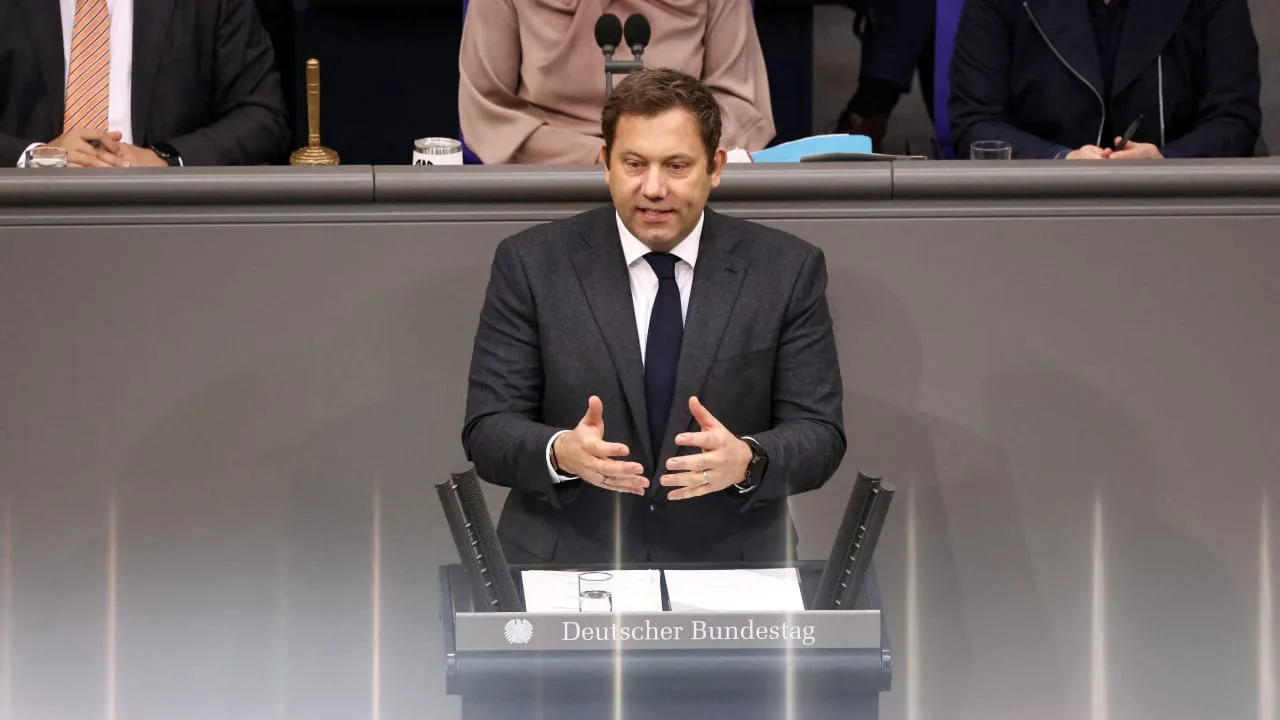
In statements echoing across diplomatic capitals, German Vice Chancellor and Finance Minister Lars Klingbeil stressed that international law applies to all nations, including the United States, directly countering renewed rhetoric from U.S. President Donald Trump regarding Greenland’s future. European capitals and NATO allies have joined Germany in a firm collective stance, emphasizing that Greenland’s destiny is a matter for Denmark and Greenland itself, not unilateral decisions by foreign powers.
A Resurgent Greenland Dispute: Why It Matters Now
Greenland, the world’s largest island, has long been an autonomous territory of the Kingdom of Denmark, known for its vast Arctic terrain and abundant natural resources — including critical minerals vital for modern technology and clean energy.
In recent weeks, that status has been thrust into global debate after President Trump reiterated his interest in Greenland, framing his statements as a matter of national security and strategic counterweight to Russia and China. Unlike past diplomatic discussions, Trump’s comments have bordered on explicit threats to annex or acquire Greenland “one way or another,” prompting strong pushback from European leaders who argue that such ambitions breach international norms.
Germany and other European allies quickly rallied — not only defending Greenland’s self-determination but warning that any forceful action could fracture NATO, a security alliance founded on shared rule-based cooperation.
In Berlin, Klingbeil’s message was clear: “It is solely up to Denmark and Greenland to decide about Greenland’s future. Territorial sovereignty and integrity must be respected.”
What makes this moment especially pivotal is the confluence of geopolitical strategy, climate change, and access to critical minerals. The Arctic has become a new frontier of global influence, and Greenland sits at its heart — both geographically and symbolically.
International Law and NATO: Unity or Rupture?
International law — the underlying foundation of diplomatic engagement, territorial sovereignty, and alliance obligations — has become a central point of contention in the Greenland debate. European leaders, including France, Italy, the United Kingdom, and others, have joined Germany in underscoring that no nation, regardless of power, is above the rules that govern sovereign relationships.
The potential implications extend deep into the core of NATO. Denmark’s Prime Minister and Greenland’s own leaders have publicly stated that any unilateral U.S. attempt to control Greenland would signal the end of NATO’s unity as we know it, stressing that collective defense cannot be selectively enforced to justify expansionist aims.
NATO’s Article 5 — which binds members to mutual defense — was designed to protect against external threats, not to provide a legal basis for one ally to overtake another’s territory under the pretext of strategic necessity. Experts now debate how such a scenario could weaken the alliance’s credibility and cohesiveness.
This tension comes at a time when NATO’s role is rapidly evolving, with Arctic security, climate-driven access routes, and shifting strategic priorities elevating the importance of united front cooperation rather than unilateral ambitions.
European Solidarity and Greenland’s Voice
Across Europe, leaders have publicly supported Greenland and Denmark’s autonomy. In early January, a coalition comprising major EU members and Canada issued a joint statement affirming that Greenland belongs to its people and Denmark, rejecting external interference.
Greenland itself has spoken loudly. The government released a unified declaration that the island “cannot accept a U.S. takeover under any circumstances,” stressing that its defense is entrusted to NATO as a collective alliance — not to a single powerful member state.
The sentiment isn’t limited to diplomatic statements. Greenland’s five main political parties jointly affirmed their desire to remain autonomous, making clear that they “do not want to be Americans, reinforcing self-determination and democratic rights.
These internal responses reflect not only political positioning but deep public sentiment among Greenlanders, many of whom value sovereignty and local governance over being caught in superpower competition.
G7 Summit, Critical Minerals, and Western Strategy
While Greenland’s political future dominates headlines, there’s another strategic layer: the upcoming G7 meeting, where Western economies are prioritizing access to critical minerals — materials like lithium, cobalt, graphite, and rare earth elements that underpin modern technology and green energy transitions.
China currently dominates large portions of the global refining and supply chains for these minerals, prompting G7 nations to seek diversified and secure sources outside Beijing’s influence. Greenland’s mineral wealth positions it as a potentially invaluable partner in that effort — but only under conditions that respect its sovereignty and legal frameworks.
German officials have highlighted that international cooperation, not adversarial competition, must drive Western access to resources in the Arctic. For Germany, going forward means strengthening alliances with like-minded partners to ensure both supply security and shared prosperity.
This strategic context elevates the Greenland debate far beyond a territorial dispute — it now sits at the crossroads of resource security, alliance unity, and international law, making it one of the most watched geopolitical flashpoints of 2026.
What Happens Next: Diplomatic Moves and Global Watch
In response to the escalating situation, U.S. lawmakers from both sides of the aisle are planning diplomatic visits to Denmark to deliberate the Greenland controversy, signaling that even within Washington, there is concern over how aggressive pursuit of control could affect alliances and global stability.
Meanwhile, European capitals prepare for high-level talks with NATO allies, aiming to reaffirm commitments to collective defense while resisting any perceived overreach by a powerful partner. The Arctic’s strategic importance, amplified by climate change and emerging shipping routes, means stakeholders from Asia to North America are watching closely.
International observers are also drawing parallels between the Greenland standoff and broader questions about how global power structures operate in a post-COVID, multipolar world. The debate challenges long-held assumptions about where influence lies and what norms global powers must uphold to maintain stable geopolitical order.
Greenland has become a litmus test for international cooperation: Will powerful nations honor the rule of law and sovereign equality, or will strategic pragmatism override established global norms?
A Turning Point for Global Diplomacy
The renewed debate over Greenland, spurred by U.S. interest and European resistance, represents much more than a regional dispute. It is a defining moment for international law, alliance cohesion, and the future of multilateral cooperation.
Germany’s call for respect of sovereignty and law underscores a broader global expectation — that no nation, regardless of power, should act outside the agreed rules of international engagement. This stance draws a clear line in world affairs at a moment when geopolitical stability is deeply fragile.
What happens in the coming weeks and months will reverberate from Washington to Copenhagen and beyond, shaping how nations negotiate power, resources, and justice in an increasingly interconnected world.
Subscribe to trusted news sites like USnewsSphere.com for continuous updates.