Republicans Vow to Stop Trump From Seizing Greenland by Force, Warning of Global and NATO Fallout
Senate Republicans Block Trump Greenland Plan Amid Growing NATO and Congressional Backlash — In a high-stakes political drama unfolding on Capitol Hill and across the globe, Senate Republicans have moved decisively to block President Donald Trump’s controversial push toward gaining control of Greenland, marking a rare moment of intra-party resistance that underscores growing concerns among lawmakers about the president’s foreign policy ambitions and the potential fallout for NATO alliances.
Senate Republicans Push Back on Trump’s Greenland Strategy
In a surprising turn of events, Senate Republicans are actively working to block any attempt by President Trump to seize control of Greenland — a strategic Arctic territory governed by Denmark — by military force. The resistance comes as Trump doubles down on his belief that the United States must acquire Greenland for national security and to counter global rivals such as Russia and China. Although the White House has said that diplomatic and purchase options are being weighed, some comments from Trump and his aides have raised alarm about possible unilateral action.
In Washington, GOP senators, including key leaders, have signaled that any effort to take territorial control without congressional authorization would be met with strong opposition. These lawmakers, citing the critical importance of upholding NATO obligations and the constitutional role of Congress in matters of war and peace, are exploring legislative measures that would bar federal funds from being used for unauthorized military actions against NATO allies or their territories — a clear rebuke of aggressive presidential rhetoric.
This shift among Republicans comes after Trump’s repeated statements that the United States “needs” Greenland — not simply as a defense outpost but as a territory the U.S. should own. While Trump has primarily couched the argument in national security terms, critics argue that any forced acquisition of a sovereign territory would violate international law and imperil longstanding alliances.
Why Greenland Matters: Strategic Importance in an Unstable World
Greenland, a semi-autonomous territory of Denmark, occupies a pivotal location in the Arctic — an increasingly contested region due to its proximity to Russia and China and its wealth of critical minerals and shipping routes. Trump and supporters have argued that U.S. control over Greenland would bolster American national defense, offering strategic positioning against global rivals and enhancing missile defense capabilities.
However, this vision is met with fierce opposition at home and abroad. Greenland’s political leaders have made it clear that they do not want to join the United States and prefer to maintain allegiance to Denmark and NATO. In statements underscoring their desire for self-determination, Greenlandic officials have rejected any notion of becoming part of the U.S., saying they “want to be Greenlanders,” not Americans.
International reactions mirror this sentiment. Denmark’s foreign minister described ongoing discussions with U.S. officials as constructive yet marked by “fundamental disagreement,” while NATO allies have reiterated that any attempt by one member to take control of another would undermine the alliance’s collective defense principles.
Public opinion in the United States also reflects widespread skepticism of Trump’s Greenland ambitions. According to a recent Reuters/Ipsos poll, only 17% of Americans support Trump’s efforts to acquire Greenland, and an overwhelming majority oppose the use of military force — even among Republicans.
Congressional Actions: A Growing Bipartisan Push to Restrict Military Moves
Alongside Senate resistance, members of both parties in Congress are taking legislative steps to restrict executive power. A bipartisan group of senators has introduced a bill that would prohibit the use of federal funds to occupy, annex, or otherwise assert control over the territory of a NATO member state without consent — widely understood to target the possibility of a Greenland takeover.
On Capitol Hill, proponents of this legislation argue that U.S. alliances, particularly within NATO, are foundational to global stability and that any unilateral military endeavor would jeopardize more than just diplomatic ties — it could fracture the alliance itself. They stress that existing agreements already grant the U.S. significant access for defense purposes without jeopardizing the sovereignty of allied territories.
The pushback against Trump’s Greenland strategy is occurring amid broader congressional debates over war powers. Senate Republicans have already blocked a resolution that would have limited Trump’s authority to take military actions in foreign theaters without congressional approval, underscoring tensions over executive authority that go beyond Greenland and also include issues like Venezuela.
International Implications: NATO, Denmark, and the Arctic Balance
Trump’s Greenland ambitions have provoked strong reactions from U.S. allies. Denmark, a steadfast NATO member, has repeatedly affirmed its commitment to defending Greenland under the alliance’s collective security framework. Officials from Denmark and Greenland have emphasized that decisions about the island’s future should be made democratically by Greenlanders themselves and in accordance with international law.
European leaders have also stepped forward to reinforce their support for Denmark and its governance over Greenland, warning that any forced U.S. action would destabilize relationships and trigger broader geopolitical consequences. Countries such as France, Germany, and Norway have pledged increased military cooperation with Denmark to bolster Arctic defense, signaling united resistance to external pressure.
At the same time, diplomatic efforts are underway to find common ground. A working group composed of officials from the United States, Denmark, and Greenland has been formed to address U.S. security concerns while respecting Danish sovereignty — a delicate balancing act that reflects the complexity of modern geopolitics in the Arctic.
Political Fallout in Washington: Divisions Within the GOP and Beyond
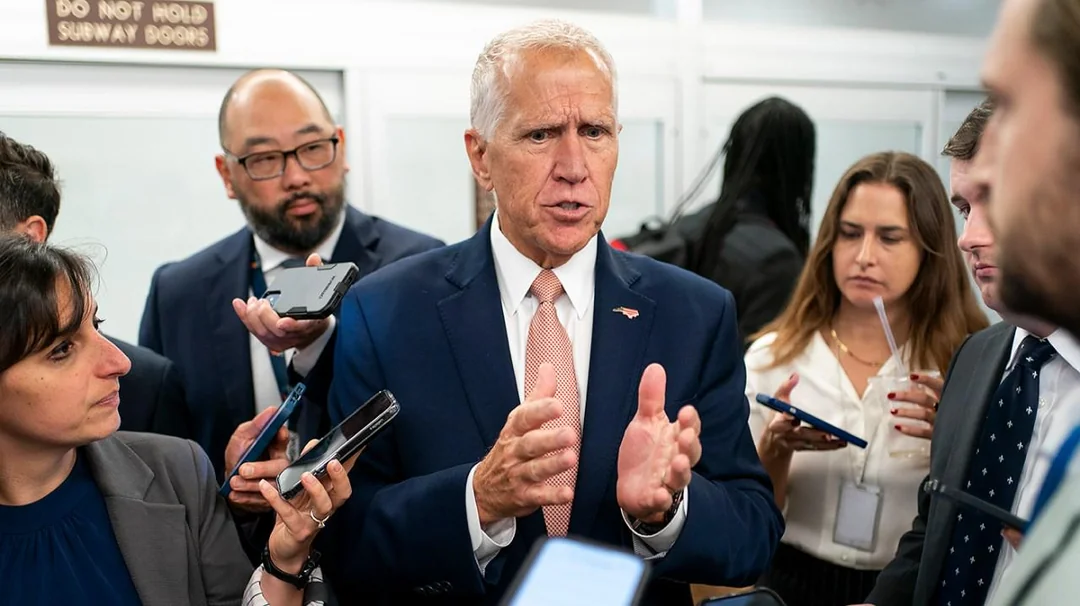
The Greenland controversy has created fissures within the Republican Party, with some prominent GOP senators publicly distancing themselves from the more aggressive rhetorical approach. Senator Thom Tillis, who is not seeking re-election, openly criticized parts of the Trump administration and ridiculed what he saw as ill-advised policy ideas, including the notion of seizing Greenland by force.
Other Republican lawmakers have taken a more cautious stance, emphasizing respect for NATO, adherence to international norms, and the need for congressional oversight over any major foreign policy moves. Meanwhile, internal divisions in Congress over war powers and foreign interventions have become more pronounced, especially as legislators grapple with balancing national security priorities against constitutional checks on executive authority.
These domestic debates are further shaped by broader foreign policy controversies, including tensions over military involvement in Venezuela and other regions. Critics argue that Trump’s approach — which sometimes blurs diplomatic, economic, and military tools — has heightened concerns about unchecked presidential power and the potential for unintended escalation abroad.
What Comes Next: The Future of the Greenland Debate
As this unfolding saga continues to evolve, several key dynamics will likely shape the outcome:
- Legislative action in Congress: Bipartisan bills designed to restrict unauthorized military actions against NATO allies could gain traction, reflecting rising unease even among Trump’s own party members.
- Diplomatic negotiations: Ongoing discussions between U.S., Danish, and Greenlandic officials aim to find a path forward that addresses security concerns without undermining sovereignty — a complex challenge with implications for Arctic geopolitics.
- Public opinion and alliance strength: With most Americans and European allies opposed to forced acquisition, any effort to change Greenland’s status will face political headwinds that extend well beyond Capitol Hill.
- War powers and constitutional oversight: More broadly, the debate has reignited questions about the constitutional balance between presidential authority and congressional oversight in matters of military and foreign policy.
In many ways, the Greenland issue encapsulates broader tensions in global politics — balancing national security imperatives, alliance obligations, democratic norms, and constitutional checks — all while navigating an increasingly competitive international environment.
The dramatic turn of events in Washington, where Senate Republicans are blocking President Trump’s Greenland strategy, highlights an extraordinary moment in U.S. politics that reverberates across the Atlantic and into the Arctic Circle. As lawmakers, diplomats, leaders, and citizens weigh in, the outcome will test the resilience of longstanding alliances, the effectiveness of constitutional checks, and the limits of presidential power.
Subscribe to trusted news sites like USnewsSphere.com for continuous updates.