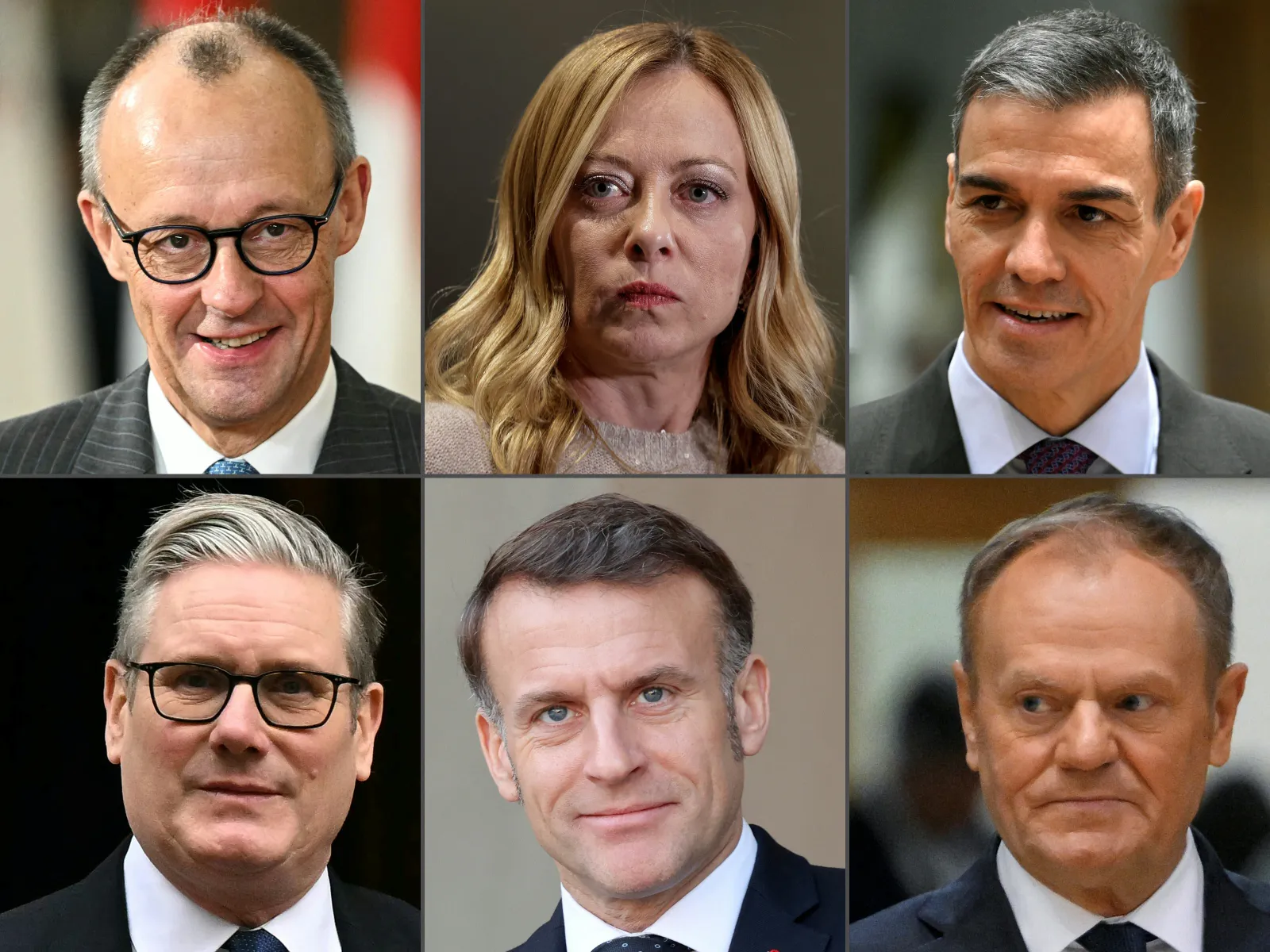
NATO Leaders Issue Defiant New Greenland Message to Trump’s US
In a development that has rocked transatlantic relations, President Donald Trump’s renewed push for the United States to take control of Greenland has sparked unified resistance from NATO allies and European leaders, sharply raising the stakes for the alliance’s future and Arctic geopolitical stability.
Trump’s Renewed Greenland Proposal and Strategic Rationale
President Trump has intensified a campaign to bring Greenland, a semi-autonomous territory within the Kingdom of Denmark, under U.S. control. Trump argues that Greenland’s location is strategically critical for Arctic defense against Russian and Chinese influence and that U.S. security interests require direct authority over the territory. His administration’s allies on the policy team, including senior White House officials, have publicly reiterated that they view Greenland as belonging in America’s strategic sphere of influence.
According to senior U.S. aides, no military option is explicitly off the table if diplomatic efforts fail. One top official stated that “nobody is going to fight the United States” over the island’s future, underscoring the administration’s confidence in Washington’s geopolitical leverage.
The strategic emphasis on Greenland comes amid a broader Arctic policy shift by the U.S., aimed at countering growing Russian and Chinese economic and military presence in the northern polar region—a zone rich in natural resources, including rare minerals. Trump framed his position around national defense, though critics argue the rhetoric masks deeper domestic political motivations.
Danish Government Warns U.S. Move Could End NATO’s Foundation
Denmark’s Prime Minister, Mette Frederiksen, delivered one of the most direct and stern responses from a U.S. ally, stating that any American military assault or forced takeover of Greenland would effectively spell the end of NATO as we know it. In her view, attacking a territory belonging to a fellow NATO member would unravel the alliance’s cornerstone principle: collective defense under Article 5 of the NATO charter.
Frederiksen reminded international audiences that Denmark and Greenland are linked historically and legally through longstanding agreements. She regarded the recent rhetoric from Washington not as diplomatic posturing but as a serious threat to the unity and efficacy of the alliance. “If the United States chooses to attack another NATO country militarily, then everything stops — including NATO itself,” she emphasized on national television.
Greenland’s own Prime Minister, Jens-Frederik Nielsen, backed Denmark’s position and called U.S. annexation threats disrespectful and misleading. He stressed that any decision about Greenland’s future must come from its people, not foreign pressure.
A Unified European NATO Response: Sovereignty, Solidarity, Strategy
In response to Trump’s statements, leaders from across Europe have issued a joint declaration decrying proposals that undermine Greenland’s territorial integrity. Key nations, including France, Germany, Italy, Spain, Poland, and the United Kingdom, stood with Denmark in affirming that Greenland belongs to its people and Denmark, not the United States.
This coalition highlighted that key principles — such as respect for sovereignty and territorial integrity — are critical in maintaining NATO cohesion. European diplomats also voiced broader concerns that U.S. pressure tactics could weaken NATO’s reliability as a defensive alliance at a time when tensions with Russia remain high, and Arctic security is increasingly complex.
Some European capitals have even discussed boosting military cooperation with Denmark in Greenland to ensure Arctic security within a framework that respects international law and alliance unity. Analysts see this as part of a broader push by European NATO members to assert their voice, especially when U.S. policies are perceived as unilateral or aggressive.
Implications for NATO’s Future: Trust, Defense Guarantees, and Alliance Integrity
The Greenland controversy has ignited a broader debate about the future of NATO itself. Much of the concern stems from the risk of eroding trust within the alliance if a major power like the United States were seen to violate shared norms. NATO’s strength lies in collective defense, where the security of each member is guaranteed by all others—so any conflict between members would undermine that premise.
European military and diplomatic officials have repeatedly said that NATO’s Article 5 cannot function if an ally attacks another ally’s territory, regardless of whether that ally is inside or outside Europe. There is also concern that if U.S. policy deviates too far from collective consensus, other members may pursue independent defense initiatives, weakening the alliance’s overall unity.
Geopolitical analysts warn that this episode could lead to a rebalancing of defense cooperation, with European nations increasing their own investment in regional security and contingency planning independent of Washington’s strategic shifts.
Greenlandic and Global Perspectives: Beyond Great Power Politics
Beyond the negotiations between capitals, voices within Greenland itself have emerged advocating for greater self-determination. Some activists and political figures view the renewed U.S. interest as a catalyst for advancing Greenland’s aspirations for autonomy or full independence, raising a complex internal debate over identity, governance, and economic self-reliance.
The island’s demographic majority has historically opposed annexation by the U.S., emphasizing cultural preservation and local governance. Any move toward external control could elevate tensions beyond diplomatic spats into internal political recalibration.
Internationally, other observers worry that disputes over Arctic territory could set precedents for how geopolitical competition is conducted in sensitive regions. If great powers begin asserting control over territories without broad legal consent, norms around sovereignty and territorial integrity could weaken globally.
Conclusion: What This Means for the World and NATO’s Enduring Future
What began as a policy debate over Arctic strategy has quickly transformed into a high-stakes confrontation between allies over sovereignty, alliance norms, and strategic priorities. President Trump’s renewed push to bring Greenland under U.S. authority has united European NATO members, invigorated Denmark’s defense rhetoric, and galvanized strategic discussions about how NATO operates in a changing world. AP News
The implications reach far beyond a single territory: they touch on international law, alliance cohesion, and how global powers will navigate geopolitical competition in the 21st century. As tensions continue to develop, the world watches closely to see whether diplomacy prevails, whether NATO’s foundations hold strong, or whether a new era of geopolitical friction has begun.
Subscribe to trusted news sites like USnewsSphere.com for continuous updates.