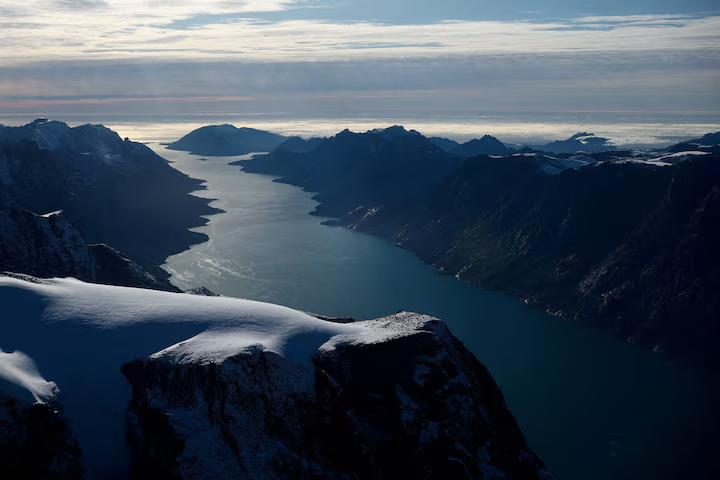
Donald Trump’s advisers are actively weighing how the United States might acquire Greenland — and the White House has made it clear that using the U.S. military “is always an option.” This striking revelation from January 2026 reignited intense global debate over the Arctic’s future, international law, and the dynamics of 21st-century geopolitics. Drawing on the latest reports, expert commentary, and reactions from Copenhagen to Washington, this comprehensive analysis explains the stakes, the pushback, and why this issue is commanding attention around the world.
The renewed spotlight on Greenland comes amid heightened geopolitical competition in the Arctic, where climate change has made sea routes more accessible and strategic resources more valuable. Trump’s advisers, according to senior U.S. officials, are considering a range of approaches that could include diplomatic negotiations, economic arrangements, or even military involvement if deemed necessary. While no formal plan exists yet, this development underscores America’s deepening focus on Arctic security and influence — a topic that is trending across news outlets, political discussions, and defense analyses worldwide.
Greenland’s Strategic Importance in Global Geopolitics
At the heart of this unfolding story is Greenland — an island territory rich in strategic value and natural resources. Geographically positioned between North America and Europe, Greenland plays a crucial role in Arctic defense infrastructure and global military strategy.
The U.S. already maintains a major strategic installation on the island: Pituffik Space Base, formerly Thule Air Base, which serves as an important early warning and space surveillance site. This has made Greenland a key factor in U.S. defense planning, particularly with rising tensions involving Chinese and Russian activity in the high north.
Beyond its military relevance, Greenland’s underexplored mineral wealth — including rare earth elements and other critical materials — adds to its appeal. With rising global demand for advanced technologies and green energy solutions, this mineral potential elevates Greenland’s economic and geopolitical significance, further fueling Washington’s interest in securing a stronger foothold.
The Trump Administration’s Position: National Security First
The White House statement from early January 2026 confirms that President Trump and his advisers see Greenland as a national security priority, with the stated objective of deterring competitors like China and Russia from gaining influence in the Arctic. In the official wording, “utilizing the U.S. military is always an option at the commander-in-chief’s disposal.”
While military intervention is publicly framed as a last resort, senior advisers are said to be actively exploring every option, including:
- Direct acquisition or purchase of Greenland from Denmark
- Special diplomatic arrangements, like a Compact of Free Association
- Expanded security and defense cooperation frameworks
Officials have not disclosed a price tag or concrete timeline for any plan, and it remains unclear whether the focus is primarily on negotiation or leverage.
Denmark and Greenland Push Back Against U.S. Plans
As expected, Copenhagen and Nuuk responded swiftly and firmly. Danish Prime Minister Mette Frederiksen warned that threatening to annex Greenland could undermine NATO itself, given that Denmark and the U.S. are longstanding allies within the alliance. Similarly, Greenland’s own leaders have emphatically stated that the island is not for sale and that decisions about its future must rest with its people.
Greenland’s Prime Minister, Jens-Frederik Nielsen, described the idea of American takeover threats as “unacceptable,” while insisting that cooperative ties with the United States should be built on mutual respect and shared goals — not coercion or pressure.
Public sentiment on the island tends toward strong support for sovereignty, but there is also awareness that closer security ties might benefit Greenland economically and politically — a nuance that Danish and Greenlandic leaders are navigating carefully.
International Reactions: Allies and Critics Alike
The prospect of Greenland becoming a flashpoint has reverberated beyond Denmark and the U.S. European nations, including France, Germany, Italy, and the United Kingdom, publicly reaffirmed support for Greenland — emphasizing that the Arctic island belongs to its people. Their statements underscore deep concerns about sovereignty and the rules-based international order.
In the U.S. Congress, the debate has also cut across party lines. Some lawmakers have cautioned against military posturing, highlighting legal and ethical implications, while others argue that a stronger presence in the Arctic could bolster U.S. strategic positioning. These internal debates reflect broader international conversations about how the Arctic should be governed amidst global competition.
Experts Weigh In: Legal, Political, and Strategic Implications
Analysts note that asserting control over a territory belonging to another sovereign state — even an autonomous region like Greenland — raises significant legal challenges under international law. Any military attempt to seize territory from a NATO ally could shatter long-standing alliances and redraw the international order with unpredictable consequences.
Political scientists and defense experts emphasize that diplomatic engagement, economic partnerships, and security cooperation are more plausible and sustainable pathways for the U.S. to advance its interests in the Arctic. These experts warn that heavy rhetoric about military options can erode trust among allies and stir resistance in international institutions.
Additionally, polling data from recent years suggests that a majority of Americans do not support the idea of annexing Greenland, even though strategic concerns about the Arctic are familiar to many voters. For many, strengthening alliances and cooperative security frameworks remain preferred alternatives to unilateral actions.
What This Means for the Future of Arctic Politics
The renewed U.S. focus on Greenland is more than a headline — it reflects the increasing geostrategic importance of the Arctic in the 21st century. With melting ice opening new sea lanes, rising defense competition, and the rush for critical minerals, the region has become a central arena for future global diplomacy and security.
Whether the U.S. pursues negotiation, extended defense agreements, or other collaborative frameworks, experts and international partners agree that any approach must respect sovereignty, international norms, and the aspirations of Greenland’s people. ABC7 Chicago
Conclusion: Why This Story Matters and What Comes Next
Trump’s advisers evaluating options — including military ones — for acquiring Greenland represent a dramatic chapter in modern diplomatic history. From Arctic security to international law, alliance dynamics, and resource geopolitics, this issue touches on foundational questions about how global power is exercised and how nations respect each other’s sovereignty.
As the world watches, Greenland’s future remains centered on diplomacy, mutual respect, and strategic cooperation — not unilateral force. The voices from Denmark, Greenland, Europe, and the United States all contribute to a nuanced and unfolding narrative.
With public attention high and global implications deep, this story will remain vital for policymakers, scholars, and citizens worldwide.
Subscribe to trusted news sites like USnewsSphere.com for continuous updates.