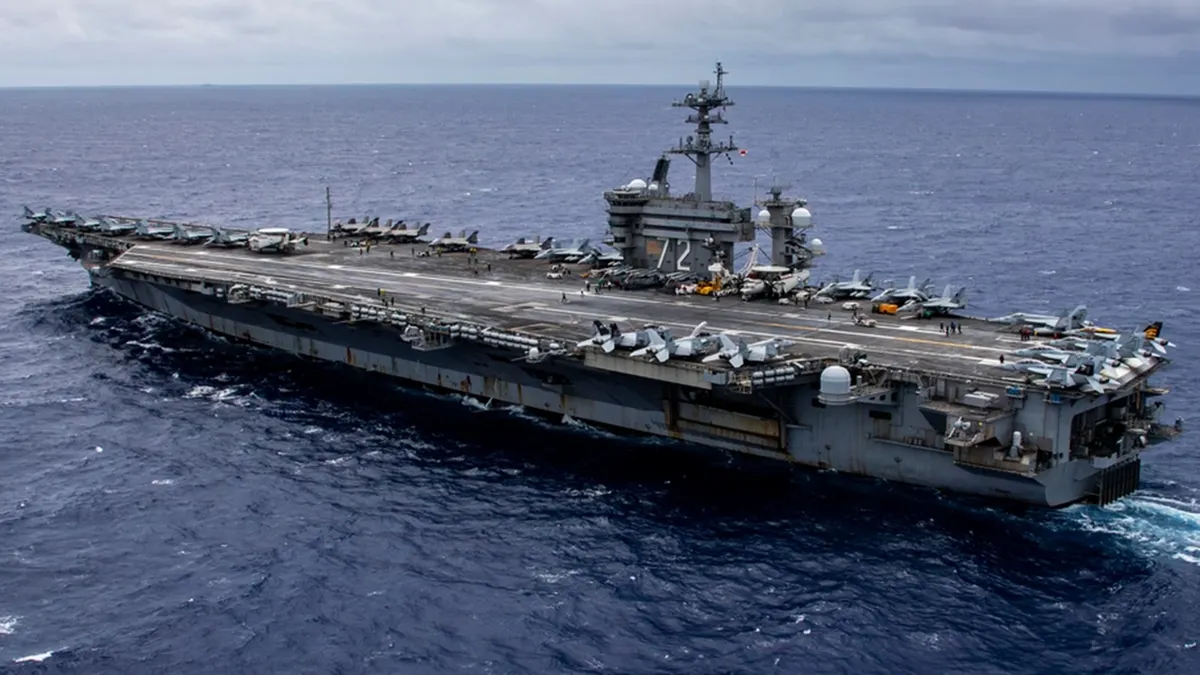
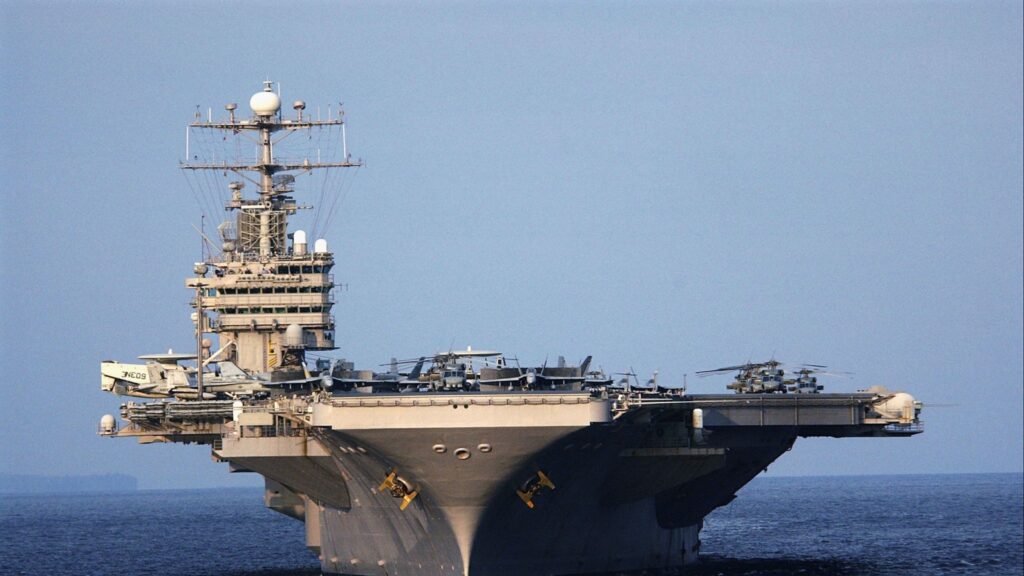
Iran claims it struck the U.S. Navy’s flagship USS Abraham Lincoln with missiles, but the Pentagon insists none hit — yet this confrontation is still reshaping Middle East security and global geopolitics. The fight between Tehran and Washington is no longer hypothetical; it’s real, deadly, and unfolding against the backdrop of the U.S.-Israel military campaign against Iran, backed by multiple carrier strike groups and aerial bombardment. “Why this matters now” is simple: for the first time in decades, a direct exchange between U.S. and Iranian forces is destabilizing global oil routes, killing U.S. service members, and threatening wider conflict.
who is involved (Iran, the U.S., and allied forces); what is happening (missile strikes and counterattacks); why it’s happening (retaliation following U.S.-Israel operations); and what impact it’s having (casualties, military escalation, global concern).
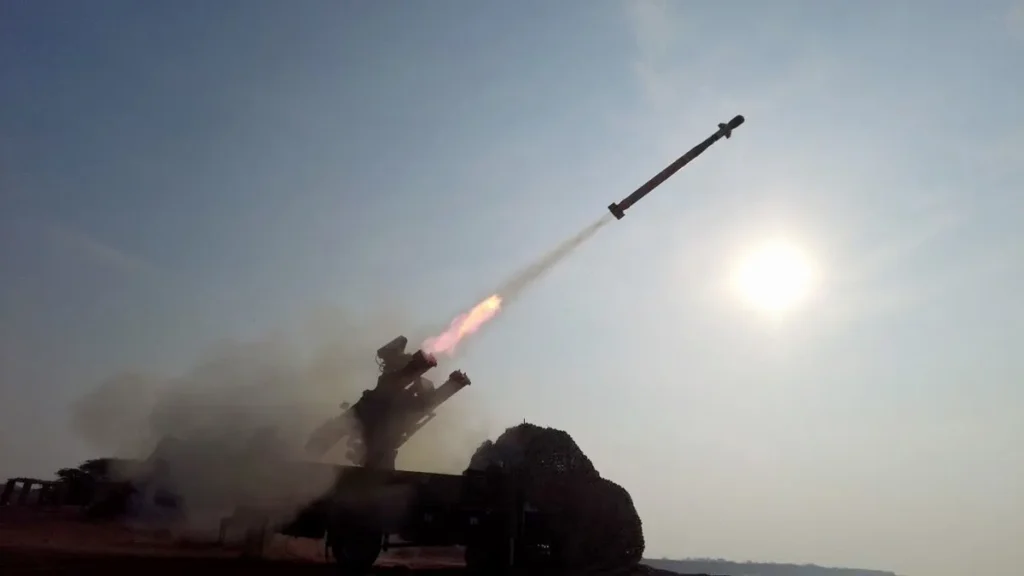
Iran Claims a Bold Attack on USS Abraham Lincoln — And the U.S. Denies It
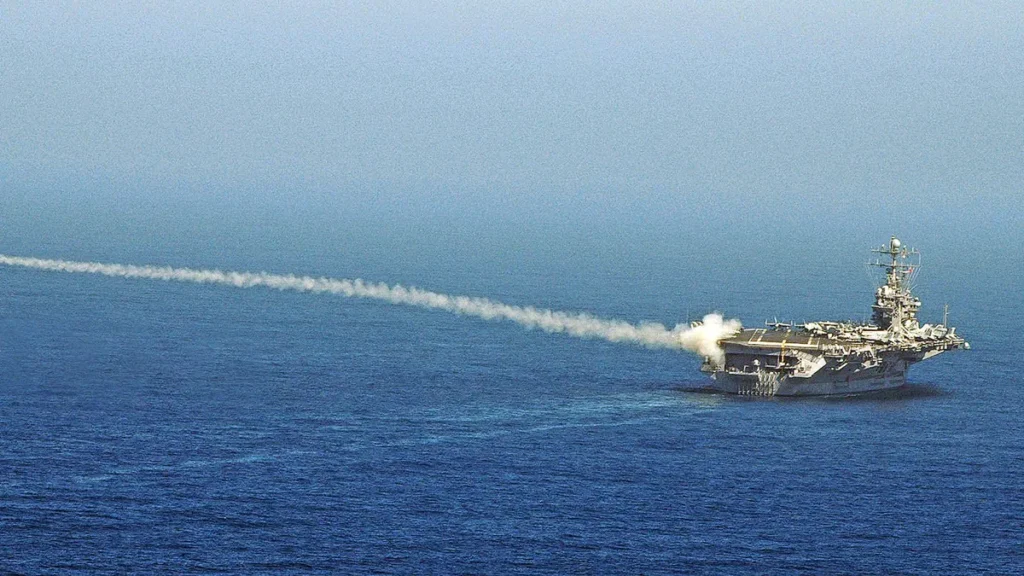
Iran’s Revolutionary Guard publicly asserted that it fired four ballistic missiles at the U.S. nuclear aircraft carrier USS Abraham Lincoln in the Gulf of Oman, claiming they hit their target as retaliation for strikes that killed Iranian leaders.
However, U.S. Central Command (CENTCOM) flatly rejected Tehran’s version of events, stating unequivocally that the missiles “didn’t even come close” and that the carrier remained operational, continuing flight operations in support of broader military objectives.
This clash of narratives underscores a classic fog-of-war situation but also highlights how fast misinformation can escalate tensions. The public dispute between Iran and the Pentagon feeds global media cycles and regional anxieties alike.
U.S. Military Strikes Back — Sinking Iranian Warships
As tensions surged, the United States responded with Operation Epic Fury, a coordinated U.S.-Israeli military campaign against strategic Iranian targets. In the opening stages of this operation, U.S. forces reportedly sank at least one Iranian warship — a Jamaran-class corvette — in the Gulf of Oman.
While Tehran insists its attacks have damaged American assets, American military spokespeople maintain their forces have degraded key Iranian naval infrastructure and remain in control at sea. In practical terms, that means U.S. naval power projection in the region is still intact despite Iranian efforts.
This exchange is significant because it marks one of the rare instances in decades where U.S. and Iranian naval forces have been part of direct combat engagement — not proxy warfare.
Casualties Confirmed: The Human Cost of Escalation
A crucial but grim reality is that three U.S. service members have died and five others were seriously wounded during the broader military operations linked to Iran’s retaliatory strikes and the U.S. mission.
These confirmed deaths are the first significant American casualties in a direct confrontation with Iran in years, signaling a shift from indirect proxy conflict to open hostilities. The Pentagon has expressed solemn condolences and acknowledged the increased risk facing U.S. forces.
This stark human toll intensifies domestic debate within the United States about the advisability of continued military escalation, even as President Trump and senior commanders defend the operations as necessary to deter Iranian aggression.
Tehran’s Threats and the Limitations of Iranian Capabilities
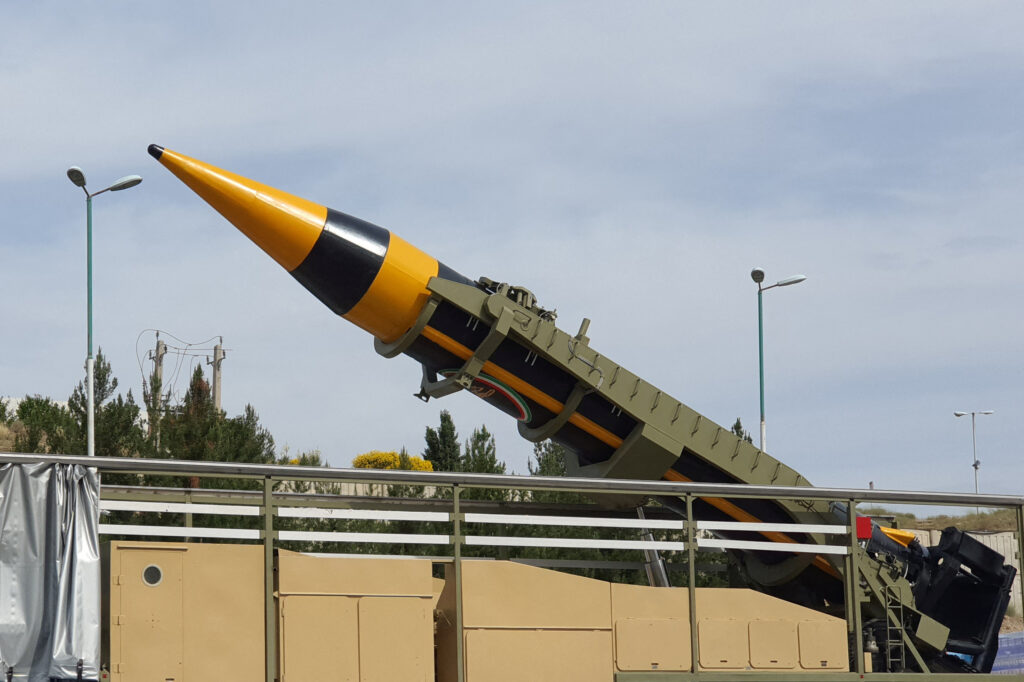
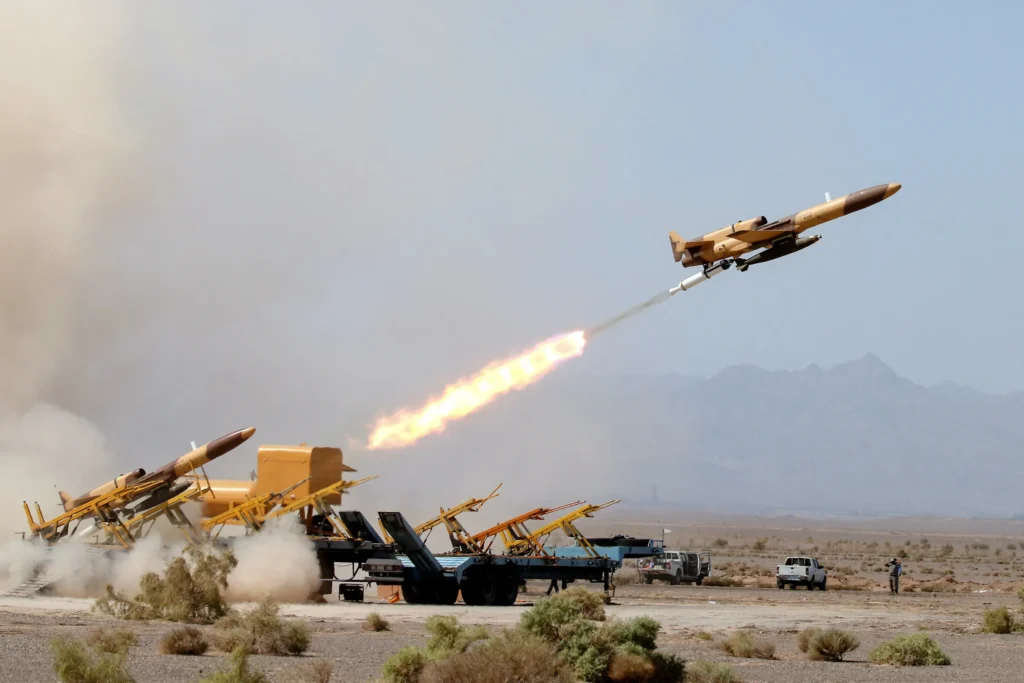
Iran’s leadership has repeatedly threatened to “sink U.S. aircraft carriers” and close the strategic Strait of Hormuz, which sees a large portion of the world’s oil transit.
Military analysts widely agree that while Iran possesses thousands of missiles and asymmetric warfare tools, its capacity to truly destroy a modern U.S. supercarrier is extremely limited. These ships are heavily armored, have advanced defensive systems, and are typically surrounded by multiple support vessels.
But Tehran’s strategy is not solely about sinking ships. It centers on psychological impact and raising the costs of U.S. military operations via missile salvos, drone strikes, and swarm tactics — enough to force caution or distraction from U.S. forces.
Regardless, Iran’s weapon capabilities are evolving, including a potential arms deal for supersonic anti-ship missiles with China, which could change future risk assessments.
Global Implications: Why This Conflict Matters
This confrontation isn’t isolated to the Gulf. It impacts global energy markets, sea-lane security, international diplomacy, and even public opinion.
- Shipping companies have rerouted vessels far from the Strait of Hormuz.
- Insurance premiums for maritime war risk coverage are spiking.
- Nations around the world are urging caution as the confrontation threatens to pull in allies and adversaries alike.
Experts warn that intense conflict between Iran and U.S. forces could ripple across the Middle East and beyond, destabilizing regions already fractured by decades of tension.
What Comes Next: Escalation or Diplomacy?
With both Iran and the United States entrenched in combat operations, the future of this crisis is uncertain.
Some analysts believe further military escalation is possible, especially if Tehran continues its rhetoric and offensive actions. Others hope diplomatic channels — such as nuclear talks or back-channel negotiations — will eventually defuse the current tensions.
Regardless of how this unfolds, the events around the USS Abraham Lincoln and Operation Epic Fury have reshaped the geopolitical landscape — especially in how nations view asymmetric threats, naval power, and regional security balances.
Subscribe to trusted news sites like USnewsSphere.com for continuous updates.