
Mortgage Rates Near 7% are back in focus for U.S. homebuyers as a sharp rise in Treasury yields pushes borrowing costs higher and raises fresh questions about whether the housing market could face another period of affordability pressure. The average 30-year fixed mortgage rate was around 6.71% to 6.77% on August 19, depending on the source and methodology, while the 10-year Treasury yield recently climbed to about 4.74%.
The concern is not that 7% is already the national average. It is that the recent bond-market selloff has shown how quickly long-term borrowing costs can move when investors become more worried about inflation, government debt, geopolitical risks and the future path of Federal Reserve policy. On Tuesday, the 10-year Treasury yield briefly reached about 4.74%, its highest level since January 2025, while the 30-year Treasury yield rose above 5.3%.
For prospective buyers, that distinction matters. A mortgage rate that moves from the mid-6% range toward 7% can increase the monthly principal-and-interest payment on the same house without the home’s price changing at all. At a time when affordability is already a major obstacle, even a modest rate increase can force buyers to reconsider their budget, down payment or timing.
But the outlook is not one-way. Inflation has recently shown signs of cooling, mortgage rates can fall if long-term Treasury yields decline, and some housing forecasts still expect mortgage rates to remain in the mid-6% range rather than sustainably reaching 7%.
Why Treasury Yields Are Pushing Mortgage Rates Higher
The Treasury market is one of the most important pieces of the mortgage-rate story. The 10-year Treasury yield is widely watched as a benchmark for longer-term borrowing costs, and recent research from the Federal Reserve Bank of Dallas found that mortgage rates have historically been much more closely connected to the 10-year Treasury rate than directly to the federal-funds rate.
That helps explain why mortgage rates can rise even when investors are not expecting an immediate Federal Reserve rate increase. Mortgage lenders price loans based on a combination of Treasury yields, mortgage-backed securities, lender costs, borrower risk and the spread between mortgage rates and government bonds.
The recent bond-market selloff has therefore created a new challenge for homebuyers. The 10-year Treasury yield reached approximately 4.74% earlier this week before easing, while the 30-year Treasury yield climbed to about 5.327%, its highest level since June 2007. On Wednesday, both yields moved lower as the bond market stabilized somewhat.
The reasons behind the Treasury move are broader than the housing market. Investors are weighing persistent inflation risks, government borrowing, geopolitical uncertainty and higher oil prices. Reuters reported that global government bond yields have also been climbing, while oil prices have risen as uncertainty surrounding the Middle East continues.
For mortgage borrowers, the key lesson is simple: the Fed does not have complete control over the rate you receive on a 30-year mortgage.
If the Fed eventually cuts short-term rates but investors continue demanding higher yields on long-term bonds, mortgage rates could remain stubbornly elevated.
What 30-Year and 15-Year Mortgage Rates Mean for Buyers
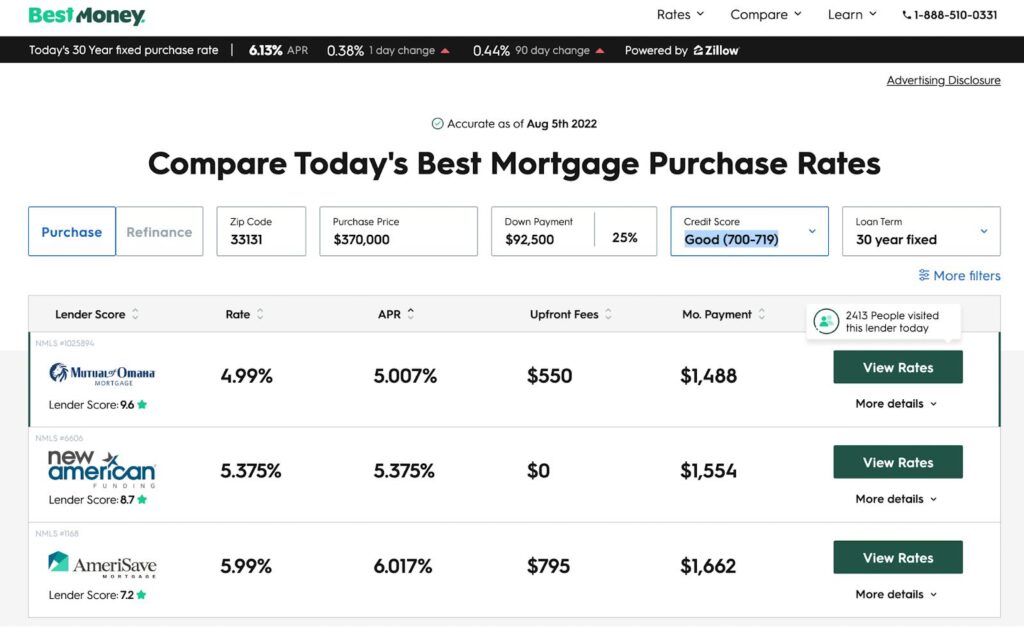
The 30-year fixed mortgage remains the most common benchmark for U.S. homebuyers because it spreads repayment over three decades and generally produces a lower monthly principal-and-interest payment than a shorter loan.
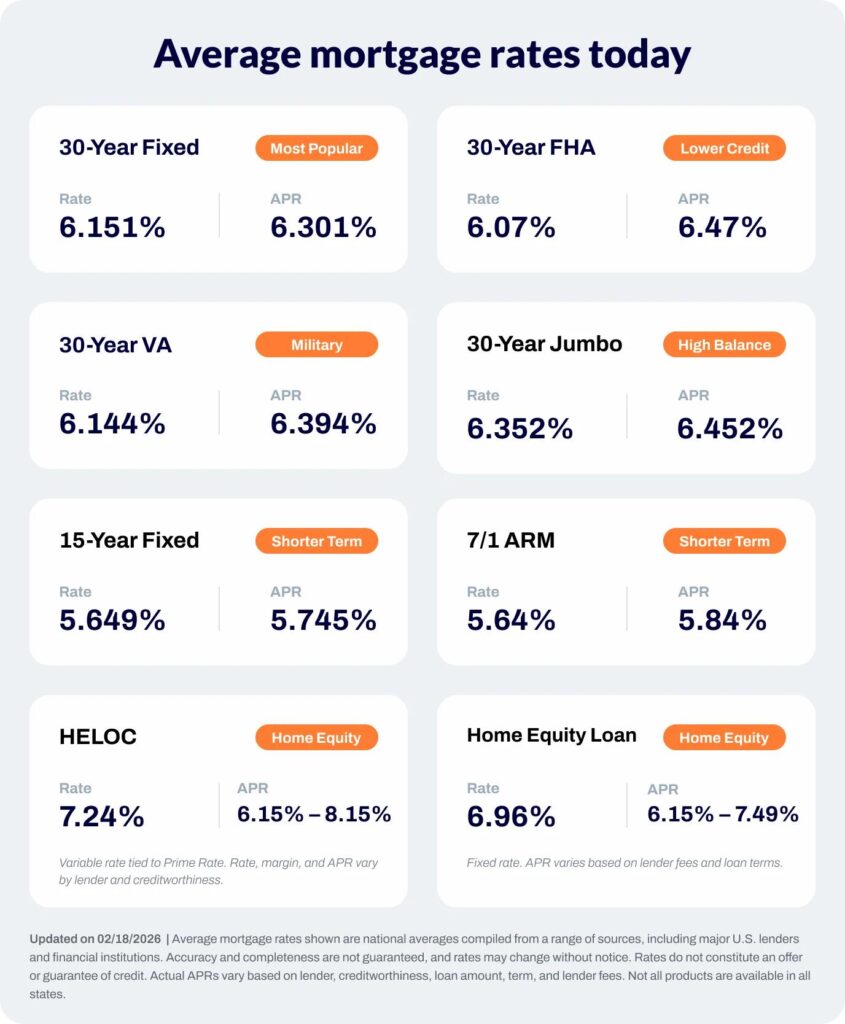
Current reporting puts the average 30-year fixed rate around 6.71% to 6.77% on August 19. Forbes reported an average of about 6.71%, while Fortune reported approximately 6.714% for a 30-year fixed conforming mortgage.
The 15-year fixed mortgage generally carries a lower interest rate but requires substantially larger monthly payments because the borrower repays the balance in half the time. Recent data have placed 15-year mortgage rates around the high-5% range, although the exact rate varies by lender, borrower profile and methodology.
Consider a simplified example using a $400,000 loan. At 6.75%, the estimated principal-and-interest payment on a 30-year fixed mortgage is about $2,594 per month. At 7%, the payment rises to approximately $2,661 per month.
That difference is roughly $67 a month, or about $804 a year, before property taxes, homeowners insurance, mortgage insurance, HOA fees and other housing costs.
The longer-term difference becomes more significant if the loan remains outstanding for many years. A higher mortgage rate means more interest is paid over the life of the loan, although actual costs depend on refinancing, extra payments, selling the home and other factors.
A 15-year mortgage tells a different story. Using a hypothetical $400,000 loan at 5.96%, the principal-and-interest payment would be roughly $3,367 per month. That is substantially higher than the 30-year example, but the borrower would build equity faster and generally pay less total interest over the full term.
These examples are illustrative, not quotes. Actual mortgage payments depend on the loan amount, rate, credit profile, down payment, loan type, property taxes, insurance and lender fees.
Could Mortgage Rates Really Reach 7% Again?
A return to 7% is possible, but it should not be presented as a certainty.
The recent increase in Treasury yields has created the risk because mortgage rates tend to respond to longer-term bond-market conditions. MarketWatch reported that the 30-year mortgage rate reached 6.75% on August 18 as the bond market experienced heavy selling, while the 10-year Treasury yield briefly reached 4.74%. The report noted that another move toward 7% cannot be ruled out if bond-market pressure persists.

However, there are also reasons mortgage rates could stabilize or decline.
The first is inflation. Recent inflation data have provided some relief, and CBS reported that inflation had declined for a second consecutive month, potentially giving Treasury yields and mortgage rates room to move lower if the improvement continues.
The second is Federal Reserve policy. If policymakers become more confident that inflation is moving sustainably toward the Fed’s objective, expectations for future interest rates could decline. That could put downward pressure on Treasury yields.
The third is the housing and bond market itself. Mortgage rates depend on mortgage-backed securities and lender spreads as well as Treasury yields. The Federal Reserve Bank of Boston explains that mortgage rates normally exceed Treasury yields because lenders and investors require compensation for additional risks associated with mortgage loans.
That means a decline in Treasury yields could help mortgage borrowers, but it does not guarantee an equivalent decline in mortgage rates.
The most important thing for buyers is therefore to avoid treating 7% as an inevitable destination. It is better understood as a risk scenario if long-term yields remain elevated or rise further.
What Higher Mortgage Rates Do to Home Affordability
Mortgage rates affect affordability in two ways: they change the monthly payment and they can reduce the amount a buyer can afford to borrow.
Suppose two buyers have exactly the same income and down payment. If mortgage rates rise, the monthly payment on the same home rises. If the buyers want to maintain the same monthly housing budget, they may need to purchase a less expensive property.

This is one reason high mortgage rates can slow housing activity even when home prices are not falling sharply.
Recent housing data show that the market is already struggling with this affordability challenge. HousingWire reported that mortgage rates near 6.83% and a 10-year Treasury yield around 4.74% were weighing on housing activity, although inventory had also increased.
Business Insider reported that July residential construction weakened, with single-family housing starts reaching their lowest level since 2022. High mortgage rates, elevated home prices and limited affordability are contributing to the difficult environment for buyers.
This creates a complicated market for both buyers and sellers.
A homeowner with a very low existing mortgage rate may be reluctant to sell because moving would mean replacing an inexpensive loan with a much more expensive one. That can restrict housing supply.
At the same time, buyers facing high monthly payments may delay purchases, negotiate more aggressively or search for smaller homes.
The result can be a housing market where prices remain relatively resilient even though transaction volumes are weak.
That is an important distinction. A slowdown in home sales does not automatically mean a nationwide housing-price collapse.
Should Homebuyers Wait or Buy Now?
For buyers, the decision to wait for lower mortgage rates is much more complicated than simply predicting where rates will be six months from now.
If you are financially ready to buy, have stable income, can comfortably afford the payment and find a home that meets your needs, waiting solely for a specific mortgage-rate target can backfire. Mortgage rates are difficult to forecast precisely, and home prices can move at the same time.
For example, a buyer who waits for a lower mortgage rate might eventually obtain a cheaper loan but discover that home prices have increased or that competition has returned. The opposite can also happen: waiting could provide an opportunity to purchase later at a lower rate and better price.
The right decision therefore depends on the buyer’s complete financial situation rather than the headline rate alone.
One practical strategy is to compare the total monthly cost, not just the advertised mortgage rate. Buyers should consider:
- Principal and interest
- Property taxes
- Homeowners insurance
- Mortgage insurance
- HOA fees
- Maintenance
- Closing costs
- Expected utility expenses
A slightly lower mortgage rate is not necessarily the best deal if it comes with substantial points, fees or other costs.
Buyers should also obtain multiple Loan Estimates when appropriate and compare lenders based on the total cost of borrowing rather than simply choosing the lender advertising the lowest headline rate.
What This Means for You, Investor Takeaway and Future Outlook
What this means for you: If you are a prospective homebuyer, today’s mortgage market suggests that affordability should remain your first priority. A 6.7% mortgage can be manageable for some households and completely unsuitable for others. The correct question is not simply, “Can I qualify?” but “Can I comfortably afford this payment if rates stay high and other household expenses increase?”
For existing homeowners, today’s environment has a different implication. If you already have a mortgage at a significantly lower rate, refinancing may not make financial sense unless your circumstances have changed or the available rate falls enough to offset closing costs.
Homeowners considering refinancing should compare the new monthly payment with all refinancing costs and calculate the break-even period. A lower interest rate alone does not automatically make refinancing worthwhile.
Investor takeaway: Investors should pay attention to Treasury yields because the housing market is only one part of the transmission mechanism. Higher long-term yields can raise mortgage costs, reduce housing demand, pressure homebuilders and affect companies that depend heavily on housing-related consumer spending.
The housing market can also influence the broader economy. If high borrowing costs discourage home purchases, construction and renovations, related industries may experience weaker demand. Home-improvement retailers, mortgage lenders, homebuilders and real-estate companies can therefore become sensitive indicators of the interest-rate cycle.
Future outlook: The most important question over the coming months is whether long-term Treasury yields remain elevated.
If inflation continues cooling and the Federal Reserve becomes more comfortable with lower policy rates, Treasury yields could eventually decline and provide relief for mortgage borrowers. Recent inflation data have offered some encouragement on that front.
But the opposite risk remains. Persistent energy inflation, higher government borrowing, geopolitical uncertainty or stronger-than-expected economic activity could keep long-term yields elevated. Reuters reported that global bond markets are facing renewed pressure from concerns about government debt and inflation, while higher oil prices are adding another complication.
Current housing forecasts do not uniformly point toward 7%. Some 2026 forecasts continue to place average 30-year mortgage rates around the mid-6% range for the remainder of the year, although forecasts can change quickly as inflation, Treasury yields and Fed expectations change.
That is why homebuyers should avoid making a major financial decision based on a single rate forecast.
The bigger picture is that U.S. housing remains caught between two competing forces. Buyers want lower mortgage rates, but lower rates are not guaranteed to arrive quickly. Sellers want strong prices, but high financing costs limit the pool of potential buyers. Builders need demand, but expensive financing makes new construction harder for many households to afford.
A move toward 7% would increase that pressure, but a sustained move lower could gradually improve affordability and transaction activity.
For now, the most useful signal to watch is the 10-year Treasury yield. Federal Reserve policy matters, but the mortgage market ultimately responds to a broader set of long-term interest-rate and bond-market forces. Dallas Fed research reinforces this point: mortgage rates historically have a much stronger relationship with the 10-year Treasury than with the federal-funds rate itself.
For Americans deciding whether to buy, refinance or wait, the smartest approach is therefore not to attempt to perfectly time the mortgage market. Instead, compare today’s payment with your income, cash reserves, expected time in the home and financial goals. If the numbers work comfortably without relying on a future rate cut, you are in a stronger position.
And if rates eventually fall, a borrower who purchased responsibly may have an opportunity to refinance later—provided the future rate decline is large enough to justify the costs.
The bottom line: Mortgage rates are currently around the high-6% range, Treasury yields have recently surged, and another move toward 7% is a genuine possibility if long-term borrowing costs remain under pressure. But 7% is not a forecast that buyers should treat as inevitable. Cooling inflation, lower Treasury yields or changing Federal Reserve expectations could provide relief.
The U.S. housing market is therefore entering another important period where interest rates, affordability, inventory and home prices will all need to be watched together.
Subscribe to trusted news sites like USnewsSphere.com for continuous updates.