Putin NATO warning has once again become a major subject of international security discussions as tensions between Moscow and Western governments continue to shape the future of Europe. Russian President Vladimir Putin has repeatedly warned that certain Western military decisions could draw NATO countries into a direct confrontation with Russia. These statements have raised important questions about the boundaries of the Ukraine conflict, the responsibilities of NATO members and the possibility of a wider military crisis.
The central concern is not simply whether Russia and NATO could enter a direct war. It is how a series of military decisions, miscalculations or unintended incidents could transform a regional conflict into a much broader international emergency. Russia’s nuclear capabilities, NATO’s collective-defence commitments and the continued military support provided to Ukraine make this a particularly sensitive geopolitical issue.
For European governments, the challenge is to maintain credible deterrence without creating unnecessary opportunities for escalation. For Moscow, the stated concern is the expansion of Western military involvement near Russian territory. These competing security positions have produced an environment in which even limited military developments can attract worldwide attention.
The situation also matters far beyond Europe. Any significant deterioration in relations between Russia and NATO could affect energy markets, international trade, financial conditions, defence spending and diplomatic relations between major powers. Understanding what Putin’s warnings actually mean requires examining the events behind them, the military capabilities involved and the mechanisms designed to prevent a wider conflict.
What Is Behind Putin’s Warning to NATO? Understanding the Growing Tensions
Russia’s warnings to NATO are rooted in a long-running disagreement over European security, military alliances and the future of Ukraine. Moscow has consistently argued that NATO’s expansion and Western military assistance to Kyiv threaten Russian security interests. NATO members, meanwhile, maintain that sovereign countries have the right to choose their own security arrangements and that supporting Ukraine is intended to help it defend itself against Russian military action.
These competing positions have become particularly significant since Russia launched its full-scale invasion of Ukraine in February 2022. The conflict has transformed Europe’s security environment, prompting NATO countries to strengthen military preparedness, increase defence cooperation and reconsider the vulnerabilities of their eastern borders.
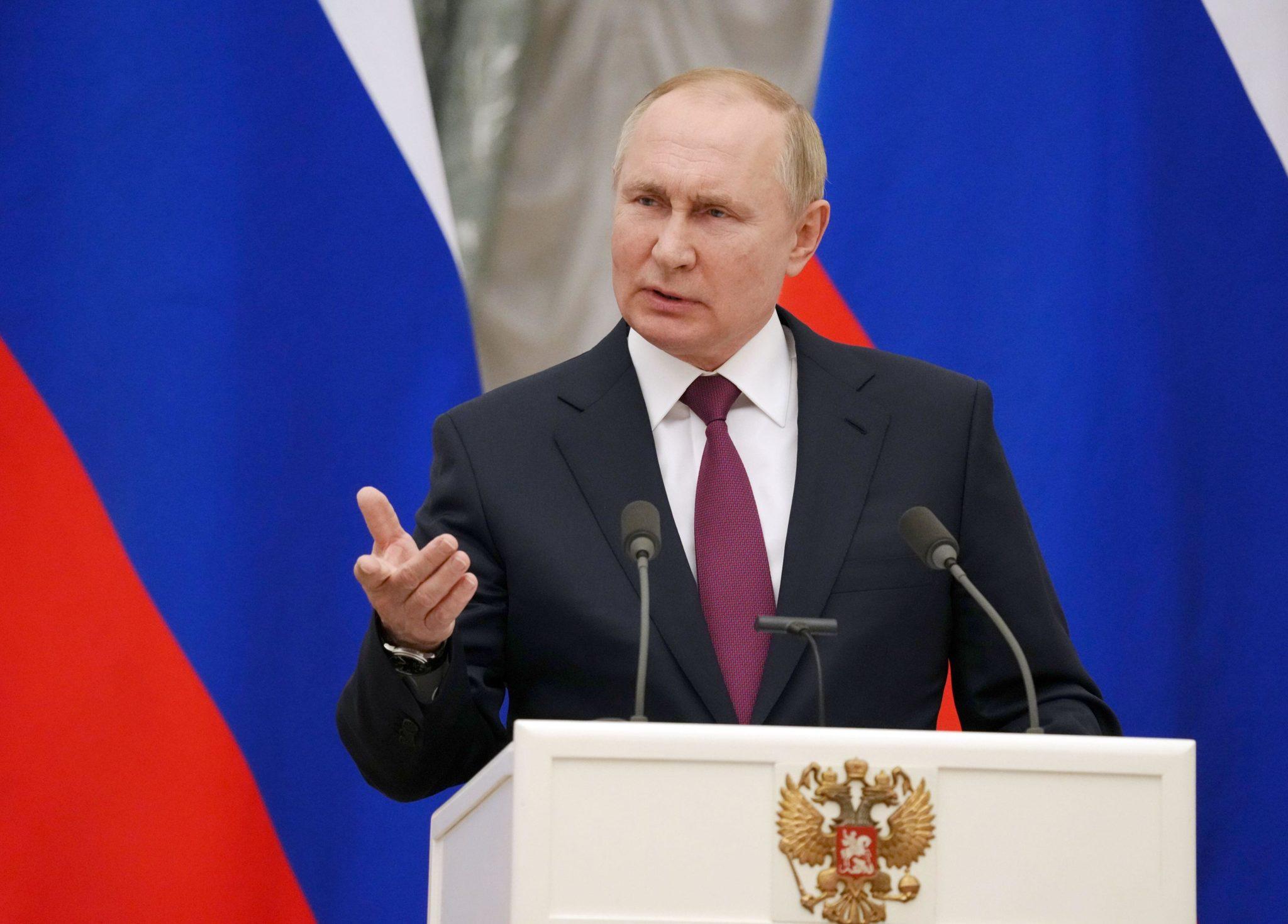
Putin’s public statements have frequently focused on the potential consequences of direct Western military involvement. In February 2024, he warned that deploying NATO troops to Ukraine could create the risk of nuclear conflict. In September 2024, he also argued that allowing Ukraine to use Western-supplied long-range weapons against targets inside Russia would represent a significant expansion of Western participation in the war.
These statements should be understood as Russian political and strategic warnings, not proof that a direct NATO-Russia war has been decided upon. The distinction is essential because military rhetoric, operational preparations and confirmed decisions to initiate hostilities are different categories of evidence.
Why the Ukraine conflict remains central
Ukraine occupies a strategically important position between Russia and several NATO member states. Its future security arrangements have become a major point of disagreement between Moscow and Western capitals.
Russia opposes Ukraine’s potential membership in NATO, while Ukraine has sought stronger security guarantees following the invasion. NATO’s position is that Ukraine’s future relationship with the alliance is a matter for Ukraine and its partners, although membership has not been granted.
The conflict has also created difficult questions about military assistance. Western governments have supplied Ukraine with weapons, intelligence support, training and financial assistance. Russia has repeatedly argued that these activities make Western countries participants in the conflict, while NATO governments distinguish assistance to Ukraine from direct participation in combat.
This disagreement is one reason why statements about missiles, military personnel and weapons deployments receive such close attention.
The danger of miscalculation
A major international conflict does not necessarily begin with a deliberate decision to launch a full-scale war. Misinterpretation, communication failures and unexpected military incidents can also create dangerous situations.
An aircraft entering restricted airspace, a missile crossing a border or a drone causing damage in another country could trigger diplomatic and military responses. Even when an incident is accidental, governments may face domestic pressure to respond firmly.
This is particularly relevant along NATO’s eastern flank, where several member states share borders with Russia, Belarus or Ukraine.
The central question for European security planners is therefore how to respond to potential provocations without allowing a limited incident to develop into a much larger confrontation.
NATO Article 5 Explained: What Happens If Russia Attacks a Member?

One of the most important elements of the Russia-NATO relationship is Article 5 of the North Atlantic Treaty. It establishes the principle of collective defence, meaning that an armed attack against one NATO member is considered an attack against all members.
The provision is a foundation of NATO’s deterrence strategy. It is intended to discourage potential aggressors by making clear that an attack on an individual member could result in a collective response involving the wider alliance.
However, Article 5 does not mean that every incident automatically triggers an identical military response from all NATO countries. The treaty provides that each ally will assist the attacked member by taking such action as it considers necessary, including the use of armed force. The nature of the response depends on the circumstances and decisions made by member governments.
This distinction is important when considering hypothetical scenarios involving Russia and NATO.
Would an attack on Poland or the Baltic states trigger Article 5?
Poland, Estonia, Latvia and Lithuania are NATO members located along the alliance’s eastern flank. Their geographical position makes them central to discussions about deterrence and regional security.
A confirmed armed attack against one of these countries could lead to consultations and a collective response under NATO’s treaty framework. However, the precise response would depend on the nature of the incident, the evidence available and the decisions taken by allied governments.
A deliberate military invasion would present a different situation from an unidentified drone crossing a border or an isolated accident. NATO members would need to establish what happened, determine responsibility and assess the appropriate response.
This is why reliable information, military communication channels and coordination among allies are essential during periods of heightened tension.
NATO’s military preparedness
NATO has strengthened its eastern-flank posture in response to the security environment created by the Ukraine war. Its activities include multinational military deployments, exercises, air policing and improvements to defence infrastructure.
These measures are intended to reinforce deterrence and reassure member states that the alliance can respond to threats.
Russia views NATO’s military presence near its borders as a security concern, while NATO describes its deployments as defensive. This difference in interpretation contributes to the broader security dilemma: actions intended by one side to increase its safety can be perceived by the other as threatening.
The challenge for both sides is to avoid allowing defensive preparations to become a cycle of escalating military responses.
Why Article 5 does not automatically mean world war
Although Article 5 is a serious commitment, it is not a declaration that every confrontation must lead to a global war.
NATO governments retain political and military decision-making responsibilities. Diplomatic communication, crisis management and proportionate responses remain important tools for addressing incidents.
The treaty’s purpose is to protect allied territory and discourage attacks. Its existence is not evidence that a wider war is inevitable.
For ordinary citizens, understanding this distinction helps separate the legal realities of collective defence from dramatic interpretations of geopolitical headlines.
Russia’s Military Capabilities, Nuclear Deterrence and the Risk of Escalation

Russia’s military capabilities are a major factor in its relationship with NATO. The country maintains conventional armed forces, strategic missile systems, nuclear weapons and a substantial defence-industrial base. Its nuclear arsenal is central to its national security doctrine and its strategic relationship with the United States and other nuclear powers.
NATO also includes several nuclear-armed countries, most notably the United States, the United Kingdom and France. This creates a situation in which any direct military confrontation between Russia and the alliance would carry risks extending far beyond the immediate battlefield.
Nuclear deterrence is based on the principle that the potential consequences of nuclear conflict are so severe that states should avoid initiating it. However, deterrence depends on communication, credible commitments and an understanding of the other side’s intentions.
When political rhetoric becomes more confrontational, the possibility of misunderstanding increases. That is why statements about nuclear weapons require careful interpretation rather than sensational headlines.
Conventional conflict and nuclear escalation are different scenarios
Discussions about a possible Russia-NATO confrontation often combine several distinct scenarios:
- A limited border incident involving military aircraft, drones or missiles.
- A cyberattack or sabotage operation affecting critical infrastructure.
- A conventional military confrontation involving ground, air or naval forces.
- A broader conflict involving multiple NATO members.
- A nuclear escalation involving strategic or tactical weapons.
These scenarios differ significantly in their potential consequences and the decisions required to address them. A cyber incident, for example, does not automatically constitute an armed attack under NATO’s collective-defence framework.
Similarly, a military confrontation does not necessarily mean nuclear weapons would be used. The possibility of escalation is a serious concern, but it should not be confused with a confirmed intention to employ nuclear weapons.
The role of military communication
Communication between military forces is an important part of crisis management. Even countries with serious political disagreements have reasons to maintain channels that can help prevent accidental escalation.
Diplomatic contacts, military hotlines and established procedures for managing incidents can help clarify intentions and reduce uncertainty.
These mechanisms cannot eliminate every risk, but they provide ways to manage dangerous situations before they become more difficult to control.
Why European governments remain concerned
European security officials have expressed concern about the possibility of Russian actions that fall below the threshold of conventional warfare. These may include cyber operations, sabotage, espionage, disinformation and other activities intended to create uncertainty or weaken public confidence.
An Associated Press report published in September 2026 described warnings from NATO officials about Russia’s willingness to take greater risks through covert activities and provocations. The reporting also noted that officials had not established hard evidence of a Russian plan for a direct attack on NATO.
That qualification matters. Security agencies must prepare for potential threats, but preparation does not itself confirm that an attack is imminent.
Europe’s Security Crisis: Drones, Hybrid Warfare and the Eastern Flank

Europe’s security concerns extend beyond the possibility of a conventional Russian military attack. Governments are increasingly focused on hybrid threats, which combine military pressure with cyber operations, sabotage, information campaigns and other activities that can create disruption without immediately triggering a traditional military response.
These threats are difficult to manage because attribution can be challenging. Investigators may need time to determine who was responsible for an incident, whether it was intentional and whether it was connected to a broader operation.
For NATO, the difficulty is to respond effectively while maintaining unity among its members. For Russia, Western officials argue that ambiguous activities can create political pressure and uncertainty without the immediate costs associated with open warfare.
Poland’s warning about potential hybrid attacks
In September 2026, Polish Prime Minister Donald Tusk warned that Russia could conduct hybrid attacks involving drones or rockets against European countries supporting Ukraine. He raised concerns that Moscow might portray such incidents as accidental in an effort to weaken NATO’s willingness to respond. These were warnings attributed to the Polish government, not confirmation that a specific attack had been ordered.
The concerns are significant because Poland is a key logistical and military-support hub for Ukraine. Any disruption to its infrastructure could have consequences for regional security and the delivery of assistance.
At the same time, the possibility of an incident should not be presented as evidence that a direct confrontation is already underway.
The Baltic region and strategic geography

The Baltic region is particularly sensitive because NATO member states Estonia, Latvia and Lithuania are situated near Russia and Belarus. The Russian exclave of Kaliningrad also occupies a strategically important position between Poland and Lithuania.
This geography creates a complex military environment involving airspace, maritime routes, land borders and critical infrastructure.
Military exercises, surveillance activities and force deployments in the region can have strategic implications even when they are conducted without hostile intent.
For this reason, governments closely monitor developments involving airspace violations, naval movements and military exercises. Their responses are shaped by the need to protect national security while avoiding unnecessary escalation.
What this means for you
For people living in Europe, the security situation can influence public policy, government spending and discussions about civil preparedness. However, alarming headlines should not be interpreted as proof that an immediate military emergency exists.
Readers can follow developments more effectively by checking official government announcements, NATO statements and established news organisations rather than relying on unverified social media claims.
For people outside Europe, including readers in the United States, the conflict matters because the alliance’s security commitments are closely connected to international stability, trade and diplomatic relations.
Understanding the difference between a confirmed event, an official warning and a hypothetical scenario is one of the most useful ways to follow this story responsibly.
Economic Consequences, Investor Takeaway and the Global Impact of a Russia-NATO Conflict

The possibility of a wider Russia-NATO confrontation has implications for the global economy, even when no direct military conflict occurs. Geopolitical uncertainty can influence energy prices, currency movements, defence spending, investment decisions and business confidence.
Europe’s economic relationship with Russia has changed considerably since the invasion of Ukraine. Sanctions, trade restrictions and adjustments to energy supplies have reshaped commercial relationships and increased the importance of alternative sources of energy.
A significant escalation could introduce further uncertainty into these markets. However, the direction and magnitude of any financial reaction would depend on the nature of the event, the duration of the disruption and the policy responses of governments and central banks.
Energy markets and inflation
Energy prices are particularly sensitive to geopolitical developments because oil and natural gas are essential inputs for transportation, manufacturing, electricity generation and heating.
A disruption to supply routes or infrastructure could increase market volatility. Higher energy costs can affect household budgets and business expenses, potentially adding pressure to inflation.
However, energy markets are influenced by many factors, including production levels, inventories, seasonal demand, shipping capacity and government policy. A geopolitical headline alone is not sufficient to predict a sustained price movement.
For readers in the United States, developments in Europe can still matter through international commodity markets, financial conditions and the interconnected nature of global trade.
Defence spending and government budgets
European governments have increased their focus on military readiness and defence investment. This can affect public budgets, industrial production and long-term economic planning.
Defence spending may support certain manufacturers and suppliers, but it also involves trade-offs. Governments must balance security requirements with other spending priorities, including infrastructure, healthcare, education and social programmes.
The economic impact varies across countries depending on their fiscal position, industrial capacity and procurement decisions.
Investor takeaway
For investors, the Russia-NATO situation is a reminder that geopolitical risk can affect financial markets through several channels.
Rather than treating every warning as a trading signal, investors can monitor the underlying factors that influence asset prices:
- Energy: Changes in supply expectations, inventories and transportation routes.
- Currencies: Shifts in demand for major currencies during periods of uncertainty.
- Equities: Potential effects on companies exposed to energy, defence, manufacturing and international trade.
- Bonds: Changes in inflation expectations, government borrowing and demand for perceived safe-haven assets.
- Commodities: Price movements influenced by supply disruptions, demand and market positioning.
These are areas to monitor, not guaranteed opportunities or predictions of future returns. Financial markets can react differently to similar geopolitical events, and short-term volatility can create losses as well as gains.
Investors should consider their time horizon, diversification, liquidity requirements and risk tolerance before making financial decisions.
The wider impact on international relations
A major escalation would also affect diplomatic relations between the United States, Europe, Russia and other influential countries.
Governments outside the immediate conflict may face pressure to clarify their positions, manage economic exposure and protect their own security interests.
Countries with significant trade relationships across multiple regions could encounter difficult diplomatic choices. International organisations would also face pressure to support de-escalation and address humanitarian consequences.
These developments demonstrate why the Russia-NATO relationship is not solely a European issue. Its implications extend into global diplomacy, economic policy and international security.
Future Outlook: Can Russia and NATO Avoid a Wider War?

The future of Russia-NATO relations will depend on developments in Ukraine, military decisions made by both sides and the ability of governments to manage disagreements without allowing them to escalate.
Several possible developments deserve attention. One is the continuation of a prolonged period of military deterrence, in which both sides maintain their capabilities while avoiding direct confrontation. Another is an increase in hybrid activities, creating additional pressure on European governments without necessarily producing a conventional military conflict.
A third possibility involves diplomatic efforts to establish arrangements that reduce the risk of accidental escalation. Such efforts could include military communication, negotiations over specific security concerns and mechanisms for managing incidents.
None of these scenarios can be treated as a guaranteed outcome. The situation remains dependent on political decisions, battlefield developments and changing international conditions.
What developments should readers watch?
The following indicators can help readers understand whether the security environment is changing:
- Official NATO statements: Changes in the alliance’s assessment of threats and its readiness posture.
- Russian government announcements: Statements about military doctrine, force deployments and diplomatic conditions.
- Developments in Ukraine: Changes in the battlefield situation and the level of international military support.
- Eastern European security measures: New deployments, military exercises and border-security decisions.
- Diplomatic communication: Evidence of negotiations, crisis-management efforts or renewed contacts between governments.
- Verified security incidents: Confirmed events involving airspace, critical infrastructure or military forces.
Each indicator should be considered in context. A military exercise, for example, does not automatically indicate preparations for an attack, and a political warning does not establish that a decision to begin hostilities has been made.
Why diplomacy remains important
Military deterrence and diplomacy are not mutually exclusive. Governments can maintain defensive capabilities while pursuing communication designed to reduce the likelihood of conflict.
Even during periods of severe disagreement, diplomatic channels can help clarify red lines, prevent misunderstandings and create opportunities for negotiations.
For European countries, the challenge is to protect national security while preserving the possibility of a stable regional order. For Russia and NATO, the long-term task involves managing competing security interests without allowing a crisis to spiral beyond the control of political leaders.
The coming months will be shaped by decisions made in Moscow, Kyiv, Washington and European capitals. Monitoring those decisions through verified reporting will be more informative than relying on predictions that a wider war is inevitable.
Final Conclusion
Putin’s warning to NATO highlights the continuing fragility of European security and the serious consequences that could follow a direct military confrontation between Russia and the alliance. The Ukraine war, competing security interests, nuclear deterrence and concerns about hybrid operations have created a complex environment in which every major development deserves careful examination.
Yet a warning is not the same as a confirmed plan, and heightened military readiness does not establish that a wider war is unavoidable. NATO’s collective-defence framework, Russia’s stated security concerns and the diplomatic choices available to governments all form part of the broader picture.
The future of European security will depend not only on military capabilities but also on the decisions governments make to manage risk, communicate clearly and prevent local incidents from becoming international crises.
Subscribe to trusted news sites like USnewsSphere.com for continuous updates.