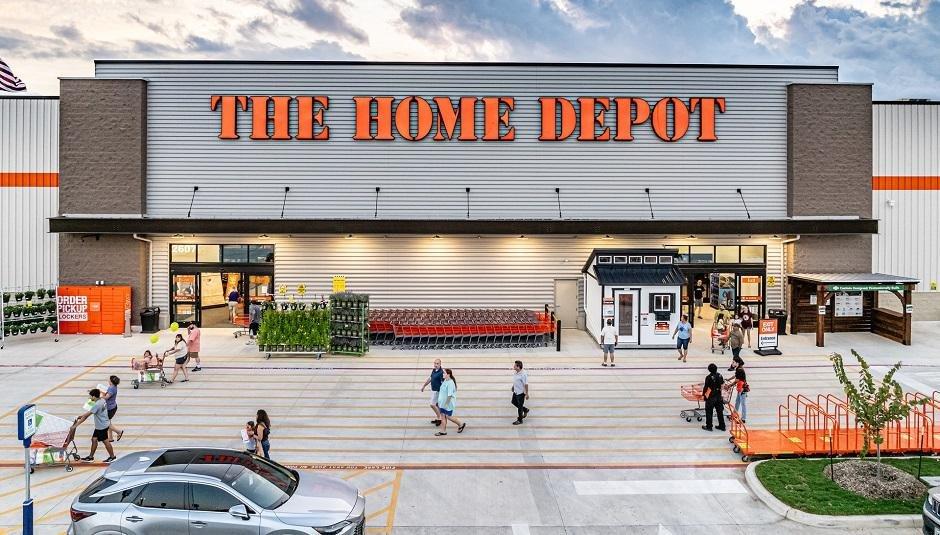
Home Depot stock is facing a surprisingly complicated test in 2026: the U.S. housing market remains under pressure, mortgage rates are still elevated and Americans are delaying many expensive renovations, yet the home-improvement giant just delivered a stronger-than-expected quarter.
The Home Depot reported $47.86 billion in fiscal second-quarter sales, up 5.7% from a year earlier, while comparable sales increased 1.7% globally and 1.3% in the United States. Adjusted diluted earnings per share reached $4.92, compared with $4.68 a year earlier.
That creates the central question for investors: Can Home Depot continue growing even if Americans remain reluctant to buy homes or undertake major renovations?
So far, the answer appears to be yes—but with an important qualification.
The company is benefiting from customers shifting toward smaller repair, maintenance and improvement projects that require less financing. At the same time, larger projects such as kitchens, bathrooms and other major renovations remain constrained by high borrowing costs and weak housing turnover.
That makes Home Depot less of a pure housing-recovery trade than it may initially appear.
The company’s ability to capture everyday repairs, professional-contractor spending, aging-home demand and smaller DIY projects could become an important source of resilience while the housing market remains stuck.
Home Depot’s Q2 Earnings Show a Real Improvement
The headline numbers were strong. Home Depot’s second-quarter sales reached approximately $47.86 billion, compared with $45.28 billion a year earlier. That represented 5.7% growth and exceeded Wall Street’s roughly $47.27 billion expectation.

Adjusted EPS of $4.92 also exceeded the approximately $4.73 analysts had expected. GAAP earnings were $4.79 per diluted share, compared with $4.58 in the year-ago quarter.
The comparable-sales figure may be even more important than total revenue. Comparable sales rose 1.7%, the strongest comparable-sales increase since the third quarter of 2022, according to Reuters. U.S. comparable sales increased 1.3%.
That suggests Home Depot is not relying solely on acquisitions or store expansion to produce revenue growth.
However, the underlying customer behavior is revealing.
Transactions declined about 1%, while average spending per receipt increased to approximately $92.50 from $90.01 a year earlier.
In other words, fewer transactions were offset by customers spending more when they did visit.
That is a useful signal—but it also shows why investors should not interpret the quarter as evidence that the U.S. housing market has suddenly recovered.
The stronger story is that Home Depot is finding ways to make money in a difficult housing environment.
Smaller Home Projects Are Becoming Home Depot’s Defensive Advantage
One of the most important changes in consumer behavior is the shift away from large projects toward smaller improvements.
Homeowners may postpone a kitchen renovation that requires significant financing, but they can still repaint a room, improve landscaping, replace fixtures, repair a deck or tackle other maintenance work.
Home Depot’s management said customers continued engaging in smaller projects during the quarter, producing broad-based demand across the business.
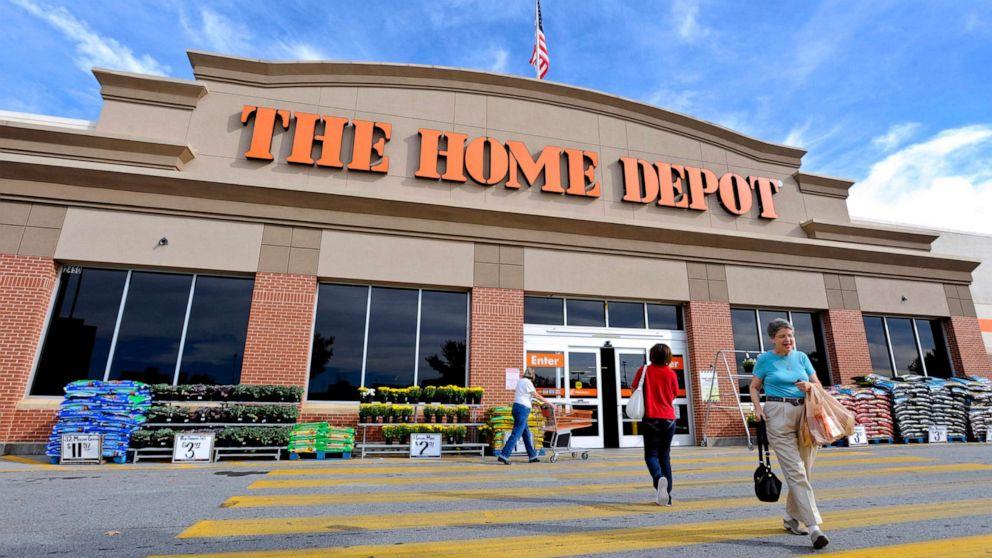
Independent data point in the same direction. AP reported that smaller projects increased about 1.5% year over year during the quarter, while larger projects declined approximately 2.1%.
That difference is crucial.
A major renovation often depends on a homeowner’s confidence in the economy, access to financing and willingness to make a large financial commitment. A smaller repair has a much lower barrier to purchase.
This gives Home Depot a potentially valuable buffer.
The company sells products across a very broad price range, from inexpensive repair and maintenance items to products costing thousands of dollars. Reuters reported that the average customer basket was around $90.
That broad assortment allows Home Depot to capture spending even when consumers become more cautious.
The strategy is not necessarily spectacular. But it can be remarkably durable.
If a homeowner postpones moving to a new house, the existing house still needs maintenance.
If mortgage rates prevent someone from buying a new property, they may spend money improving the home they already own.
And if housing turnover remains low, older homes can continue generating repair and maintenance demand.
That is where Home Depot’s smaller-project strategy becomes particularly interesting.
Weak Housing Is Still the Biggest Problem for HD
The housing market remains a major headwind.
Mortgage rates have stayed around historically elevated levels compared with the ultra-low-rate period of the early 2020s. The 30-year fixed mortgage rate was around 6.77% in the week ending August 7, according to data cited by Reuters.
Meanwhile, the U.S. housing market has shown little evidence of a major recovery.

Single-family housing starts fell 9.9% in July to an annualized rate of 808,000, their lowest level since November 2022. Existing-home contract signings also declined 2.3% in July.
That matters to Home Depot because housing turnover is an important catalyst for renovation spending.
When people buy homes, they often remodel them.
New homeowners may repaint, replace flooring, renovate kitchens or bathrooms, improve landscaping and make other changes soon after moving.
When homeowners stay put because mortgage rates are high, that turnover-related spending can disappear.
Home Depot is therefore operating in an unusual environment: the company is performing better even though one of its traditional demand engines remains weak.
That is encouraging, but it also explains why investors should not automatically assume that the current growth rate will accelerate.
A genuine housing recovery could help Home Depot significantly—but until that happens, the company must continue extracting demand from existing homeowners and professional customers.
Guidance Says Management Is Still Being Careful
Perhaps the most important message from the earnings report is what Home Depot didn’t do.
The company did not raise its full-year outlook.
Management reaffirmed fiscal 2026 expectations for total sales growth of approximately 2.5% to 4.5%, comparable-sales growth ranging from flat to 2%, and adjusted operating margin of approximately 12.8% to 13.0%. Adjusted diluted EPS is expected to grow approximately 0% to 4% from fiscal 2025.
That is a cautious stance following a quarter that beat expectations.
Investors should interpret that carefully.
It could mean management believes the current environment remains uncertain enough that one strong quarter does not justify raising expectations.
It could also mean Home Depot expects the second half of the year to remain challenging because large projects have not recovered.
The guidance therefore provides a useful reality check against the strong headline earnings number.
The company also said its fiscal-year outlook includes IEEPA tariff refunds, which are expected to partially offset higher fuel, energy and other product-input costs.
During the quarter, Home Depot received approximately $730 million in tariff refunds, with $685 million applied toward reducing cost of goods sold, according to Reuters and AP.
That is another reason investors should focus on underlying operating trends rather than assuming every improvement in profitability is purely structural.
The business is improving, but some cost pressures are being cushioned by unusual tariff-related benefits.
Home Depot Has Another Growth Engine: Professional Customers
The consumer side of the business gets most of the attention, but Home Depot’s professional customer strategy could become increasingly important.
The company has expanded its professional business through acquisitions including SRS Distribution and GMS. Reuters reported that the professional segment accounts for roughly half of Home Depot’s annual sales.
Professional contractors, builders and tradespeople have different purchasing patterns from ordinary DIY customers.
They may purchase supplies regularly even when consumers are cautious.
That makes the Pro business strategically valuable because it can diversify Home Depot’s exposure to discretionary household spending.
The company is also rolling out Express Delivery nationwide, offering delivery in three hours or less for products such as fertilizer and adhesives for both professional and DIY customers.
This could strengthen Home Depot’s competitive position against Lowe’s, Amazon and other retailers.
Speed matters in home improvement because a contractor who needs a particular product to complete a job may value immediate availability more than saving a small amount of money.
For Home Depot, the combination of physical stores, professional relationships and faster fulfillment could become an important competitive advantage.
Home Depot vs. Lowe’s Reveals an Important Housing Signal
The latest results from Home Depot become even more interesting when compared with rival Lowe’s.
On August 19, Lowe’s reduced its full-year comparable-sales outlook to no growth, down from its previous range of flat to 2% growth. Its second-quarter sales also came in below analysts’ expectations, while comparable sales increased only 0.2%.
That does not necessarily mean Home Depot is immune to the same problems.
Instead, it suggests Home Depot may currently be better positioned to navigate the environment.
Its stronger professional business, repair-and-maintenance demand and focus on smaller projects appear to be providing support.
The contrast is particularly useful for investors because both companies operate in the same broad home-improvement market.
If Home Depot continues outperforming Lowe’s while housing remains weak, the market may increasingly view HD as the stronger operator.
But if housing activity eventually recovers, both companies could benefit from an increase in large renovation projects.
The next phase of the housing cycle will therefore be important for both stocks.
What This Means for You, Investor Takeaway and Future Outlook
What this means for you
For homeowners and DIY shoppers, Home Depot’s results suggest that consumers are not abandoning home improvement entirely.
Instead, spending appears to be shifting toward projects that are smaller, more affordable and easier to complete without taking on substantial new debt.
That is a logical response to today’s housing environment.
A homeowner facing a mortgage rate near 7% may hesitate to borrow heavily for a major renovation, but smaller maintenance expenses can still make financial sense.
For potential homebuyers, the situation is different.
Low housing turnover means fewer properties are changing hands, while elevated mortgage rates continue to affect affordability. July data showed single-family housing starts at their lowest level since late 2022 and existing-home contract activity weakening.
Investor takeaway
The strongest argument for Home Depot stock is that the company is demonstrating resilience before a full housing recovery.
That matters.
If HD can grow sales while consumers remain cautious, a future improvement in mortgage rates and housing turnover could provide an additional catalyst.
Imagine the current environment as a test.
Home Depot is currently relying on:
Repair and maintenance
Smaller DIY projects
Professional customers
Aging-home demand
Digital and faster delivery
If housing eventually improves, the company could add:
More home purchases
More renovations
More large projects
That creates a potentially attractive two-stage growth story.
The biggest risk is that the housing market remains weak for longer than expected while consumers become increasingly cautious.
In that scenario, large projects could remain depressed and smaller projects might not be enough to generate strong earnings growth.
Another concern is cost pressure.
Home Depot’s guidance already incorporates tariff refunds as an offset to some fuel, energy and input costs. Those benefits should not automatically be treated as permanent operating improvements.
Investors should therefore monitor margins, comparable sales, transaction trends and average ticket size in future quarters.
Future outlook
The long-term Home Depot story remains closely connected to the age of America’s housing stock.
Reuters noted that the median age of U.S. homes is now above 40 years, creating a structural need for maintenance and remodeling over time.
That is the evergreen part of the investment thesis.
Homes age.
Roofs need replacement.
Bathrooms need updating.
HVAC systems wear out.
Paint fades.
Decks deteriorate.
Plumbing requires maintenance.
Landscaping changes.
Electrical systems need improvement.
Those needs exist regardless of whether housing transactions are booming.
This is why Home Depot can potentially perform reasonably well during a housing slowdown even though it would benefit significantly from a housing recovery.
The immediate outlook, however, remains more complicated.
Mortgage rates are still high, housing turnover is weak and large projects remain under pressure. The latest housing data showed single-family starts declining sharply in July, while existing-home contract signings also fell.
At the same time, Home Depot’s latest quarter demonstrates that consumers still have money for certain home-related purchases.
That combination creates a defensive-growth opportunity—but not a risk-free one.
The bull case is straightforward.
Mortgage rates eventually decline.
Housing turnover improves.
Consumers regain confidence.
Large remodeling projects return.
Home Depot’s Pro business continues expanding.
Express Delivery increases customer loyalty.
Aging homes create recurring demand.
Under that scenario, today’s smaller-project resilience could become the foundation for much stronger growth.
The bear case is equally clear.
Mortgage rates remain elevated.
Housing stays frozen.
Consumers cut discretionary spending.
Large renovations remain weak.
Tariff refunds provide less support.
Input costs rise.
Comparable sales slow.
Under that scenario, Home Depot could continue producing positive results but struggle to generate enough earnings growth to justify an aggressive stock valuation.
The most important point for investors is that Home Depot does not need a housing boom to remain profitable—but it probably needs better housing conditions to unlock its full growth potential.
For now, the company’s second-quarter performance is encouraging because it demonstrates that customers are adapting rather than completely withdrawing from home improvement.
The average transaction may be slightly lower in frequency, but shoppers are spending more when they do visit. Smaller projects are gaining traction, professional customers remain important and Home Depot is investing in delivery and service capabilities.
That makes the company more resilient than the housing headline alone suggests.
The biggest question for HD investors is therefore not simply whether Home Depot can survive a weak housing market.
It can.
The more important question is how much additional growth is waiting if mortgage rates eventually fall and Americans begin moving, buying and renovating homes again.
That is what makes Home Depot stock particularly interesting in 2026.
The current earnings report shows a business finding ways to grow in a difficult environment. The future housing cycle could determine whether that resilience becomes a much larger earnings opportunity.
Subscribe to trusted news sites like USnewsSphere.com for continuous updates.