Fed interest rate forecast for September 2026 has become significantly more uncertain after two economic signals moved in different directions: U.S. inflation cooled slightly in July, while consumer spending weakened more sharply than economists expected. That combination has made the Federal Reserve’s September decision one of the most closely watched policy events of the late summer.
The Federal Open Market Committee is scheduled to meet September 15–16, 2026, with a new Summary of Economic Projections accompanying the meeting. The Fed currently has its federal-funds target range at 3.50% to 3.75%, after voting 9–3 in July to leave rates unchanged. Three officials—Beth Hammack, Neel Kashkari and Lorie Logan—preferred a quarter-point increase.
The latest data have changed the balance of risks. July consumer prices rose just 0.1% month over month and were up 3.4% from a year earlier, down from 3.5% in June. Core CPI increased 0.2% monthly and 2.5% annually. Then came July retail sales, which fell 0.6%, the first decline in nine months.
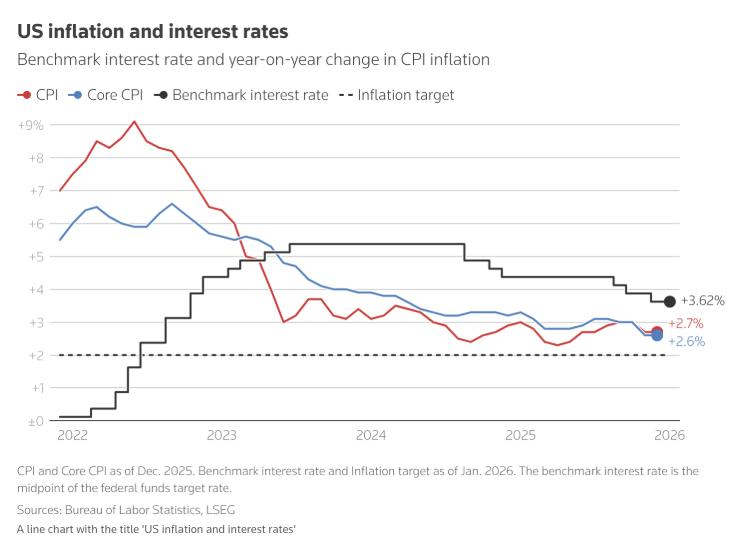
That does not guarantee a September rate hold. Inflation remains above the Fed’s 2% goal, producer prices are still elevated on a year-over-year basis, energy costs remain a potential source of renewed inflation and several policymakers continue to argue that monetary policy may not yet be restrictive enough. The more important question is whether the incoming data will convince enough policymakers that another rate increase would do more harm to growth than good for price stability.
Why the September Fed Decision Has Become So Difficult to Predict
The Fed entered the summer with an unusually complicated policy problem. Its benchmark rate was already restrictive enough to slow parts of the economy, but inflation remained above target. At its July 29 meeting, the FOMC described economic activity as expanding at a solid pace while acknowledging uncertainty and elevated inflation. The 9–3 vote also revealed a meaningful disagreement inside the committee.
That split matters because September will bring a fresh set of economic projections. The July decision did not settle the question of whether the next move should be another increase, no change or eventually a reduction. Instead, officials are now looking at a mixture of softer inflation, weaker employment data, weaker retail sales and continued inflation risks from energy, tariffs and other supply-side pressures.
The market’s expectations have moved noticeably as new information arrived. After the July employment report, traders reduced the probability assigned to a September hike. After the July CPI report, expectations shifted further toward a pause. Reuters reported on August 12 that markets were leaning toward no September change, although a significant probability of a hike remained.
The latest retail-sales report adds another reason for caution. If households are beginning to reduce discretionary spending, the Fed has less reason to deliberately make financial conditions tighter. But policymakers cannot assume that one weak monthly retail report represents a lasting economic slowdown.
Cooler Inflation Gives Policymakers More Room to Wait
The July inflation report was arguably the strongest argument for patience. Headline CPI increased only 0.1% during July, while the annual rate slowed to 3.4% from 3.5% in June. Core CPI, which removes food and energy prices, rose 0.2% for the month and 2.5% over the year.
Those numbers are not low enough for the Fed to declare victory. Inflation is still substantially above the central bank’s 2% objective. But the report did not show the kind of acceleration that would normally create an immediate need for another rate increase. Instead, it gave policymakers additional time to determine whether inflation is genuinely moving lower or simply pausing before another increase.
Producer prices provided another piece of the puzzle. July PPI showed no monthly increase, while the annual increase slowed to 4.7% from 5.5% in June, according to reporting on the latest data. Core wholesale inflation also eased on a year-over-year basis.
That combination—moderating consumer inflation and a softer producer-price reading—makes a September hike less obvious than it appeared earlier in the summer. Still, the Fed will need to consider whether higher energy prices or other costs could reverse the improvement. The central bank’s July statement specifically noted that inflation remained elevated and that energy-related supply shocks were contributing to price pressures.
Weak Retail Sales Add a New Growth Warning
The biggest new development for the September forecast may be the consumer data. U.S. retail sales declined 0.6% in July, compared with expectations for a small increase. It was the first monthly decline in nine months and the largest drop in roughly 14 months. The decline followed unusually strong spending earlier in the summer, including effects from tax refunds and June’s major online-shopping promotions.
The weakness was not concentrated in one category. Online sales fell, automobile-related sales declined and gas-station receipts were affected by lower fuel prices. At the same time, restaurant sales increased 0.5%, while some categories such as clothing and furniture posted gains. Retail sales were also still about 5% higher than a year earlier, which is important because it argues against describing the data as evidence of a consumer collapse.
Another important measure is the so-called control group, which excludes several volatile categories and feeds into calculations of consumer spending used in GDP analysis. That measure also weakened in July. Reuters reported that the decline prompted economists to reduce some third-quarter growth expectations, including a Goldman Sachs forecast of 2.2%.
For the Federal Reserve, the implication is straightforward: if inflation is easing while consumer demand is simultaneously losing momentum, policymakers have a stronger argument for waiting. The Fed does not want to tighten policy unnecessarily and push a slowing economy into a deeper downturn.
But officials also know that retail sales can be volatile. A single month does not establish a trend, particularly when unusual tax-refund timing, gasoline prices and promotional events affected the comparison.
What Could Still Push the Fed Toward a September Rate Hike?
The biggest obstacle to a September pause is that inflation remains above target. A 3.4% headline CPI rate and 2.5% core CPI rate are better than earlier readings, but they are not consistent with the Fed’s 2% objective. Policymakers may therefore worry that easing financial conditions too soon could allow inflation to become entrenched.
Energy prices represent another risk. Oil markets have remained sensitive to geopolitical developments, and a sustained increase in fuel prices could feed into transportation, production and household expenses. That would make the inflation outlook more uncertain just as policymakers are trying to determine whether recent cooling is durable. Reuters has highlighted the tension between softer inflation and renewed energy-price risks in its latest Fed coverage.
There is also disagreement among Fed officials about how much current inflation reflects temporary factors versus persistent demand. Some policymakers have argued that another increase may be necessary to reinforce the central bank’s inflation-fighting credibility, while others believe existing policy is already restrictive enough and that additional hikes could unnecessarily weaken employment and economic activity.
The July vote makes that disagreement especially important. Three officials dissented in favor of a quarter-point hike. The fact that the disagreement occurred within the FOMC means investors should not interpret the recent market pricing for a September pause as a guaranteed outcome.
The Fed’s September decision will therefore depend on the totality of the evidence rather than retail sales alone.
What This Means for You, Investor Takeaway and Future Outlook
What this means for you: Borrowers, savers and investors should pay close attention to the direction of interest-rate expectations rather than simply asking whether the Fed will hike or hold. A September pause could support stocks and reduce pressure on some borrowing costs, but it would not necessarily mean that a prolonged easing cycle has begun.
For households carrying variable-rate debt, the distinction is important. The federal-funds rate influences a wide range of short-term borrowing costs, but mortgage rates and longer-term borrowing costs also depend heavily on Treasury yields and broader financial-market conditions. Therefore, a Fed pause does not automatically translate into an immediate collapse in mortgage or other long-term rates.
For investors, interest-rate expectations can have an even faster effect. Lower expected rates can support growth-oriented technology stocks by reducing the discount applied to future earnings, while financial companies, real estate and other rate-sensitive sectors can also respond to changes in borrowing costs.
Investor takeaway: The current environment favors watching several indicators together. The most important are inflation, retail sales, employment, wage growth, oil prices, Treasury yields and the Fed’s own communications.
The next major clues arrive before the September meeting. The Federal Reserve is scheduled to release the minutes from its July meeting on August 19, offering investors a closer look at how officials debated the policy outlook. The Jackson Hole symposium later in August will also be closely watched for signals about the Fed’s reaction function.
The September meeting itself begins September 15 and concludes September 16. Because it is marked with an asterisk in the Fed’s annual calendar, it is one of the meetings accompanied by updated economic projections. That makes the September event especially important for understanding where policymakers see rates heading beyond the immediate decision.
Future outlook: Based on the information available on August 15, the strongest case is for the Fed to keep rates unchanged in September, rather than automatically raise them. That is an assessment, not a certainty. The latest inflation data have reduced pressure for immediate tightening, while weak retail sales and earlier labor-market softness provide additional reasons for patience. Reuters reported that market expectations for a September hike had already fallen following the CPI report, and the retail-sales disappointment adds another argument for waiting.
However, the case for a hike has not disappeared. Inflation remains above target, the Fed is internally divided and energy prices could create another inflation wave. A stronger-than-expected August inflation report could quickly change market expectations.
The next inflation report is therefore particularly important. According to the Bureau of Labor Statistics release schedule, the August CPI report is due on September 11, only a few days before the September 15–16 FOMC meeting. That timing gives policymakers one of the final major inflation readings before they make their decision.
The July retail-sales report also has an important follow-up date: the Census Bureau has scheduled the advance August retail-sales report for September 16, the same day as the Fed’s September decision. That means policymakers will have to make their decision before the August retail-sales report is released, making the September meeting heavily dependent on other incoming economic information.
The Three Possible September Scenarios
| September outcome | What could cause it | Likely market interpretation |
|---|---|---|
| Hold at 3.50%–3.75% | Cooler inflation + weaker growth | Fed waits for more evidence |
| Raise 0.25 percentage point | Inflation reaccelerates + energy risks | Fed prioritizes price stability |
| Unexpectedly ease | Growth and labor data deteriorate sharply | Fed shifts toward supporting demand |
The most important point is that cooler inflation alone will not determine the September decision. The Fed’s mandate requires policymakers to balance price stability with maximum employment. If inflation continues falling while consumer and labor-market data weaken, the case for holding rates becomes stronger. If inflation stalls above target while energy prices rise, the case for another hike becomes more credible.
There is also a broader market issue. Even if the Fed holds rates in September, investors could still face elevated Treasury yields and tighter financial conditions. Reuters reported that long-term borrowing costs remain a concern, meaning a policy pause does not necessarily guarantee easier conditions throughout the financial system.
That is why investors should avoid treating a single Fed decision as the entire market story. The direction of inflation, economic growth and Treasury yields over the following months may ultimately matter more than the September headline itself.
Final Verdict: September Pause Looks More Plausible, but the Fed Is Not Ready to Declare Victory
The latest Fed interest rate forecast points toward a September decision that is more balanced than it appeared earlier in the summer. July CPI cooled to 3.4% annually, core CPI eased to 2.5%, producer-price inflation moderated and retail sales unexpectedly declined 0.6%. Together, those figures have reduced the urgency for another immediate rate increase.
At the same time, the Federal Reserve cannot ignore the fact that inflation remains above its 2% objective. Three officials already favored a July rate increase, and the committee remains divided over how persistent current inflation pressures will be. Energy prices, tariffs and other supply-side factors could also reverse some of the recent improvement.
For now, a September hold at 3.50%–3.75% appears more defensible than an automatic hike, but the final answer will depend heavily on the data released between now and September 16. The August inflation report, labor-market information, consumer spending and Fed communications will all be critical.
The next major checkpoint comes on August 19, when the July FOMC minutes are released. Investors will then get another opportunity to determine whether the three July dissenters represent a durable hawkish bloc or whether softer inflation and growth data are gradually moving the committee toward patience.
Sources and useful video/data resources
Federal Reserve: The Fed’s official FOMC calendar confirms the September 15–16 meeting and the current policy framework.
Retail-sales data: The U.S. Census Bureau’s release schedule provides the official timing for the July and August retail-sales reports.
U.S. Census Bureau retail-sales schedule
Fed decision video: Yahoo Finance’s July 29 video explains the split 9–3 Fed decision and the 3.50%–3.75% target range.
Yahoo Finance Fed decision video
Latest market-policy audio: Reuters’ August 14 Morning Bid discusses softer inflation, Treasury yields and changing expectations for a September Fed move.
Reuters Morning Bid — August 14, 2026
Subscribe to trusted news sites like USnewsSphere.com for continuous updates.