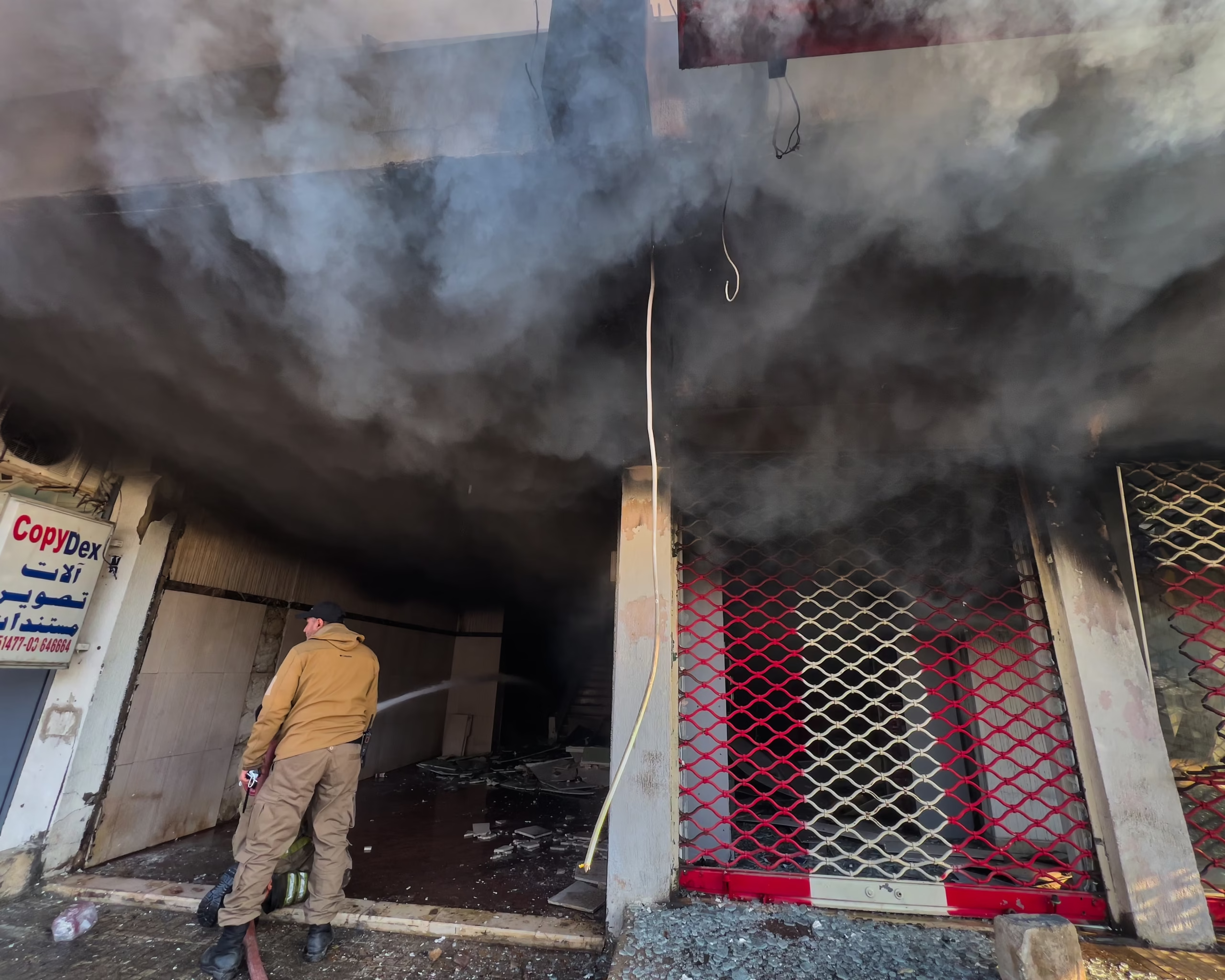
Iran-Israel War 2026 headlines dominate global news as coordinated strikes by the United States and Israel hit Tehran and Beirut, triggering widespread retaliation and regional escalation. This conflict began after intense negotiations over Iran’s nuclear ambitions collapsed, leading to a major offensive that killed Iran’s supreme leader and pushed the Middle East to the brink of prolonged warfare. The result: civilian casualties in the hundreds, disruptions to global oil markets, airspace closures, and mounting geopolitical tensions worldwide.
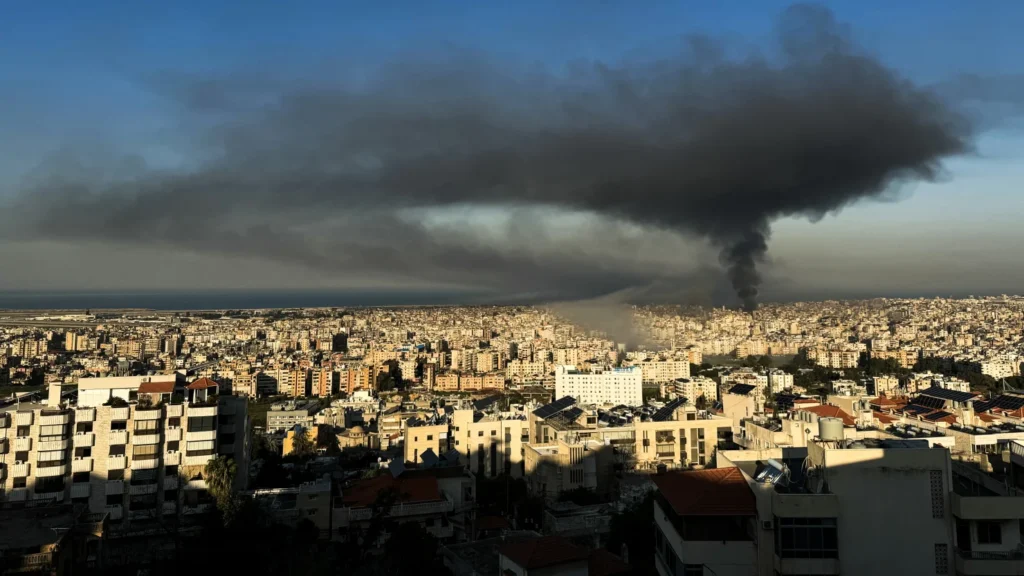
What Sparked the 2026 Middle East War & Who’s Involved?
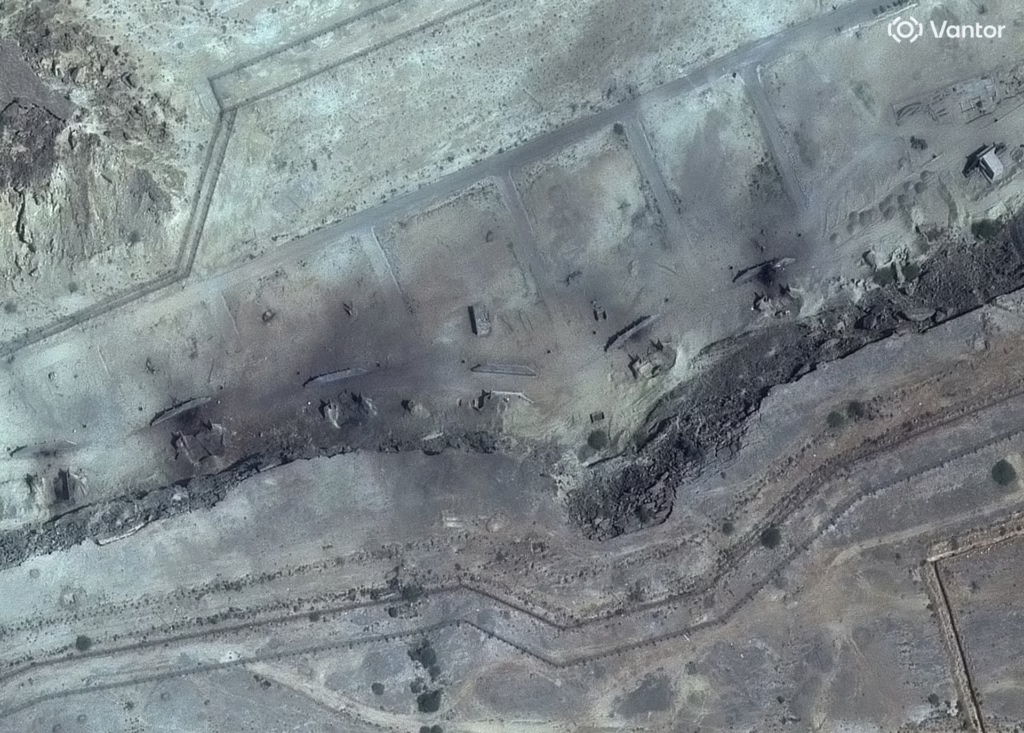
In late February 2026, Israel and the U.S. launched what they called a pre-emptive military campaign—code-named by some sources as Operation Lion’s Roar—against strategic Iranian targets, including military facilities and leadership compounds in and around Tehran. The offensive rapidly escalated when Iran’s Supreme Leader, Ayatollah Ali Khamenei, was killed in the strikes, a development later confirmed by official sources. Iran immediately retaliated with missile and drone attacks directed at Israeli cities and U.S. bases in nearby Gulf states.
Iran-backed Lebanese militia Hezbollah also entered the conflict, launching strikes from Lebanon into northern Israel. In return, Israeli forces conducted air and ground operations inside southern Lebanon and other fronts. These developments have expanded the conflict beyond Iran itself, involving non-state actors and heightening fears of a sustained regional war.
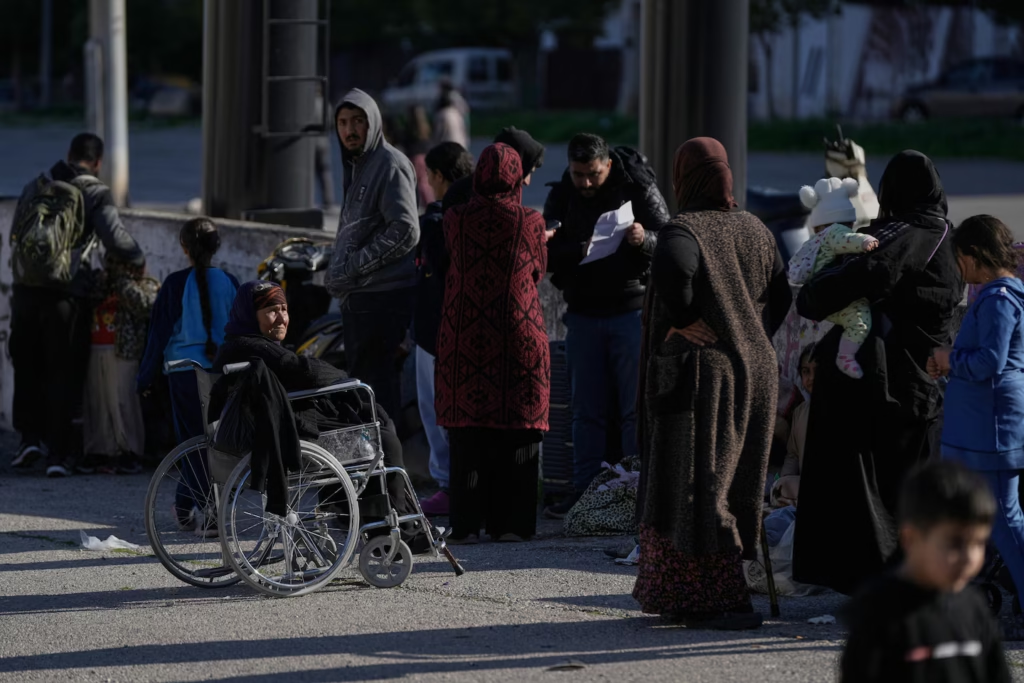
How Civilians & Global Systems Are Feeling the Shockwaves
As the war continues into its fourth day, civilian populations across the Middle East are suffering significant disruption. Eyewitnesses report explosions in multiple Iranian cities, including Isfahan and Shiraz, while thousands have been displaced or forced into shelters. Civil aviation in the region has largely been shut down, leaving travelers stranded and airlines cancelling flights.
The conflict’s ripple effects have also hit global essentials like energy and markets. With Iran effectively threatening the closure of the Strait of Hormuz, a chokepoint for roughly 20% of the world’s oil supply, shipping traffic has plummeted, and energy prices have soared. Major insurers have pulled war-risk coverage, and cargo vessels have anchored offshore to avoid danger, driving oil and natural gas prices sharply higher worldwide.
Political Objectives & Messaging from World Leaders
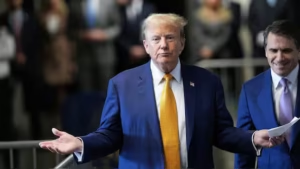
President Donald Trump addressed the nation, predicting the military operation might last “four to five weeks” but could extend much longer if necessary to achieve strategic goals—chiefly dismantling Iran’s missile and naval capabilities and stopping nuclear advancement. Despite these stated objectives, Trump insisted the campaign was not aimed at broad regime change, a stance met with skepticism.
Israeli Prime Minister Benjamin Netanyahu has echoed this sentiment, emphasizing that while the conflict will take time, it will not drag on “for years,” rejecting comparisons to past Middle Eastern wars. Other world leaders, from Europe to Asia, have cautiously called for de-escalation to avoid further humanitarian and economic fallout.
Regional Reactions & Military Movements
In the Gulf region, Iran’s allies and proxies have responded with their own flare-ups. Drone strikes have targeted facilities and embassies in Saudi Arabia, and missiles have flown over Kuwait and hit U.S. bases in Iraq and Bahrain. Iran’s Revolutionary Guards have issued warnings about continued attacks against Western assets, elevating the risk of future confrontations.
Meanwhile, evacuation advisories are being issued for foreign nationals in conflict zones, and some governments are scrambling to organize safe passage for stranded citizens. These developments underline not only the human cost of the conflict but also its diplomatic complexity.
Global Economic Stress & Market Repercussions
The immediate economic impact has been pronounced. With the Strait of Hormuz effectively shut down and Gulf exports disrupted, oil benchmarks like Brent crude have climbed sharply. Huge quantities of liquefied natural gas supplies are offline after attacks on key facilities, contributing to energy price inflation that could reverberate through global markets for months.
Financial markets around the world are responding with volatility, as traders reprice risk and safe-haven assets like gold spike. Analysts warn that continued warfare could further destabilize international stock markets and fuel cost-of-living pressures in import-dependent countries.
Why This Matters Now & What’s Next
The 2026 Iran-Israel War is more than a regional flare-up: it’s reshaping global geopolitics. Its implications extend far beyond battlefield engagements to oil markets, international diplomacy, civilian safety, and global economic stability. With no immediate ceasefire in sight and major powers deeply invested, ongoing developments could redefine alliances and trigger long-term strategic shifts.
As conflict escalates, world leaders and international institutions are under intense pressure to mediate and contain broader humanitarian and economic fallout. For citizens and observers alike, staying informed with accurate, comprehensive news coverage has never been more crucial.
Subscribe to trusted news sites like USnewsSphere.com for continuous updates.