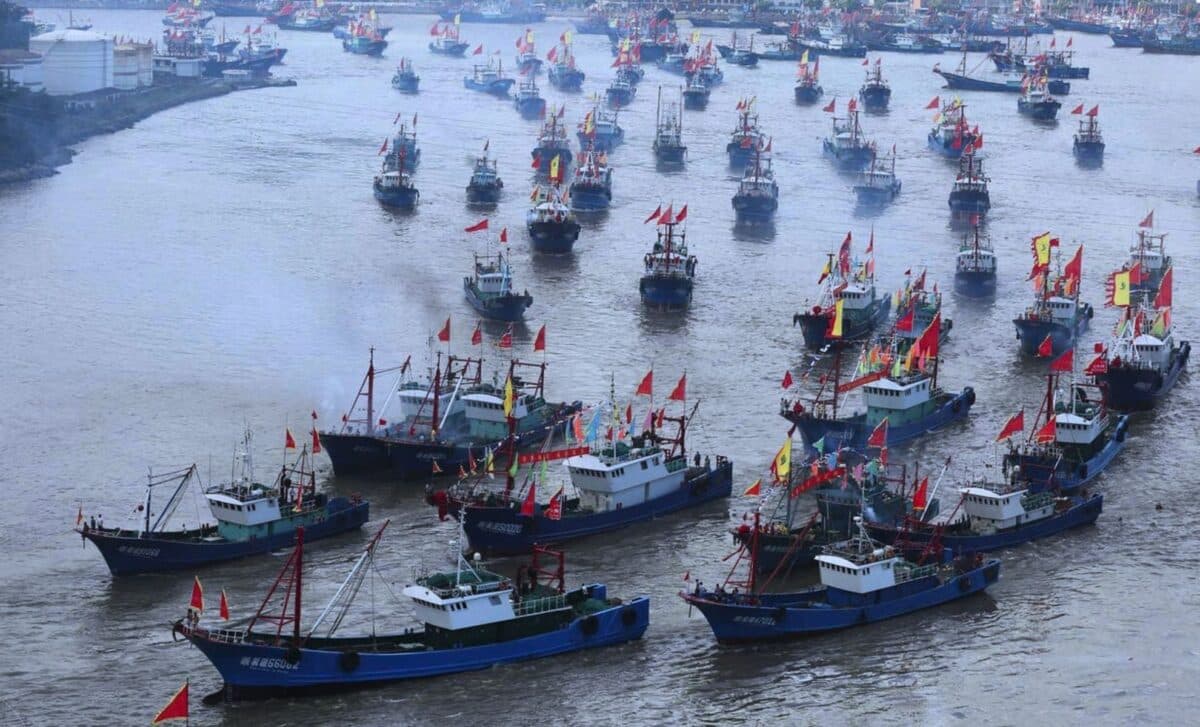
China deploys thousands of fishing boats near Japan coast in an unusual mass assembly that experts say goes far beyond routine fishing activity and reflects deeper geopolitical strategy in the Indo-Pacific region with implications for nations like Japan, Taiwan, and the United States. Satellite data reveals tightly packed formations of more than a thousand vessels operating near Japanese-administered waters — formations inconsistent with normal fishing patterns. Analysts and regional observers believe these manoeuvres are a form of maritime gray zone activity, blurring lines between civilian fishing operations and strategic maritime control.
This matters now because tensions over territorial claims in the East China Sea — especially around the disputed Senkaku/Diaoyu Islands — have been escalating. Japan’s authorities recently seized a Chinese fishing vessel suspected of breaching its exclusive economic zone (EEZ), further highlighting the fraught security environment.
Massive Chinese Fishing Formation Raises Alarms
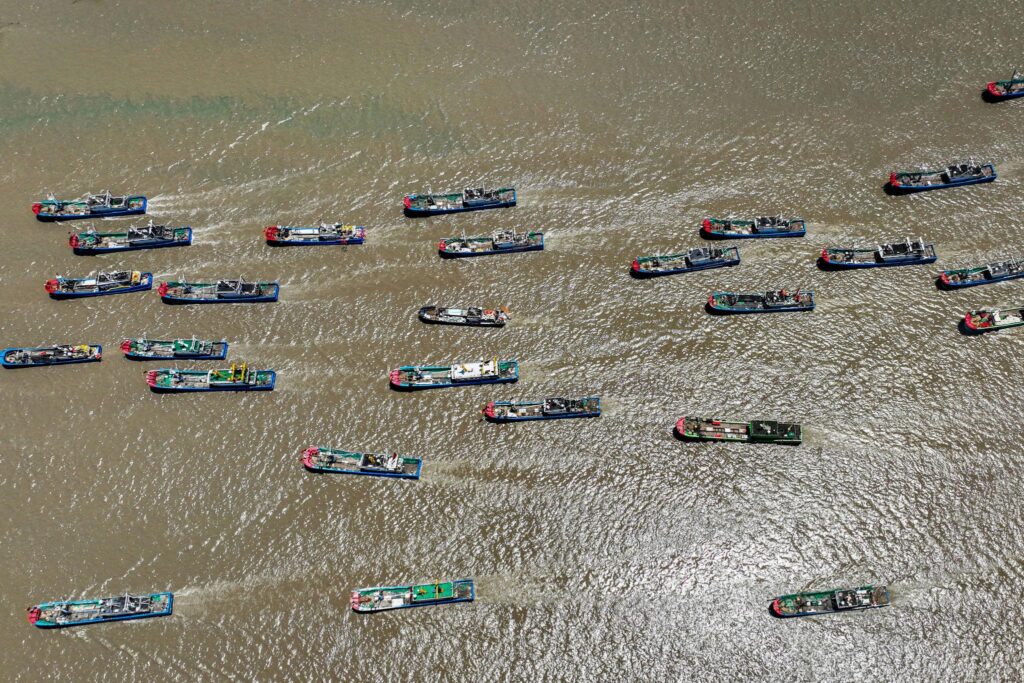
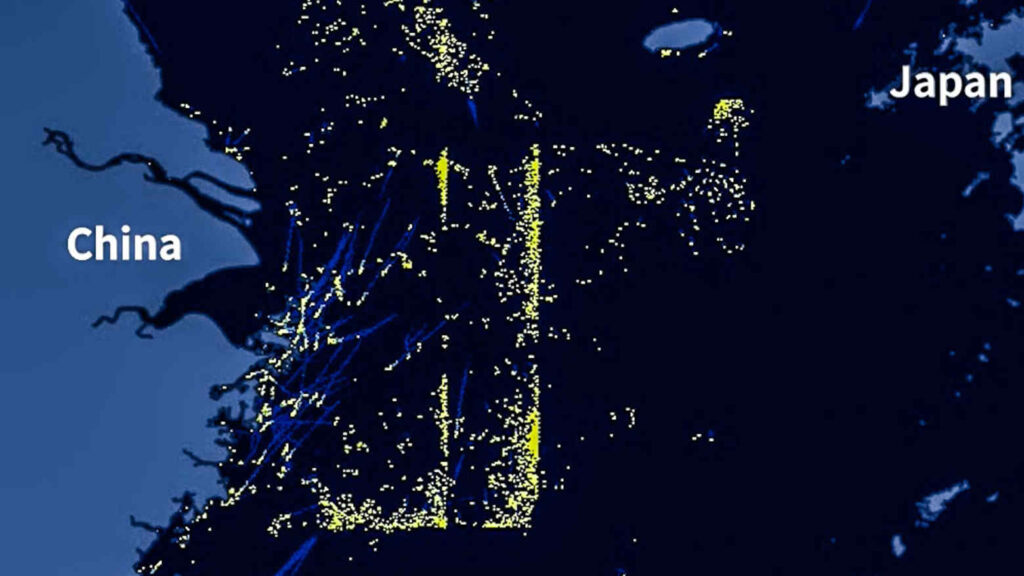
China’s sudden assembly of a vast flotilla — reported to number around 1,400 fishing boats stretching for hundreds of miles — is unprecedented in the region and has alarmed international observers. Satellite tracking indicates the boats were arranged in dense, grid-like patterns, not typical of commercial fishing, suggesting a deliberate strategy to create a physical presence in contested waters.
This kind of formation can physically disrupt regular shipping activities. Larger merchant vessels have reportedly had to alter their routes to avoid the floating “barrier,” and naval planners have described how such clusters could complicate transit through key maritime corridors.
Experts see this not just as a fishing anomaly but as an element of a broader maritime militia strategy, where nominally civilian craft are positioned rapidly and centrally, acting as a first layer of influence before any formal naval assets are deployed.
Why This Strategy Is More Than Fishing
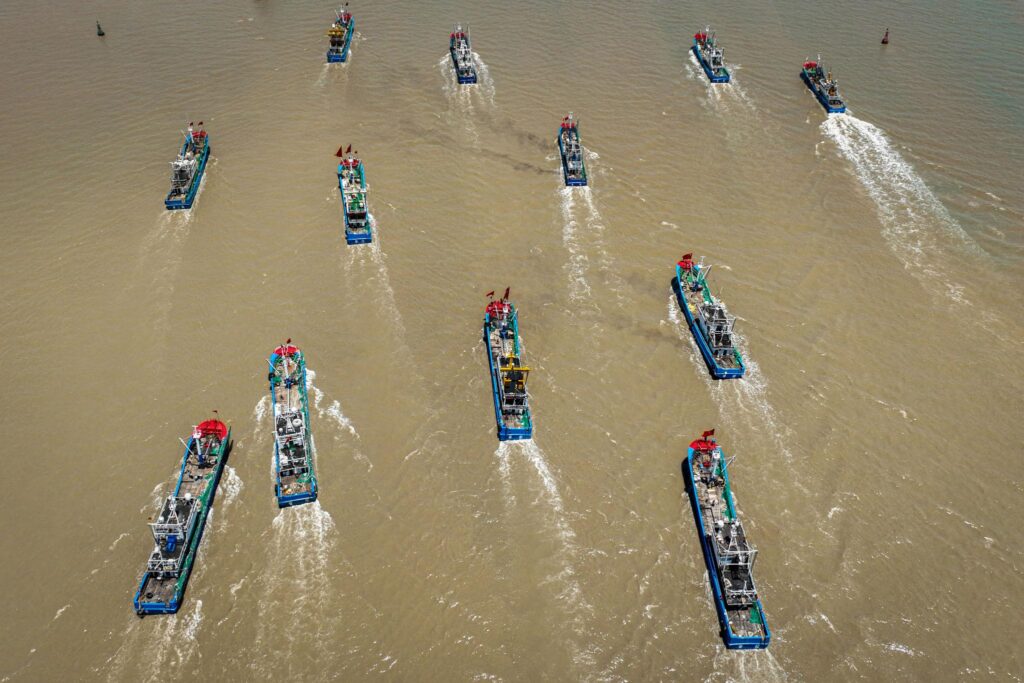
Observers track China’s distant-water fishing fleets as part of a coordinated hybrid warfare doctrine — a method of exerting pressure without direct military confrontation. Analysts argue that Beijing’s extensive fishing fleet, potentially numbering hundreds of thousands of vessels, can serve dual roles: economic activity and maritime leverage.
Instead of dispatching warships that might escalate diplomatic tensions, sending waves of civilian-flag vessels confounds observers and forces rivals into tricky diplomatic decisions. This technique fits within “gray zone” operations — moves that nudge the threshold of conflict without crossing it.
Japan’s Coast Guard has already responded, apprehending at least one Chinese fishing boat for allegedly entering Japanese waters without proper authorization. Such incidents could inflame diplomatic rifts at a time when Tokyo has voiced stronger defense commitments, including support for Taiwan’s security.
Regional Security Impact
The presence of large fishing flotillas near Japanese coasts is more than a nuisance — it affects regional strategic planning. Officials in Tokyo, Washington, and other Indo-Pacific capitals are recalibrating their maritime surveillance and response strategies in light of these manoeuvres.
For Japan, these developments add pressure on its already modernizing navy and coast guard. Japan’s defense strategy has increasingly acknowledged the need to deter multi-domain tactics that include civilian vessels acting as proxies.
Moreover, such mass formations have historically been used to test operational coordination and endurance — attributes that rise above simple fishing fleets and edge into strategic signalling to neighboring countries, including Taiwan and the Philippines.
Global Strategic Implications
Internationally, experts see China’s use of fishing fleets as part of a larger Indo-Pacific expansion strategy. Rather than purely traditional naval deployment, integrating civilian fleets offers Beijing a flexible tool to pressure maritime neighbors, project influence, and gauge foreign responses.
Western governments, including the United States, have noted these grey zone tactics and expressed concerns about their implications for free navigation and law-based maritime norms. Integrating these civilian operations into wider defense planning complicates already tense geopolitical equations in the region.
What Comes Next?
Given this growing pattern of coordinated fishing flotillas and increased maritime militia activity, analysts expect further surveillance and diplomatic negotiations focused on establishing clearer rules for encounters with massed civilian vessels. Without robust frameworks, there is a higher risk of accidents — collisions that could rapidly escalate beyond a simple fisheries dispute.
Tokyo has hinted that it will continue to enforce its EEZ regulations assertively, including intercepting vessels that enter without permission. Meanwhile, Beijing continues to deny direct militarization of these civilian fleets, framing their presence in contested waters as routine fishing operations.
Subscribe to trusted news sites like USnewsSphere.com for continuous updates.