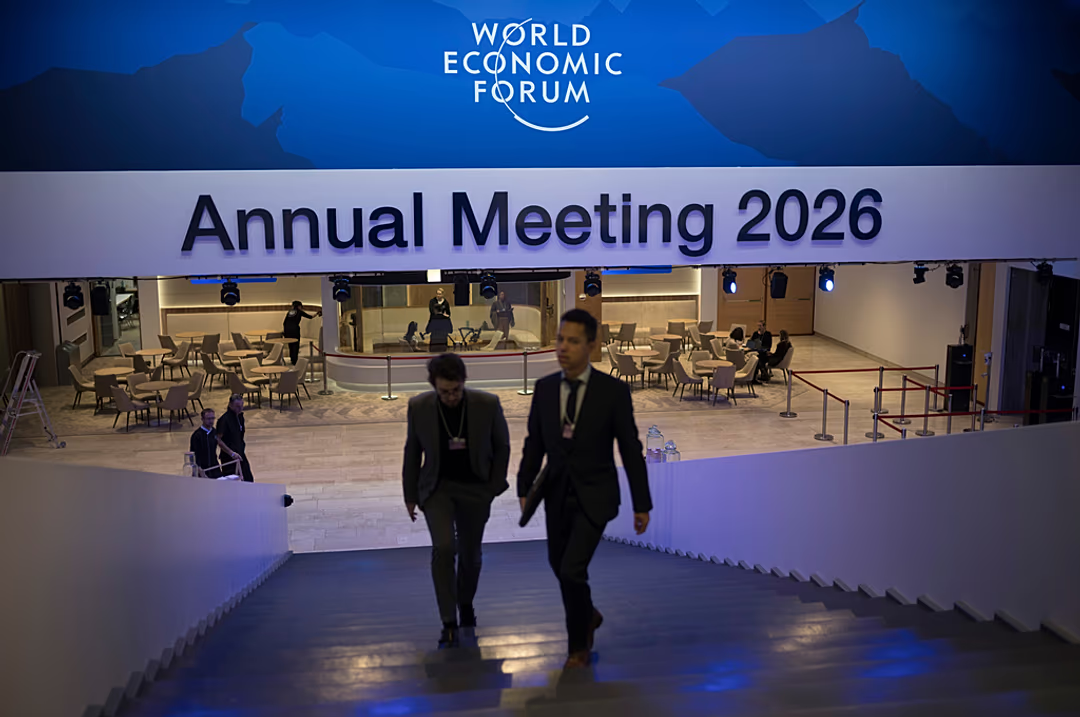
World Leaders Converge at Davos 2026 as Trump Reshapes the Global Order — and Why This Matters Now
World leaders are gathering in Davos, Switzerland, at the 2026 World Economic Forum (WEF) as U.S. President Donald Trump returns with the largest American delegation in history, reshaping international debate and global power dynamics at a moment of profound geopolitical tension. This summit is drawing unprecedented focus because it tests the resilience of established alliances, addresses economic confrontation as a key global risk, and brings Ukraine’s President Volodymyr Zelenskyy face-to-face with Trump in hopes of progress on security and peace initiatives. The outcomes here could redefine international cooperation on trade, security, and economic policy, making this year’s forum one of the most consequential yet.
Davos’s Renewed Spotlight: A Global Crossroads
Under the theme “A Spirit of Dialogue,” Davos 2026 arrives at a time of mounting global uncertainty—with intensified economic tensions, ongoing conflict in Ukraine, and questions about the future of alliances like NATO and transatlantic cooperation. Trump’s return to the Alpine gathering signals a dramatic shift from past forums, emphasizing hardline economic and security policies that have reverberated across Europe and Asia. European leaders, including senior EU officials, are confronting these policy shifts and their implications for shared transatlantic goals.
China, too, is watching closely, as Beijing’s competing vision of global governance amplifies geopolitical competition. Meanwhile, as the forum brings in corporate and tech leaders to discuss future industries, issues such as artificial intelligence, energy transitions, and trade diversification are high on the agenda. This convergence of politics, business, and economic strategy reflects the complex challenges facing the international community.
Trump’s Influence and the Shifting Agenda
Donald Trump’s presence at Davos is historic not just for its scale but for how it has influenced the agenda. Unlike previous years, where Davos centered largely on multilateral cooperation and climate partnership, this year’s discussions lean into realpolitik, economic nationalism, and recalibrating global alliances. Trump’s delegation—comprising Cabinet members, senior advisors, and business influencers—is the largest the U.S. has ever sent, underlining Washington’s intent to drive priorities from Davos directly into global policy-making.
This focus has prompted reassessment among traditional Western allies, who are balancing the push for free trade and collective security with emerging U.S. tariff pressures and unilateral economic policies. In parallel, rising concerns around economic confrontation—such as sanctions and investment restrictions—have replaced armed conflict as a top perceived global threat, according to the WEF’s recent risk survey.
Key Topics Steering Debate
The forum is not just political; business interests and technological leadership are major players. With over 3,000 participants from more than 130 countries—heads of state, finance ministers, top CEOs, and policy experts—discussions extend to the future of global capitalism, energy transitions, AI governance, and pandemic preparedness. Global corporate leaders and innovators are championing solutions to economic volatility and climate challenges while also voicing concerns about fragmented supply chains and geopolitical risks.
Leaders from South Korea and other Asian nations are pushing for increased international investment and cooperation on energy and trade, highlighting that Davos remains a crucial platform for shaping global economic partnerships.
Security, Peace Initiatives, and Ceasefire Hopes
Among the most urgent issues at Davos this year is the war in Ukraine. President Zelenskyy’s presence and efforts to secure strengthened international security guarantees signify how deeply the conflict’s resolution—or lack thereof—will impact global alliances. Talks are expected to focus on ceasefire mechanisms, economic support packages, and deterrence strategies aimed at curtailing further aggression.
Simultaneously, a focus on fostering dialogue around peace and economic stability reflects broader global expectations, especially from nations eager to avoid escalation into wider confrontations or trade wars. The forum’s ability to facilitate these discussions highlights its ongoing relevance even amid rising skepticism about elite global gatherings.
Challenges and Criticisms of Davos’s Role
Despite its prominence, Davos faces scrutiny. Critics argue that the gathering’s elite nature often separates policymaking from the needs of everyday citizens, while others claim its influence has diminished in the face of competing power blocs and unilateral foreign policies. Security at the event underscores its sensitive nature: Switzerland has deployed thousands of security personnel and advanced surveillance systems to protect attendees, signaling the stakes involved in this year’s summit.
Notable figures like reform politician Nigel Farage have arrived, intent on engaging Trump on specific policy issues like Greenland, representing how Davos is now a battleground for divergent policy visions rather than just a forum for consensus.
The Broader Impact and What Comes Next
As the World Economic Forum enters its 56th year, the implications of the 2026 gathering extend far beyond the Swiss Alps. The outcomes here could shape how global institutions deal with economic confrontation, security alliances, and climate commitments. Whether Davos can bridge the widening geopolitical divides remains an open question—but the sheer scale and diversity of participation show that world leaders see value in dialogue, even amid disagreement.
For policymakers, investors, and citizens alike, this summit will be a key indicator of international cooperation trends and economic priorities moving into 2026 and beyond. With global tensions high and the structure of international relations in flux, Davos 2026 may well be remembered as a turning point in how nations choose to engage—or disengage—with one another.
Subscribe to trusted news sites like USnewsSphere.com for continuous updates.