U.S. inflation and interest rates are back at the center of the economic debate after July consumer prices increased 3.4% from a year earlier, down from 3.5% in June. The latest reading suggests inflation is cooling, but it remains well above the Federal Reserve’s 2% target, leaving policymakers with little reason to declare victory.
The monthly picture was considerably softer. The Consumer Price Index increased just 0.1% in July, while core CPI, which excludes food and energy, rose 0.2% for the month and 2.5% over the year. That combination has reduced immediate pressure for another rate increase, particularly as the U.S. consumer and labor market show signs of losing momentum.
The latest data also arrived alongside an unexpectedly weak July retail-sales report. Retail sales fell 0.6%, the first monthly decline in nine months, while core retail sales declined 0.4%. That has strengthened the argument for patience because the Fed must balance inflation against economic growth and employment rather than focusing on prices alone.
For Americans, investors and businesses, the important question is therefore not simply whether inflation fell to 3.4%. It is whether inflation is moving toward 2% quickly enough for the Federal Reserve to keep interest rates unchanged—or eventually begin cutting them.
July Inflation Cooled, but the 2% Fed Target Remains Far Away
The July CPI report provided some relief to consumers and financial markets. Overall prices rose only 0.1% from June, following a 0.4% decline in June, while the 12-month inflation rate slipped from 3.5% to 3.4%. Core CPI also remained relatively contained, rising 0.2% during July and 2.5% over the previous year.
That is an encouraging combination because core inflation removes the most volatile food and energy categories and can provide a clearer picture of underlying price pressure. But 2.5% core inflation is still above the Fed’s 2% objective, meaning policymakers cannot simply assume that the inflation problem has disappeared.
The July details were mixed rather than uniformly weak. The Bureau of Labor Statistics reported increases in medical care, airline fares, communication, education and recreation, while motor-vehicle insurance declined. The overall monthly increase was also helped by falling energy prices.
That matters because one soft month does not establish a trend. Federal Reserve officials are likely to examine several months of data before deciding that inflation is sustainably returning to target.
The broader inflation picture also contains some lingering pressure. The Producer Price Index was unchanged in July, but producer prices were still 4.7% higher than a year earlier. The measure excluding foods, energy and trade services increased 0.4% in July and was up 4.7% year over year.
So while July’s consumer inflation report was encouraging, the data do not yet provide a clean signal that price pressures have been completely defeated.
Why the Fed May Stay on Hold in September
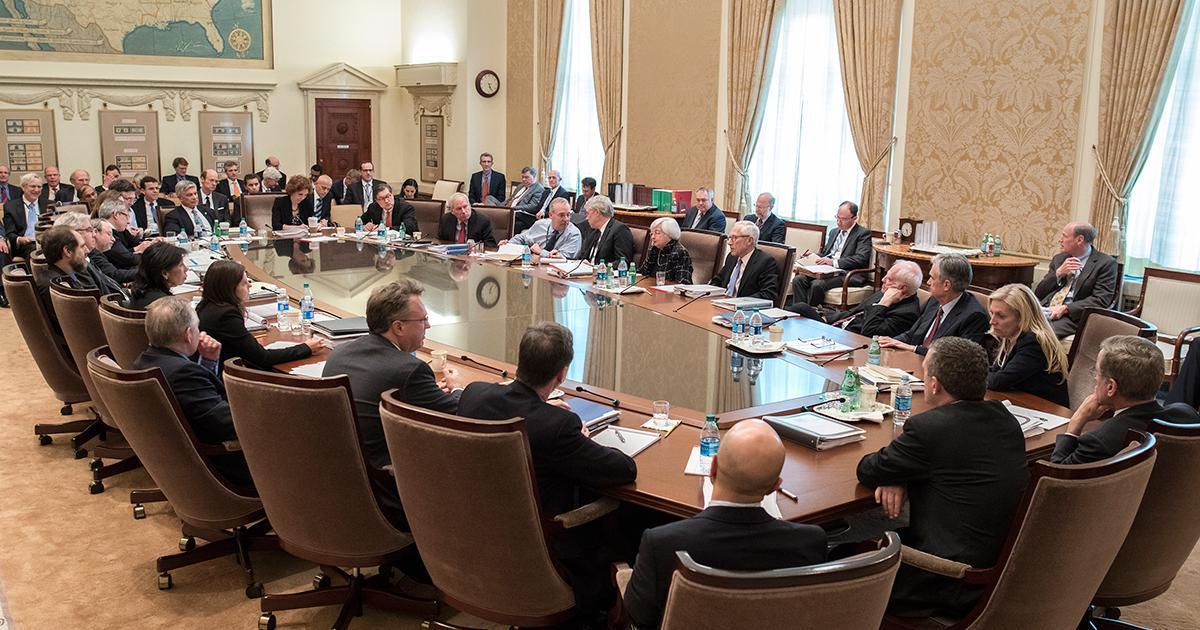
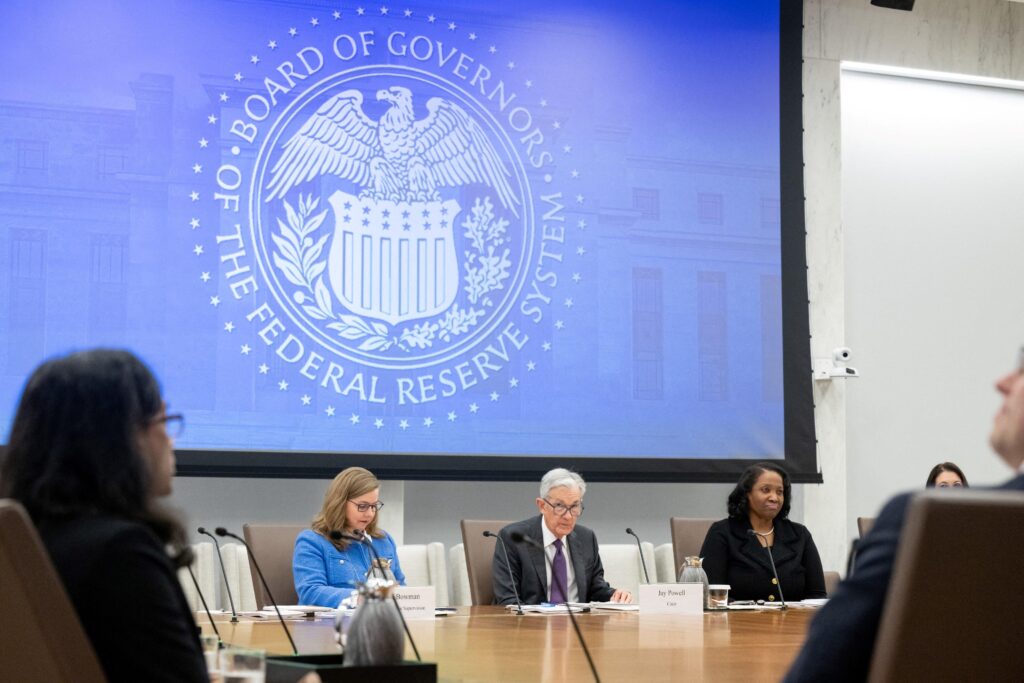
The Federal Reserve entered August with its policy rate at a target range of 3.50% to 3.75%. At its July 29 meeting, the FOMC voted 9-3 to leave rates unchanged, while three voting members preferred a quarter-point increase. The Fed said inflation remained elevated relative to its 2% objective.
The split vote is important because it demonstrates that policymakers do not have a unanimous view of the appropriate next step. Some officials believe inflation is sufficiently persistent to justify higher rates, while others believe the existing level of monetary restraint is enough to bring inflation lower over time.
Since that meeting, however, the incoming data have shifted the market debate.
July CPI was mild. July PPI was also unexpectedly flat on a monthly basis. The labor market has produced weaker signals, and July retail sales subsequently fell sharply. Taken together, those developments reduce the immediate case for another rate increase.
Reuters reported on August 14 that markets were pricing about a 69.4% probability of the Fed maintaining the 3.50%-3.75% target range at its September 15-16 meeting, with a 30.6% probability of a hike. The hike probability had been 50% one month earlier.
That is a major change in expectations, but it should not be interpreted as a guarantee.
The Fed will receive additional August inflation and employment data before its September meeting. A renewed acceleration in prices or a surprisingly strong labor-market report could quickly change market expectations.
Weak Retail Sales Add a New Argument for Patience
The inflation story became more complicated on August 14 when the Commerce Department reported that U.S. retail sales fell 0.6% in July. Economists had expected a small increase. It was the first decline in nine months and the largest monthly decrease in 14 months.
The weakness was broad enough to attract attention. Nonstore retailer sales fell 2.2%, motor-vehicle and parts dealers dropped 1.8%, electronics and appliance stores declined 0.5%, and gasoline-station receipts fell 0.9%. At the same time, clothing stores and restaurants showed strength.
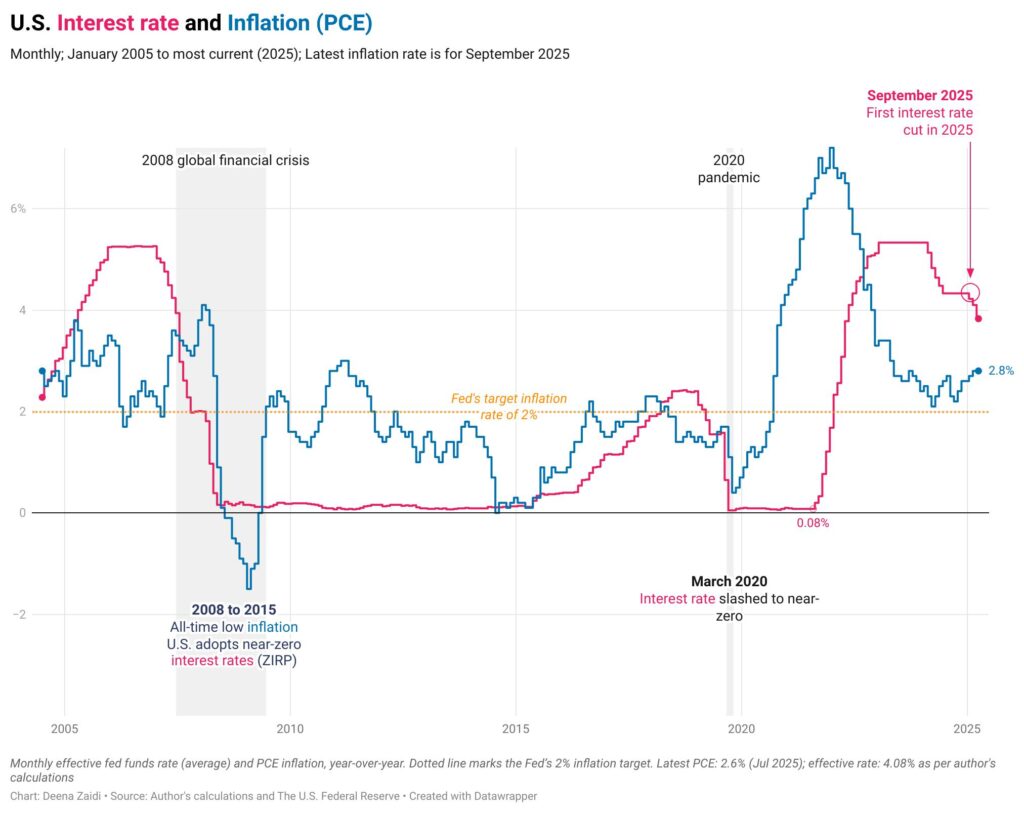
Some of the decline was related to special factors, including Amazon moving its Prime Day event from July into June and the fading impact of large tax refunds. Lower gasoline prices also reduced the dollar value of service-station sales. So economists will be cautious about treating one month’s decline as proof of a major consumer recession.
Still, the report contained an important underlying signal: core retail sales declined 0.4%, despite economists expecting a 0.3% increase. Core retail sales are particularly important because they correspond more closely with the consumer-spending component of GDP.
Economists subsequently lowered some third-quarter growth forecasts. Goldman Sachs cut its estimate by half a percentage point to a 2.2% annualized rate, while some economists warned that consumer spending could slow below 2% from its 3.2% pace in the second quarter.
That creates an increasingly delicate situation for the Fed. If inflation is cooling while consumers and employment are also losing momentum, raising interest rates could unnecessarily weaken economic activity.
What This Means for You, Investor Takeaway and Future Outlook
What this means for you: A 3.4% inflation rate does not mean prices are falling. It means consumer prices are increasing more slowly than they were a year earlier. For households, that distinction matters because the price level remains much higher than it was before the inflation surge.
For borrowers, the biggest question is what happens to interest rates. The Fed has not signaled a September rate cut, and markets are currently leaning toward a hold. That means mortgage rates, credit-card rates, auto-loan rates and other borrowing costs may remain elevated even if inflation continues to cool. The Fed’s benchmark rate remains at 3.50%-3.75%.
Investor takeaway: July’s data are generally favorable for rate-sensitive assets because they reduce the immediate probability of another Fed hike. Softer inflation can support stocks and bonds by lowering expectations for future monetary tightening.
That does not mean every stock automatically benefits. Investors still need to watch Treasury yields, earnings expectations, consumer demand and the path of inflation. Reuters reported that U.S. equity funds received $2.58 billion of net inflows during the week ending August 12, while the S&P 500 had reached record levels amid strong corporate earnings and easing rate-hike concerns.
Future outlook: The September Fed meeting will depend heavily on the next batch of inflation and labor-market data. If August CPI remains moderate and employment does not rebound strongly, policymakers may have a stronger argument for leaving rates unchanged.
The more difficult scenario would be a renewed inflation acceleration. Energy prices remain a potential source of volatility, while tariffs and investment connected to the AI boom could continue affecting some prices. Fed officials are divided over whether those pressures are temporary or could become embedded in inflation expectations.
For now, the most likely story is not a dramatic policy shift but a period of Fed patience.
Inflation Risks Could Still Prevent a Rate Cut
The argument for holding rates is becoming stronger, but there is still a reason for the Fed to remain cautious.
Inflation at 3.4% is significantly above the central bank’s 2% target. More importantly, policymakers have to consider expectations. If consumers and businesses begin assuming that inflation will remain above target for years, companies may become more willing to raise prices and workers may demand larger wage increases. That can make inflation harder to eliminate.
Several Fed officials have expressed precisely this concern. Cleveland Fed President Beth Hammack has argued that policymakers should not allow above-target inflation to become entrenched, while Richmond Fed President Thomas Barkin has suggested that some of the recent price pressures could be temporary shocks associated with tariffs, energy prices and AI investment.
Energy is another major uncertainty. July’s CPI benefited from lower gasoline prices, but energy markets can reverse quickly. The Producer Price Index showed a 3.1% decline in final-demand energy prices during July, with gasoline prices falling 5.7%. If energy prices rise again, some of that disinflation could disappear.
The Fed therefore has to avoid two opposite mistakes.
Moving too quickly toward rate cuts could allow inflation to remain elevated. But raising rates unnecessarily could weaken consumer spending and employment at exactly the moment economic momentum is cooling.
That is why the September meeting is likely to be less about one inflation number and more about the entire economic picture.
Final Verdict: July’s 3.4% Inflation Gives the Fed More Breathing Room
The latest U.S. inflation and interest rates data provide a stronger case for the Federal Reserve to remain patient, but they do not yet provide a strong case for aggressive rate cuts.
July CPI increased 3.4% over the year, down from 3.5% in June. Monthly inflation was only 0.1%, while core inflation was 2.5% year over year. Those figures show that price pressures have moderated.
At the same time, the latest retail-sales report showed a 0.6% monthly decline, and core retail sales fell 0.4%. The combination of softer inflation and weaker consumer activity is making a September rate hike less attractive to policymakers and investors.
But the Fed cannot ignore the fact that inflation remains above its 2% goal. Producer prices also remain elevated on a yearly basis, and some Fed officials are concerned that prolonged inflation could become embedded in expectations.
The best interpretation right now is therefore “cooling, but not conquered.”
The September 15-16 meeting could produce another rate hold if the next inflation and employment reports continue to show moderation. A hike remains possible if price pressures accelerate or policymakers become more concerned about inflation expectations. Market pricing as of August 14 favored a hold, but those expectations can change rapidly.
For American households, investors and businesses, the next few economic reports will matter more than the headline 3.4% figure by itself.
The key indicators to watch are:
| Economic indicator | Why it matters |
|---|---|
| August CPI | Tests whether inflation is continuing to cool |
| Core CPI | Measures underlying price pressure |
| Jobs report | Shows whether the labor market is weakening |
| Retail sales | Measures consumer demand |
| PPI | Provides information about producer-level price pressure |
| PCE inflation | The Fed’s preferred inflation measure |
| Treasury yields | Shows market expectations for rates |
| September FOMC decision | Determines the next policy step |
The biggest takeaway is simple: July’s inflation report gives the Fed more room to wait, but not enough evidence yet to declare victory over inflation.
With consumer spending showing signs of cooling and inflation moving lower, the case for a September hold has strengthened. But until inflation moves convincingly toward 2%, the Federal Reserve is likely to remain cautious.
For investors, that means volatility around inflation and interest-rate expectations is likely to continue. For consumers, it means borrowing costs may stay high even as inflation improves. And for the broader U.S. economy, the next phase will depend on whether price pressures continue to decline without causing a sharper slowdown in jobs and spending.
Subscribe to trusted news sites like USnewsSphere.com for continuous updates.
Primary sources and further reading
The Bureau of Labor Statistics July CPI report provides the underlying data for headline inflation, core inflation and individual price categories.
BLS — Consumer Price Index, July 2026
The Federal Reserve’s July 29 FOMC statement provides the official policy rate and the central bank’s assessment of inflation and economic conditions.
Federal Reserve — July 2026 FOMC statement
The latest Reuters retail-sales report adds an important new dimension to the story because consumer spending weakened sharply in July.
Reuters — U.S. July retail sales report
Reuters’ latest analysis of Fed officials provides additional context on the debate between policymakers who favor patience and those concerned about above-target inflation.