Fed rate cut or hike expectations have become one of the biggest questions facing U.S. financial markets as September’s Federal Reserve meeting approaches. The latest economic reports are sending mixed signals: July retail sales unexpectedly declined, the labor market has shown signs of cooling, and producer prices were flat in July. At the same time, consumer inflation remains well above the Federal Reserve’s 2% objective.
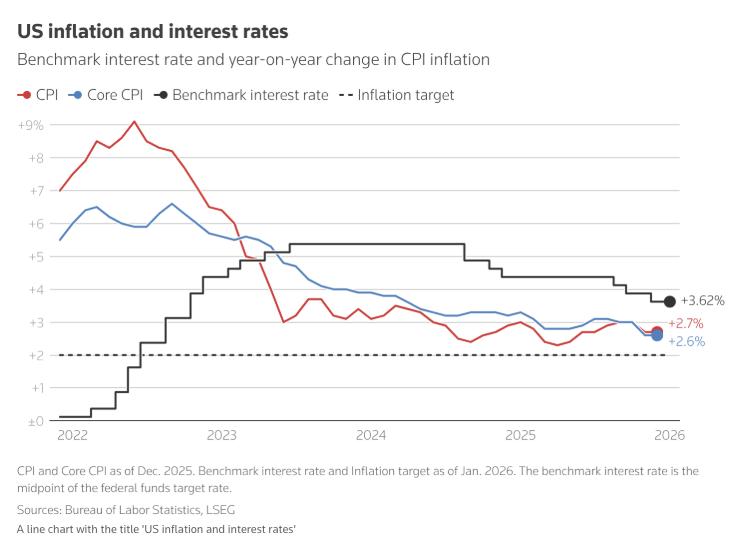
That combination has made the September decision unusually difficult to read. A weaker consumer and labor market would normally strengthen the argument for lower interest rates because the Fed would want to avoid putting unnecessary pressure on economic activity. But inflation at 3.4% year over year means policymakers cannot simply declare victory over price pressures. The July core CPI reading was 2.5%, while other inflation measures remain considerably above the Fed’s target.
The result is a policy dilemma that could remain unresolved until the final major inflation and employment reports arrive before the September 15–16 meeting. Investors are therefore watching every economic release for clues about whether the next move will be a pause, a rate increase or, eventually, a cut.
September Fed Decision Enters a New Phase
The Federal Reserve entered August with its policy rate unchanged at 3.50% to 3.75%. At its July 28–29 meeting, the Federal Open Market Committee voted 9–3 to maintain that range. Three officials—Beth Hammack, Neel Kashkari and Lorie Logan—preferred a quarter-point increase, demonstrating that the debate inside the central bank had already become more hawkish than the headline decision suggested.
The next scheduled FOMC meeting is September 15–16. The Fed has made clear that incoming economic information will matter, and the August employment and inflation reports will arrive before policymakers make that decision. The central bank’s July statement said economic activity was expanding at a solid pace, while also acknowledging elevated uncertainty and inflation that remained above the 2% goal.
Market expectations have moved sharply during August. After July’s weak employment report, futures markets reduced the probability of a September hike. Following the July retail-sales report, Reuters reported that the probability of the Fed holding rates at 3.50%–3.75% had reached about 69.4%, while the probability of a hike was about 30.6% on August 14. That is a major change from the roughly 50% hike probability seen a month earlier.
A September rate cut, however, should not be treated as the base case based on the latest information. The more immediate question for markets is whether policymakers will hold or decide that inflation is sufficiently persistent to justify another hike. A cut could become more plausible later if labor-market weakness becomes substantially worse and inflation continues to cool.
Weak July Retail Sales Put the Fed in a Difficult Position
The biggest new economic warning came from the consumer.
The U.S. Census Bureau reported that retail and food-service sales fell 0.6% in July, to approximately $763.6 billion. It was the first monthly decline in nine months and the largest decline in 14 months. Economists had expected a small increase instead. Despite the monthly decline, sales were still 5.0% higher than July 2025, showing that the consumer economy has not simply collapsed.
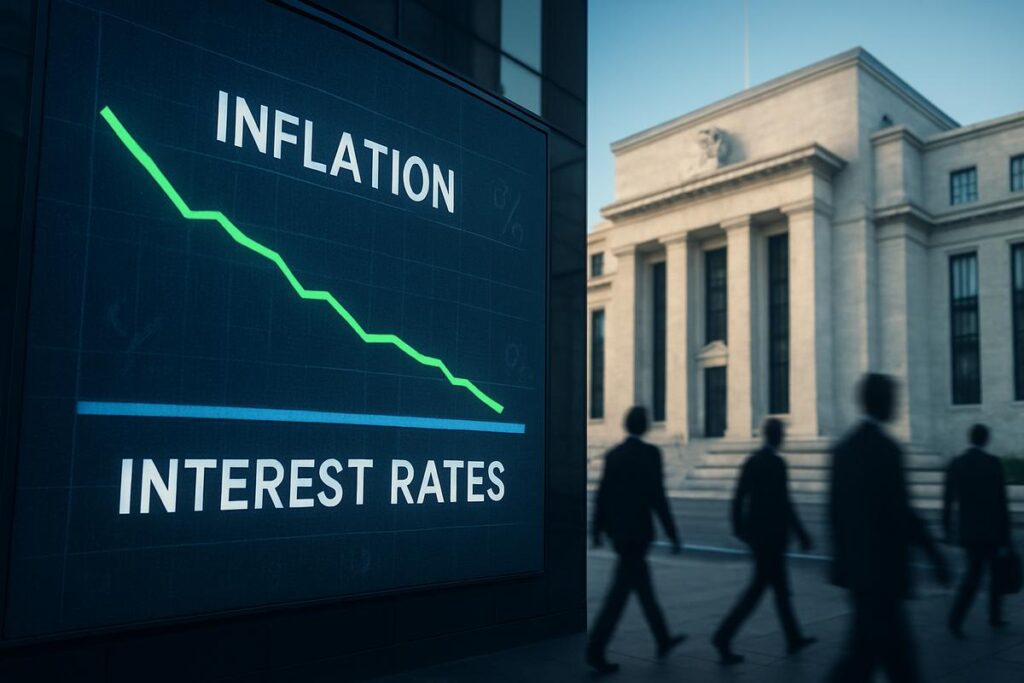
The details matter. Core retail sales, excluding automobiles, gasoline, building materials and food services, fell 0.4% in July. That measure is particularly important because it is more closely connected to the consumer-spending component of GDP. Reuters reported that economists subsequently lowered some third-quarter growth forecasts, with Goldman Sachs cutting its estimate to a 2.2% annualized pace.
Several temporary factors contributed to the weakness. The impact of large tax refunds faded, gasoline prices declined, and Amazon moved its Prime Day promotion into June rather than July, changing the normal seasonal pattern. Nonstore retailer sales fell 2.2%, motor-vehicle and parts sales dropped 1.8%, and electronics and appliance-store receipts fell 0.5%. At the same time, food-service sales increased 0.5% and clothing-store sales rose 1.9%.
That mixed picture is important for the Fed. Policymakers do not necessarily want to react aggressively to one weak monthly report, particularly when some of the weakness reflects temporary events. But if July’s slowdown is followed by weaker August spending, employment and income data, it would strengthen the argument that restrictive monetary policy is beginning to weigh more heavily on households.
Inflation Is Cooling, But the Fed Still Has a Problem
Inflation is the reason a September rate hike remains on the table.
The Bureau of Labor Statistics reported that the Consumer Price Index increased 3.4% over the 12 months through July, down from 3.5% in June. Core CPI, which excludes food and energy, increased 2.5% year over year, compared with 2.6% in June. On a monthly basis, headline CPI increased 0.1%, while core CPI rose 0.2%.
Those numbers are better than they could have been, but they are not consistent with a clean return to the Fed’s 2% inflation objective. Shelter remained an important source of price pressure, while food prices continued to rise. The energy index fell 1.5% in July, but energy prices were still 14.7% above their level a year earlier.
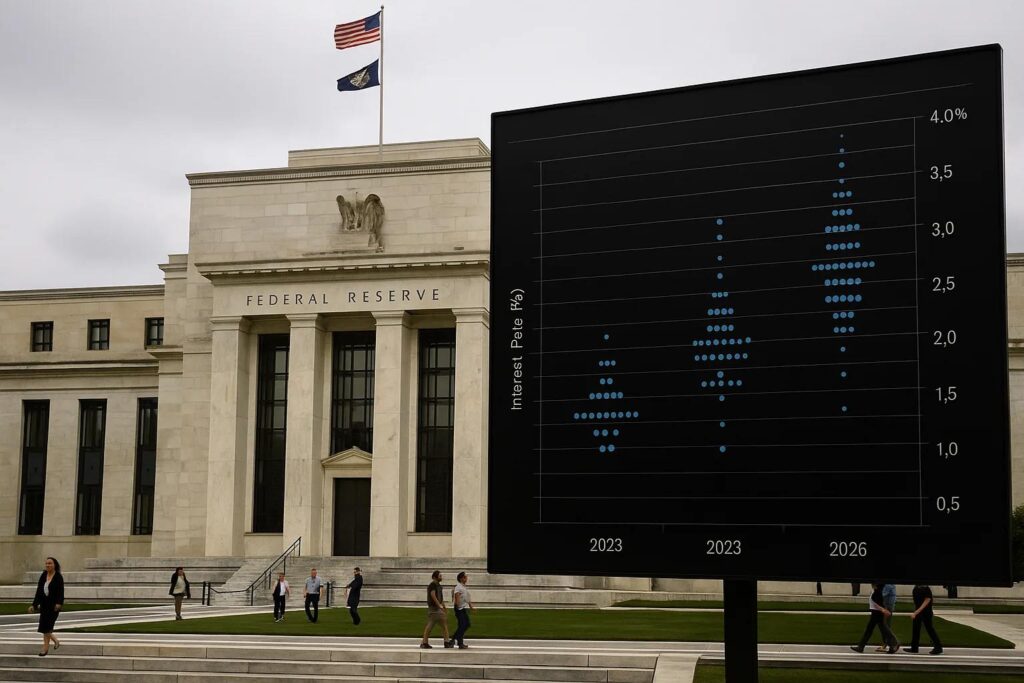
Producer prices offered another piece of relatively favorable news. U.S. PPI was unchanged in July, while producer prices were still 4.7% higher than a year earlier. The report strengthened market expectations that the Fed may be able to leave rates unchanged in September rather than immediately raising them.
But policymakers remain divided over how much weight to put on the inflation threat. Chicago Fed President Austan Goolsbee has argued that inflation remains the economy’s biggest problem, while Richmond Fed President Tom Barkin has said it remains an open question whether another rate increase will ultimately be necessary. Barkin has also highlighted the possibility that some current inflation pressure comes from temporary shocks such as tariffs, oil prices and AI-related demand.
This explains why the September debate cannot be reduced to a simple “weak retail sales equals rate cut” argument. The Fed has two objectives—maximum employment and price stability—and the latest data are sending different signals on each side.
Jobs, Inflation and the Fed’s Policy Split Matter More Than One Report
The labor market has become the other major reason the September outlook has changed.
July employment data showed the U.S. economy losing 23,000 jobs, while the unemployment rate edged down to 4.1%. Reuters reported that the weak employment report caused financial markets to rapidly reduce expectations for a September hike. The significance was not simply the number of jobs lost; it was the combination of weaker hiring, a less convincing labor-market picture and inflation that had started to moderate.
For the Fed, this creates a difficult balancing act. Raising rates when employment is weakening could unnecessarily increase pressure on businesses and consumers. But leaving rates unchanged while inflation remains well above target could allow price pressures to become more persistent.
The Fed’s July decision itself illustrates this division. Three voting members wanted a quarter-point increase, while the majority chose to hold the target range at 3.50%–3.75%. The next decision could therefore depend heavily on whether August employment and inflation data confirm the recent trend or reverse it.
Long-term Treasury yields add another complication. Reuters reported that the 30-year Treasury yield recently reached its highest level in 25 years, reflecting investor concerns about persistent inflation and large U.S. fiscal deficits even as expectations for a September Fed hike declined.
That means financial conditions may not depend entirely on the Fed’s overnight policy rate. If long-term borrowing costs remain elevated, mortgages, corporate borrowing and investment decisions can remain expensive even without another Fed hike.
What This Means for You: Borrowers, Savers and Investors Face Different Risks
For households with variable-rate debt, credit-card balances or other borrowing costs linked closely to market interest rates, the most favorable near-term outcome would be a prolonged pause or eventual reduction in rates. But consumers should not assume that a single weak retail-sales report guarantees lower borrowing costs.
Mortgage borrowers face a different situation because fixed mortgage rates are influenced heavily by longer-term Treasury yields and market expectations. Even if the Fed does not raise its policy rate in September, mortgage rates could remain elevated if investors continue demanding higher yields on long-duration government debt.
Savers, meanwhile, face the opposite trade-off. Higher interest rates can keep yields on cash and short-term savings products attractive. A future Fed easing cycle would gradually reduce that advantage, although the pace would depend on inflation, economic growth and market expectations.
For investors, the implications are broader. Lower rates can support growth stocks, housing-related companies and other interest-rate-sensitive assets. But a surprise rate hike could pressure high-valuation equities, increase Treasury yields and strengthen the dollar. Gold and other inflation-sensitive assets could also react significantly if investors become more concerned about persistent price pressures.
The most important lesson is that investors should not position entirely around one September outcome. The market is already repricing expectations rapidly as each economic report arrives.
Investor Takeaway: What to Watch Before September
Investor takeaway: The September Fed decision is becoming a data-dependent contest between a cooling economy and inflation that remains too high.
The latest evidence does not yet provide a convincing case for an immediate rate cut. Instead, the strongest current argument is for a September hold, with a hike still possible if the next inflation or employment reports surprise significantly to the upside. As of August 14, market pricing put the probability of no September change at roughly 69.4% and a hike at 30.6%.
Investors should focus on several indicators before the September meeting: the August employment report, August CPI, PCE inflation, wage growth, consumer spending, jobless claims and Treasury yields. The Fed will have access to those reports before policymakers sit down on September 15–16.
Future outlook
The most likely path will depend on which side of the economic equation becomes more convincing.
If inflation continues declining, retail spending remains weak and employment deteriorates further, the case for a prolonged pause—and eventually rate cuts—would become stronger. That scenario could support bonds, rate-sensitive stocks and other assets that benefit from easier monetary conditions.
If inflation accelerates again, energy prices rise, wage pressures remain strong or consumer demand proves more resilient than July’s retail-sales report suggests, the Fed could maintain its restrictive stance for longer. A renewed hike would become more plausible, particularly because several policymakers have already shown concern that inflation is not returning to 2% quickly enough.
The most important point is that September is not a predetermined rate-cut meeting. The latest data have made a hike less likely than it appeared earlier in the summer, but inflation remains sufficiently high to prevent the Federal Reserve from declaring victory.
That is why this story should be treated as an ongoing economic update rather than a one-day prediction. Every major inflation, employment and consumer-spending release can change the market’s calculation.
For readers, the best approach is to watch the trend rather than react to individual headlines. A single weak retail-sales report does not prove that the U.S. economy is entering recession. Similarly, one soft inflation report does not guarantee a rate cut.
The Fed has a narrow path to navigate: it needs to prevent inflation from becoming entrenched without unnecessarily damaging the labor market or consumer economy.
As September approaches, that balancing act is likely to remain one of the most important forces influencing U.S. stocks, Treasury bonds, mortgages, the dollar, gold and household borrowing costs.
Subscribe to trusted news sites like USnewsSphere.com for continuous updates.