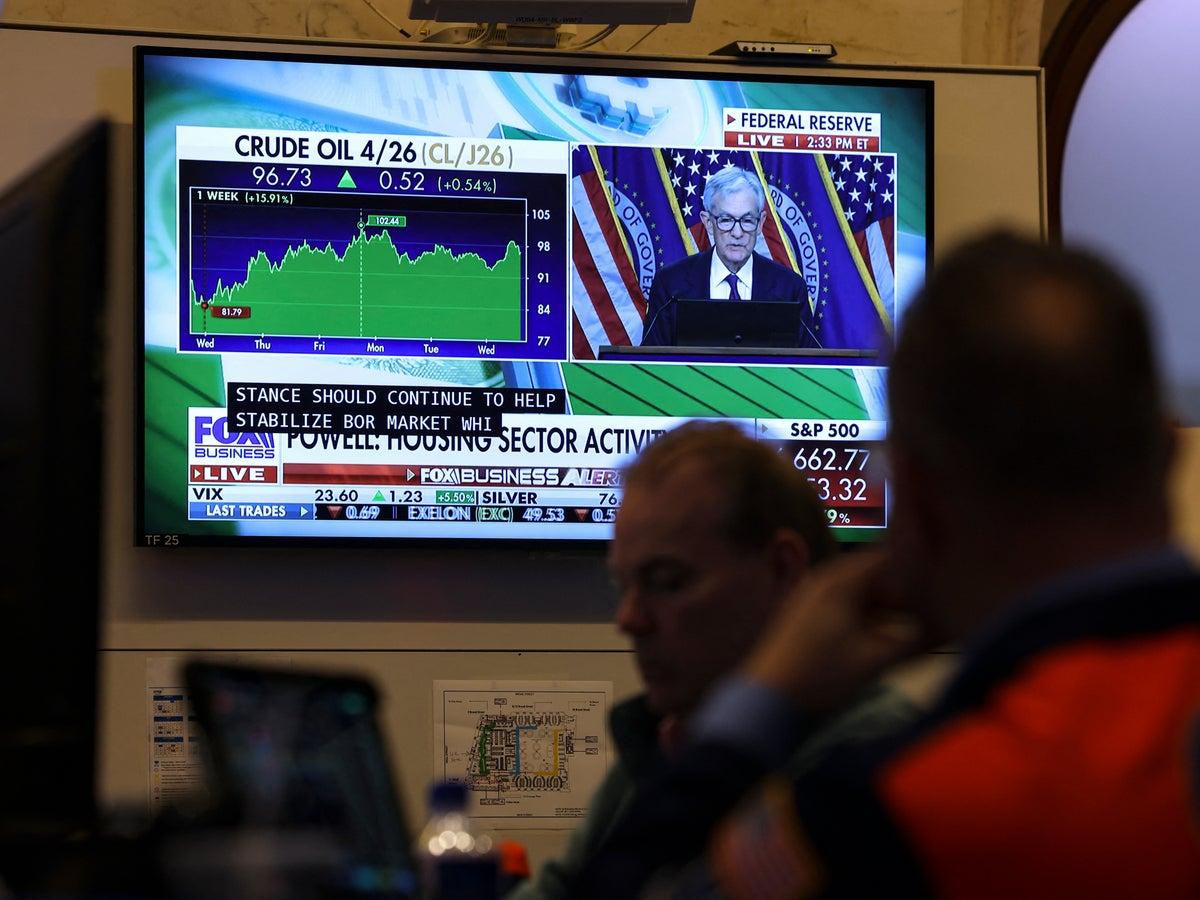
Inflation is moving back into the center of the market conversation as crude oil prices climb toward the mid-$90s and investors reassess the outlook for Federal Reserve interest rates. The latest oil rally is particularly important because it comes at a time when U.S. inflation remains above the Federal Reserve’s 2% long-run objective and policymakers are already facing a difficult balance between price stability and economic growth.
As of August 21, Brent crude was trading around the $94-per-barrel area, while West Texas Intermediate was near $87. Brent was on track for a second consecutive weekly gain, with geopolitical tensions and disruptions involving Middle Eastern oil supplies keeping traders focused on the possibility of a prolonged energy shock.
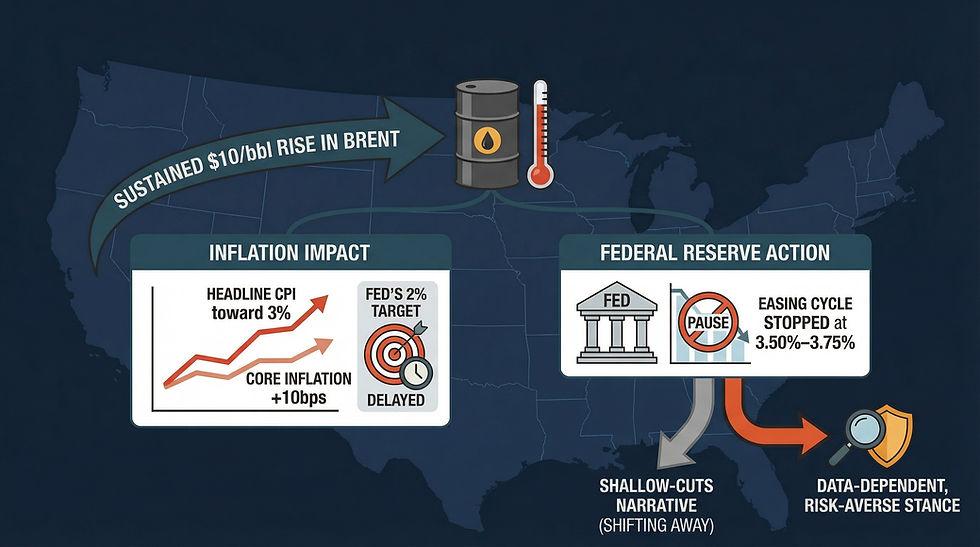
The timing matters. The Federal Reserve left its federal funds target range unchanged at 3.50% to 3.75% at its July meeting, but the decision was not unanimous. Three policymakers preferred a quarter-point increase. The Fed also said inflation remained elevated and specifically pointed to supply shocks affecting sectors including energy.
That creates a complicated setup for the next rate decision. If oil remains elevated, gasoline and transportation costs could rise again and potentially slow the progress on inflation. At the same time, higher energy prices can weaken household purchasing power and corporate margins, meaning the Fed could face a situation in which inflation rises while economic growth loses momentum.
Oil Prices Are Rising Again as Supply Risks Return
Oil has become one of the most important market variables for investors heading into the second half of 2026. On August 21, Brent crude was around $93.98 a barrel and WTI around $86.90, according to Reuters, with Brent up about 6.1% for the week and WTI gaining roughly 5.3%.
The immediate catalyst has been renewed uncertainty surrounding the Middle East and Iranian oil supplies. Reduced traffic through the Strait of Hormuz has increased concern about the reliability of global energy flows, while escalating U.S.-Iran tensions have added another layer of uncertainty. Reuters reported that Iran’s crude exports to China had fallen while concerns about shipping disruptions remained elevated.
The market does not necessarily need an immediate physical shortage to push prices higher. Oil is traded globally, and traders price in the possibility of future supply disruptions. That means geopolitical risk can be reflected in crude futures before consumers see the full effect at gasoline stations.
The increase is significant when viewed over a longer period. One August 21 market update put Brent at about $95.29 a barrel, compared with approximately $67.80 a year earlier, representing an increase of more than 40%.
That matters for inflation because crude oil affects much more than gasoline. Energy is an input into transportation, manufacturing, aviation, chemicals, logistics and numerous other industries. If companies face higher fuel and transportation costs for an extended period, some of those expenses can eventually be passed on to consumers.
Relevant market video: CME Group — Oil, Inflation, and the Fed’s Difficult Balancing Act
U.S. Inflation Is Still Above the Fed’s 2% Goal
The latest official inflation data show why investors are paying close attention to the oil market. The U.S. Bureau of Labor Statistics reported that the Consumer Price Index increased 3.4% over the 12 months ending in July 2026. Monthly CPI increased 0.1% in July after declining 0.4% in June.
Core CPI, which excludes food and energy, increased 2.5% year over year in July. That is an important distinction because the Federal Reserve generally wants to understand whether inflation is broadening beyond volatile categories. At the same time, the energy component of CPI was up 14.7% over the year, while gasoline prices were up 24.6%.
In other words, the headline inflation picture is already being influenced heavily by energy prices, even though the monthly energy index actually fell 1.5% in July. Gasoline prices declined 2.9% during the month, illustrating how quickly energy can move in either direction.
The Federal Reserve’s preferred inflation gauge is the Personal Consumption Expenditures price index. The latest available June data showed headline PCE inflation at 3.7%, while core PCE was 3.3%. The next report, covering July, is scheduled for August 26.
That upcoming report could be particularly important because it will give investors another look at underlying price pressures shortly before the Fed’s September 15-16 policy meeting.
The key question is therefore not simply whether oil is rising. Investors need to determine whether higher energy costs remain temporary or begin feeding into broader inflation expectations, services prices, wages and business pricing decisions.
Why Higher Oil Prices Could Complicate the Fed’s Next Rate Decision
The Federal Reserve is already navigating an unusually difficult policy environment. Its July 29 decision kept the federal funds rate at 3.50% to 3.75%, but the 9-3 vote revealed a meaningful disagreement among policymakers. Governors Beth Hammack, Neel Kashkari and Lorie Logan preferred a 25-basis-point rate increase.
The Fed’s statement also acknowledged that inflation remained above its 2% objective and said supply shocks had driven price increases in sectors including energy. That wording is important because an oil-driven inflation shock is different from inflation caused primarily by excessive domestic demand.
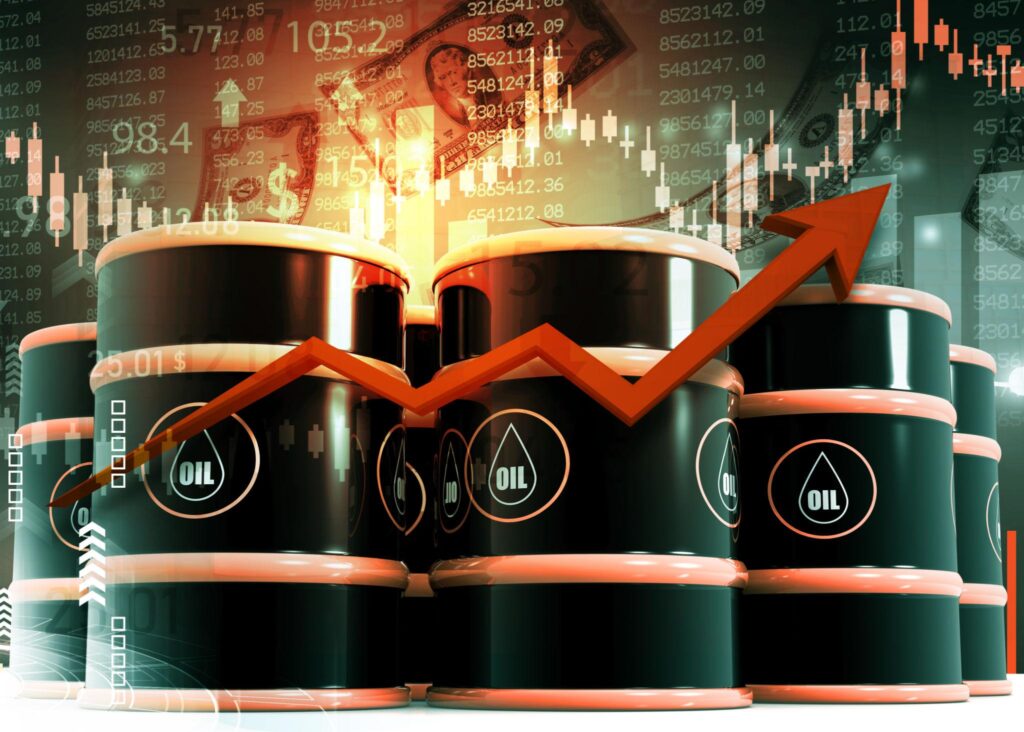
Monetary policy cannot produce more oil. Raising interest rates cannot reopen a shipping route, increase Middle Eastern production or immediately repair an international supply chain. But policymakers still have to consider the possibility that an energy shock could become embedded in inflation expectations or spill into other prices.
This is where the Fed’s dual mandate becomes especially difficult. If inflation accelerates, keeping rates higher for longer may become necessary to prevent inflation expectations from becoming unanchored. But if higher oil prices simultaneously weaken consumer spending and business activity, additional tightening could amplify the economic slowdown.
Recent economic expectations already reflect this uncertainty. A Reuters poll conducted August 12-17 found that a strong majority of economists expected the Fed to keep rates unchanged at 3.50%-3.75% through the end of 2026. The same survey noted that economists were watching upcoming inflation and labor-market data closely, while inflation was expected to remain above the Fed’s target for an extended period.
That means the market is not simply debating “rate cut versus rate hike.” A more realistic question is whether the Fed will have enough evidence to change policy at all.
The next major decision is scheduled for September 15-16, 2026, giving policymakers several weeks to assess oil prices, inflation, employment, consumer spending and financial conditions.
What This Means for You
For American households, higher oil prices can show up relatively quickly. Gasoline is the most visible example, but the effects can extend to airline tickets, delivery costs, commuting expenses, heating and electricity-related costs, and the prices of goods transported across the country.
The impact can be especially noticeable for households with limited budgets because fuel and transportation are difficult expenses to eliminate completely. If gasoline prices rise substantially, consumers may have less money available for restaurants, entertainment, retail purchases and other discretionary spending.
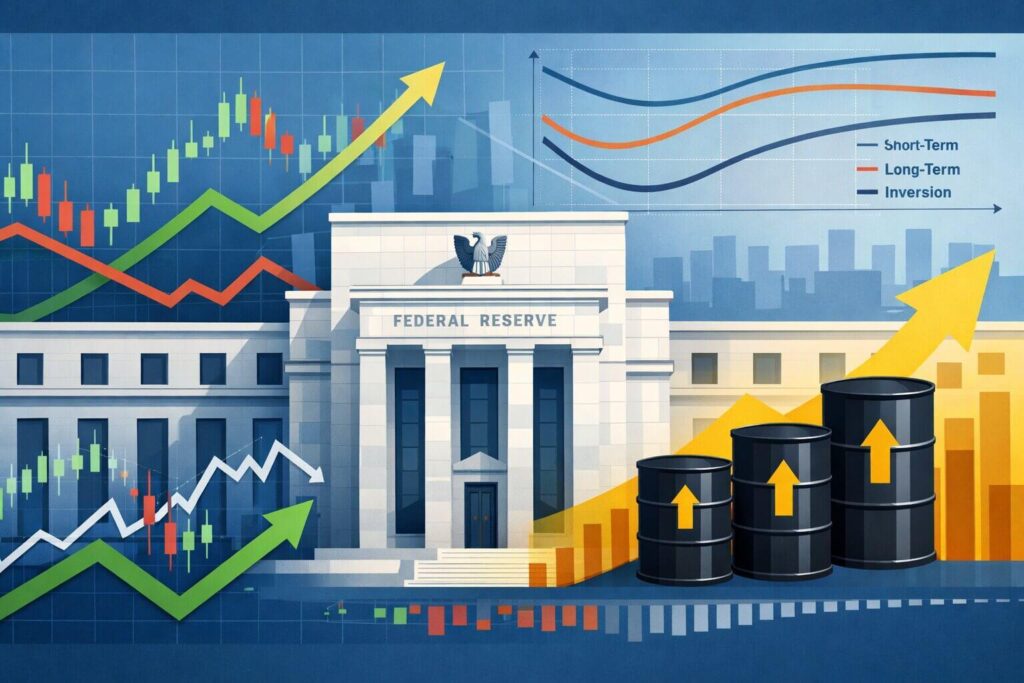
Higher energy costs can also influence businesses. Transportation companies may face higher operating expenses, airlines can face higher fuel bills, and manufacturers can see increased costs throughout their supply chains. Some companies absorb those costs temporarily, while others attempt to pass them through to customers.
For borrowers, the Federal Reserve decision matters because interest rates influence the broader cost of credit. Mortgage rates, auto loans, credit cards and business financing do not move one-for-one with the Fed’s policy rate, but expectations for future monetary policy can strongly influence borrowing costs and Treasury yields.
For savers, the situation is more mixed. Higher rates can support returns on some savings products and short-term fixed-income investments. But if inflation remains elevated, the real purchasing power of those returns can still be reduced.
The most important takeaway for consumers is that oil prices are not just a Wall Street issue. A prolonged energy shock can affect household budgets, business costs, borrowing conditions and the purchasing power of the dollar.
Investor Takeaway
Investors should watch the oil market alongside inflation and interest-rate expectations rather than treating crude prices as an isolated commodity story.
The first signal to watch is whether Brent remains above $90 for an extended period or quickly retreats. A temporary geopolitical spike would have a different economic impact from a sustained increase that persists for several months.
The second signal is gasoline inflation. The July CPI report showed how important energy remains to the inflation picture, with gasoline prices 24.6% higher than a year earlier despite a monthly decline in July.
The third signal is core inflation. If energy prices rise but core inflation remains relatively stable, the Fed may be more inclined to look through part of the shock. If higher energy costs begin spreading into services, goods and inflation expectations, the policy challenge becomes more serious.
The fourth signal is the labor market. A weaker employment environment could make the Fed more reluctant to respond aggressively to a supply-driven inflation shock. The Federal Reserve said in July that job gains had kept pace with the workforce and that unemployment had changed little, but investors will continue watching employment data closely.
Markets may also react differently depending on the duration of the oil move. Energy producers can benefit from higher crude prices, while airlines, transportation companies and fuel-intensive manufacturers may face margin pressure. Meanwhile, higher Treasury yields could create additional pressure for rate-sensitive areas of the stock market.
The broader risk is a form of stagflationary pressure: higher prices combined with slower economic activity. That would be particularly uncomfortable for policymakers because the tools used to fight inflation can also weaken demand.
Future Outlook
The next few weeks could be crucial for determining whether the current oil rally becomes a temporary market shock or a more persistent inflation problem. Brent crude is currently around the mid-$90s, and geopolitical developments remain the biggest near-term variable.
If geopolitical tensions ease and oil supplies normalize, crude prices could retreat. That would reduce pressure on gasoline and transportation costs and potentially make the Fed’s inflation problem easier to manage.
The opposite scenario would be more challenging. If disruptions through key Middle Eastern energy routes continue and oil moves toward or above $100, investors could begin reassessing inflation forecasts more aggressively. That would potentially place additional upward pressure on bond yields and reduce expectations for monetary easing.
There is also a timing issue. Oil-price increases do not necessarily appear in every inflation category immediately. Energy costs can work through the economy gradually, meaning policymakers may have to make decisions based partly on what they expect to happen several months ahead rather than relying only on today’s inflation reading.
The upcoming July PCE report on August 26 will therefore be one of the most important pieces of data before the September Fed meeting. The Federal Reserve closely follows the PCE inflation measure, while core PCE is particularly useful for evaluating underlying price trends because it removes food and energy volatility.
The Fed’s own recent analysis reinforces why energy matters. Its July Monetary Policy Report said inflation had moved higher in 2026 and linked part of the increase to supply shocks affecting energy. The report also noted that economic activity remained solid while uncertainty surrounding the Middle East conflict remained elevated.
That leaves investors facing a market with several competing forces: elevated oil prices, inflation above target, uncertainty over monetary policy, a changing labor market and geopolitical risks.
The most likely policy path cannot be known with certainty until more data arrive. But the current evidence suggests that higher oil prices could make it harder for the Federal Reserve to deliver easier monetary policy if the energy shock begins to push broader inflation higher.
For investors, the most important lesson is to watch the interaction between oil, inflation, Treasury yields and Fed expectations, rather than any single number. For households, the key issue is how long elevated energy costs last and whether they begin affecting other everyday expenses.
In short, oil prices have once again become a critical variable for the U.S. inflation outlook. With Brent crude near $94 and U.S. inflation still above the Federal Reserve’s 2% target, the path toward lower interest rates could become more complicated if the energy shock persists.
Subscribe to trusted news sites like USnewsSphere.com for continuous updates.
Key sources for readers: U.S. Bureau of Labor Statistics — July 2026 CPI report · Federal Reserve — July 29, 2026 FOMC statement · Federal Reserve — 2026 FOMC calendar · Bureau of Economic Analysis — PCE inflation data