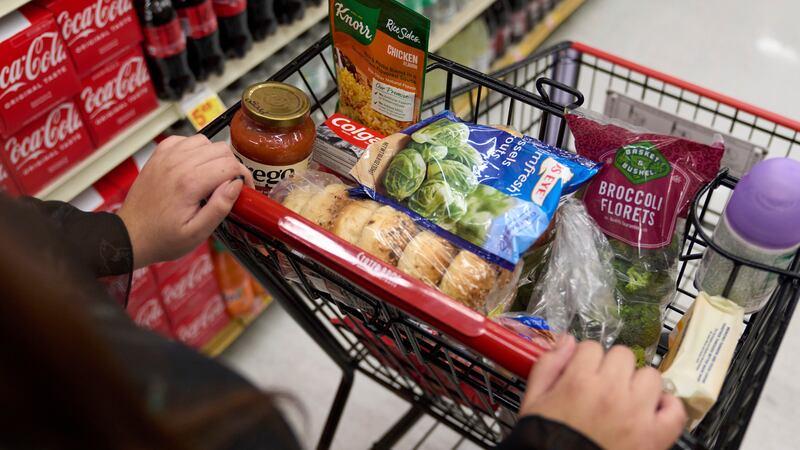
U.S. consumers are pulling back in some important parts of the economy, and the latest numbers suggest American households are becoming more selective about where their money goes.
The clearest warning arrived in the July retail-sales report. U.S. retail and food-services sales fell 0.6% from June to $763.6 billion, according to the Census Bureau. That was the first monthly decline in nine months and the largest in 14 months. Yet sales were still 5.0% higher than a year earlier, which means Americans have not stopped spending altogether. The better description is that the consumer is becoming more cautious and uneven.
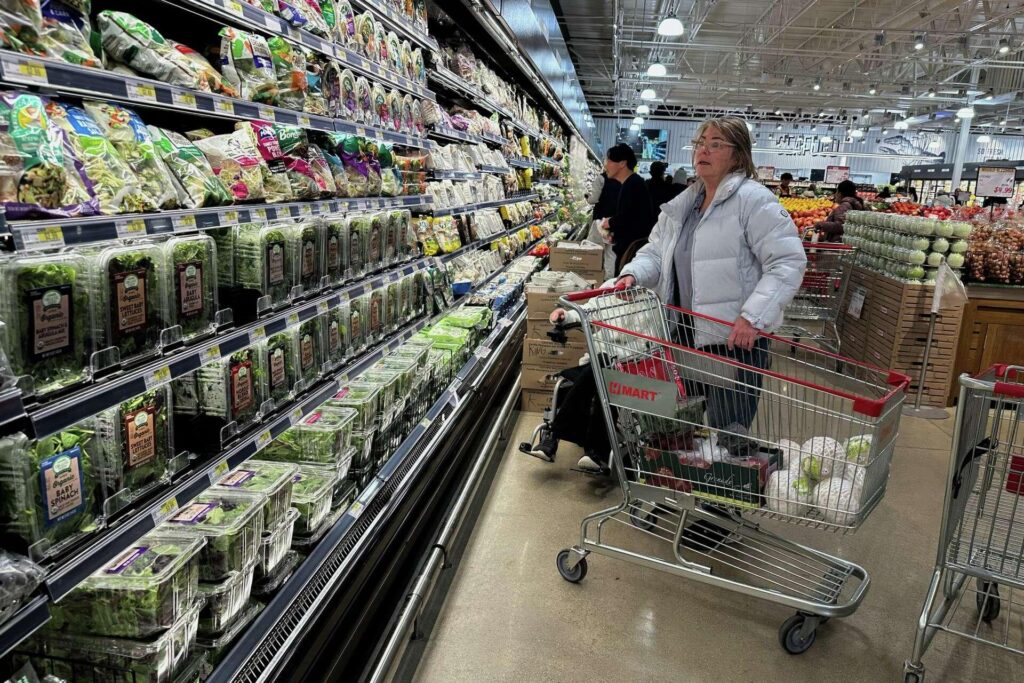
That distinction matters because consumer spending is one of the central engines of the U.S. economy. When Americans begin delaying purchases, eating out less frequently, financing more purchases with debt or worrying about job security, the effects can spread from retailers and restaurants to housing, financial markets and Federal Reserve policy.
Seven money signals now deserve particularly close attention: retail sales, food budgets, consumer credit, housing costs, employment, gasoline and energy costs, and consumer confidence. Restaurant spending provides an especially useful window into the food-budget signal because it shows where households are still willing to spend despite pressure elsewhere.
The story is not simply “the consumer is collapsing.” In fact, several indicators remain resilient. That is exactly why these seven signals are worth watching together.
Retail Sales and Food Budgets Are Sending the First Warning
Signal #1: Retail sales. July’s 0.6% decline deserves attention because it followed months of generally resilient spending. Reuters reported that it was the first monthly drop in nine months. Core retail sales used in GDP calculations also declined 0.4%, prompting some economists to trim estimates for third-quarter economic growth.
The weakness was not spread evenly across every category. Nonstore retailers, automobiles, electronics and gasoline stations were among the areas showing weakness, while clothing and food-service spending performed better. July’s figures were also affected by unusual timing factors—including Amazon moving Prime Day into June—and lower gasoline prices. That means one weak month should not be treated as proof of a recession. The September 16 release covering August retail sales will be much more informative because it will show whether July was a temporary dip or the beginning of a broader slowdown. Census Bureau retail release schedule
Signal #2: The American food budget. Grocery inflation has slowed substantially compared with the extreme increases Americans experienced earlier in the decade, but food still costs more than it did a year ago. Bureau of Labor Statistics data show food-at-home prices were 2.7% higher year over year in July, while food-away-from-home prices were up 3.4%. Grocery prices actually slipped 0.1% from June, but restaurant prices rose another 0.3%. BLS July CPI report
That creates an interesting consumer trade-off. The July retail report showed food-service and drinking-place sales holding up better than several merchandise categories even as restaurant prices continued rising. Americans may therefore be cutting back selectively rather than eliminating discretionary spending altogether.
For households, this is one of the most practical indicators to watch. If grocery inflation accelerates while restaurant spending weakens, it could indicate that families are becoming more defensive with everyday budgets. If restaurant spending remains resilient while grocery inflation stays contained, the consumer may be healthier than the headline retail number suggests.
Credit and Housing Show How Expensive Everyday Financial Life Remains
Signal #3: Consumer credit. Americans continue to use credit heavily, but the latest debt data provide a more complicated picture than headlines about record balances suggest. New York Fed data reported by Reuters show that consumers originated a nominal record $211 billion of auto loans during the second quarter, while credit-card and home-equity balances also increased.

There is an important counterpoint: household finances have not deteriorated uniformly. The overall delinquency rate declined to 4.7% from 4.8%, and New York Fed researchers said the pace at which credit-card balances were flowing into delinquency had been broadly stable since 2024, although still elevated compared with the pre-pandemic period. Bank of America card data cited by Reuters also showed July credit-card spending excluding gasoline rising 4.3% year over year.
That means credit is not yet flashing an unambiguous recession warning. But it is a critical pressure point. If households increasingly rely on revolving credit while employment weakens, the combination could eventually reduce discretionary spending. Consumers carrying balances should pay particular attention because high APRs can make even relatively small purchases expensive over time.
Signal #4: Housing. The housing market remains one of the largest financial barriers facing American households. Freddie Mac reported that the average 30-year fixed mortgage rate was 6.67% on August 13, compared with 6.69% the previous week. The average 15-year rate stood at 5.96%.
Rates near that level can dramatically change affordability compared with the ultra-low-rate environment earlier in the decade. A buyer financing a home today has to consider not only the purchase price but also the monthly impact of interest, property taxes and insurance.
There is another important effect: homeowners who already locked in much lower mortgage rates have a strong incentive not to move. Reuters reported that home-equity balances rose by $19 billion in the second quarter, with New York Fed researchers pointing to a trend in which some older homeowners borrow against equity rather than refinance an entire mortgage at today’s higher rates.
Jobs and Gasoline Could Decide Whether the Pullback Gets Worse
Signal #5: Jobs. The July employment report added another reason to watch consumer spending carefully. The U.S. economy unexpectedly lost 23,000 jobs in July, while economists had expected an increase. The unemployment rate nevertheless edged down to 4.1%, partly because labor-force participation declined.

This is a crucial distinction. A 4.1% unemployment rate does not indicate a labor market in crisis, and weekly unemployment claims remain relatively low. But hiring momentum has weakened. When people become less confident about finding or keeping a job, they can reduce spending before they actually lose income. Large purchases such as vehicles, vacations, furniture and homes are often the first to be delayed.
The next employment report, covering August, is scheduled for September 4. Investors and consumers should watch payroll growth, unemployment, labor-force participation and wages rather than focusing on only one headline number. Another weak payroll reading combined with weaker retail sales would strengthen the argument that consumer momentum is genuinely fading.
Signal #6: Gasoline and energy. The latest inflation report offered short-term relief at the pump: the gasoline index fell 2.9% in July after a much larger decline in June. But the longer-term comparison tells a very different story. Gasoline prices in the CPI were 24.6% higher than a year earlier, while the broader energy index was up 14.7%.
Energy therefore remains one of the biggest wild cards for American households. Oil prices climbed again in mid-August as Middle East tensions and tanker attacks raised supply concerns. Brent crude reached about $88.52 a barrel on August 14, according to Reuters. If oil rises substantially further, gasoline could once again absorb more of household budgets.
Gas prices have an unusually visible psychological effect because drivers see them every time they pass a station. Rising fuel costs can therefore influence both actual household spending and perceptions of inflation. A sustained return toward higher pump prices could leave less money available for restaurants, entertainment, travel and retail purchases.
Consumer Confidence May Be the Most Important Signal of All
Signal #7: Consumer confidence. The University of Michigan’s preliminary August reading showed consumer sentiment falling sharply to 51.0 from 55.2 in July. That is a 7.6% monthly decline and leaves sentiment 12.4% below its August 2025 level. The current-economic-conditions index fell to 51.8, while consumer expectations dropped to 50.6. University of Michigan Surveys of Consumers
Reuters reported that the deterioration was broad, with particularly notable weakness among older Americans, lower-income households and people without college degrees. Consumers’ one-year inflation expectations also rose to 4.3%, while five-year expectations remained at 3.3%.
Confidence matters because spending depends on more than today’s paycheck. Households also make decisions based on what they think will happen next. A family worried about employment, gasoline, food prices or housing costs may postpone replacing a vehicle, renovating a home or taking a vacation even if its current income has not changed.
This is where restaurant spending becomes particularly useful as a real-world indicator. Dining out is discretionary for many households. July’s CPI showed restaurant prices rising 3.4% from a year earlier, yet the retail report indicated food-service sales remained relatively resilient. If restaurant spending begins falling at the same time confidence and retail sales weaken, that would provide stronger evidence of a broad consumer retrenchment.
What This Means for You
The latest data do not say that Americans should panic or that the U.S. consumer has collapsed. They say something more useful: households appear to be becoming increasingly selective.
Consider the seven-signal dashboard:
| Money signal | Latest reading | What to watch |
|---|---|---|
| Retail sales | -0.6% MoM | Another decline |
| Grocery prices | +2.7% YoY | Food inflation reaccelerating |
| Consumer credit | Still expanding | Delinquencies and revolving debt |
| 30-year mortgage | 6.67% | Treasury yields and Fed expectations |
| July payrolls | -23,000 | August hiring and participation |
| Gasoline CPI | +24.6% YoY | Oil and Middle East developments |
| Consumer sentiment | 51.0 | Whether confidence rebounds |
For households, these indicators translate directly into budgeting decisions. A consumer with expensive credit-card debt may benefit more from paying down a 20%-plus APR balance than from trying to predict the stock market. A prospective homebuyer should calculate affordability at today’s actual mortgage rate rather than assuming Federal Reserve policy will quickly produce dramatically cheaper mortgages. And households vulnerable to energy-price increases may want extra room in monthly budgets for fuel and utility costs.
The broader message is to distinguish wants from fixed obligations. Housing, food, insurance, transportation and debt payments can consume an increasingly large portion of income. When those categories rise, discretionary spending usually absorbs the adjustment.
This is why a consumer slowdown often appears first in categories such as electronics, furniture, apparel, travel and entertainment rather than groceries or housing. Watching where Americans cut spending can reveal more about the economy than the headline retail-sales number alone.
Investor Takeaway and Future Outlook
Investor takeaway
For investors, softer consumer spending creates both opportunities and risks. Consumer-discretionary companies are particularly sensitive because their earnings depend on households continuing to spend beyond necessities. Retailers targeting lower- and middle-income consumers may face greater pressure if food, energy, housing and credit costs absorb a larger share of paychecks.
At the same time, a gradual slowdown could be positive for financial markets if it helps cool inflation without producing a recession. Weaker retail sales and softer consumer confidence have already reduced market expectations for another immediate Federal Reserve rate hike. Reuters reported on August 17 that traders had cut the perceived probability of a September hike to around 30%, from about 50% a week earlier.
That is the key market tension: bad economic news can initially help stocks and bonds if it reduces interest-rate pressure, but sufficiently bad news eventually hurts corporate earnings. Investors should therefore watch whether the slowdown remains orderly.
Retail earnings will provide an important real-time test. Major U.S. retailers can reveal whether shoppers are trading down to cheaper products, delaying big purchases, using more promotions or concentrating spending around necessities. Those corporate results can sometimes provide consumer insights before government data catch up.
Future outlook
The next several weeks should reveal whether July’s weak retail-sales report was a one-month distortion or the beginning of something more meaningful.
The August jobs report arrives September 4. That will be followed by additional inflation information and the next Federal Reserve meeting. Then, on September 16, the Census Bureau is scheduled to publish August retail-sales data. That report may be the cleanest confirmation—or rejection—of the current consumer-slowdown narrative.
There are three broad scenarios to watch.
Soft landing: Retail spending cools moderately, inflation continues easing, employment stabilizes and the Fed avoids additional tightening. This would probably be the most favorable outcome for households and financial markets.
Consumer rebound: July retail weakness proves temporary, hiring strengthens and confidence recovers. That would reduce recession concerns but could revive questions about inflation and interest rates if demand becomes too strong.
Deeper slowdown: Retail sales weaken again, hiring deteriorates, restaurant spending falls, credit delinquencies rise and confidence remains depressed. That combination would be much more concerning because it would indicate weakness spreading from sentiment into actual household behavior.
The biggest near-term wild card is energy. July’s headline inflation eased to 3.4% year over year, but energy remained substantially more expensive than a year earlier. A renewed oil-price shock could squeeze households while simultaneously making it harder for the Federal Reserve to support the economy with lower interest rates.
That is why Americans should not judge the economy from one number.
Retail sales tell us what households are buying.
Food prices tell us what necessities cost.
Credit tells us how households are financing spending.
Housing tells us how expensive the largest household purchase remains.
Jobs tell us whether consumers can continue earning.
Gasoline tells us how much energy is squeezing disposable income.
Confidence tells us whether Americans believe conditions are getting better or worse.
Taken together, those seven signals provide a much clearer picture.
Bottom line: The American consumer is showing signs of fatigue, but not collapse. July retail sales were clearly weak, consumer sentiment deteriorated and job growth has softened. Yet spending remains higher than a year ago, credit-card spending is still growing, delinquencies have broadly stabilized and unemployment remains relatively low.
The next question is whether cautious consumers simply shift where they spend or begin cutting total spending more aggressively.
If August retail sales rebound, hiring stabilizes and confidence improves, July may look like a temporary setback. If retail sales decline again while employment and confidence weaken, the consumer slowdown will become much harder to dismiss.
For households, investors and policymakers, that makes the next few weeks unusually important.
Subscribe to trusted news sites like USnewsSphere.com for continuous updates.