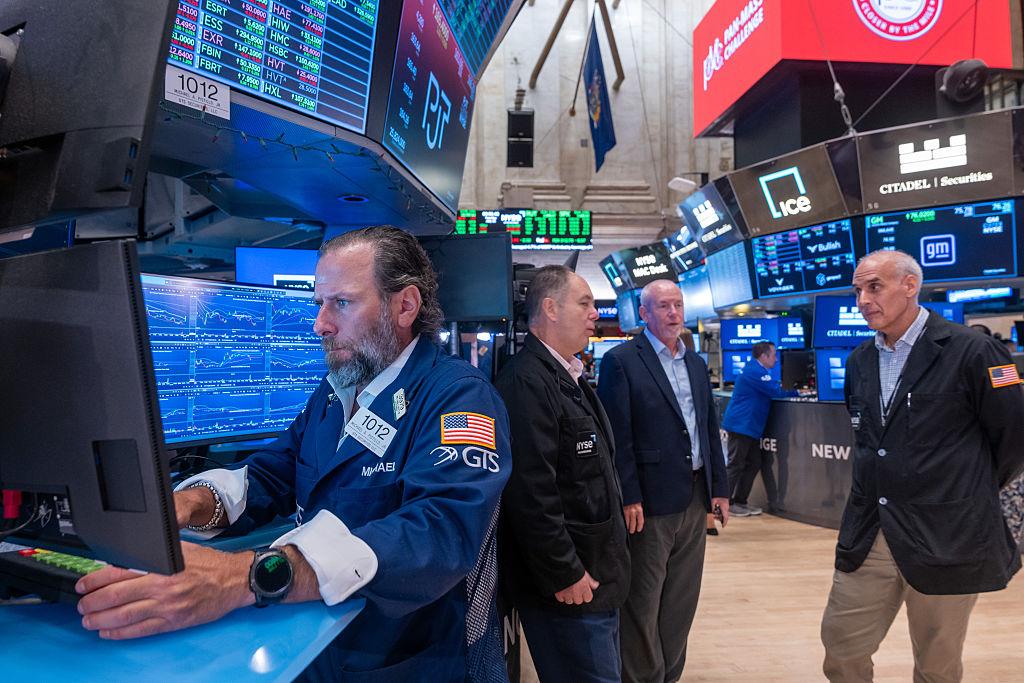
U.S. stock market today is being shaped by a delicate combination of cooling consumer inflation, uncertainty over the Federal Reserve’s next interest-rate decision, strong demand for artificial-intelligence stocks and renewed concerns about energy prices. After Wednesday’s trading session, investors are entering Thursday with the latest CPI report behind them but another important inflation test ahead: the July Producer Price Index, or PPI.
The latest data gave Wall Street some relief. U.S. consumer prices increased 0.1% in July from June and were up 3.4% from a year earlier, down from 3.5% in June. Core CPI, which excludes food and energy, increased 0.2% for the month and 2.5% over the year. The readings were broadly in line with expectations, reducing the immediate pressure for another Federal Reserve rate increase.
But investors should not interpret one relatively calm inflation report as the end of the inflation story. The Federal Reserve is still dealing with inflation above its 2% goal, a labor market that has shown signs of cooling and energy-market uncertainty. At the same time, Wall Street’s enthusiasm around artificial intelligence remains an important source of support for technology and semiconductor shares. That combination is creating a market in which good economic news can help stocks, but unexpectedly hot inflation or higher oil prices could quickly change the mood.
U.S. Stock Market Today: What Happened on Wall Street
The S&P 500 finished Wednesday at 7,748.50, gaining 0.26%, while the Nasdaq Composite advanced 0.54% to 26,588.49. The Dow Jones Industrial Average slipped 0.04%. The relatively modest moves disguise an important change underneath the surface: technology and semiconductor shares received a boost from continued enthusiasm surrounding AI investment, while the CPI report reduced some of the immediate fear surrounding another Fed rate increase.
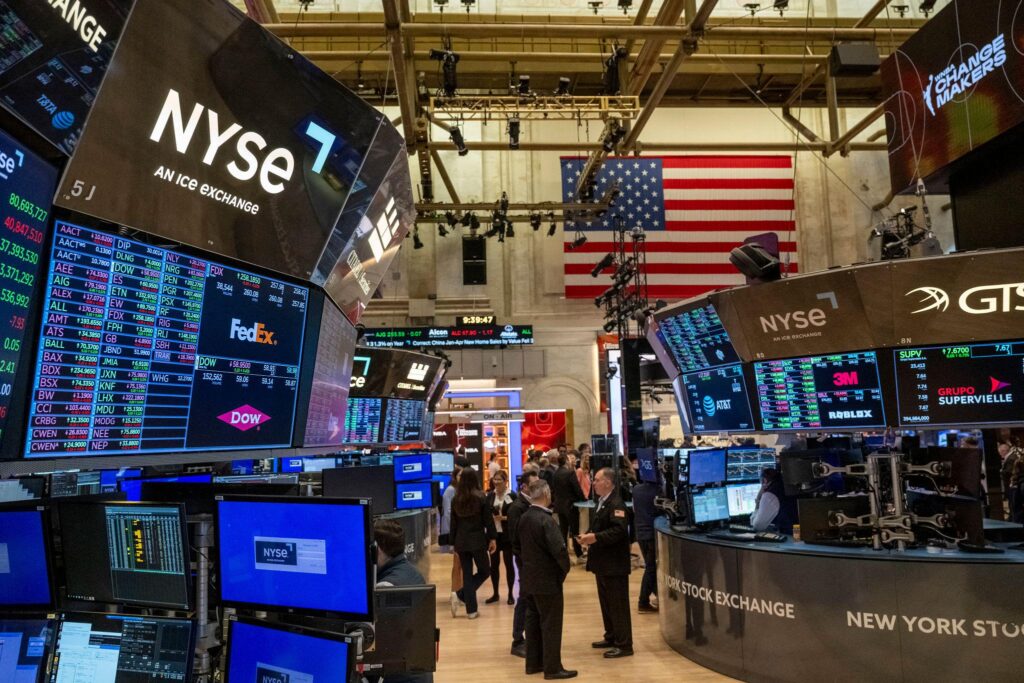
AI infrastructure was particularly important to Wednesday’s session. CoreWeave jumped sharply after reporting stronger-than-expected results and raising its capital-spending outlook, while Super Micro Computer also gained after giving investors a stronger revenue outlook. Nvidia and Micron Technology advanced as semiconductor shares benefited from renewed expectations for continued AI infrastructure spending. The Philadelphia Semiconductor Index gained 2.5%, showing how strongly investors were responding to the AI investment theme.
For investors, however, the bigger story is not simply whether the Nasdaq rises or falls on a single day. The market is trying to determine whether strong corporate earnings and AI investment can continue to offset the pressure created by elevated valuations and interest rates. A company can report excellent growth and still see its stock fall if Treasury yields rise enough to reduce the value investors place on future earnings. That is why the bond market remains almost as important as the stock market in today’s environment.
The latest market reaction also suggests that investors are increasingly focused on the difference between inflation that is slowing gradually and inflation that is falling quickly enough to justify easier monetary policy. Those are not the same thing. The July CPI report was encouraging because it did not show an upside surprise, but annual inflation at 3.4% remains considerably above the Fed’s 2% objective.
Inflation, PPI and the Next Test for U.S. Stocks
July CPI provided Wall Street with a measure of relief. Headline inflation increased only 0.1% month over month, while annual inflation slowed to 3.4%. Core inflation increased 0.2% during the month and 2.5% over the year. The BLS data show that some of the moderation came alongside lower gasoline prices and declines in several categories, while shelter and other services continued to matter for the overall inflation picture.
The next test arrives Thursday morning with the Producer Price Index. PPI measures price changes received by domestic producers and can provide an earlier indication of cost pressures moving through businesses and eventually into consumer prices. The BLS scheduled the July PPI release for August 13 at 8:30 a.m. Eastern Time.
That makes PPI particularly important for today’s market. If producer-price pressure remains contained, investors could interpret the combination of CPI and PPI as evidence that inflation is gradually becoming less threatening. That could support rate-sensitive areas such as technology, real estate and other companies whose valuations are particularly sensitive to borrowing costs.
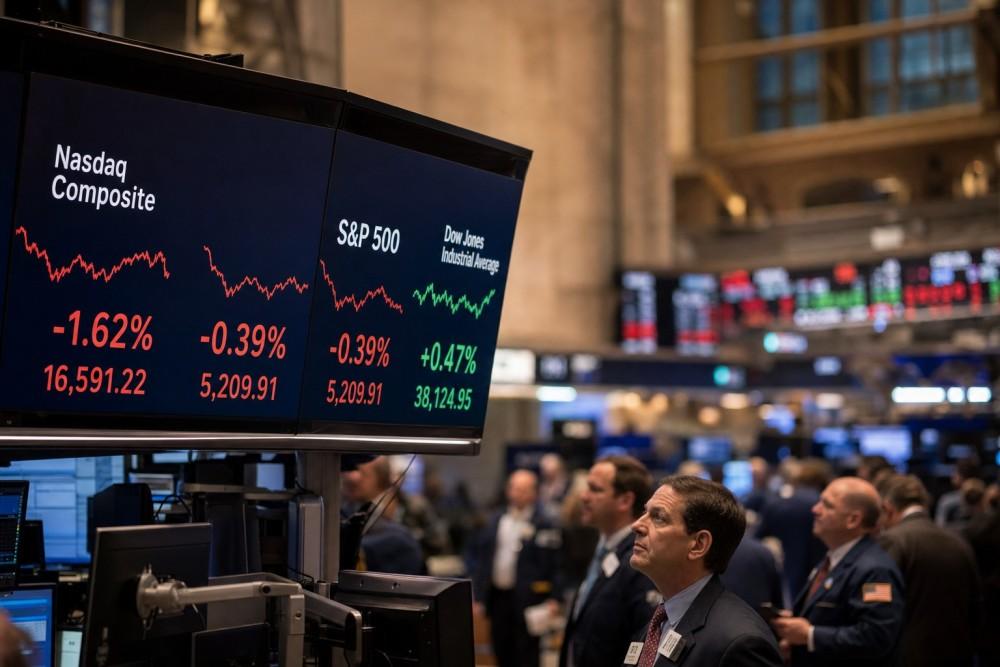
If PPI instead surprises meaningfully to the upside, the market could become more cautious. Higher producer costs can raise concerns about corporate margins, consumer prices and the possibility that the Federal Reserve will need to keep monetary policy restrictive for longer. That would potentially put pressure on long-duration growth stocks and could push Treasury yields higher.
The previous PPI report showed why investors are watching the series carefully. June final-demand producer prices fell 0.3%, while prices for final-demand goods declined 1.4%. However, final-demand services increased 0.2%, and the index for final demand was still 5.5% higher than a year earlier.
For today’s article, the most important thing is to update this section after 8:30 a.m. ET with the actual July PPI result. Do not publish a forecast as though it were an official result.
What the Federal Reserve Signals Mean for Wall Street
The Federal Reserve remains at the center of the U.S. market story. At its July 28–29 meeting, the Federal Open Market Committee voted 9–3 to maintain the federal-funds target range at 3.50% to 3.75%. The Fed said economic activity was expanding at a solid pace, while inflation remained elevated relative to its 2% objective. Three members preferred a quarter-point increase.
That vote is important because it shows that the committee is not operating from a completely unified view of inflation risk. While the July CPI report reduced some immediate pressure for another increase, the Fed still has to balance price stability against employment and economic growth. The central bank’s own July report also emphasized that inflation had risen during 2026 and remained above target, partly because of supply shocks including energy costs.
Markets are therefore paying close attention to every new inflation and labor-market report. Reuters reported Thursday that expectations for a September Fed rate increase had fallen following the mild CPI report, with market pricing showing substantially less concern about an immediate hike than a week earlier. Investors are nevertheless waiting for additional evidence before assuming that the Fed’s policy path has changed permanently.
The distinction matters for stocks. A lower inflation reading can support equities because it reduces pressure on the Fed to tighten policy. But if inflation cools because economic growth is weakening sharply, investors may instead become worried about corporate earnings. The ideal scenario for Wall Street is much harder to achieve: inflation gradually moves lower while economic growth and corporate profits remain healthy.
That is why investors should avoid treating every CPI or PPI release as a simple “stocks up” or “stocks down” signal. The market response depends on the interaction between inflation, economic growth, earnings, Treasury yields and expectations for monetary policy.
What This Means for You
For American investors, the current market environment has several practical implications. First, the latest inflation report is not evidence that inflation has disappeared. Annual CPI at 3.4% remains above the Federal Reserve’s 2% target. At the same time, the data do not currently show the kind of sudden acceleration that would automatically force the Fed into a more aggressive policy response.
That distinction matters for households because interest rates influence more than stock prices. Federal Reserve policy affects borrowing conditions, savings products, mortgages, business financing and the valuation of financial assets. When investors expect rates to remain high, borrowing can remain expensive and high-growth companies can face greater valuation pressure. When expectations shift toward lower rates, financial conditions can become more supportive.
For people with retirement accounts such as 401(k)s and IRAs, daily market movements are usually less important than diversification, time horizon and risk tolerance. A 0.5% move in the Nasdaq or S&P 500 does not by itself change the long-term investment case. What matters more is whether the underlying economic and earnings environment is changing.
For consumers, energy prices deserve particular attention. Oil has become an important inflation risk because geopolitical developments can influence fuel costs, transportation expenses and business input prices. Recent market reporting has highlighted the continuing sensitivity of crude prices to developments involving the Middle East and the Strait of Hormuz.
For savers and borrowers, the message is similarly mixed. Higher rates can benefit people holding cash in competitive savings products or short-term fixed-income investments, but they can make mortgages, credit cards and other borrowing more expensive. A future decline in rates would reverse some of those effects, although the timing and size of any Fed move remain uncertain.
Investor Takeaway
The central message for investors today is that the U.S. stock market is balancing three competing forces: cooling inflation, restrictive monetary policy and powerful corporate growth expectations around artificial intelligence.
The CPI report was constructive for risk assets because it did not deliver an upside inflation surprise. The S&P 500 and Nasdaq responded with modest gains, while technology and semiconductor shares received additional support from strong AI-related corporate results.
But investors should not confuse a favorable market reaction with the removal of risk. The S&P 500 and Nasdaq are operating at elevated levels, which means expectations are already significant. When expectations are high, companies may need to deliver exceptionally strong earnings and guidance to justify further gains.
The AI trade is a good example. Strong demand for data centers, semiconductors and computing infrastructure can support corporate earnings, but investors also need to monitor capital spending, profitability, competition and valuation. The market can reward strong AI growth, but it can also punish companies if spending rises faster than expected returns.
Treasury yields should remain another critical indicator. The bond market provides a real-time measure of how investors are assessing inflation and monetary policy. When yields rise sharply, growth-oriented stocks can come under pressure. When yields stabilize or fall because inflation expectations moderate, the environment can become more favorable for long-duration assets.
Oil is another variable that could complicate the picture. Falling crude prices would generally make the inflation outlook easier, while a sustained energy-price increase could create renewed pressure on consumer prices and the Federal Reserve. Reuters reported that oil prices were moving lower Thursday as investors considered weaker demand signals, even while geopolitical uncertainty remained a risk.
The most useful approach, therefore, is not to predict one guaranteed market direction. Investors should watch the data and identify which scenario is developing.
Future Outlook
The next phase of the U.S. market story will depend heavily on whether the recent improvement in inflation continues. Today’s PPI report is an immediate catalyst, followed by additional labor-market and economic releases. The Federal Reserve will have more information before its next policy decision, meaning today’s market reaction should be viewed as one piece of a larger economic puzzle rather than a final verdict on interest rates.
The near-term bullish scenario is straightforward: inflation continues to moderate, economic growth remains positive, corporate earnings stay strong and AI investment continues to generate revenue growth. Under that combination, investors could continue to support equities even with interest rates above the ultra-low levels seen during previous market cycles.
The more difficult scenario would involve renewed energy inflation, sticky services prices, higher producer costs or unexpectedly strong price pressures. That could push Treasury yields higher and force investors to reconsider how quickly monetary policy can become easier. Growth stocks with high valuations would be particularly sensitive to such a change.
There is also a downside economic scenario that investors should not ignore. If the labor market weakens substantially while inflation remains elevated, the Fed could face a difficult policy trade-off. Cutting rates could support growth but risk keeping inflation elevated; maintaining restrictive policy could help price stability but increase pressure on economic activity.
For the remainder of 2026, investors should therefore watch CPI, PPI, PCE inflation, employment data, Treasury yields, oil prices, corporate earnings and Fed communications together. Looking at only one indicator can create a misleading picture. Looking at the interaction among these indicators provides a much stronger framework for understanding where Wall Street may be heading.
The most important question for investors is no longer simply whether inflation is falling. It is whether inflation can continue moving toward the Federal Reserve’s 2% objective without causing a major slowdown in economic growth or corporate profits.
That is the balance that could determine whether the current U.S. stock-market rally extends further, pauses, or becomes more volatile during the months ahead.
Subscribe to trusted news sites like USnewsSphere.com for continuous updates.