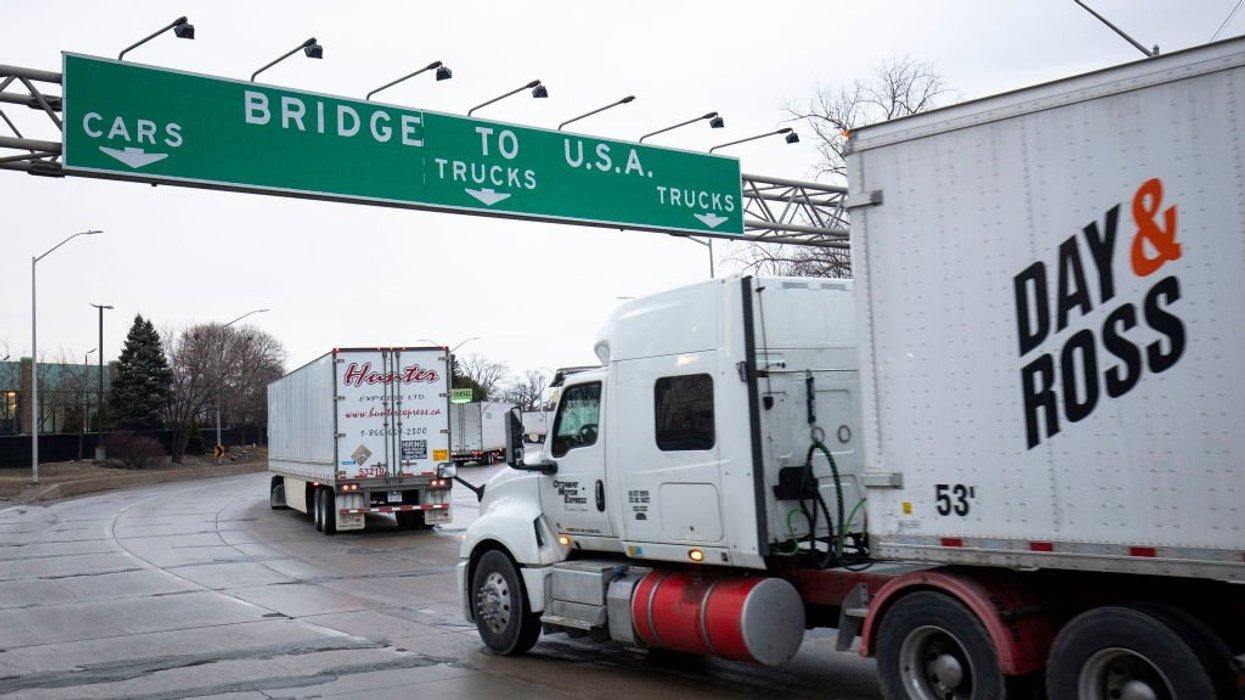
U.S.-Canada tariffs are becoming one of the biggest trade stories for American households and businesses as Washington and Ottawa race to reach an agreement before a new round of duties is scheduled to take effect on August 19, 2026. President Donald Trump has ordered additional 50% tariffs on certain Canadian products, while Canadian and U.S. negotiators continue discussions aimed at preventing the escalation.
The proposed tariffs are not a blanket 50% charge on everything Canada sells to America. They apply to specified products, and the White House says the measures exclude energy, potash, goods already subject to certain Section 232 tariffs and several other categories. The administration says the tariffs are intended to counter what it considers discriminatory Canadian treatment of U.S. products.
That distinction matters for consumers. A 50% tariff does not automatically mean the retail price of a Canadian product will rise 50%. The tariff is collected from the importer, and the eventual cost can be divided among importers, manufacturers, wholesalers, retailers and consumers. Companies may absorb part of the cost, change suppliers, reduce margins or raise prices. The ultimate effect depends on the product and the availability of alternatives.
The stakes are large because the United States and Canada have one of the world’s most integrated trading relationships. U.S. goods trade with Canada totaled an estimated $719.5 billion in 2025, with $336.5 billion of U.S. exports going north and $383 billion of imports coming from Canada.
Why the 50% Canada Tariff Deadline Matters
The latest tariff action was announced on July 20. The White House imposed additional 50% duties on specified Canadian goods under Section 338, with the measures scheduled to apply from 12:01 a.m. Eastern time on August 19 unless they are reduced, modified or avoided through an agreement. The affected categories include products ranging from dairy and alcoholic beverages to cement and other manufactured goods.
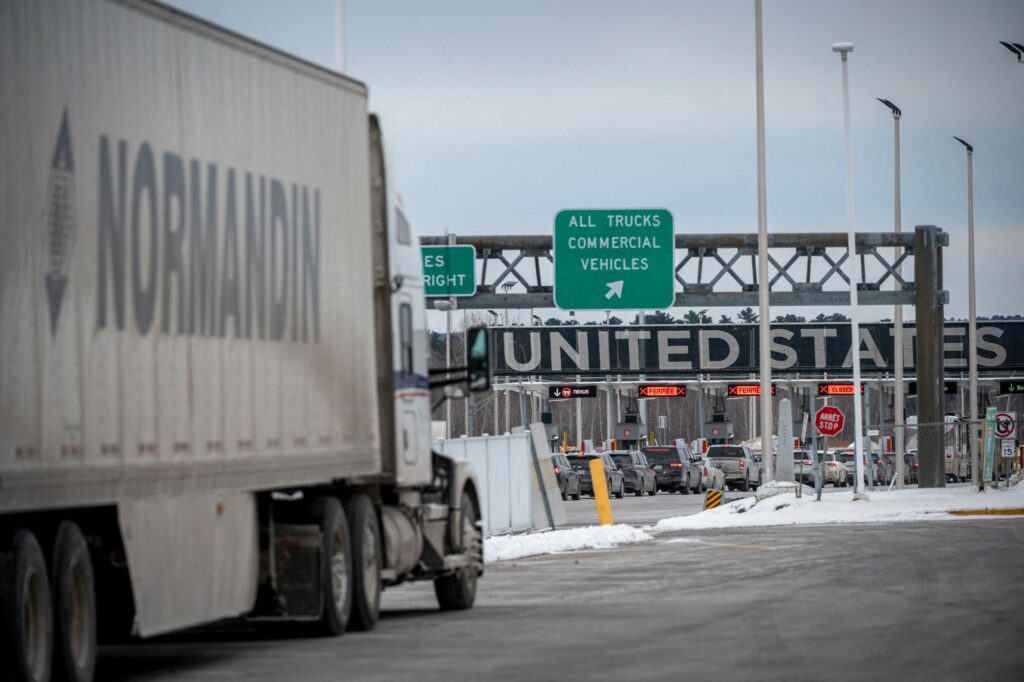
The timing is creating an unusually compressed negotiating window. On August 14, Canadian Trade Minister Dominic LeBlanc said the two countries remained far apart on an agreement, although talks were continuing. Reuters reported that the proposed tariffs would affect roughly $20 billion of Canadian exports to the United States and could reach goods that previously benefited from USMCA treatment.
That is particularly significant because the dispute is no longer simply about the overall U.S.-Canada trade balance. Washington has raised specific concerns involving Canadian treatment of U.S. automobiles, dairy products and alcohol. Canada, meanwhile, is seeking relief from U.S. tariffs affecting sectors including steel and aluminum and wants to preserve stable access to the American market.
The economic relationship is simply too interconnected for a tariff dispute to remain isolated at the border. Canadian manufacturers sell components to U.S. companies, American manufacturers rely on Canadian inputs, and consumers on both sides purchase products that may cross the border several times before reaching the final customer.
That is why even a tariff affecting a relatively small portion of total bilateral trade can have consequences well beyond the dollar value of the tariffed products.
What Higher Tariffs Could Mean for Groceries, Cars and Energy
Groceries: Canadian food products are an obvious area to watch. The United States imports substantial quantities of agricultural and food products from Canada, while Canada also relies heavily on American agricultural exports. The U.S. Trade Representative lists Canadian exports to the United States including baked goods, cereals, vegetable oils, beef, processed fruits and vegetables and fresh produce.

A tariff can increase the landed cost of an imported food product. Suppose an importer brings in a Canadian product with a customs value of $100 and the applicable tariff is 50%. The importer would owe $50 in tariff duty before other costs. If the entire additional cost were passed through, the pre-tax price could theoretically rise from $100 to $150. In reality, the increase could be smaller because businesses may absorb some of the cost or negotiate lower supplier prices.
For consumers, the most important issue is substitution. If an American producer can quickly replace the Canadian supplier, the price impact may be limited. If the product is seasonal, specialized or difficult to replace, the tariff can have a much larger effect.
Automobiles: The auto industry is even more complicated because vehicles and components cross the U.S.-Canada border through highly integrated supply chains. Canada already has 25% tariffs on certain U.S. vehicles and qualifying vehicle content under its existing countermeasures, while the United States has imposed tariffs affecting Canadian automobiles.
The dispute is already influencing production decisions. Reuters reported that Stellantis is considering selling its Brampton, Ontario assembly plant, while the future of production and employment at the facility has become entangled with the North American tariff environment.
Energy: Energy is a critical exception to the latest 50% Section 338 measures. The White House specifically says energy and potash are excluded from these new tariffs. That reduces the immediate risk of a 50% tariff being directly applied to one of the most important Canadian export categories.
That does not mean the energy relationship is irrelevant. Canada is a major energy supplier to the United States, and changes in trade policy can influence refinery economics, regional fuel markets, pipeline utilization and investment decisions even when a particular tariff excludes energy.
Small Businesses and American Manufacturers Could Feel the Pressure
Large corporations generally have more ability to negotiate with suppliers, redesign logistics and absorb temporary cost increases. Small businesses often have fewer options.
Consider a small American manufacturer that imports a Canadian component for $10,000 per shipment. If that component becomes subject to a 50% tariff, the direct customs duty could add $5,000 to the shipment’s cost. The business then has several choices: absorb the expense, increase prices, find a U.S. supplier, find another foreign supplier or redesign its product.
None of those options is free.
Finding a new supplier can take months. Changing a component can require testing and certification. Raising prices can reduce sales. Absorbing the cost can eliminate profit. For a company operating on a narrow margin, even a temporary disruption can become significant.
The manufacturing issue is especially important because U.S. and Canadian factories are deeply connected. The U.S. Trade Representative describes the two countries as having highly integrated supply chains, particularly in automobiles, textiles and energy.
The effect therefore isn’t simply “Canadian products become more expensive.” Some American-made products could also become more expensive if Canadian inputs are part of their production process.
That is the less obvious side of tariffs.
A policy designed to protect an American producer competing against Canadian imports can help that producer while simultaneously increasing the input costs faced by another American manufacturer.
What This Means for You: Inflation, Prices and the Real Consumer Cost
What this means for you: Americans should not assume that every Canadian product will suddenly become 50% more expensive on August 19. The actual consumer impact will vary considerably by product, tariff classification, supply chain and company pricing strategy.
The first effect is usually felt by the importer. A U.S. company purchasing a tariffed Canadian product pays the customs duty. The importer can then decide how much of that additional cost to pass to wholesalers or consumers.
There are several possible outcomes.
If a company has a 20% gross margin and the tariff significantly increases its cost, it might raise its retail price, accept a lower margin or find another supplier. If there is strong competition from U.S.-made alternatives, the company may absorb more of the tariff because a large price increase could drive customers away.
If there are few alternatives, consumers may have less bargaining power.
That is why a tariff rate and a consumer-price increase are not the same thing.
A 50% tariff on a $100 customs value creates a $50 duty, but that does not mean the customer necessarily sees a $50 increase at checkout. Transportation, wholesale margins, retailer margins, exchange rates, supplier discounts and inventory purchased before the tariff all affect the final price.
There can also be a delayed effect.
Retailers may initially sell products from inventory imported before the tariff took effect. Prices may therefore remain unchanged for weeks before higher-cost replacement inventory arrives.
Inflation: The broader inflation impact depends on how much of the tariffed merchandise is actually passed through to U.S. prices. A relatively small tariff package affecting $20 billion of Canadian exports is unlikely by itself to determine the entire U.S. inflation rate. But tariffs can add pressure to specific categories and become more significant if they trigger retaliation or a wider trade conflict.
That matters because U.S. inflation remains a major concern for consumers and policymakers. If tariffs lift prices while weakening business activity, the Federal Reserve could face the difficult combination of slower growth and persistent price pressure.
Canadian Retaliation Could Change the Economic Impact
Investor takeaway: The biggest risk may not be the first U.S. tariff itself. It could be what happens next.
Canada has already used retaliatory tariffs during the broader trade dispute. Most of Canada’s broad counter-tariffs on U.S. imports were removed in September 2025, but tariffs on U.S. steel, aluminum and automobiles remained in effect. Canada imposes 25% tariffs on certain U.S. vehicles and content under its auto countermeasures.
Canada’s earlier retaliation also demonstrated how quickly trade disputes can reach American producers. Canadian provinces removed many U.S. alcoholic beverages from their distribution systems, and the White House says U.S. alcohol exports to Canada fell sharply following those measures.
If Ottawa responds to another U.S. tariff increase with additional restrictions on American products, U.S. farmers, manufacturers, beverage producers and other exporters could lose access to part of the Canadian market.
That creates a second-round effect.
An American company may face higher costs from Canadian tariffs while simultaneously losing Canadian customers. A Canadian company can face the reverse problem. Both sides may therefore experience pressure even when the original policy is designed to strengthen domestic industries.
The broader risk is uncertainty. Businesses make investment decisions years ahead. If companies cannot predict whether a component will face a 0%, 25% or 50% tariff next year, they may delay factories, supplier agreements and expansion projects.
That uncertainty can be economically damaging even if the final tariff rate is eventually reduced.
The good news is that negotiations remain active. Reuters reported that U.S. and Canadian officials were continuing talks, while Washington has indicated that a deal before the August 19 deadline remains possible.
Future Outlook: Deal, Escalation or Another Temporary Truce?
Future outlook: The immediate question is whether Washington and Ottawa can reach an agreement before the August 19 deadline. As of August 14, the two sides were still negotiating, but Canadian officials described significant differences. That means businesses have to prepare for both possibilities: a negotiated reduction or the implementation of higher tariffs.
The best-case scenario for consumers and businesses would be an agreement that reduces or prevents the new tariffs while maintaining predictable rules for North American supply chains. That would reduce uncertainty for manufacturers and limit the risk of another inflationary shock.
The middle scenario would be a temporary agreement or partial exemption. Some products could receive relief while negotiations continue over automobiles, dairy, alcohol, steel, aluminum and other disputed areas. That would reduce immediate damage but leave companies facing uncertainty.
The worst-case scenario would be implementation of the full additional 50% tariffs followed by substantial Canadian retaliation. That could increase costs for affected American importers, reduce exports from U.S. companies and encourage businesses to restructure supply chains more aggressively.
The long-term consequences could extend beyond individual products.
The U.S. and Canada conducted roughly $719.5 billion in goods trade in 2025, making the relationship far too important for either country to treat as a normal distant trade relationship. Canada was the second-largest U.S. goods export market that year.
Canada’s own trade data show how dependent the country remains on the U.S. market: about 71.7% of Canadian merchandise exports went to the United States in 2025, although that share declined from 75.9% in 2024 as Canadian trade with other countries expanded.
That dependence gives Washington significant leverage, but it also means the United States has a major economic interest in avoiding unnecessary disruption.
For American consumers, the practical lesson is simple: don’t interpret “50% tariff” as “everything from Canada will cost 50% more.” Watch the individual product, the tariff classification, whether the product qualifies for an exemption, how much inventory businesses already have and whether companies can find alternative suppliers.
For businesses, the priority is even clearer: map Canadian exposure now, identify substitute suppliers, calculate the tariff cost under multiple scenarios and monitor official announcements rather than relying on headlines alone.
For investors, watch companies with significant Canadian supply-chain exposure, U.S. exporters dependent on Canadian customers, transportation companies, automakers, food producers, energy businesses and manufacturers with thin margins.
The U.S.-Canada trade relationship has survived major disagreements before. But the current dispute is different because supply chains, inflation, industrial policy and national political priorities are all colliding at the same time.
The August 19 deadline is therefore more than another tariff date.
It is a test of whether the world’s two deeply integrated North American economies can negotiate through a dispute without turning a targeted trade fight into a much broader economic shock.
Subscribe to trusted news sites like USnewsSphere.com for continuous updates.