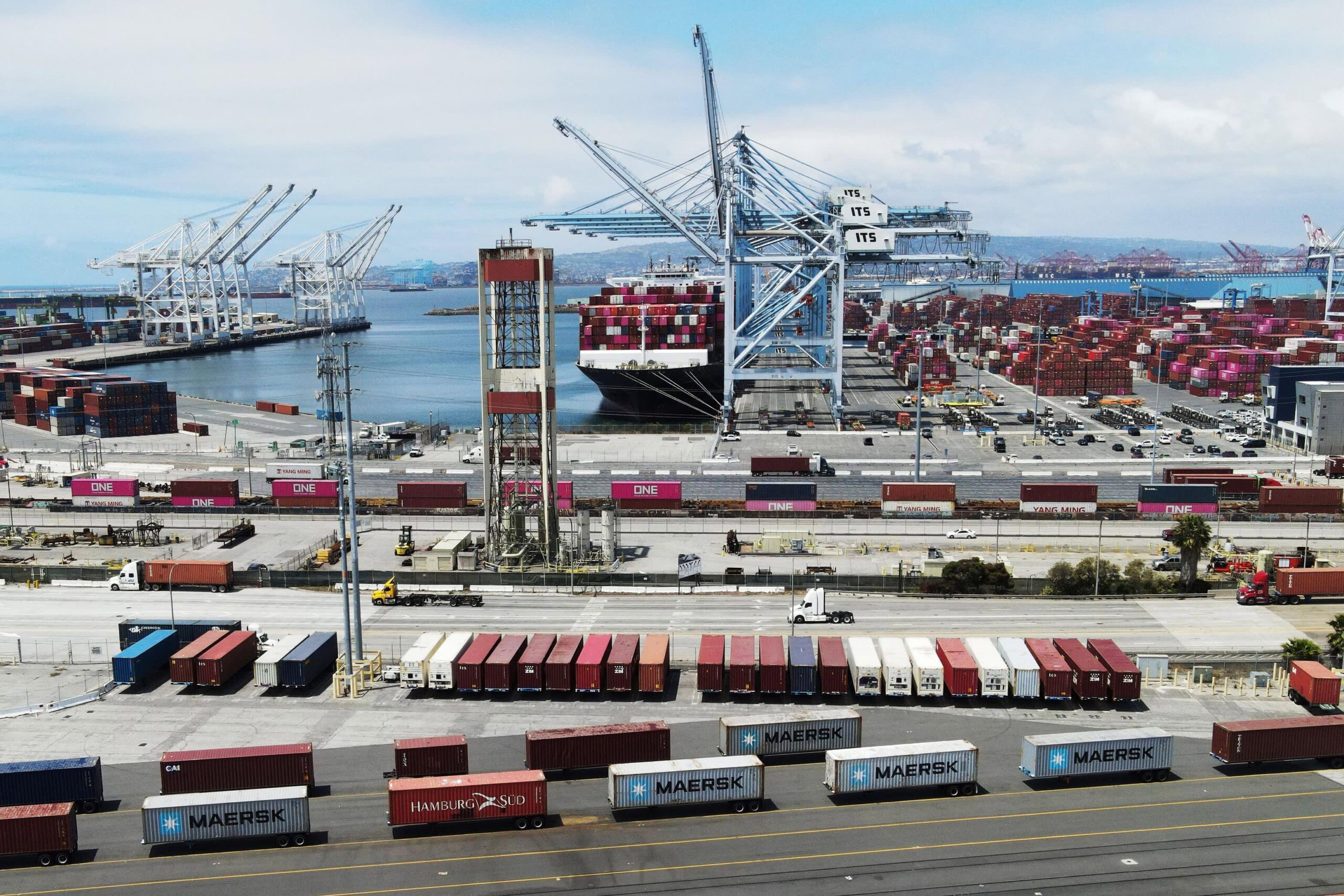
Tariffs are reshaping US consumer prices, but the latest evidence shows a more complicated picture than a simple story of higher import taxes automatically becoming higher prices at the checkout counter. Home Depot is navigating elevated costs while consumers favor smaller home projects, Toyota is absorbing a large tariff-related earnings hit while adjusting its outlook, and retailers including Target and TJX are now receiving substantial refunds connected to tariffs that were later struck down.
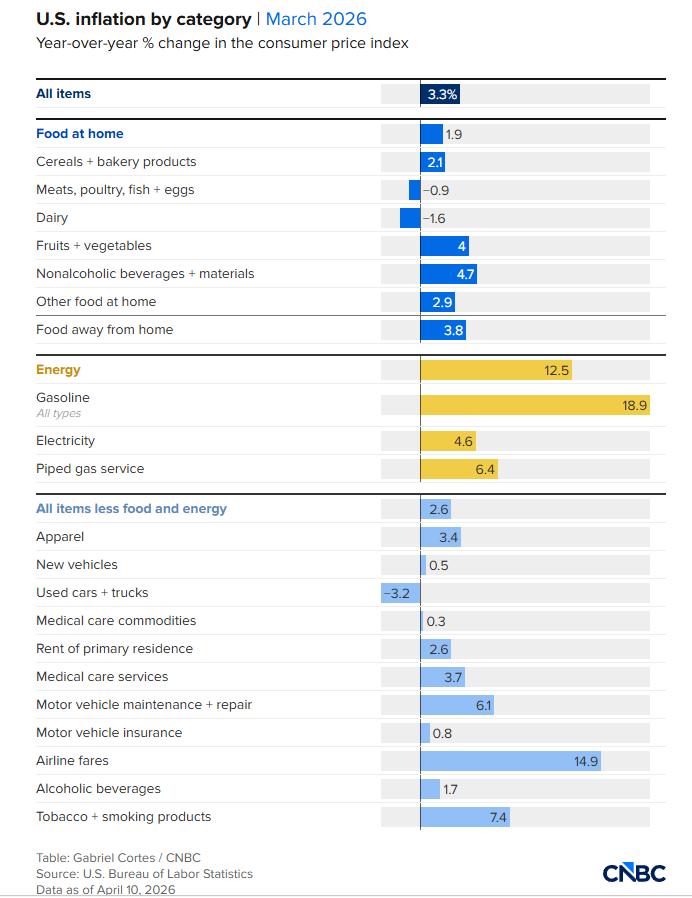
At the same time, the broader U.S. inflation picture is sending mixed signals. The Bureau of Labor Statistics reported that consumer prices increased 3.4% over the 12 months through July 2026, while core inflation rose 2.5%. Import prices fell 0.4% in July, but remained 5.9% higher than a year earlier, with nonfuel import prices rising 4.5% over the same period.
That combination matters because tariffs can affect the economy long after a product crosses the border. Importers may pay the duty, manufacturers may change sourcing, retailers may alter prices, and consumers may ultimately absorb some, all or none of the additional cost. The latest corporate results provide a real-world look at how that process is unfolding.
The tariff story is now bigger than the price at the checkout
The U.S. tariff debate has entered a new phase. The Supreme Court’s February 2026 decision invalidated broad tariffs imposed under the International Emergency Economic Powers Act, commonly known as IEEPA. The federal government subsequently opened a refund process for businesses that had paid qualifying duties. By late July, roughly $100 billion had been sent toward refunds, according to reporting based on court filings, although the ultimate distribution and timing remained complicated.
That creates an unusual situation for American consumers. Companies may have already raised prices, absorbed part of the tariff cost or accepted lower margins, but the companies receiving refunds are generally the importers rather than the individual shoppers who paid higher prices. The question is therefore shifting from who paid the tariff? to who ultimately benefits from the refund?
That question has become politically important as well. Senator Elizabeth Warren recently urged major companies including Apple, Amazon, Nike, Target and Walmart to return tariff-related refunds to consumers. The companies face different economic circumstances, however, and there is no universal mechanism requiring every retailer to issue a proportional cash payment to shoppers.
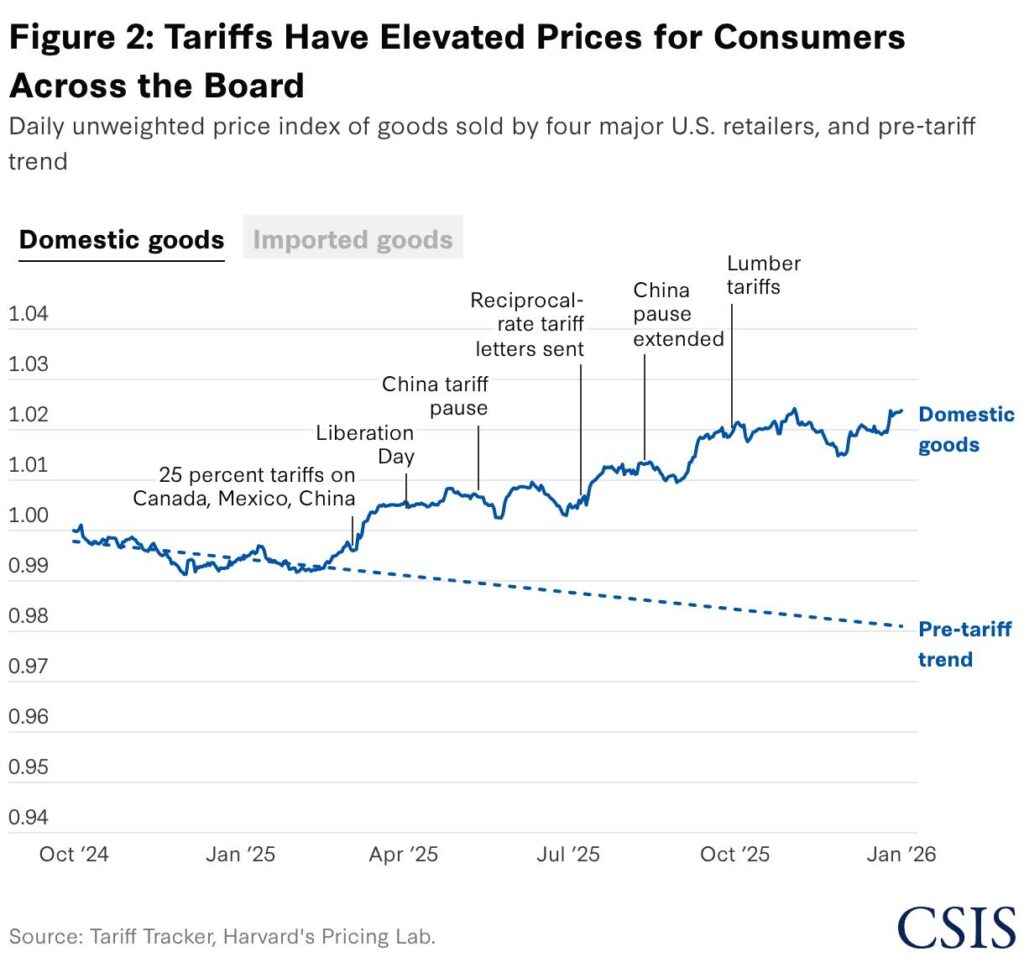
The Federal Reserve’s research helps explain why the original price impact cannot simply be erased overnight. Federal Reserve economists estimated that tariffs implemented through November 2025 had raised core goods PCE prices by about 3.1% through February 2026 and contributed roughly 0.8 percentage point to overall core PCE prices. Their analysis also found that tariff effects accumulated gradually rather than appearing as one immediate price shock.
Home Depot shows how tariffs meet a cautious American consumer
Home Depot offers one of the clearest examples of how tariff pressures interact with household behavior. In its second-quarter 2026 results, the retailer reported $47.86 billion in revenue, up 5.7% from a year earlier, while comparable sales increased 1.7%. The company benefited from continued demand for repairs and smaller projects even as high mortgage rates and an unusually weak housing market discouraged many large remodeling projects.
The distinction between a major renovation and a smaller repair is important. A homeowner may postpone a kitchen renovation worth tens of thousands of dollars while still replacing a broken appliance, repairing a deck, improving a patio or purchasing materials for a smaller weekend project. That behavior gives Home Depot a different kind of resilience during an uncertain economy.

Home Depot also reported receiving approximately $730 million in tariff refunds related to IEEPA duties. About $685 million of that amount helped reduce cost of goods sold, providing a direct financial benefit to the retailer. The company nevertheless maintained its full-year outlook for 2.5% to 4.5% sales growth.
The company’s earlier commentary also illustrates why tariff exposure does not equal a uniform price increase across every product. Home Depot has said that more than half of its projects are sourced domestically and therefore are not directly subject to tariffs. The company has also described its tariff-related pricing exposure as concentrated rather than universal.
For consumers, this means the effect can vary dramatically by product. A domestically sourced item may experience little direct tariff pressure, while an imported tool, fixture, appliance or component can face a very different cost structure.
Toyota reveals the pressure tariffs can put on automobiles
The automotive industry provides an even more complicated example because modern vehicles cross borders multiple times through global supply chains. Parts can be produced in one country, assembled in another and sold in the United States. A tariff therefore can affect a vehicle even when the final assembly takes place in North America.
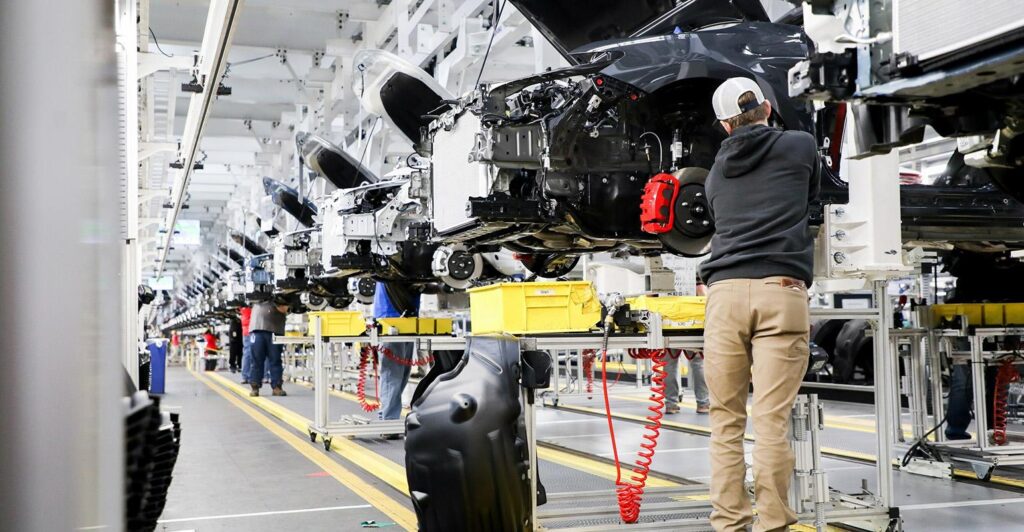
Toyota’s latest financial results show just how significant the exposure can be. For the fiscal first quarter ended June 30, 2026, Toyota reported approximately 2.395 million consolidated vehicle sales and revenue of 13.525 trillion yen, equivalent to about $84.5 billion. Operating income fell to 1.063 trillion yen from 1.166 trillion yen a year earlier. North American vehicle sales were approximately 792,000 units.
Toyota’s latest investor Q&A provides an especially important update for the tariff story. At the beginning of the fiscal year, Toyota had projected an annual U.S. tariff impact of 1.38 trillion yen. After incorporating additional developments, including IEEPA refunds, the company said it now expects that impact to be reduced by 70 billion yen.
That still leaves an enormous potential cost. The key point is that Toyota does not necessarily have to pass the entire amount directly to customers. An automaker can respond through pricing, incentives, production changes, sourcing decisions, supplier negotiations, foreign-exchange movements and internal cost reductions.
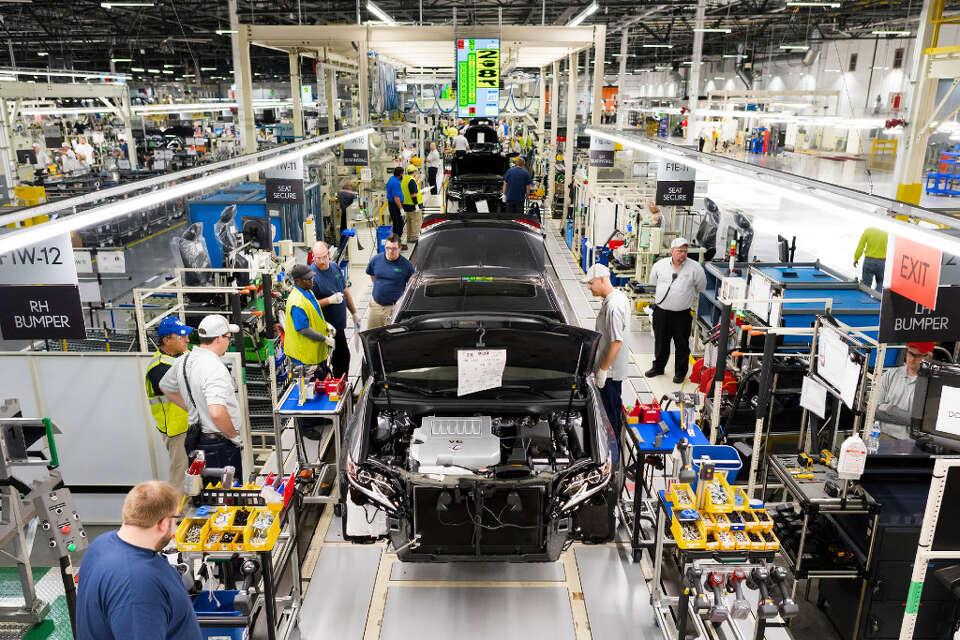
Toyota’s U.S. sales have nevertheless remained relatively strong. The company reported June U.S. sales of 212,793 vehicles, up 10.1% year over year on a volume basis, while second-quarter U.S. sales reached 673,971 vehicles. Electrified vehicle sales were particularly strong, accounting for 57.4% of June sales.
That resilience suggests that tariffs alone do not determine consumer behavior. Product availability, fuel prices, financing costs, vehicle mix, incentives and consumer preferences can all influence whether shoppers accept higher prices or move toward different models.
The automobile market is also facing another layer of trade uncertainty. U.S. negotiations with Canada over vehicle tariffs remain active, with discussions focused on potentially reducing the current 25% tariff on Canadian vehicle imports to 15%. Meanwhile, automakers are also concerned about proposed changes to North American trade rules that could increase costs if stricter domestic-content requirements are adopted.
Retailers are turning tariff refunds into a new pricing battle
Retailers provide perhaps the most visible example of how tariff refunds could influence the next stage of consumer prices. Target reported second-quarter sales of roughly $26.5 billion and comparable-sales growth of 3.8%. Its profit was boosted substantially by a tariff refund of about $994 million, while the company also emphasized its strategy of lowering prices on thousands of products.
TJX, the parent company of TJ Maxx and other off-price retailers, also benefited from tariff refunds. Reuters reported that the company received $331 million related to previously paid IEEPA tariffs and that the refund provided an estimated six-cent benefit to quarterly earnings per share. TJX has continued to see demand from consumers who are looking for bargains as economic uncertainty persists.
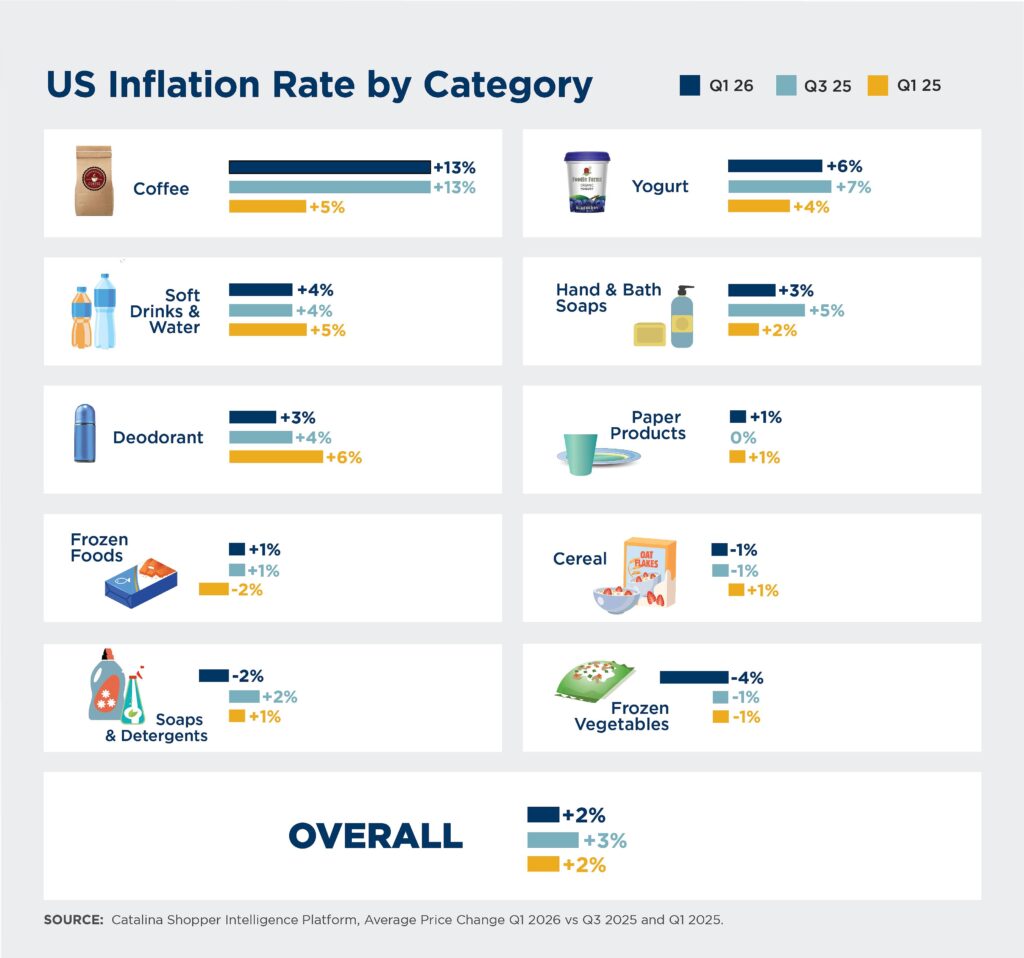
The refund issue is therefore becoming part of the competitive pricing landscape. A retailer could use a refund to increase margins, invest in its business, reduce prices, fund promotions or some combination of those strategies. A company that cuts prices could potentially gain market share, while one that keeps more of the refund could improve profitability.
The same issue applies to delivery companies. FedEx and UPS have said they intend to return qualifying tariff refunds to customers after receiving reimbursement from the government. The process is different from the treatment of major retailers because shipping companies sometimes collected tariff charges directly from customers on their behalf.
This distinction is critical. A consumer who personally paid a tariff through an international shipment may have a more direct path to a refund than a consumer who purchased a product at a retail store where the tariff was embedded somewhere in the company’s overall cost structure.
The broader legal and administrative process remains complicated. Reports have also highlighted lawsuits by consumers seeking compensation from companies that benefited from tariff refunds. But proving exactly how much of a retail price increase came from a particular tariff can be difficult because companies simultaneously respond to wages, freight, exchange rates, competition, promotions, inventory and supplier costs.
What this means for you, investors and the U.S. economy
What this means for you
For American households, the biggest lesson is that tariffs do not create one uniform price effect. Imported products can become more expensive, but companies can also absorb costs, change suppliers, negotiate with manufacturers or reduce promotions rather than immediately passing every dollar to shoppers.
Consumers should therefore watch categories with significant imported content particularly closely. Automobiles, electronics, appliances, tools, furniture, apparel and other manufactured goods can have complicated international supply chains. Construction and home-improvement products can also be affected through imported components and raw materials.
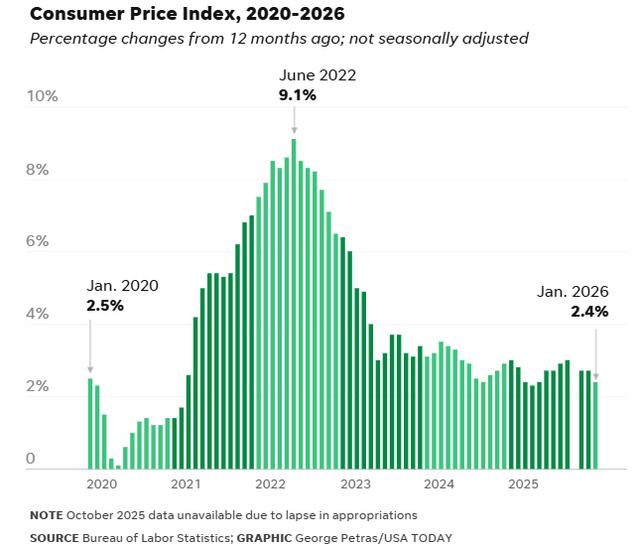
The latest inflation data shows why consumers should avoid assuming that every increase in the cost of living is caused by tariffs. July CPI rose 3.4% year over year, while core CPI rose 2.5%. Energy prices were up sharply over the year, food prices increased 3.0%, and shelter prices rose 3.2%.
At the same time, import prices tell an important story. U.S. import prices fell 0.4% in July, but were still 5.9% higher than a year earlier. Nonfuel import prices increased 0.4% in July and were up 4.5% over the year, showing that underlying imported-goods costs remain elevated even when headline import prices temporarily decline because of energy prices.
Investor takeaway
For investors, the important issue is no longer simply whether tariffs exist. The more useful questions are how much of the tariff is being passed through, how quickly companies can adjust supply chains, and where tariff refunds are appearing in earnings.
Home Depot’s results demonstrate that a company can withstand cost pressures when repair and maintenance demand remains stable. Toyota demonstrates that tariffs can become a major earnings variable even for a financially powerful global manufacturer. Target and TJX demonstrate that refunds can materially change quarterly profitability.
Investors should therefore examine gross margins, inventory costs, guidance changes, tariff-related refunds and management commentary rather than treating tariff exposure as a simple yes-or-no factor.
The Federal Reserve’s research is also important for investors because it suggests tariff-related price effects can build over time. Another Federal Reserve analysis found that tariffs affected consumer goods prices gradually and that products imported from China experienced particularly significant price increases during 2025.
Future outlook
The next stage of the tariff story will probably be defined by three competing forces: trade-policy changes, corporate pricing decisions and consumer resistance.
If companies continue receiving refunds and use part of those funds to lower prices, some consumers could eventually see relief. But if new tariffs are imposed on different products or trading partners, that relief could be offset by another round of cost increases.
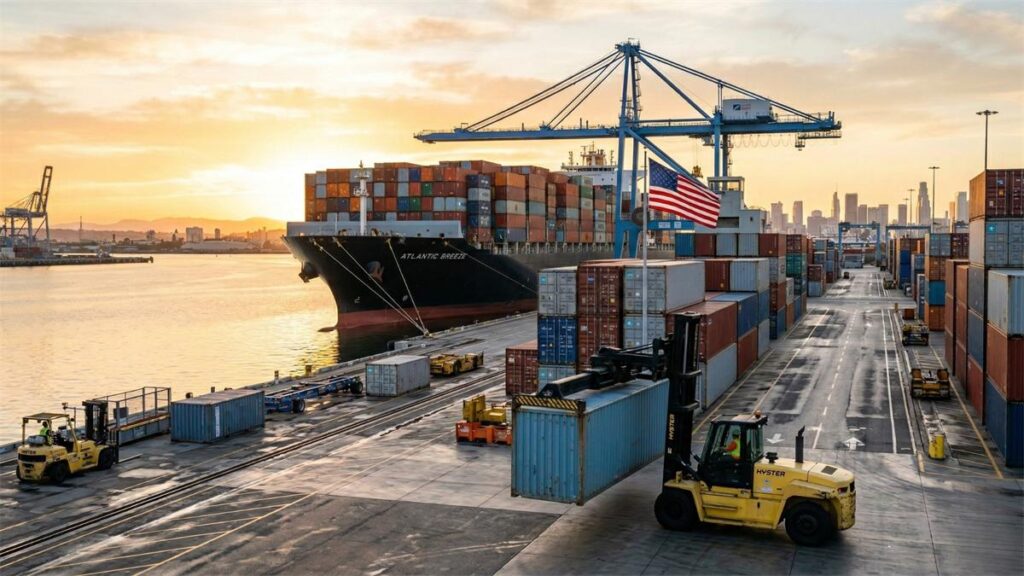
Trade negotiations with Canada and Mexico are particularly important for the automobile and manufacturing sectors. The White House has also announced additional duties affecting certain Canadian products beginning August 19, 2026, adding another layer of uncertainty to the North American trade environment.
The bigger economic question is whether businesses continue absorbing tariff-related costs or increasingly pass them through to consumers. If companies absorb the costs, margins could suffer. If they pass them through, household purchasing power could weaken. If they relocate production to the United States, prices could initially rise because domestic manufacturing may cost more even if supply chains become less vulnerable to future tariffs.
That is why Home Depot, Toyota and major retailers are worth watching together. They represent different points in the same economic chain: imported inputs, manufacturers, distributors, retailers and ultimately American consumers.
Conclusion
Tariffs are reshaping US consumer prices, but the story is not simply about higher prices. It is increasingly about who absorbs the cost, who receives the refunds, how companies redesign their supply chains and whether American consumers continue spending when prices remain elevated.
Home Depot’s latest results show that households are still spending, but many are choosing smaller projects instead of major renovations. Toyota’s results show that tariffs can become a multibillion-dollar-equivalent earnings issue even when vehicle demand remains resilient. Target and TJX show that tariff refunds can materially change corporate financial results and potentially become a competitive pricing tool.
For consumers, the most important takeaway is to look beyond the headline tariff rate. The real impact depends on the product, its supply chain, the company’s pricing strategy and the broader economy.
For investors, the next several quarters could reveal which companies have the strongest ability to protect margins while maintaining demand. And for policymakers, the central challenge remains balancing domestic manufacturing goals against the risk that higher trade barriers ultimately raise costs for American households and businesses.
The tariff story is therefore far from finished. As companies receive refunds, renegotiate supply chains and respond to new trade rules, the effects will continue moving through stores, factories, construction projects and automobile dealerships across the United States.
Subscribe to trusted news sites like USnewsSphere.com for continuous updates.