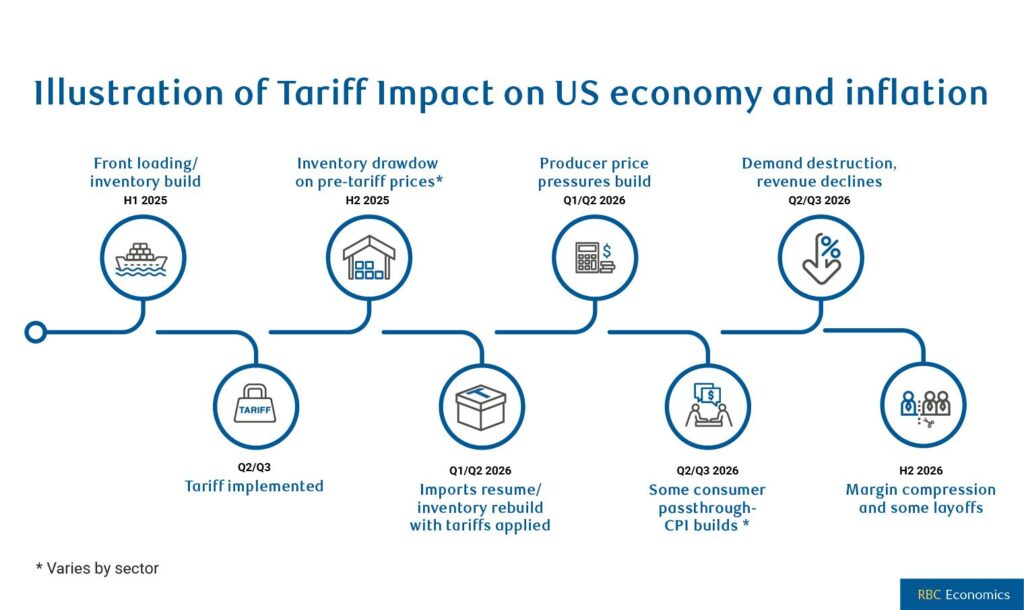
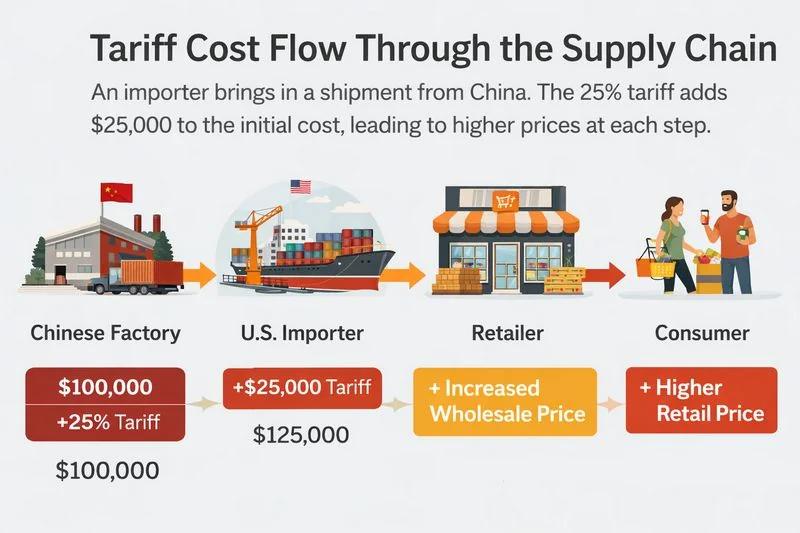
Trump tariffs are becoming an increasingly important economic issue for American households and businesses because the cost of an import does not necessarily stop at the border. A tariff can move through a long chain: an importer pays the duty, a manufacturer absorbs or passes along part of the cost, a retailer adjusts prices, consumers pay more, inflation changes, the Federal Reserve reassesses interest rates and investors reprice stocks.
That transmission chain is what makes the current tariff debate much bigger than politics or international trade negotiations.
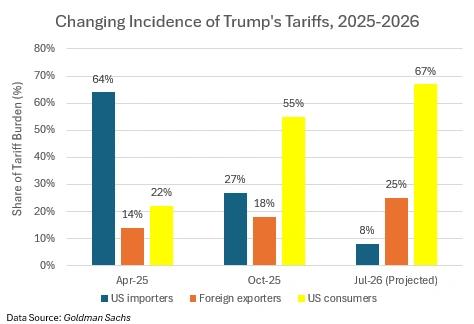
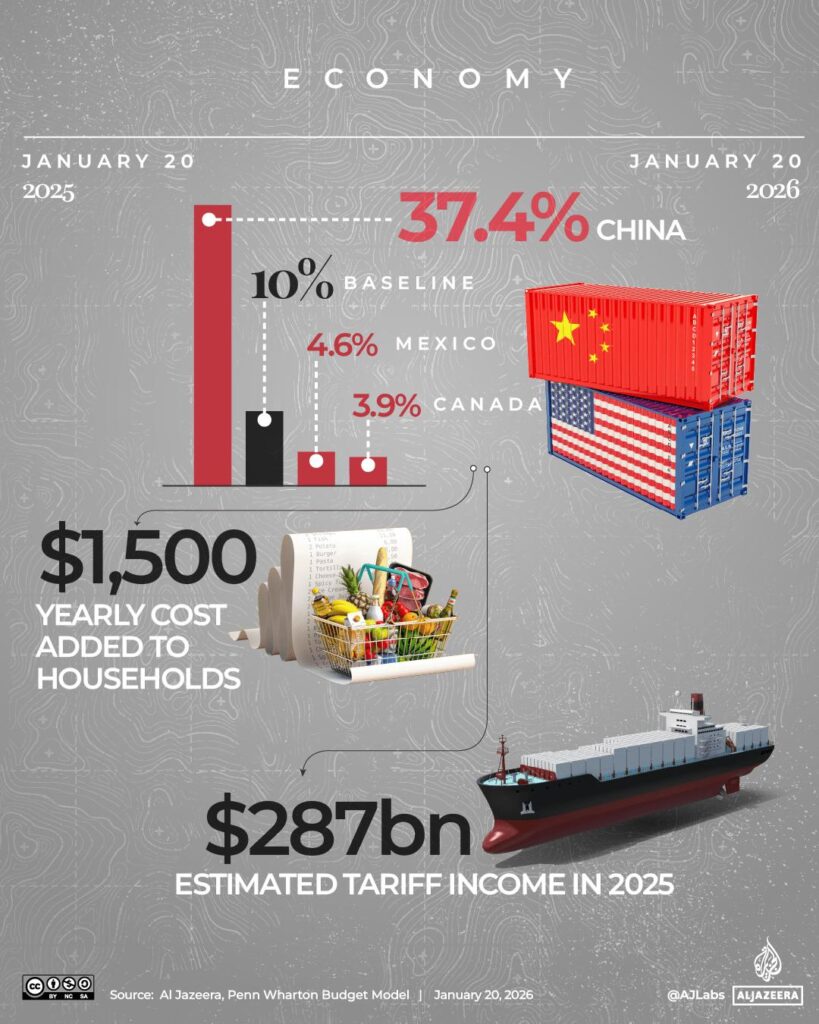
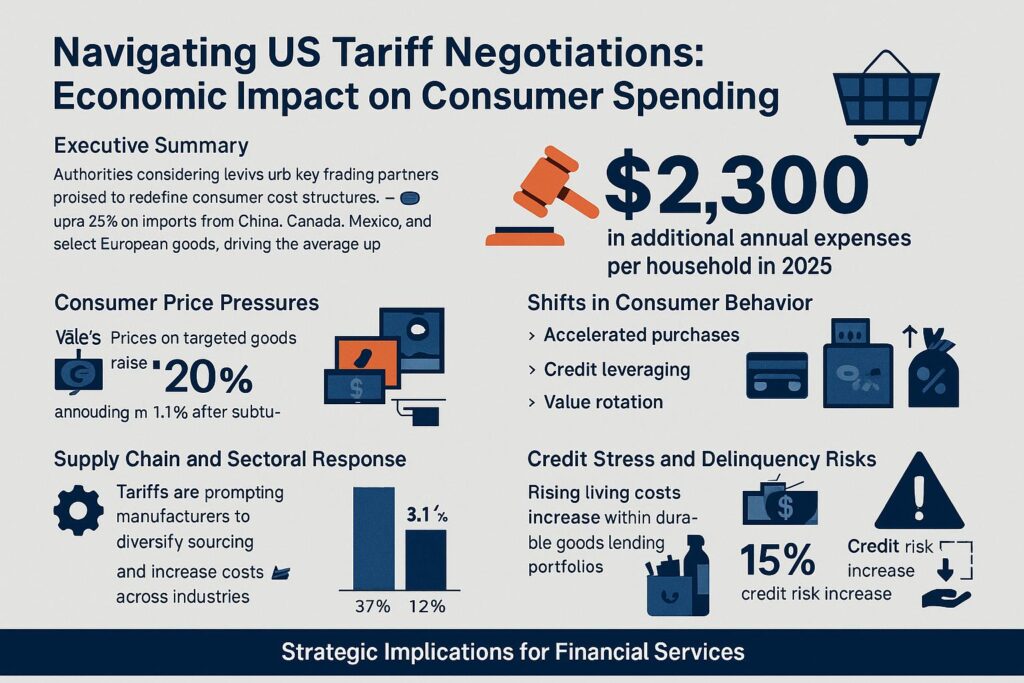
The latest estimates show why. The New York Fed found that nearly 90% of the economic burden of the 2025 U.S. tariffs fell on American firms and consumers, rather than being absorbed primarily by foreign exporters. Yale University’s Budget Lab, using its updated 2026 tariff model, estimates that the current-law tariff regime could ultimately raise the U.S. consumer price level by about 0.7% and impose an average annual cost of roughly $1,100 per household.
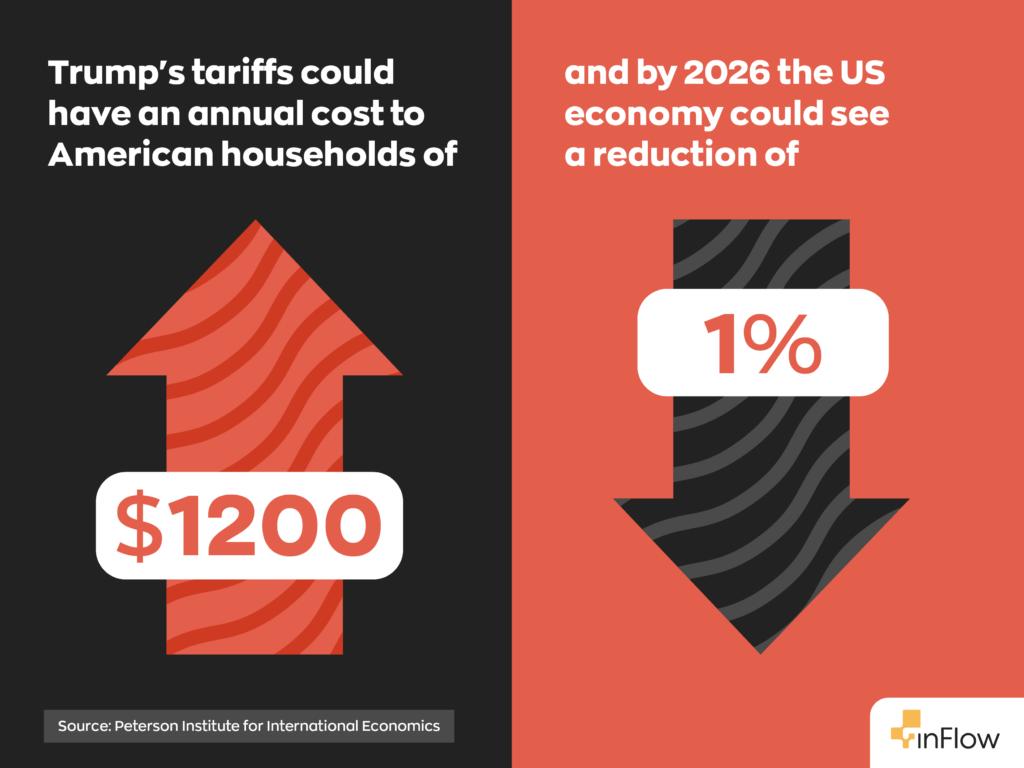
Those estimates do not mean every American will pay exactly $1,100 more, nor does every imported product rise by the same percentage. The actual effect depends on the product, country of origin, tariff classification, supply chain, exchange rates, company pricing decisions and whether businesses switch suppliers.
But the economic mechanism is clear enough to understand: tariffs can become higher costs for American businesses and consumers even when the policy objective is to encourage more domestic production.
How Trump Tariffs Move From the Border to American Prices
A tariff is a tax collected on imported goods. The importer generally pays the duty to U.S. Customs, but the economic burden can be distributed among importers, foreign suppliers, U.S. manufacturers, retailers and consumers.
Consider a U.S. company that imports a component used to manufacture a product domestically. If the imported component becomes more expensive because of a tariff, the manufacturer has several choices. It can accept a lower profit margin, negotiate with its supplier, find another source, redesign the product, move production or increase the price charged to customers.
Large companies may have more options because they can negotiate volume discounts or change suppliers. Smaller businesses can have fewer alternatives, particularly when a product requires specialized components or when the supply chain is concentrated in a small number of countries.
This is why the question “Who pays the tariff?” can be misleading. The legal payment occurs at the border, but the economic cost can spread through the domestic economy.
The New York Fed’s research on 2025 tariffs found that the average tariff rate on U.S. imports rose from 2.6% to 13% during that year and estimated that nearly 90% of the economic burden was ultimately borne by U.S. firms and consumers.
That does not mean foreign companies never absorb any cost. They may reduce prices to protect market share, while American companies may absorb some of the increase to remain competitive. The final result is a negotiation across the supply chain.
The economic transmission chain
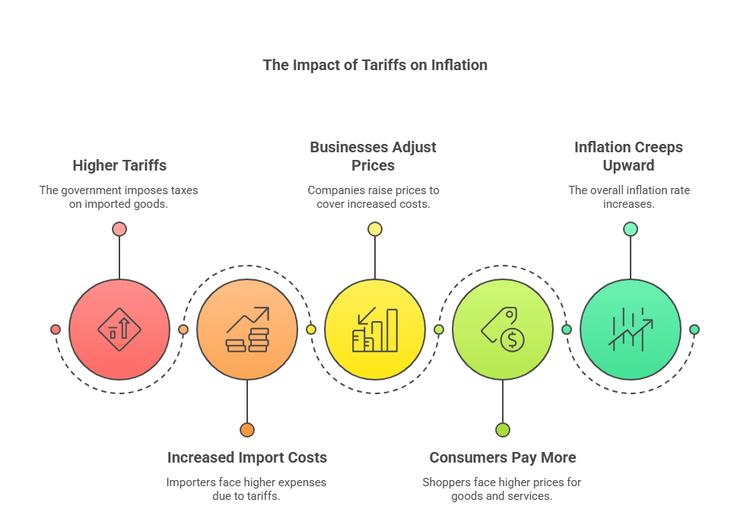
Tariffs → higher import costs → higher business input costs → pricing decisions → consumer prices → inflation → Fed policy → bond yields → stock valuations
That chain is the most important idea for investors and households to understand.
Cars, Electronics and Machinery Could Face Different Pressures
The automobile industry is one of the clearest examples of why tariffs can have complicated effects. A vehicle assembled in the United States can still contain components sourced from multiple countries. Tariffs on imported parts can therefore increase production costs even when final assembly happens domestically.
Automakers can respond in different ways. They can absorb some costs, raise vehicle prices, negotiate with suppliers, change sourcing or modify production. Consumers may ultimately face higher prices, fewer discounts or changes in the availability of certain models.
Electronics create another challenge. Smartphones, computers, semiconductors, networking equipment and household electronics depend on highly internationalized supply chains. A tariff imposed on one component does not necessarily create a one-for-one increase in the final retail price because companies can change suppliers, redesign products or absorb some costs.
The U.S. trade data demonstrate the enormous scale of these supply chains. In May 2026, U.S. goods imports increased by $12.3 billion, with increases in consumer goods, industrial supplies, automobiles and capital goods. Imports of passenger cars increased by $1 billion, while imports of semiconductors rose by $1 billion.
Machinery and industrial equipment are especially important for the broader economy. A manufacturer buying imported equipment or components may eventually pass some of the increased cost into the price of the goods it produces. That can make tariffs relevant even to companies that do not directly sell imported consumer products.
The result is that tariffs can affect both consumer inflation and business investment costs.
Apparel, Food and Construction Materials Could Reach Household Budgets
Consumers may notice tariff-related costs most quickly in categories where imported goods represent a large part of the supply chain.
Apparel is a particularly important example because clothing production is heavily international. A retailer importing garments may have to decide whether to accept a smaller margin, negotiate with suppliers or increase prices.
Food is more complicated because agricultural products can move through multiple stages before reaching grocery shelves. Tariffs can affect imported food directly, while retaliatory tariffs can also affect American farmers and agricultural exporters if foreign countries respond with their own trade barriers.
Construction materials create another important transmission channel. Lumber, metals, equipment, fixtures and other inputs can influence the cost of building homes, commercial properties and infrastructure.
That matters because a higher cost of construction does not necessarily appear immediately as a higher consumer-price statistic. It can show up through higher project costs, reduced construction activity, delayed investment or higher prices for newly built homes and commercial space.
The BLS data also show why consumers should not assume that every household product moves in the same direction. Its detailed CPI tables track categories such as appliances, furniture, household equipment, apparel and tools separately, allowing analysts to identify where price pressure is actually appearing.
This is why a good tariff analysis should look beyond the headline tariff rate and examine which products are affected and how businesses are responding.
Small Businesses and U.S. Manufacturers Face a Different Choice
Large corporations can sometimes spread tariff costs across millions of units, renegotiate contracts or shift sourcing between countries. Small businesses may not have the same flexibility.
A small retailer importing a specialized product may have only a handful of suppliers. If the tariff suddenly raises the landed cost, the business may have to choose between higher prices and lower margins.
For a small manufacturer, the problem can be even more complicated. The company may support the goal of domestic manufacturing while simultaneously depending on imported machinery, components, metals or electronic parts.
That creates a tension at the heart of tariff policy: protecting one part of the domestic production chain can increase costs for another part.
The longer-term outcome depends on whether businesses respond by increasing U.S. production. If tariffs remain in place for long enough, companies may have incentives to invest in domestic factories or find alternative suppliers.
But building factories takes time and capital. A company cannot instantly replace an international supply chain with a domestic one simply because a tariff changes the economics.
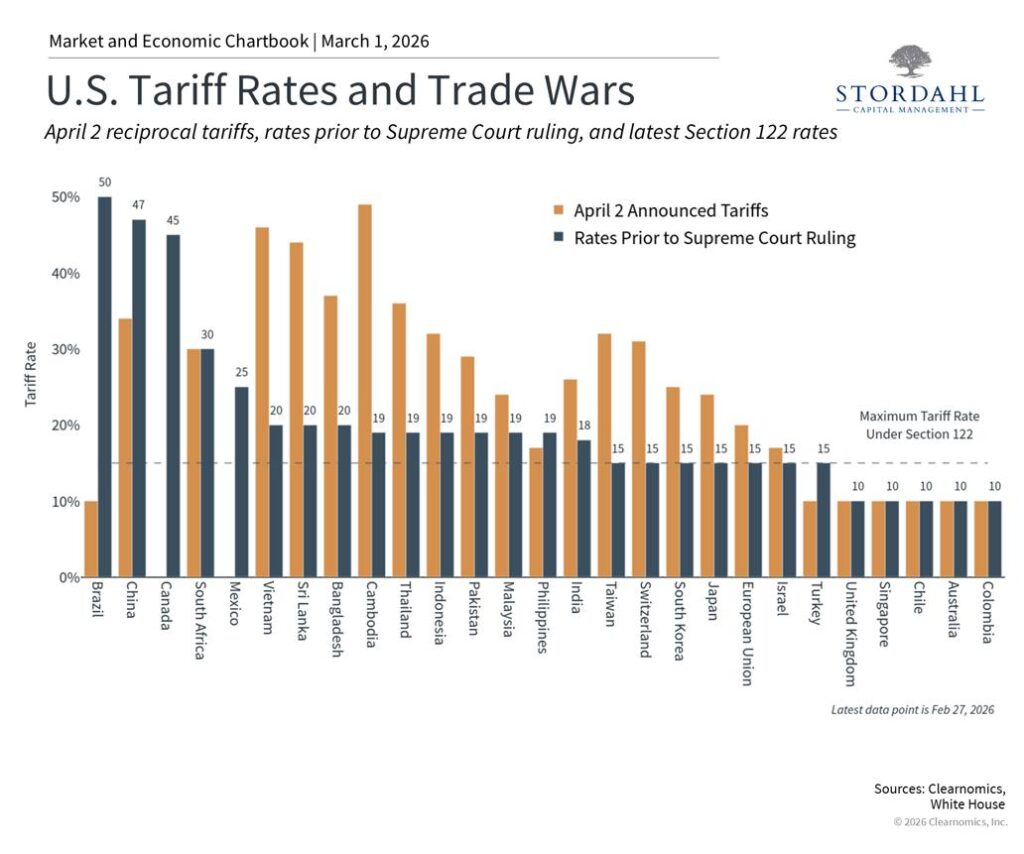
The Budget Lab’s July 2026 analysis estimates the current-law average statutory tariff rate at 11.1%, with scheduled changes potentially lifting it to 11.8% by the end of 2026. Its model estimates a roughly 0.7% consumer-price-level effect under current law.
These figures highlight another important point: tariff policy is not static. New investigations, exemptions, agreements and tariff changes can alter the economic impact over time.
What Tariffs Could Mean for Inflation and the Federal Reserve
The most important financial-market question is whether tariff-related price increases remain concentrated in goods or spread into broader inflation.
If tariffs raise the price of imported goods but businesses absorb part of the cost and consumers substitute toward cheaper alternatives, the inflation effect could be relatively limited.
If companies broadly pass higher costs to customers, however, tariffs can contribute to a higher overall price level.
The Federal Reserve then faces a difficult policy decision.
The Fed cannot manufacture more imported goods or eliminate a tariff through monetary policy. Raising interest rates cannot directly reduce a customs duty. But the central bank can respond if tariff-related price increases begin to influence broader inflation expectations or wage and pricing behavior.
That creates the possibility of a policy trade-off.
Higher tariffs → higher prices → inflation pressure → Fed stays restrictive for longer → higher borrowing costs
At the same time:
Higher tariffs → weaker demand and investment → slower economic growth → pressure for easier monetary policy
Those two forces can work against each other.
The result is particularly important for investors because the Fed may need to determine whether tariff-driven inflation is temporary or persistent.
The broader inflation backdrop is already important. The BEA’s PCE price index, the Federal Reserve’s preferred broad inflation measure, showed a 4.1% year-over-year increase in May 2026, according to the latest data available on the BEA’s current index page.
That means policymakers have reason to watch additional price pressures carefully rather than assuming tariff increases will have no monetary-policy consequences.
What This Means for You
For American consumers, the effect of tariffs will depend heavily on what you buy.
A household that rarely purchases imported products may experience little direct impact. A household buying a new vehicle, electronics, clothing, furniture or home-improvement materials could face greater exposure if companies pass higher import costs into retail prices.
Consumers can also be affected indirectly. If businesses face higher costs for machinery, transportation equipment or components, they may raise prices for services or finished products even when the final item is manufactured in the United States.
Small businesses should pay particular attention to landed cost, which includes the purchase price plus shipping, duties and other expenses required to bring a product into the country.
A business that calculates profitability using only the supplier’s quoted price can underestimate its actual exposure.
For households, the practical lesson is not to assume that a tariff automatically means a particular product will become exactly 10%, 20% or 30% more expensive. The tariff rate is only one part of the final pricing equation.
Companies may absorb some costs, suppliers may lower prices, exchange rates may change, consumers may switch products and retailers may adjust margins.
Investor Takeaway: Which Stocks Could Be Most Exposed?
Investor takeaway: investors should focus less on the political announcement itself and more on which companies have the greatest exposure to imported inputs, foreign production and pricing power.
Companies with strong pricing power may be able to pass some tariff costs to customers without losing much demand. That can protect profit margins.
Companies competing in highly price-sensitive markets may have less flexibility. If they raise prices, customers may switch to competitors. If they do not raise prices, margins can decline.
Retailers are therefore particularly important to watch. Their results can reveal whether tariff costs are being passed to consumers or absorbed by companies.
Manufacturers should also be examined according to their supply-chain exposure. A U.S. manufacturer that sources most components domestically could be relatively insulated compared with one that depends heavily on imported parts.
For investors in technology, the question extends beyond finished electronics. Semiconductor equipment, components, industrial machinery and data-center hardware can all have international supply chains.
The U.S. trade data show that capital-goods imports remain economically significant. In May 2026, imports included substantial movements in computer accessories, semiconductors and other capital goods.
That makes tariff exposure a company-by-company issue rather than a simple sector-wide prediction.
Investors should therefore examine quarterly earnings reports for phrases such as tariff costs, supply-chain restructuring, pricing actions, gross-margin pressure, sourcing changes and capital expenditure.
Those details may provide a clearer picture of tariff exposure than the tariff headline itself.
Future Outlook: Three Economic Paths to Watch
Future outlook: the U.S. economy could move in several different directions as the current tariff regime evolves.
Scenario one: Businesses absorb more costs
Companies could choose to protect market share by accepting lower margins. Consumers would experience less immediate inflation, but corporate profitability could suffer.
This scenario could be particularly challenging for businesses operating with thin margins and limited pricing power.
Scenario two: Tariffs pass through to consumers
If companies broadly raise prices, households would carry more of the economic burden. Inflation could remain elevated, potentially making the Federal Reserve more cautious about reducing interest rates.
This is the scenario that financial markets would watch most closely if tariff-driven inflation becomes persistent.
Scenario three: Supply chains shift toward the United States
Tariffs could encourage companies to invest in domestic production or shift sourcing toward countries with lower tariff exposure.
That could eventually strengthen certain U.S. manufacturing industries and support domestic investment.
But the transition would take time. Building factories, finding suppliers, hiring workers and developing new logistics networks cannot happen overnight.
There is also a potential downside: producing more domestically can increase resilience while simultaneously increasing costs if U.S. production is more expensive than the imported alternative.
That is why the long-term economic outcome cannot be determined simply by looking at tariff revenue.
The Bigger Question: Can Tariffs Change the U.S. Economy Without Reigniting Inflation?
The central economic question is no longer simply whether tariffs will change trade flows.
It is whether the United States can shift production toward domestic suppliers without creating a sustained increase in consumer prices or a significant slowdown in investment and consumption.
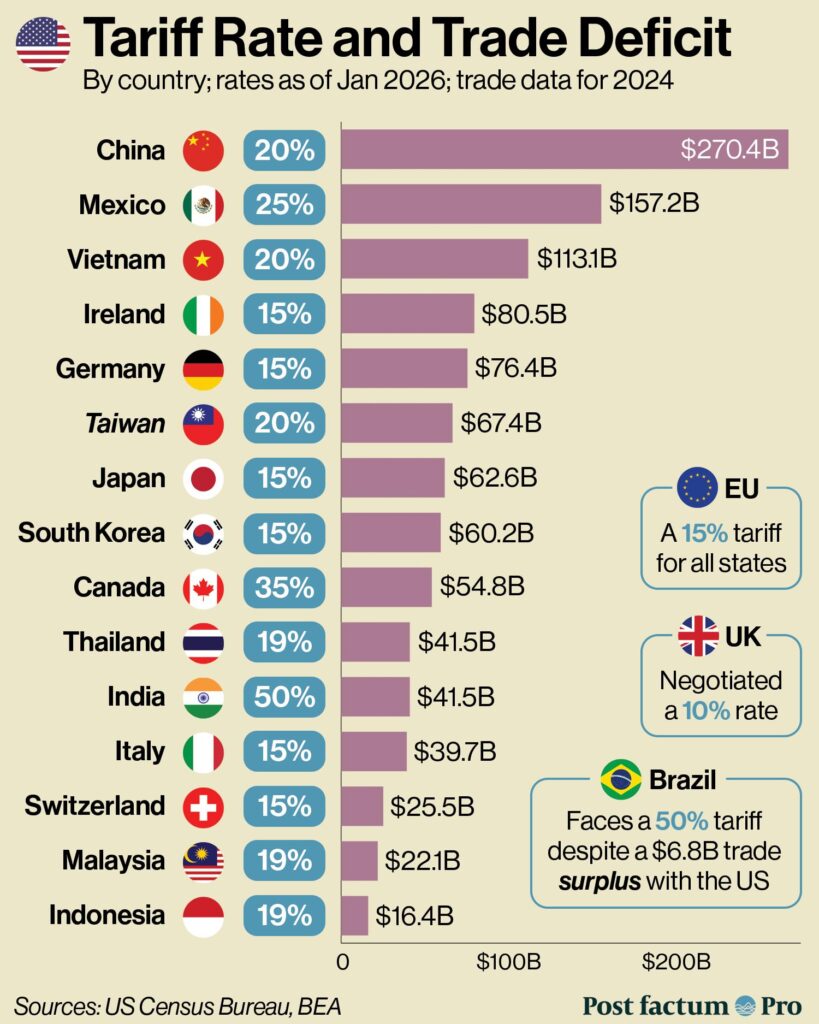
The trade data already show how large and interconnected U.S. supply chains remain. In May 2026, the United States imported $395.3 billion of goods and services while exporting $317.7 billion, producing a $77.6 billion goods-and-services deficit.
That scale makes rapid decoupling difficult.
At the same time, the current tariff structure continues to evolve. USTR has announced additional Section 301 actions and other measures in 2026, meaning companies cannot necessarily treat today’s tariff schedule as permanent.
For consumers, that uncertainty can influence purchasing decisions.
For businesses, it can influence inventory, sourcing and investment decisions.
For investors, it can influence earnings forecasts and valuation.
And for the Federal Reserve, it can complicate the distinction between a temporary supply shock and persistent inflation.
That is ultimately why Trump’s tariffs matter far beyond the political debate.
The economic transmission chain is the story:
Tariffs raise import costs. Import costs affect businesses. Businesses make pricing decisions. Retail prices can change. Consumer inflation can move. The Federal Reserve may respond. Treasury yields can react. Stock valuations can change.
The winners and losers will not necessarily be determined by whether a company is simply “American” or “foreign.” They will depend on supply-chain exposure, pricing power, competition, substitution options and the ability to invest in alternatives.
For U.S. households, the biggest risk is that tariff costs arrive at the same time as other inflation pressures.
For businesses, the biggest risk may be uncertainty: not knowing exactly what their supply-chain costs will look like several months from now.
For investors, the biggest opportunity may be identifying companies that can adapt faster than competitors.
The next phase of the tariff story will therefore be measured not only in customs revenue or trade balances, but in consumer prices, corporate margins, business investment, inflation expectations, interest rates and ultimately economic growth.
Subscribe to trusted news sites like USnewsSphere.com for continuous updates.