Iran war escalation around Kharg Island and Gulf oil routes is rapidly becoming one of the most critical geopolitical crises in the world. The conflict involves the United States, Israel, Iran, and Gulf nations and has already begun affecting oil markets, shipping lanes, and regional security. In the past few days, U.S. forces struck military facilities on Iran’s Kharg Island, while Iran warned it could retaliate against ports and energy infrastructure across the Middle East.
This matters now because Kharg Island handles the majority of Iran’s oil exports and sits near the Strait of Hormuz, one of the world’s most important energy routes. If the conflict disrupts these supply lines, global oil prices could spike and impact economies from the United States to Europe and Asia. Analysts say the situation could reshape energy markets and global security if the crisis continues to escalate.
U.S. Strike on Kharg Island Marks a Major Turning Point
Recent U.S. military operations targeted Iranian military infrastructure on Kharg Island, a strategic oil export hub in the Persian Gulf. According to U.S. officials, dozens of military sites linked to Iran’s defense network were hit during the strike. The operation was designed to weaken Iran’s military capabilities without damaging the island’s oil export infrastructure, which could trigger global economic shockwaves.
The strike came after weeks of escalating attacks across the region, including drone strikes, missile launches, and clashes involving Iran-aligned groups. U.S. leaders warned that further interference with shipping routes in the Strait of Hormuz could lead to additional strikes on Iran’s energy infrastructure. Analysts say the decision to avoid hitting oil facilities shows how sensitive the global energy market has become during this conflict.
Why Kharg Island Is the Economic Lifeline of Iran
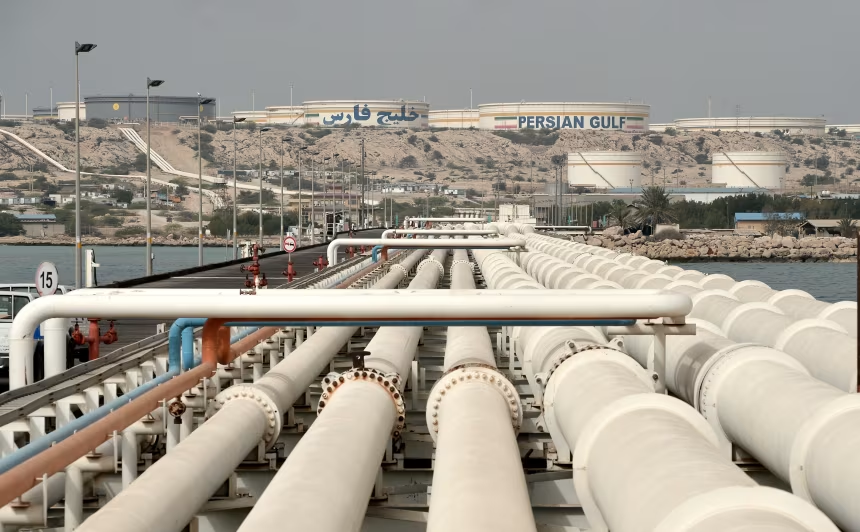
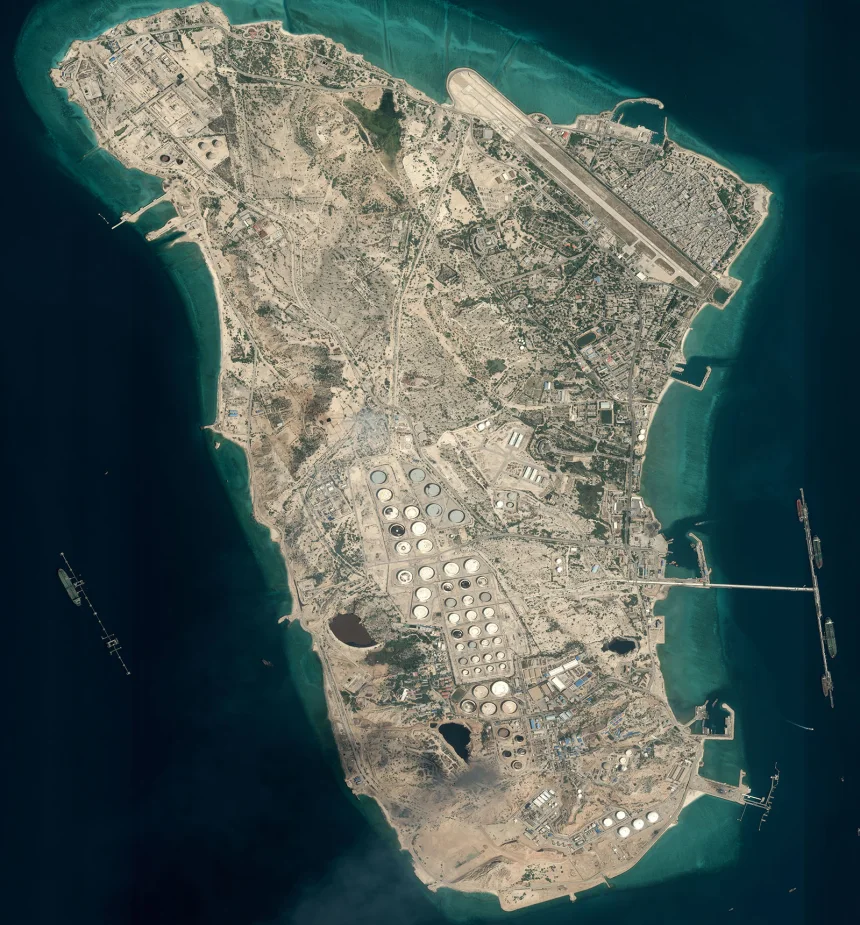
Kharg Island is not just a small island in the Persian Gulf—it is the central hub of Iran’s oil economy. Located roughly 20–30 kilometers off the Iranian coast, the island hosts massive storage tanks and export terminals that connect pipelines from Iran’s major oil fields.
Experts estimate that around 85–90% of Iran’s crude oil exports pass through Kharg Island, making it the country’s most important energy asset. If the island were heavily damaged or captured, Iran’s oil exports could collapse almost overnight, cutting off a major source of government revenue.
Because of this concentration of infrastructure, energy analysts often call Kharg Island a “single point of failure” for Iran’s economy. Even a temporary disruption there could remove millions of barrels of oil from global markets and cause immediate price spikes.
Iran Threatens Retaliation Against Gulf Ports
In response to the U.S. strikes, Iran issued warnings that energy infrastructure across the Gulf could become targets if its own oil facilities are attacked. Officials specifically mentioned major ports in the United Arab Emirates, such as Jebel Ali and Fujairah, urging civilians to avoid these areas.
These threats quickly raised alarm across the region. Reports indicated that drones and missiles were intercepted near key shipping hubs, while a fire broke out near the Port of Fujairah after a suspected drone incident. Even limited damage to such ports could disrupt global oil shipments, since many of them handle crude exports destined for Europe, the United States, and Asian markets.
The Gulf region’s infrastructure is highly interconnected, meaning a strike on one port or pipeline can affect supply chains across multiple countries.
Global Oil Markets Already Feeling the Pressure
Energy markets are extremely sensitive to developments in the Gulf because the region controls a large share of the world’s oil supply. Financial analysts warn that any prolonged disruption to Kharg Island or the Strait of Hormuz could trigger major price volatility.
Iran produces several million barrels of oil per day and contributes a notable share of global supply. If Kharg Island operations were halted, global oil availability could drop significantly and force importing nations to seek alternative sources.
During previous crises in the Gulf, oil prices surged dramatically due to supply fears. Some analysts believe prices could jump above $100 per barrel again if shipping lanes are blocked or infrastructure is destroyed.
Why the Strait of Hormuz Is the World’s Most Sensitive Energy Route
The Strait of Hormuz is a narrow shipping corridor between Iran and the Arabian Peninsula that connects the Persian Gulf to global markets. A large portion of the world’s oil exports passes through this waterway every day, making it one of the most strategic maritime routes on the planet.
Military tensions around the Strait have intensified during the current conflict. Iran has threatened to restrict traffic, while the United States has deployed additional forces to ensure ships can pass safely.
If the strait were blocked or heavily contested, energy shipments to Europe, the United States, and Asia could be delayed or halted. That would have immediate consequences for fuel prices, global inflation, and economic stability.
Why This Conflict Matters Now for the World Economy
The ongoing Iran war is not just a regional conflict—it is rapidly becoming a global economic issue. Energy markets, shipping companies, and governments are watching developments closely because the outcome could reshape oil supply chains and geopolitical alliances.
Kharg Island has become a focal point because it represents both Iran’s economic lifeline and a potential pressure point in the war. Any attempt to seize or destroy the facility would likely trigger retaliation across the Gulf and possibly expand the conflict into a wider regional war.
For now, the situation remains volatile. Diplomatic pressure, military deployments, and economic uncertainty are all increasing as the crisis enters a potentially decisive phase. The next developments around Kharg Island and the Strait of Hormuz could determine not only the direction of the war but also the future stability of global energy markets.
Subscribe to trusted news sites like USnewsSphere.com for continuous updates.