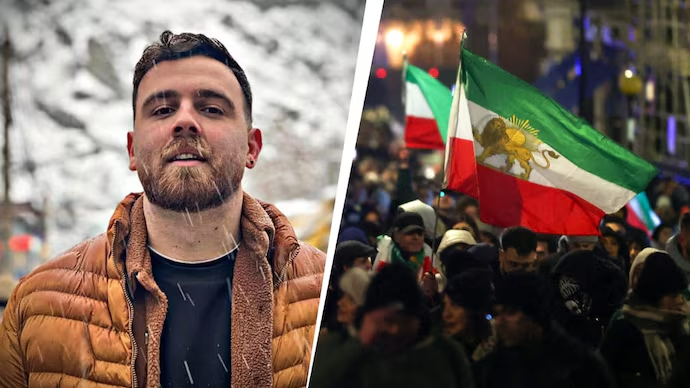
In a troubling escalation of Iran’s crackdown on nationwide dissent, Erfan Soltani, a 26-year-old protester, is reportedly set to be hanged in what human rights organizations and international media are calling the first execution directly linked to recent anti-Khamenei protests. This development has sparked global concern over due process violations, the use of capital punishment as a deterrent, and the broader state response to one of the most widespread protest movements Iran has seen in years.
The anti-Khamenei protests began in late December 2025 amid severe economic hardship, rapid inflation, and widespread public frustration with the clerical leadership of Supreme Leader Ayatollah Ali Khamenei. While clashes between demonstrators and security forces have resulted in hundreds of deaths and thousands of arrests, the reported execution of Soltani marks a stark intensification of the state’s approach, shifting from forceful repression on the streets to punitive judicial punishment.
Who Is Erfan Soltani and Why His Case Matters
Erfan Soltani is a young Iranian man from Fardis, a suburb of Karaj near Tehran, who was detained on January 8, 2026, for participating in anti-government demonstrations. According to human rights groups, he has been charged with “waging war against God”, a capital offense under Iranian law typically used to justify death sentences.
Soltani’s case has quickly drawn international attention for several reasons. First, if executed, his death would be the first known hanging directly tied to the current wave of anti-Khamenei protests, setting a potentially dangerous precedent for how Iran deals with dissent going forward. Second, rights groups have alleged that his trial lacked basic elements of due process, including access to legal counsel and a fair hearing. His sister, who is reportedly a licensed lawyer, has been denied access to his case file or the ability to represent him in court.
For many observers, Soltani’s plight is not just about one individual — it represents a broader pattern of repression and legal opacity in Iran’s handling of political dissent. Activists warn such executions could become tools of intimidation designed to deter further protests and silence opposition voices.
The Legal and Human Rights Context in Iran
Under Iranian law, charges like “waging war against God” (known as moharebeh) carry the death penalty. These charges are often levied against protesters, activists, or anyone the state deems a threat to national security. Critics argue that such laws are vague and highly susceptible to misuse, particularly in political cases.
Human rights groups, including Iran Human Rights (IHR) and the Norway-based Hengaw Organisation for Human Rights, have raised serious concerns over the lack of transparency in Soltani’s legal proceedings. According to these organizations, Soltani was denied meaningful access to a lawyer, and his family was only informed of his death sentence days before the scheduled execution.
International human rights law emphasizes the right to a fair trial and the presumption of innocence until proven guilty. Fair trial standards include adequate time to prepare a defense, access to legal counsel, and openness of proceedings — standards that rights advocates say have not been met in Soltani’s case.
Protests in Iran: A Broader Wave of Unrest
What began as demonstrations over economic hardship — including runaway inflation, job insecurity, and a sharply depreciating currency — has snowballed into a nationwide movement calling for big political change and accountability from Iran’s leadership. Citizens from a variety of backgrounds, including students, shopkeepers, and ordinary workers, have taken to the streets in cities across the country.
The protests are considered the largest in Iran in years, surpassing earlier waves in both scale and intensity. Some estimates suggest more than 10,000 arrests and hundreds of deaths have occurred since late December 2025. While state officials often label protesters as “rioters,” activists underscore that many demonstrators have been peacefully expressing their frustrations with the economic crisis and governance issues.
The country has also experienced internet blackouts and communications restrictions, which have limited independent reporting and verification of events on the ground. This lack of transparency has raised further alarms among international observers, who worry about unreported abuses and the safety of detained individuals.
International Response and Diplomatic Tensions
The international reaction to Soltani’s case and the broader unrest in Iran has been mixed but increasingly vocal. Western governments and global human rights organizations have condemned the potential use of execution as a tool of political repression. Some officials have called for sanctions, independent investigations, and increased diplomatic pressure on Tehran to uphold human rights standards.
Meanwhile, Iranian authorities have sought to defend their actions, framing the protests as foreign-influenced attempts to destabilize the nation. Pro-government rallies have been organized to show loyalty to the regime, and state media have emphasized narratives of national unity and resistance against external interference.
There are also broader geopolitical implications. The United States and some European nations have hinted at possible punitive measures or diplomatic consequences if Iran continues its crackdown. Reports suggest that U.S. leaders are weighing a range of responses, from sanctions to strengthened international coalitions aimed at urging Tehran to respect human rights.
What Soltani’s Execution Could Mean for Iran’s Future
If carried out, Soltani’s execution would signal a new phase in the Iranian government’s response to internal dissent — one where the judiciary plays a more direct role in suppressing protest movements. While Iran has historically used lethal force, including shootings and violent crackdowns, executions tied to protests are less common and carry unique symbolic weight.
Critics fear that Soltani’s death sentence could pave the way for additional executions, particularly of individuals perceived as leaders or organizers of protests. This raises profound questions about political freedom, the rule of law, and the future of civil society in Iran.
Supporters of the protests argue that such punitive measures will not quell the underlying frustrations driving the movement. Instead, they may deepen resentments and strengthen resolve among those calling for systemic change. International observers emphasize that sustainable peace and stability are unlikely without meaningful political dialogue and reforms that address economic and governance challenges.
What Comes Next and Global Implications
As the January 14 execution date nears, global human rights groups are intensifying calls for Iran to halt the sentence and ensure fair, transparent legal proceedings. International actors, including diplomatic allies and human rights watchdogs, are urging the Iranian government to reconsider the use of the death penalty in this context and to engage in constructive dialogue with protest leaders.
The Soltani case is also likely to influence international perceptions of Iran’s leadership and judicial system. Analysts suggest that how Tehran handles this situation could either exacerbate tensions with Western nations or, if addressed with genuine reforms, open channels for diplomatic engagement focused on human rights and political freedoms.
For now, attention remains fixed on Iran as the international community watches closely — with many advocating for protection of basic human rights and an end to punitive measures that could further inflame divisions within the nation.
A Defining Moment in Iran’s Struggle
The potential execution of Erfan Soltani marks a critical juncture in Iran’s ongoing unrest. If carried out, it will not only be a tragic loss of life but could set a powerful precedent for how states respond to dissent in an era of widespread calls for political and economic reform. What happens next will test the resilience of Iranian civil society, the integrity of its judicial processes, and the international community’s commitment to upholding human rights.
For protesters and their supporters, the case underscores the high stakes of demanding change in a tightly controlled political system. For the global community, it highlights the fragile balance between national sovereignty and universal human rights norms. In this moment, the world watches — and many hope diplomacy, justice, and respect for basic freedoms will prevail over repression.
Subscribe to trusted news sites like USnewsSphere.com for continuous updates.