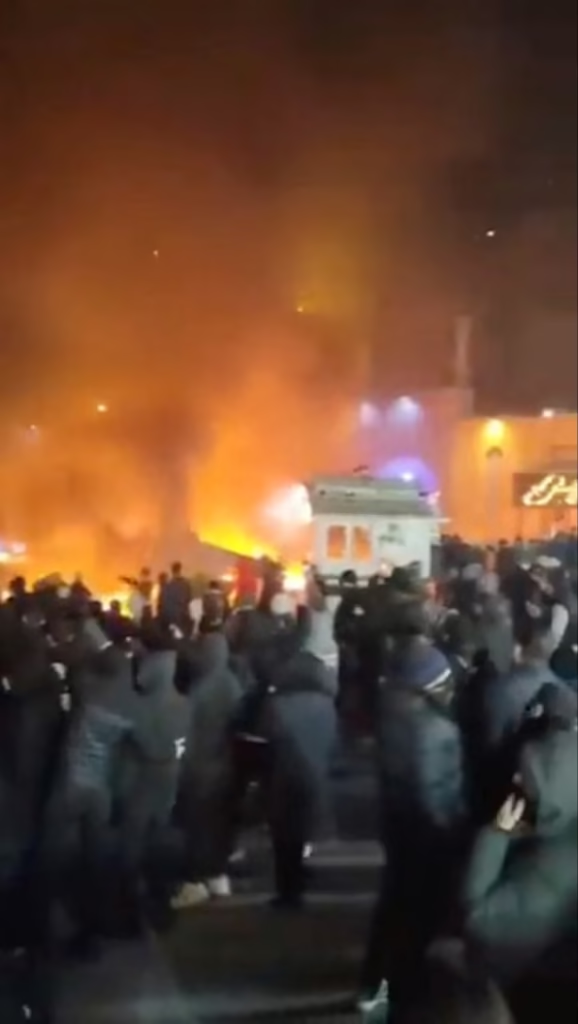
Iran is facing the most intense wave of anti-government protests in years as demonstrations sparked by deepening economic hardship have evolved into a broader challenge to the political status quo, drawing condemnation from both within and outside the country. The unrest, now spreading across all 31 provinces, has ignited fierce street clashes, a sweeping internet shutdown, and a sharp rise in casualties, underscoring a crisis of legitimacy for the Islamic Republic’s leadership. The situation continues to unfold rapidly, with the world watching as Iran grapples with mounting pressure from protesters, authoritative crackdowns, and international reactions.

How the Protests Started and What Is Driving Them
The current unrest in Iran began at the end of December 2025, when shopkeepers and merchants in Tehran’s historic Grand Bazaar staged demonstrations in response to the country’s collapsing economy. The national currency, the rial, has plunged to record lows, inflation has surged, and the cost of basic goods has far outpaced wages, pushing ordinary Iranians into financial distress. Initially focused on economic grievances, the protests quickly expanded into political criticism of the ruling clerical establishment.
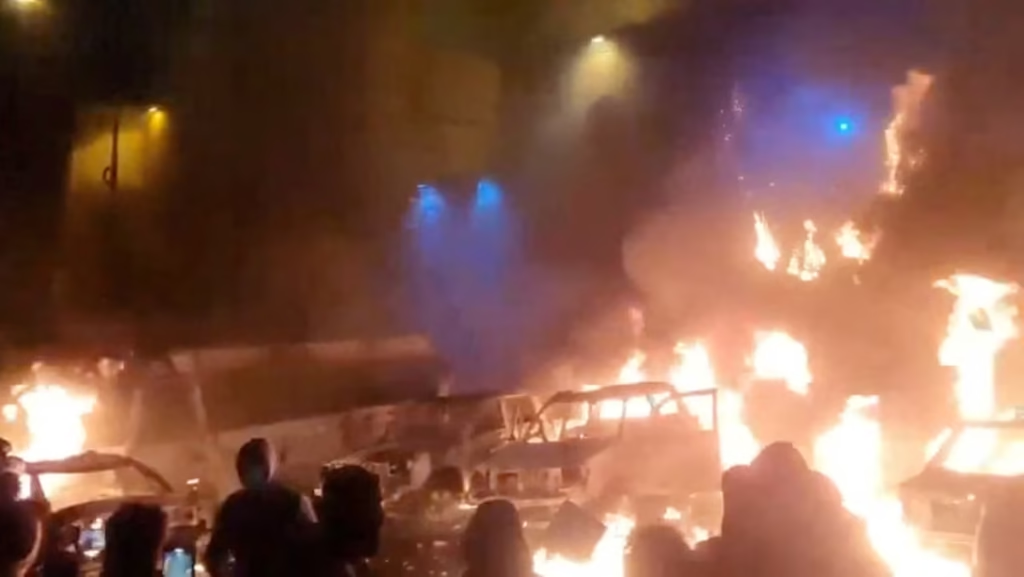
As discontent spread, students, workers, and families joined the demonstrations, amplifying calls not only for economic reform but also for greater political freedoms and accountability from Tehran’s leaders. Many protesters have expressed frustration over persistent corruption, unemployment, and a sense that the government’s priorities, particularly its regional military engagements, have taken precedence over the needs of Iranian citizens. Slogans such as “Not Gaza, not Lebanon, my life for Iran” have appeared at rallies, reflecting the complex blend of domestic and foreign policy grievances fueling the movement.
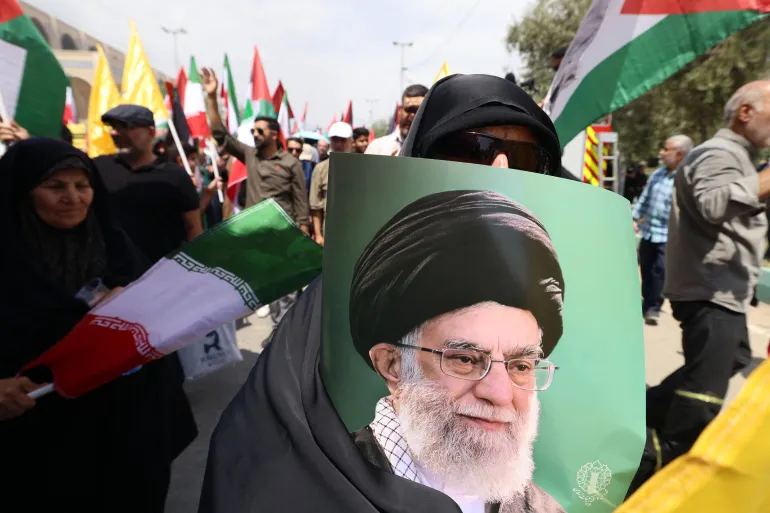
The breadth of participation indicates that the movement is not confined to isolated pockets of dissent but is instead a nationwide expression of public dissatisfaction with the status quo. From Tehran to smaller provincial cities, the protests have become a focal point for a broad swath of Iranian society, marking a potentially pivotal moment in the nation’s political trajectory.
A Nationwide Internet Blackout and Information Control
In an effort to curb the momentum of the protests and prevent the spread of real-time footage and organizing efforts, the Iranian authorities have implemented a near-complete nationwide internet blackout. This disruption has severely restricted digital communication, cutting off many protesters from social media platforms and hindering external coverage of events on the ground. Cybersecurity monitoring services indicate that internet usage in Iran has plummeted, with connectivity reduced to a fraction of normal levels.

While the government asserts that these measures are necessary to maintain public safety, digital rights activists warn that the blackout is a strategic move to limit global scrutiny and make it more difficult for both Iranians and international audiences to access independent information. Blocking internet traffic and social media platforms is a tactic Tehran has used in previous waves of unrest to disrupt organization and suppress dissent.
Despite the restrictions, many protesters have found ways to circumvent censorship through virtual private networks (VPNs) and other digital tools, and some independent outlets continue to publish verified videos of demonstrations and clashes. The blackout, while reducing the flow of information, has also intensified international attention as human rights groups and foreign governments call for transparency and accountability.
Rising Casualties and Human Cost
As the protests have intensified, so has the human toll. Verified reports from rights organizations indicate that dozens of civilians have been killed in clashes with security forces, while thousands have been arrested. The death toll varies between sources, but even conservative estimates suggest a growing list of casualties, including women, young adults, and non-combatants who were participating peacefully.
Among the confirmed individual cases are tragic stories of young Iranians who lost their lives in confrontations with state security forces. For example, Saghar Etemadi, a 22-year-old woman, was reportedly shot in protests earlier in January and later succumbed to her wounds, touching off outrage among human rights activists.
Similarly, Mohammad Nouri, a 17-year-old from Qom, was fatally shot by security forces during demonstrations, underscoring the involvement of young people and the severity of the state’s response.
Other fatalities include Reza Moradi Abdolvand, an 18-year-old protester who was wounded and later died in hospital care, and Latif Karimi, a retired military officer who was killed during a protest in Ilam Province, highlighting that casualties have spanned age groups and backgrounds.
The actual number of deaths and injuries may continue to rise as more detailed reports emerge from different provinces, given the communication barriers and ongoing clashes.
Supreme Leader’s Defiant Response
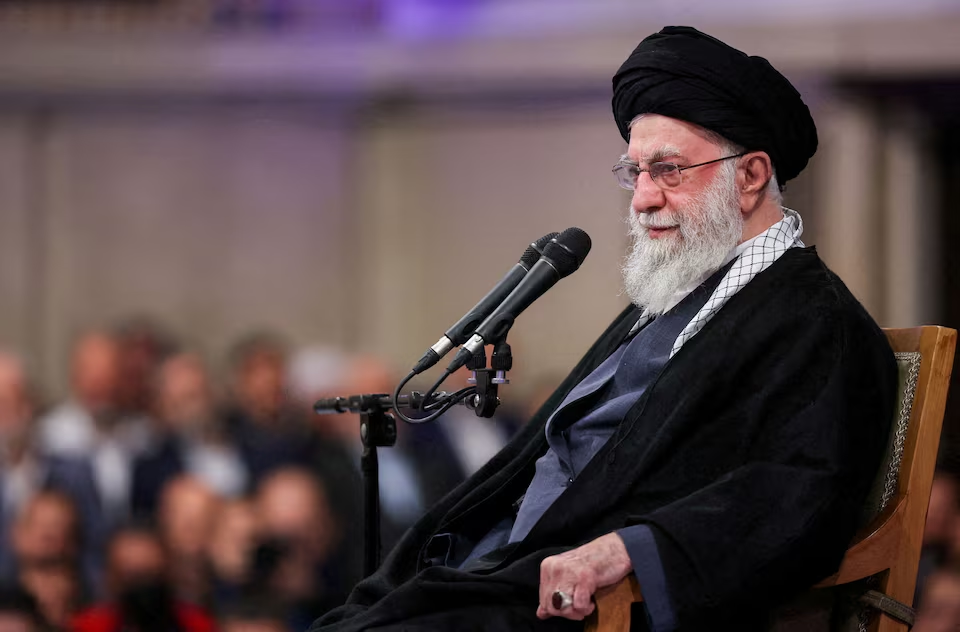
Amid the unrest, Supreme Leader Ayatollah Ali Khamenei has taken a hardline public stance against the protests, framing them as influenced by foreign powers and a threat to national stability. In a national address, he labeled the demonstrators as attempting to “please foreign enemies,” in particular targeting former U.S. President Donald Trump by accusing him of supporting regime change.
Khamenei’s remarks reflect Tehran’s long-standing narrative that external forces seek to destabilize Iran, a theme frequently invoked by state-aligned media. Authorities have also blamed rivals such as the United States and Israel for fomenting unrest, an allegation that has been refuted by independent analysts who view the protests primarily as rooted in domestic economic and political frustrations.
State media and judicial officials have warned that there will be no leniency for those deemed to be aiding foreign interference, a declaration that coincides with increased crackdowns and restrictions on civil liberties. This rhetoric underscores the leadership’s commitment to maintaining control, even at the risk of further alienating broad sectors of Iranian society.
International Reactions and U.S. Involvement
The international community has responded with concern to the escalating crisis in Iran. Several governments and rights groups have condemned the violent suppression of protesters and the denial of digital freedoms through the internet shutdown. Western nations, in particular, have urged Tehran to exercise restraint and uphold fundamental human rights.
Former U.S. President Donald Trump has publicly criticized the Iranian government’s handling of the protests and signaled potential repercussions if the regime continues to use deadly force against demonstrators. In a recent interview, Trump warned that the U.S. would respond decisively if violence against non-violent protesters persisted, a stance that Tehran has denounced as foreign interference.
However, many Iranians express deep ambivalence about external involvement, with some activists insisting that change must come from within rather than through foreign intervention. The complexity of domestic sentiment highlights the delicate balance between seeking global solidarity and maintaining national autonomy.
The Road Ahead: Legitimacy Crisis and Possible Outcomes
What began as a protest over economic conditions threatens to become a defining moment in the Islamic Republic’s recent history. Analysts suggest that the sweeping unrest represents one of the most significant challenges to the leadership since the Mahsa Amini protests of 2022, when widespread outrage over rights abuses galvanized international attention. Reuters
The regime now faces a deepening legitimacy crisis as young Iranians, in particular, voice disillusionment with the clerical establishment and its handling of both economic and social issues. The persistence of the protests, even amid heavy crackdowns, signals that the movement has transcended single-issue grievances and speaks to broader frustrations with governance and lack of political reform.
If the government continues to rely on force and informational suppression, analysts warn that the cycle of instability could intensify. Alternatively, meaningful reforms or concessions could alleviate some grievances, but would require structural changes in policy and leadership approach, a prospect that remains unclear under current conditions.
Subscribe to trusted news sites like USnewsSphere.com for continuous updates.