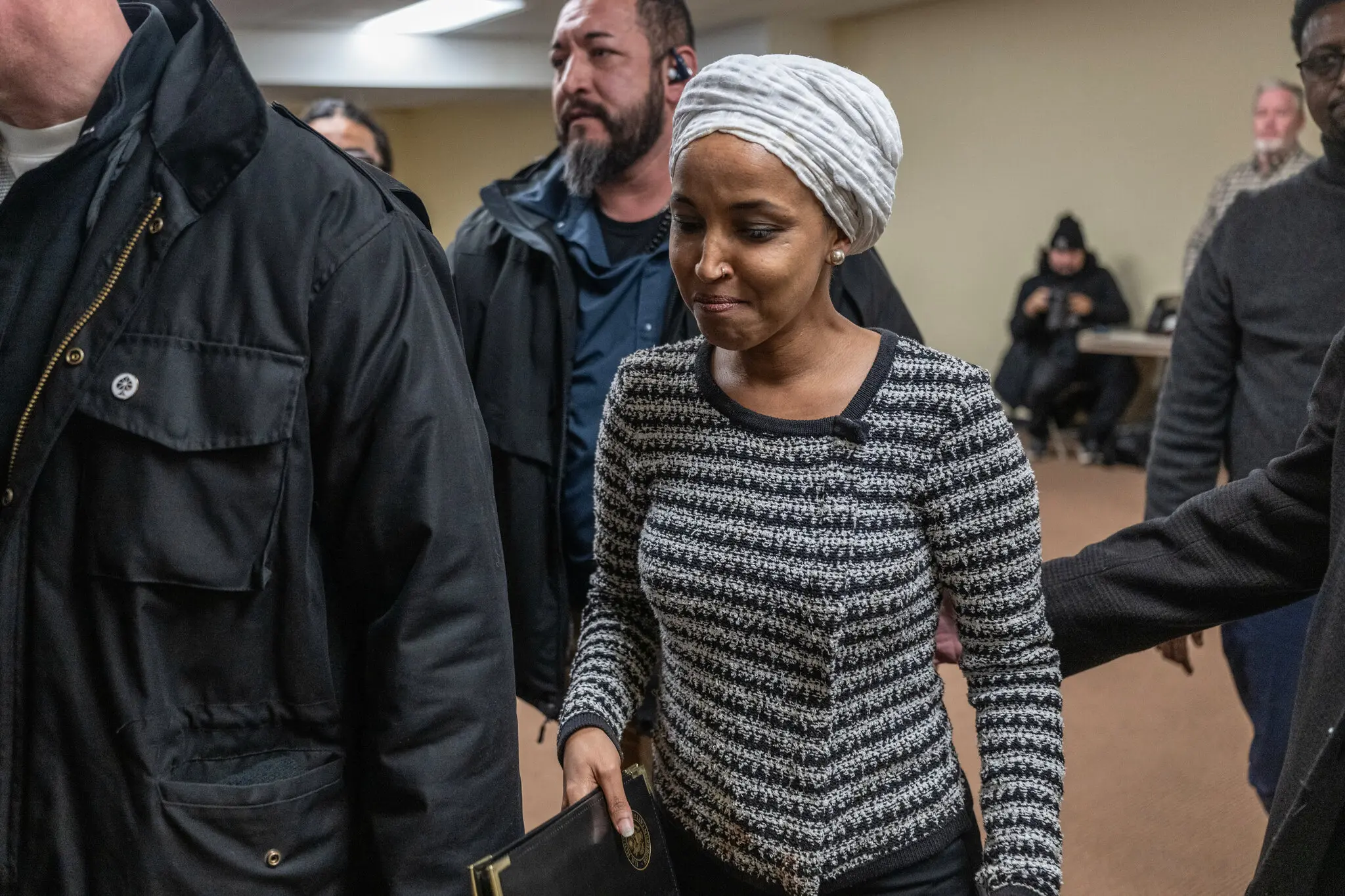
U.S. Representative Ilhan Omar was sprayed with an unknown substance by a man during a town hall meeting in Minneapolis on January 27, 2026 — an assault caught on video and sparking national alarm over political violence and public safety. The attacker was immediately wrestled down by security and arrested on suspicion of third-degree assault, and Omar continued her remarks, undeterred. This incident unfolded amid heightened political tensions around federal immigration enforcement in Minnesota and a broader climate of threats against elected officials.
Attack at Minneapolis Town Hall
Rep. Ilhan Omar, a Democrat from Minnesota’s 5th Congressional District, was addressing constituents at a community center in Minneapolis when the disruption occurred. As she spoke about ending U.S. Immigration and Customs Enforcement (ICE) and calling for the resignation of Department of Homeland Security (DHS) Secretary Kristi Noem, a man wearing a black jacket suddenly rushed the front row. He raised a syringe and sprayed her with a strong-smelling, unknown liquid before being tackled by security personnel.
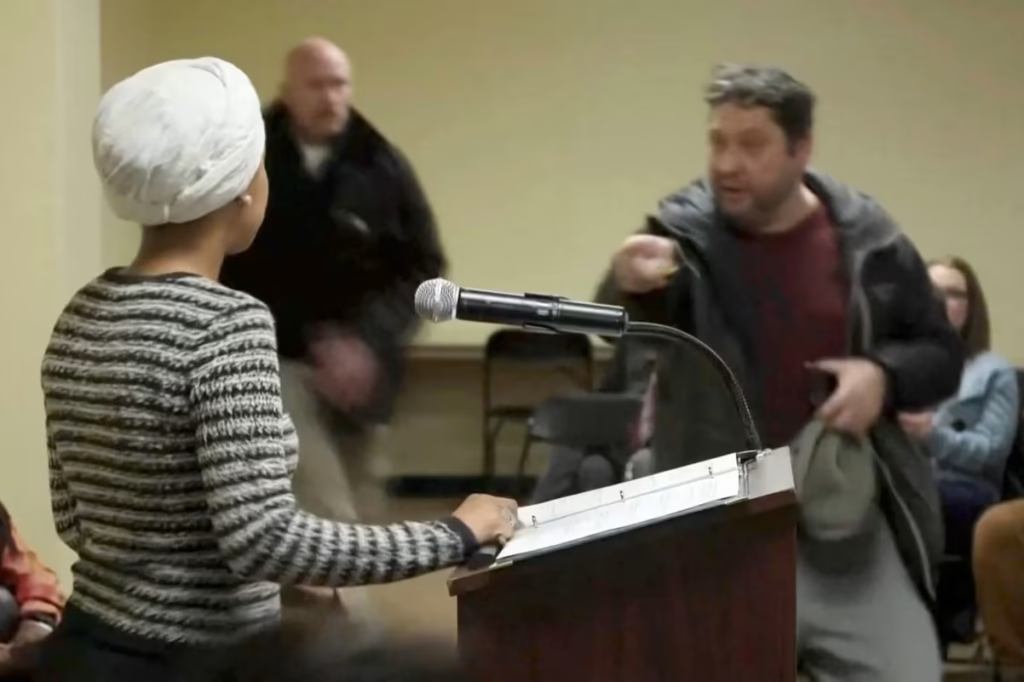
Security immediately subdued the suspect and restrained him as shocked attendees reacted. The substance’s odor was later described as harsh, though officials have not publicly disclosed its composition. Minneapolis police and forensic teams are investigating to determine what it was and whether others were exposed.
The Suspect and Immediate Police Response
The attacker has been identified as 55-year-old Anthony Kazmierczak of Minneapolis, who was quickly apprehended at the site and booked into Hennepin County Jail. Police charged him with third-degree assault, a serious offense that could carry months in jail if convicted. Law enforcement confirmed that officers present observed the act and intervened before additional harm could occur.
Authorities have not yet released Kazmierczak’s motive, and whether his actions were politically inspired remains under examination.
Omar’s Reaction: Resilience and Defiance
Despite being sprayed, Omar stood her ground and refused immediate medical attention, choosing instead to continue addressing the crowd. In comments shared later on social media, she described herself as a “survivor” and said she would not allow violence or intimidation to silence her voice or weaken her commitment to constituents.
Her persistence drew applause and cheers from many at the event, and leaders from both political parties quickly condemned the assault as unacceptable. Minneapolis Mayor Jacob Frey emphasized that violence has no place in civic dialogue, while other lawmakers stressed that disagreements — even heated ones — should never turn into physical confrontations.
Political Context: Immigration and Rising Tension
This town hall attack comes at a highly charged political moment in Minnesota and across the United States. Federal immigration enforcement operations in Minneapolis earlier this month, under what authorities have called “Operation Metro Surge,” led to clashes, protests, and at least two fatal shootings by federal agents that have inflamed local communities.
In this backdrop of tension, Omar has been one of the most outspoken critics of aggressive immigration enforcement, ICE, and DHS leadership. Her speeches often spotlight the human consequences of federal policy, especially within Minneapolis’ Somali-American community, making her a frequent focal point for political debate and criticism.
Broader Impact: Safety, Political Violence, and Public Discourse
The attack on Rep. Omar is more than an isolated incident; it highlights a worrying trend in threats against public officials. The U.S. Capitol Police reported a significant rise in threat assessments for lawmakers in 2025, reflecting broader national concerns about political rhetoric translating into physical danger.
Experts argue that violent episodes like this deepen divisions and can dissuade civic participation, particularly among women and minorities in politics. Many commentators also point to the role of political leaders in shaping public tone — stressing that heated rhetoric must be balanced with responsibility to prevent escalation into violence.
National Reactions and Calls for Change
Responses to the incident poured in across the political spectrum. Republican Rep. Nancy Mace said she was “deeply disturbed” by the attack, emphasizing that no elected official should face physical violence regardless of ideological differences. Local and national leaders echoed that sentiment, underscoring that robust debate must remain non-violent.
The White House, Minneapolis officials, and law enforcement have all reiterated commitments to safety for public officials and constituents, promising thorough investigations and accountability for acts of intimidation or assault.
Why This Matters Now
This event serves as a stark reminder that political tensions in the U.S. are not just rhetorical but have real, tangible consequences. With elections approaching and immigration policy at the center of national debate, incidents like the Minneapolis town hall attack raise pressing questions about security, civic discourse, and how public leaders can both inspire and protect democratic engagement. The ongoing inquiry into what happened, why it happened, and how to prevent similar events is now part of a larger national conversation about the future of public safety and political civility.
Subscribe to trusted news sites like USnewsSphere.com for continuous updates.