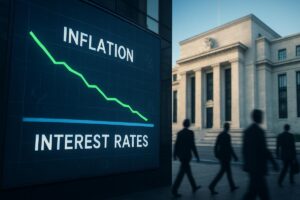
AI inflation is emerging as an unusual new question for investors and Federal Reserve policymakers: Can a technology expected to make the economy more productive actually make prices rise before those productivity gains arrive?
The question is becoming harder to dismiss. The artificial-intelligence boom is driving enormous investment in data centers, semiconductors, electricity infrastructure, power equipment and construction. That spending creates demand immediately, while some of the productivity benefits promised by AI may take years to appear.
Federal Reserve officials are now openly examining this possibility. A July speech by New York Fed President John Williams highlighted strong technology investment and said demand for AI-related goods and electricity was outpacing supply in some categories, contributing to higher prices for semiconductors, power transformers and other technology inputs.
The Federal Reserve itself has also published research specifically examining the economic effects of the AI buildout, including investment, adoption, costs, productivity and labor-market effects.
At the same time, the latest inflation data do not show an economy spiraling into an AI-driven inflation shock. July consumer inflation cooled to 3.4% year over year, according to recent reporting, while July producer prices were unchanged from June and rose 4.7% over the year.
That creates the central puzzle for investors.
AI may eventually increase the economy’s supply capacity—but the spending needed to build AI infrastructure can increase demand before that extra supply arrives.
That timing gap could become one of the most interesting inflation stories of 2026.
Why the AI Boom Could Create Inflation Before It Creates Productivity
The traditional argument for AI is strongly disinflationary.
If artificial intelligence allows businesses to produce more goods with fewer workers, automate administrative tasks, improve logistics and increase worker productivity, the economy’s productive capacity should rise. More output without proportionally higher costs can eventually reduce inflationary pressure.
But there is a timing problem.
Companies have to spend money before those productivity gains materialize. They need servers, chips, data centers, electricity connections, cooling systems, transformers, construction workers, engineers and specialized equipment.
That creates an immediate increase in demand.
Federal Reserve Vice Chair Philip Jefferson made a similar point earlier this year, noting that the near-term increase in demand associated with AI activity could temporarily raise inflation even if AI ultimately increases productivity and productive capacity.
This is essentially a race between demand and supply.
If AI investment grows faster than the economy can expand its supply of chips, electricity, construction capacity and specialized equipment, prices can rise.
Eventually, factories can expand, more power generation can come online and businesses can adapt. But those responses take time.
That means AI can theoretically pass through two very different economic phases:
Phase one: AI investment creates demand and bottlenecks.
Phase two: AI productivity expands supply and reduces costs.
The inflation question is whether phase one becomes large enough—or lasts long enough—to create a meaningful problem for policymakers before phase two arrives.
That is why this story is different from a simple “AI is good for growth” narrative.
Chips, Data Centers and Electricity Are the New Inflation Pressure Points
The semiconductor industry is one of the clearest places where AI-driven demand can collide with limited supply.
AI systems require enormous quantities of advanced processors and memory. Hyperscale technology companies are competing for computing capacity, while semiconductor manufacturers are expanding production to meet rapidly increasing demand.
Recent reporting has highlighted what some analysts are calling “chipflation”—the reversal of the long-running trend in which memory and other computing components became cheaper or more powerful over time. Strong AI demand is putting pressure on supplies of memory and other components used in computers, smartphones and cloud infrastructure.
That matters beyond the technology industry.
A chip is not simply a component inside an AI server. Semiconductors are used in automobiles, medical equipment, industrial machinery, telecommunications equipment, consumer electronics and household appliances.
If component costs rise substantially, manufacturers eventually have to choose between absorbing the cost, reducing margins or raising prices.
The same principle applies to electricity.
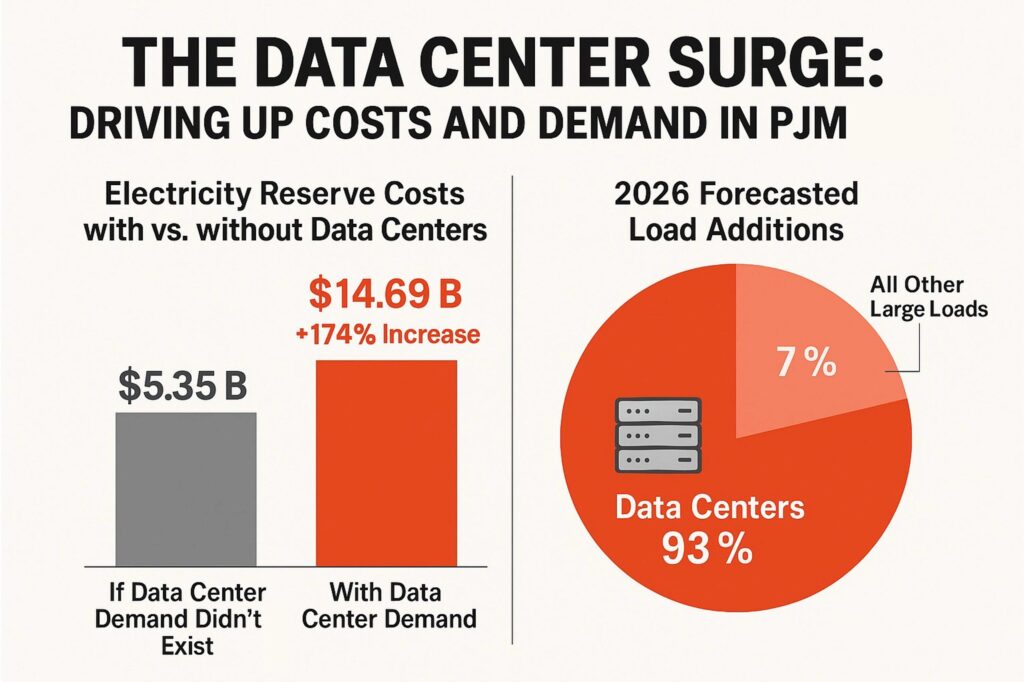
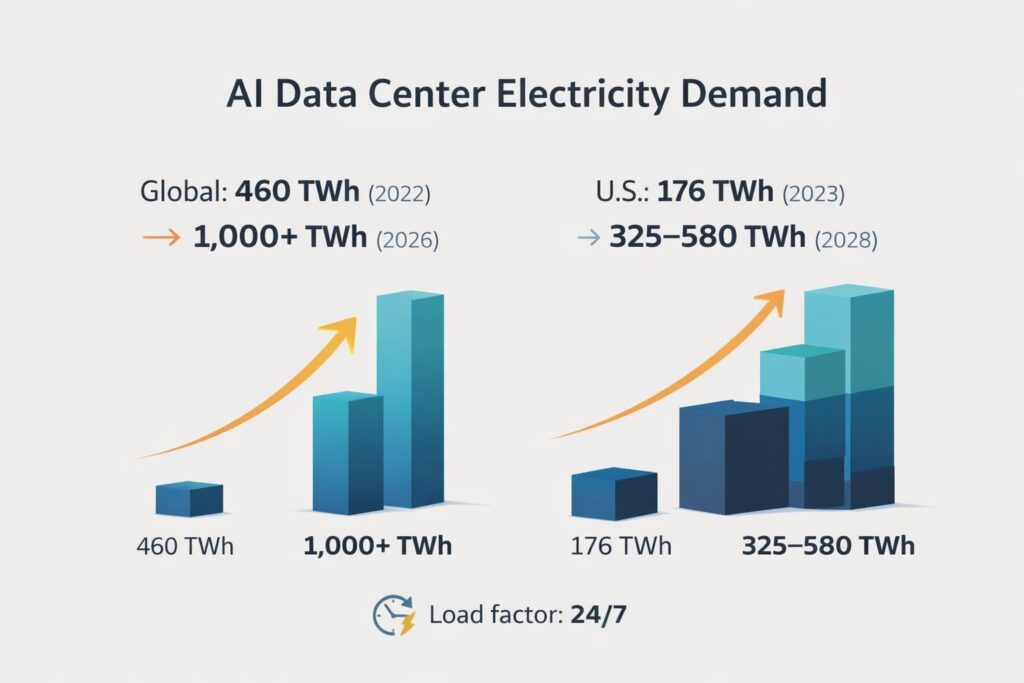
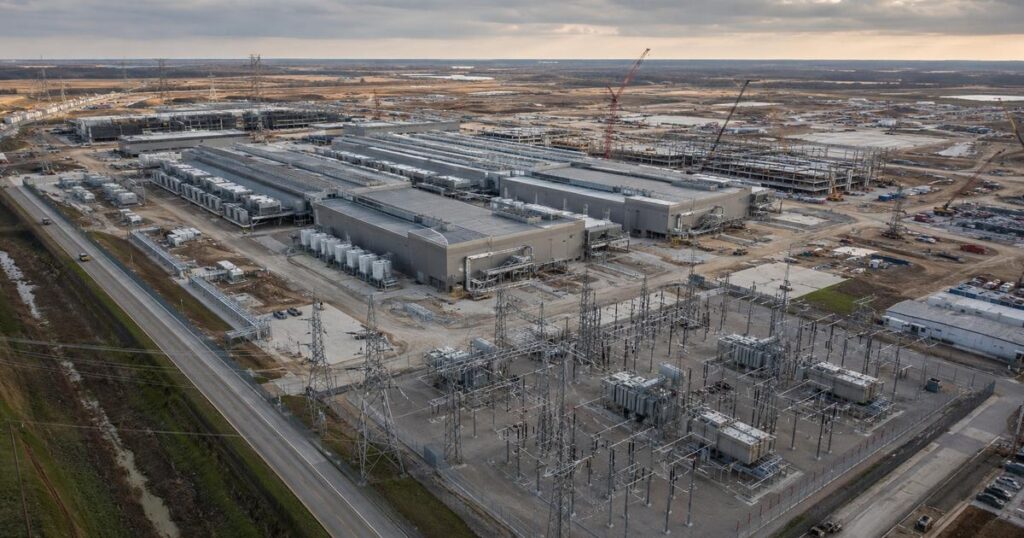
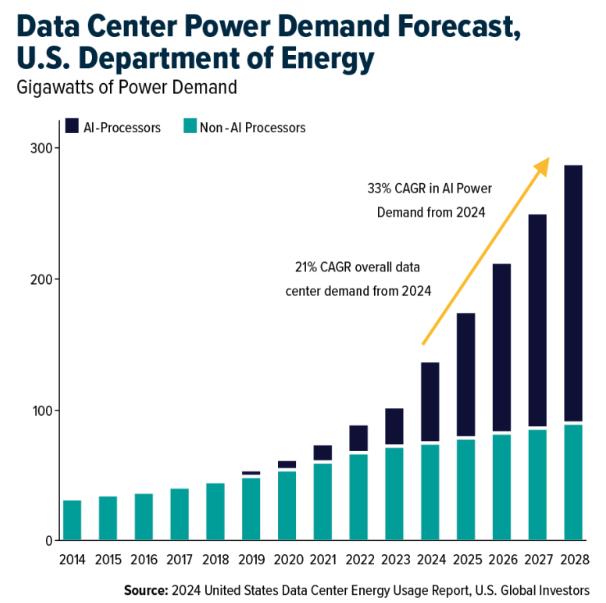
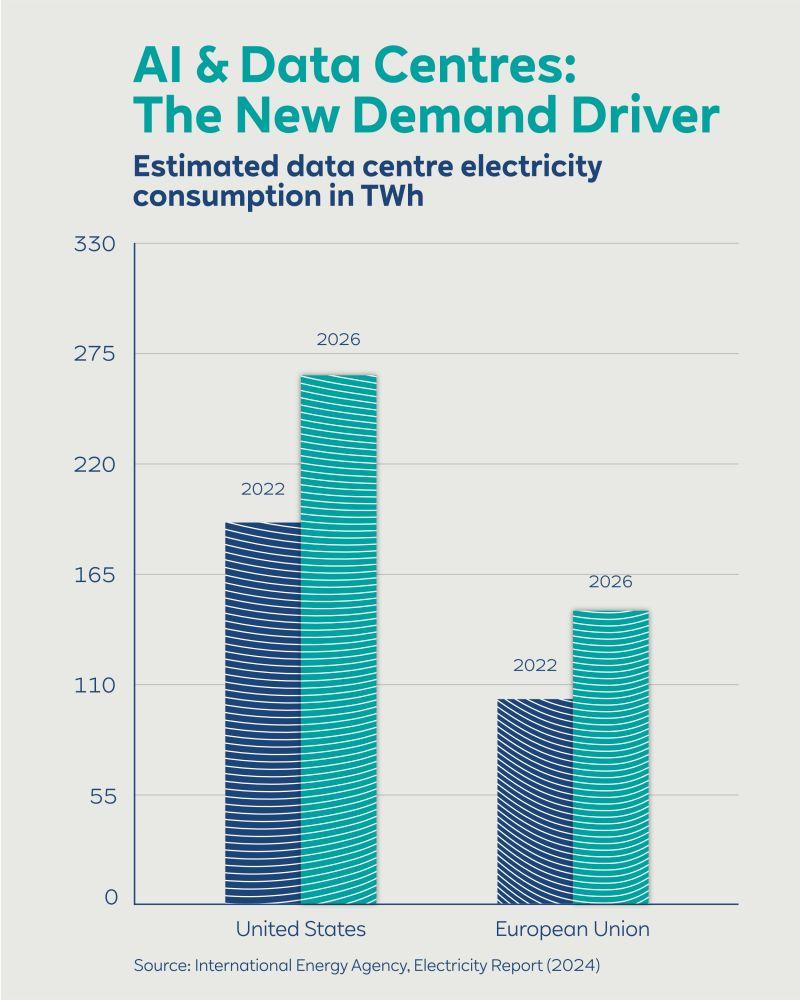
AI data centers require enormous amounts of power. New facilities need electricity connections, transmission capacity, substations, transformers and backup systems. In regions where electricity supply is already constrained, rapidly growing data-center demand can increase pressure on power prices and infrastructure.
The St. Louis Federal Reserve has specifically highlighted rising electricity prices as one visible consequence of the strong demand created by the AI buildout.
Construction is another potential bottleneck.
A large data center requires land, concrete, steel, electrical equipment, cooling systems and specialized construction labor. If dozens of projects compete for the same resources at the same time, the cost of building them can increase.
This creates an unusual economic chain:
AI demand → data centers → construction demand → equipment demand → electricity demand → input-price pressure
The chain doesn’t guarantee higher overall inflation.
But it creates a channel through which an investment boom in one sector can spill into the broader economy.
The Inflation Data Are Sending a More Complicated Signal
What this means for you: the current U.S. inflation picture is not simply “AI is making everything more expensive.”
The latest data show both cooling and persistent price pressures.
July CPI rose 3.4% from a year earlier, according to recent reporting, while core CPI rose 2.5% annually. That represented another month of moderation and reduced some of the immediate pressure on the Federal Reserve.
Producer prices also offered some relief.
The July Producer Price Index was unchanged from June, while the annual increase slowed to 4.7% from 5.5% in June. Goods prices fell 0.7% during the month while services prices increased 0.2%.
That is important because producer-price data can provide clues about cost pressures moving through the supply chain.
But the picture is not completely comfortable.
Some technology-related prices are rising, and AI-related demand can be highly concentrated. A handful of industries may experience severe price pressure without the effect immediately becoming obvious in headline CPI.
That is one reason investors should avoid looking only at the headline inflation number.
An economy can have moderate overall inflation while experiencing very significant price increases in specific strategic inputs.
Semiconductors, transformers, electricity, construction services and data-center equipment are examples.
If those costs eventually spread into consumer products, the inflation impact could become more visible.
The Federal Reserve’s preferred inflation measure is also different from CPI. At its July meeting, the Fed said inflation remained elevated relative to its 2% goal and maintained the federal-funds target range at 3.50%–3.75%.
So policymakers have to balance two competing possibilities.
AI investment could create temporary demand pressure that keeps inflation above target.
But AI productivity could eventually expand supply enough to lower inflation.
The Fed cannot simply assume the second outcome will arrive quickly.
Could AI Make the Fed Keep Interest Rates Higher?
Investor takeaway: the biggest financial-market consequence of AI-driven inflation would not necessarily be higher prices for computers or smartphones. It could be a change in expectations for interest rates.
Suppose businesses spend aggressively on AI infrastructure while households and companies continue spending strongly. If supply cannot keep up, inflation could remain elevated.
The Federal Reserve would then have less room to cut interest rates.
That could keep Treasury yields higher and affect mortgage rates, corporate borrowing costs, stock valuations and investment decisions.
This is especially relevant because the Fed has already acknowledged that AI could alter the economic relationship between growth, inflation and interest rates.
Federal Reserve Vice Chair Jefferson has discussed the possibility that AI could affect the economy’s neutral interest rate, often referred to as r*. If AI increases productivity and potential growth, the equilibrium interest rate could eventually be higher.
That creates a second layer to the story.
AI could potentially be inflationary in the short run while also increasing the economy’s productive capacity over the long run.
For investors, that means the question is not simply:
“Will AI reduce inflation?”
A better question is:
“When will AI’s supply-side benefits become large enough to offset its current demand pressures?”
If the answer is “soon,” inflation may remain manageable.
If the answer is “several years,” the economy could experience a prolonged period in which AI investment keeps demand strong while infrastructure constraints keep selected prices elevated.
That could complicate the Fed’s path.
It could also create different winners and losers across financial markets.
Companies selling AI infrastructure may benefit from strong demand.
Companies dependent on expensive electricity or scarce components may face higher costs.
Utilities and infrastructure providers could benefit from rising power demand.
Construction companies may benefit from data-center development.
Consumers could face higher prices for some electronics and services.
Investors holding long-duration growth stocks could face valuation pressure if interest rates remain higher for longer.
That is why AI inflation has implications far beyond the technology sector.
The Bigger Risk: AI Investment Could Compete for Scarce Capital and Resources
There is another inflationary mechanism that receives less attention: capital itself can become more expensive when investment demand rises rapidly.
The AI buildout is already enormous.
Recent Reuters reporting said Alphabet, Amazon and Meta had issued nearly $220 billion of bonds during 2026, more than twice their issuance in 2025, while rising government borrowing is also competing for capital. The result has been unusually high real yields in long-term bond markets.
Another recent development illustrates the scale of the investment cycle: Nvidia has been working with major financial institutions on a potential financing framework capable of supporting as much as $500 billion in AI infrastructure, although the arrangements involve memorandums of understanding rather than a finalized $500 billion loan.
The significance is not simply the size of those numbers.
It shows how AI investment is becoming intertwined with the broader financial system.
If companies, governments and infrastructure developers all demand capital simultaneously, the price of financing can rise.
Higher financing costs can then feed back into the cost of building AI infrastructure.
That creates another loop:
AI investment ↑ → financing demand ↑ → borrowing costs ↑ → infrastructure costs ↑
This doesn’t necessarily produce consumer inflation.
But it can make the AI buildout more expensive and increase pressure on companies to generate sufficient returns from their investments.
That matters for investors because the market has already priced enormous expectations into parts of the AI ecosystem.
If AI spending remains strong but the productivity payoff takes longer than expected, companies may face a difficult combination of high capital expenditure, expensive financing and uncertain returns.
The Federal Reserve Bank of New York has also warned that AI can affect inflation through changes in production technology, pricing behavior, cost pass-through and expectations. Its research emphasizes that AI’s effect on monetary policy is broader than simply asking whether productivity rises.
In other words, AI is not just another industry.
It could change the way the economy itself behaves.
Future Outlook: Inflationary AI Today, Disinflationary AI Tomorrow?
Future outlook: the most likely long-term outcome may not be that AI permanently causes inflation.
The more interesting possibility is a temporary inflationary period followed by stronger productivity growth.
Consider the basic sequence.
Technology companies spend heavily on infrastructure.
That increases demand for chips, electricity, construction and labor.
Those bottlenecks increase costs.
Businesses pass some of those costs to customers.
Inflation remains elevated.
The Fed responds by maintaining tighter financial conditions.
Meanwhile, AI adoption spreads throughout the economy.
Businesses automate tasks, increase output, reduce waste and improve productivity.
Supply expands.
Unit costs decline.
Inflationary pressure eventually weakens.
That would make the AI boom inflationary before becoming disinflationary.
It is not guaranteed, but it is economically plausible.
The opposite scenario is also possible.
If AI investment becomes excessive and expected productivity gains fail to materialize, companies could eventually reduce capital spending. That could cause a sharp slowdown in demand for chips, construction and infrastructure.
In that scenario, today’s inflation pressure could turn into tomorrow’s excess capacity.
There is also a middle scenario.
AI productivity could increase substantially, but infrastructure constraints could remain severe enough that inflation stays somewhat elevated for years.
That would create a very different monetary-policy environment from the one investors became accustomed to during the technology boom of the previous decade.
The Federal Reserve will therefore need to monitor both sides of the AI equation.
On the demand side, officials can watch capital expenditure, data-center construction, electricity consumption, semiconductor prices, business investment and financial conditions.
On the supply side, they can watch productivity, labor efficiency, AI adoption and the cost of producing goods and services.
The Fed has already begun building a framework for doing precisely this. Its July research on the AI buildout organizes indicators into AI capabilities and costs, firm investment and adoption, and productivity and labor.
For investors, that framework is useful.
If AI investment rises while productivity remains weak, inflation risks could increase.
If investment rises and productivity accelerates at the same time, the economy may absorb the spending without a major inflation problem.
If investment slows while productivity remains strong, the disinflationary benefits could become more visible.
That is the data investors should watch.
What investors should monitor now
Semiconductor prices: Are memory and advanced-chip prices continuing to rise?
Electricity prices: Are data centers creating regional power shortages or higher utility costs?
Construction costs: Are data-center projects competing for scarce labor and materials?
AI capital spending: Are hyperscalers increasing or reducing spending plans?
Productivity: Is measured output per worker actually accelerating?
Core inflation: Are higher technology costs spreading into consumer prices?
Treasury yields: Are markets demanding higher real returns because of stronger growth, inflation or capital scarcity?
Fed expectations: Are investors pricing fewer rate cuts because AI-related demand remains strong?
Corporate earnings: Are AI investments generating enough revenue and productivity to justify their cost?
These indicators can tell a much more complete story than simply watching Nvidia or the Nasdaq.
The central question for 2026 and beyond is becoming increasingly clear:
Will AI create enough new supply to outrun the demand it creates?
If it does, AI could ultimately become one of the strongest disinflationary forces of the next decade.
If demand continues to outrun supply for too long, the technology boom could create a new inflation channel that policymakers cannot easily ignore.
And that is what makes the current AI cycle so unusual.
The technology may eventually make the economy cheaper, faster and more productive.
But before that happens, America has to build the machines, data centers, power systems, semiconductor capacity and infrastructure needed to make the AI economy possible.
That construction boom has a price.
For investors, the smartest approach is therefore not to assume that AI is automatically inflationary or automatically disinflationary.
Watch the race between demand and supply.
If supply starts winning, inflation should benefit.
If demand keeps winning, the Federal Reserve may have to keep financial conditions tighter for longer.
And if productivity finally catches up with the enormous investment already underway, the same AI boom that initially created price pressure could eventually become one of the biggest sources of disinflationary growth the U.S. economy has seen in decades.
Subscribe to trusted news sites like USnewsSphere.com for continuous updates.
Best primary sources to keep this article updated
- Federal Reserve — The AI Buildout and the Economy — excellent recurring source for AI investment, adoption, productivity and labor data.
- Federal Reserve — July 2026 FOMC statement — use for the current policy rate and Fed inflation assessment.
- BLS CPI — update consumer inflation figures.
- BLS PPI — update producer and wholesale-price pressures.