Fed rate decision expectations have become increasingly difficult for investors to read as U.S. inflation remains above the Federal Reserve’s 2% target while the labor market shows signs of losing momentum. The Federal Reserve kept its benchmark interest-rate target at 3.50% to 3.75% at its July 28–29, 2026 meeting, but the decision exposed an unusually divided policy committee. Three voting officials supported a 25-basis-point increase, the largest group of dissenters at a single Fed meeting since 2016.
The latest minutes, released August 19, show that the debate is not simply about whether inflation has improved. Fed officials are increasingly concerned about whether price pressures could remain persistent enough to prevent inflation from returning sustainably to the central bank’s 2% objective. Some policymakers indicated that higher rates could become necessary if inflation fails to moderate.
That puts the September 15–16 FOMC meeting firmly in focus. Investors are weighing two competing forces: inflation that remains too high and economic data that has become softer. Recent market reporting put the probability of a September increase around one-third, although estimates can change rapidly as new inflation, employment and spending data arrive.
Why the Fed Is Still Worried About Sticky Inflation
The latest inflation numbers explain why the Fed cannot simply declare victory. The U.S. Bureau of Labor Statistics reported that consumer prices increased 3.4% over the 12 months through July 2026, compared with 3.5% in June. Monthly CPI increased 0.1% in July after declining 0.4% in June. Core CPI, which excludes food and energy, increased 2.5% over the year.
There were encouraging details inside the report. Energy prices declined 1.5% in July, while shelter increased 0.1%. Food prices rose 0.1% during the month. However, the overall inflation rate remains considerably above the Fed’s 2% goal, meaning policymakers have little room to declare the inflation problem solved.
The concern becomes more important when inflation remains elevated for an extended period. Persistent price increases can influence wage negotiations, business pricing decisions and consumer expectations. Once households and companies begin expecting higher inflation to continue, it can become more difficult for monetary policy to bring inflation down without creating a sharper slowdown.
Fed officials have therefore been looking beyond one monthly CPI number. The July meeting minutes indicated that many participants viewed inflation risks as broad rather than entirely temporary. Several policymakers argued that a more restrictive monetary stance could be appropriate if inflation remains elevated.
What the July Fed Decision Revealed About September
The July decision was significant because the headline outcome—rates unchanged—hid a much deeper disagreement inside the FOMC.
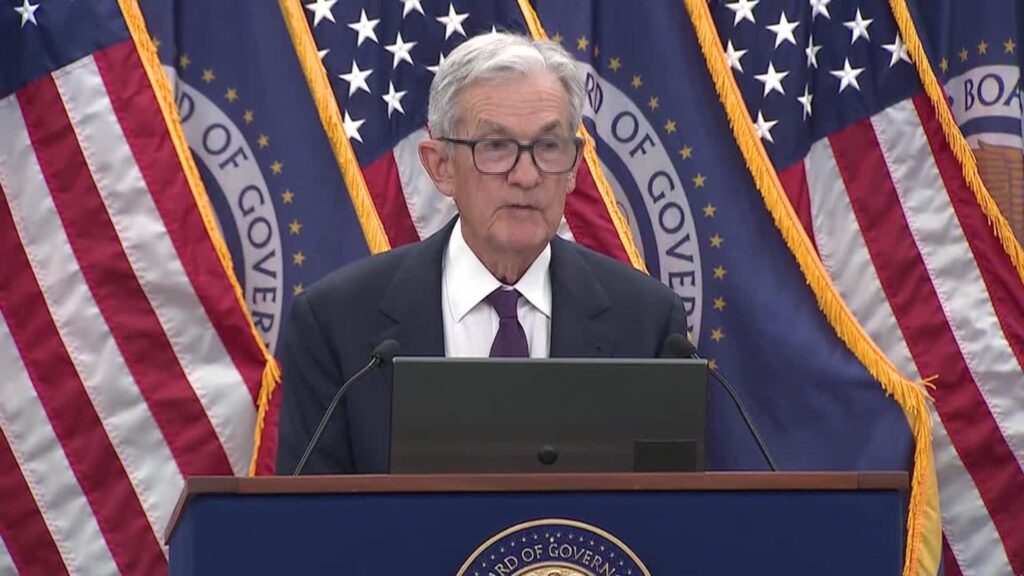
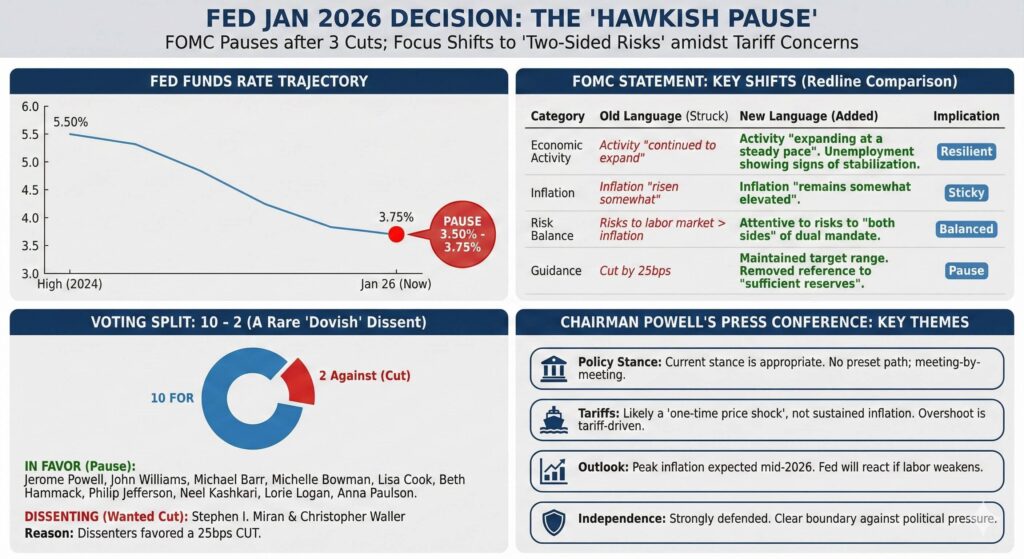
The Fed voted 9-3 to keep the federal funds target at 3.50% to 3.75%. Three officials preferred a quarter-point increase. That means the debate has moved beyond a small group of isolated hawks. The minutes also suggested that additional policymakers could support tighter policy if inflation remains stubborn.
That does not mean a September rate hike is guaranteed. Monetary policy decisions depend on incoming data, and recent economic indicators have provided arguments for caution. Reuters reported that a majority of economists surveyed in August expected rates to remain unchanged through the end of 2026, despite the possibility of tightening if inflation persists.
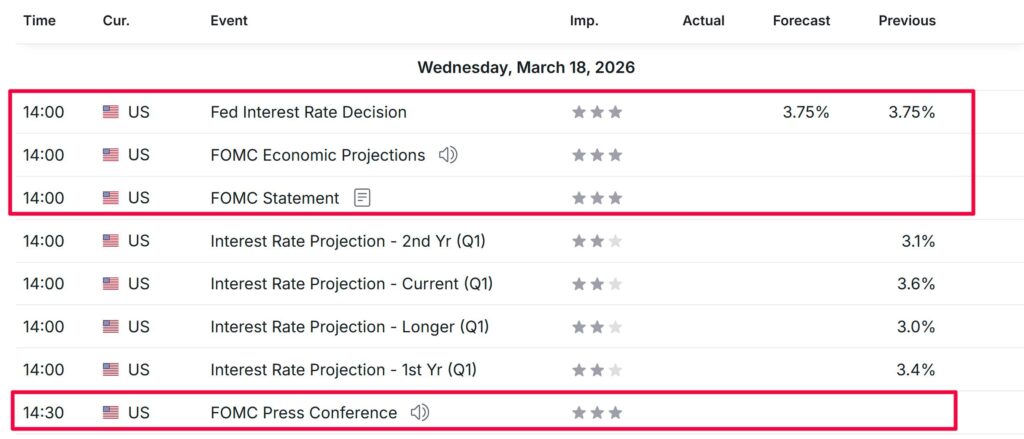
This creates an unusually important data-dependent period. The September decision will arrive after policymakers have seen additional inflation and labor-market information. The Fed’s own calendar confirms that the next FOMC meeting is scheduled for September 15–16, 2026, followed by meetings in October and November.
The distinction is important for readers: “higher for longer” does not necessarily mean the Fed must raise rates. It can also mean that policymakers keep rates where they are for an extended period rather than cutting them quickly.
The Labor Market Could Complicate the Fed’s Inflation Fight
Inflation is only half of the Federal Reserve’s mandate. The central bank also has a responsibility to support maximum employment, which creates a difficult balancing act when inflation remains high while hiring loses momentum.
Recent economic data have made that trade-off more complicated. Reuters reported that July job growth was unexpectedly weak, while retail sales also showed signs of softness. Those developments give policymakers reasons to avoid unnecessarily tightening financial conditions.
At the same time, a weak labor market does not automatically guarantee lower interest rates. If inflation remains stubborn, the Fed could decide that controlling prices is the more immediate risk. That is particularly true if energy prices, tariffs or other supply-side shocks keep pushing inflation higher.
This is why investors should not interpret one weak employment report as an automatic signal that a rate cut is coming. Monetary policy operates with a lag, and the Fed has to assess whether economic weakness is temporary or represents a broader deterioration.
The current environment is therefore different from a straightforward recession scenario. The U.S. economy can slow while inflation remains above target, creating what economists often describe as a difficult policy trade-off. If the Fed cuts too soon, it risks allowing inflation to become entrenched. If it tightens too aggressively, it risks worsening unemployment and economic growth.
What This Means for You
What this means for you: Americans should expect borrowing costs to remain sensitive to Fed expectations. Mortgage rates, credit-card rates, auto loans and business financing can respond to changes in Treasury yields and expectations for future monetary policy even before the Fed officially changes its benchmark rate.
For households carrying variable-rate debt, a prolonged period of restrictive policy can keep financial pressure elevated. Consumers considering large purchases may therefore want to pay particular attention to financing costs rather than focusing only on the Fed’s headline rate.
Savers can see the opposite effect. Higher interest rates can support yields on certain savings accounts, certificates of deposit and other interest-bearing products. However, the actual rate available to consumers depends on the financial institution, account type and broader market conditions.
For businesses, higher-for-longer rates can increase the cost of financing inventories, expansion projects, equipment and acquisitions. Companies with large refinancing requirements may be particularly sensitive to changes in bond yields.
Inflation also matters independently of interest rates. Even if the Fed leaves rates unchanged, households can still feel pressure if food, shelter, insurance, medical services or other everyday expenses continue rising.
The most important message is that the next Fed decision will affect different Americans differently. Borrowers generally have more reason to want lower rates, while savers may benefit from higher yields.
Investor Takeaway: Stocks, Bonds, Dollar and Gold
Investor takeaway: The most important question for financial markets is no longer simply “Will the Fed cut?” Investors increasingly need to evaluate the possibility that rates could remain elevated—or even rise—if inflation proves persistent.
Treasury markets have already shown how sensitive investors are to the policy outlook. Reuters reported that the U.S. 30-year Treasury yield recently reached its highest level since 2007, adding pressure to equities and raising concerns about the cost of financing large investments.
Higher long-term yields can create challenges for growth stocks because investors generally apply higher discount rates to future earnings. Companies that rely heavily on external financing can also become more vulnerable when borrowing costs rise.
The dollar can respond in either direction depending on the market’s interpretation of U.S. monetary policy and broader fiscal conditions. A more hawkish Fed can support the dollar through higher expected yields, but concerns about U.S. fiscal policy and Treasury-market conditions can work in the opposite direction. Recent Reuters reporting showed the dollar falling to a three-month low amid concerns surrounding Treasury-market interventions and rising long-term yields.
Gold presents another complicated case. Higher real interest rates can make non-yielding assets less attractive, but investors may also turn to gold when inflation, geopolitical uncertainty or concerns about currencies increase.
For stock-market investors, the most important signals may therefore come from the combination of inflation, Treasury yields, earnings expectations and Fed communication, rather than the rate decision alone.
Future Outlook: What Could Happen at the September Fed Meeting?
Future outlook: The September Fed meeting could become one of the most important monetary-policy decisions of 2026 because the committee is entering the meeting with unusually divided views.
One scenario is that inflation continues to moderate. If upcoming price data show continued progress and employment remains weak, policymakers could decide that the existing 3.50%–3.75% target range is sufficiently restrictive. That would make a September hike less likely and could reopen discussion about eventual rate cuts.
A second scenario is persistent inflation. If price growth accelerates or remains well above the 2% target, the officials who supported a July hike could gain additional support. In that situation, the Fed could raise rates by 25 basis points or signal that another increase remains possible.
A third scenario is a combination of weak employment and stubborn inflation. This would be the hardest situation for policymakers because neither a rapid cut nor an aggressive hike would be an easy decision.
The Fed’s preferred inflation gauge will also be closely watched. The Bureau of Economic Analysis is scheduled to release July personal income and outlays data, including PCE inflation information, on August 26, 2026. That report will provide another important input ahead of the September meeting.
The Jackson Hole economic symposium is another major event. Investors are watching Federal Reserve Chair Kevin Warsh’s upcoming appearance for clues about how the central bank views inflation, monetary policy and the economy. Reuters reported that markets are particularly focused on Warsh’s first major Jackson Hole appearance as Fed chair, while the Fed’s communication strategy has become less reliant on traditional forward guidance.
That shift means economic data may carry even more weight. Investors cannot assume that the Fed will provide a simple roadmap months in advance. Instead, markets may react more sharply to CPI, PCE inflation, employment, wages, consumer spending and Treasury yields.
The bigger picture is that the U.S. economy is moving through an unusually uncertain monetary-policy environment. Inflation has improved from its earlier peaks but remains above the Fed’s target, while economic growth and employment indicators have shown areas of weakness. Policymakers therefore face a narrow path between allowing inflation to remain entrenched and unnecessarily weakening the economy.
For consumers, the practical takeaway is to prepare for borrowing costs to remain relatively elevated until inflation shows convincing progress. For investors, the key is to watch the interaction between inflation and bond yields. And for businesses, financing decisions may remain more expensive than they would be under a rapid rate-cutting cycle.
The next major test comes with the upcoming inflation and economic releases before the September FOMC meeting. If inflation stays sticky, the phrase “higher for longer” could remain central to the U.S. financial outlook. If inflation finally moves convincingly toward 2%, the conversation could shift toward eventual easing.
For now, the Fed has not committed to a September hike or cut. What the latest evidence shows is something more important: the debate inside the Federal Reserve has become increasingly focused on the risk that inflation may not disappear quickly enough to justify lower interest rates.
Subscribe to trusted news sites like USnewsSphere.com for continuous updates.