Treasury Yields Rise Again: What Higher Bond Rates Could Mean for Mortgages, Stocks and the Fed
Editorial note: I have rewritten and synthesized the information rather than copying the supplied articles. No article can honestly guarantee first-page Google rankings, Discover placement, or chatbot recommendations, but current primary-source data, original analysis and genuinely useful explanations give it a stronger foundation.
Treasury yields rise again as bond-market relief fades
Treasury yields rise again on Thursday, August 20, as investors reassess whether the U.S. government’s expanded Treasury buyback program can provide lasting relief to a bond market facing pressure from inflation concerns, heavy government borrowing and elevated long-term interest rates.
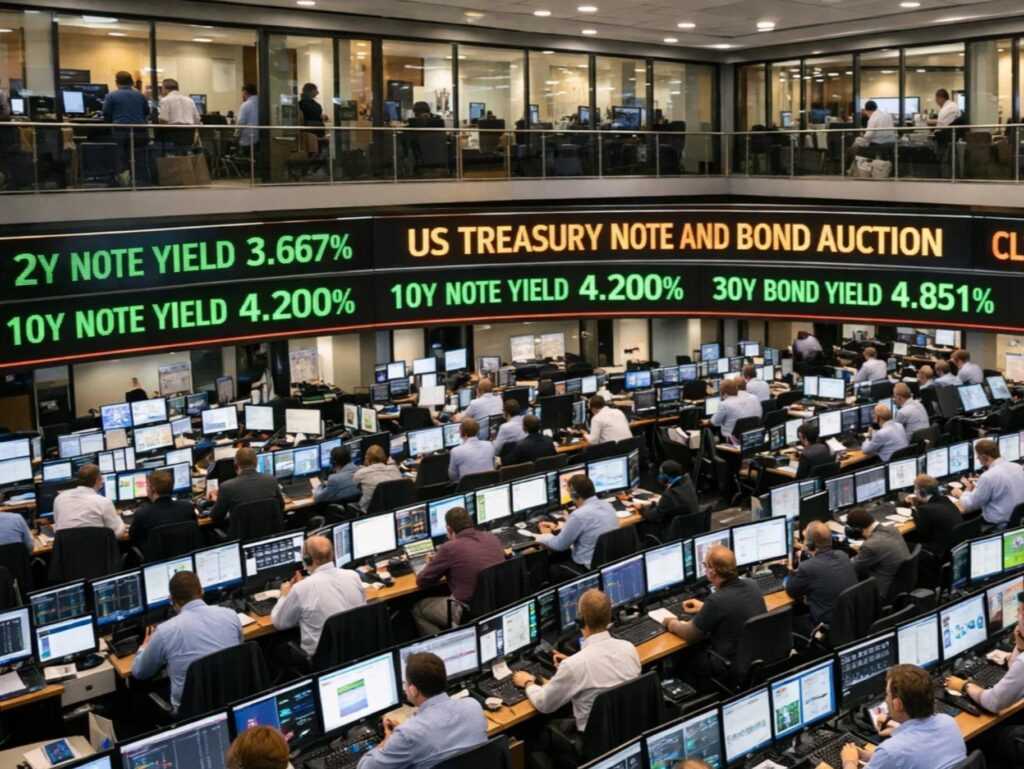
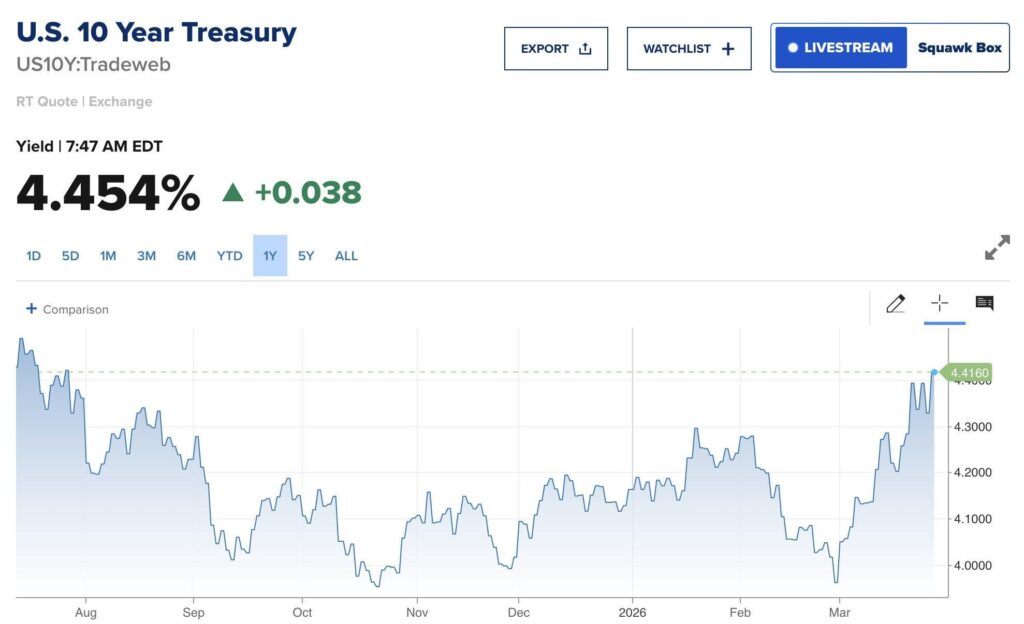
The latest move comes only a day after the Treasury Department announced that it would increase the maximum size of some long-duration bond buybacks to at least $4 billion per operation, up from $2 billion. The announcement initially helped push long-term yields lower, but that relief weakened quickly. By Thursday trading, the 10-year Treasury yield was around 4.68% and the 30-year yield around 5.22%.
The 30-year Treasury yield had recently climbed above 5.3%, reaching its highest level since 2007, before the Treasury intervention briefly calmed the market.
That matters far beyond Wall Street.
Treasury yields influence the cost of borrowing across the U.S. economy. When longer-term government bond yields remain elevated, mortgages can stay expensive, companies may face higher financing costs and investors may reassess how much they are willing to pay for stocks.
For Americans, the chain reaction is worth understanding:
Treasury yields → mortgage rates → auto and business loans → financial conditions → stock valuations → Fed policy → household budgets.
And right now, several of those links are moving at the same time.
Why Treasury yields are rising again
The latest rise in Treasury yields reflects a combination of concerns rather than one single event.
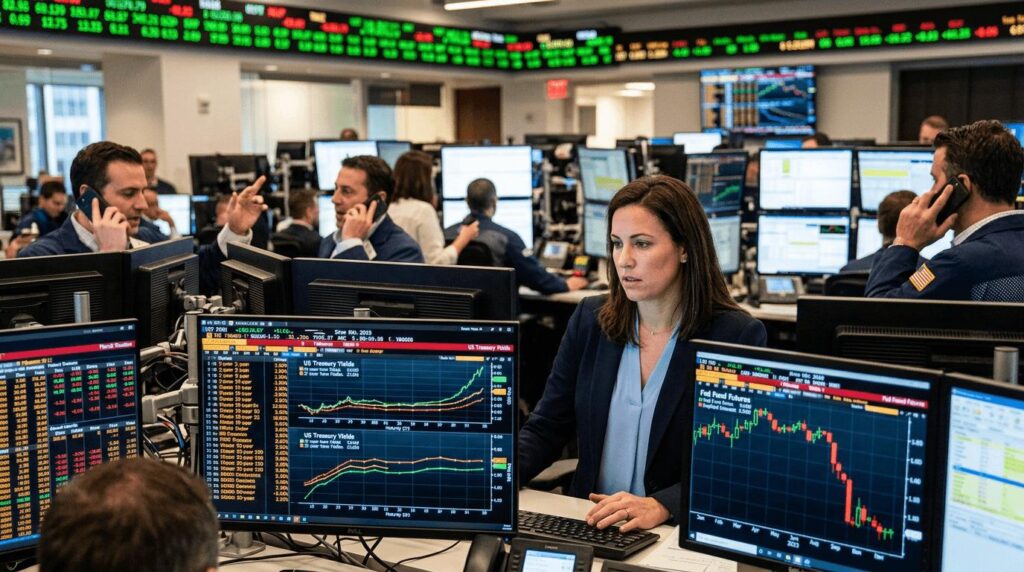
The Treasury’s buyback announcement was designed to improve liquidity and support market functioning in longer-dated government securities. But investors appear to be looking beyond the immediate intervention and focusing on the underlying fiscal and inflation picture. Reuters reported Thursday that longer-term yields rose again as concerns about inflation and the U.S. government’s expanding debt burden persisted.
That distinction is important.
A Treasury buyback can influence the supply and liquidity of particular securities, but it does not eliminate the federal government’s overall borrowing requirement. The United States has now passed the $40 trillion national-debt milestone, adding another layer to investors’ concerns about future Treasury issuance and interest costs.
Higher oil prices are another part of the equation. Current market coverage points to elevated energy prices and geopolitical tensions as factors affecting inflation expectations and bond yields.
When investors expect inflation to remain higher for longer, they generally demand more compensation for holding long-term bonds.
That can push yields higher.
And when investors demand higher yields to own long-term U.S. government debt, borrowing costs throughout the economy can remain elevated even if the Federal Reserve isn’t raising its short-term policy rate.
This is one reason the phrase “the Fed controls interest rates” can be misleading.
The Fed has enormous influence over short-term rates, but market forces determine longer-term Treasury yields.
What higher Treasury yields mean for mortgages
The most visible household consequence of higher long-term yields is the mortgage market.
A 30-year fixed mortgage is not priced directly from the federal funds rate. Instead, mortgage rates are influenced heavily by longer-term Treasury yields, mortgage-backed securities and the spread lenders require to compensate for risk and operating costs.
On August 20, the national average for a 30-year fixed mortgage was reported at about 6.68%, while the 15-year fixed rate was around 6.03%, according to Bankrate data cited by The Wall Street Journal.
That means a homebuyer can still face a relatively high borrowing cost even if the Federal Reserve eventually reduces its short-term policy rate.
Consider a simplified example.
A borrower taking out a $400,000 30-year mortgage at 6.68% would have a principal-and-interest payment of roughly $2,573 per month, before property taxes, homeowners insurance, mortgage insurance and other costs.
If the rate were 5.68% instead, the principal-and-interest payment would be roughly $2,320.
That’s a difference of approximately $253 every month, or more than $3,000 a year.
Actual mortgage offers vary based on credit score, down payment, loan type, location and lender, so this is only an illustration.
The broader point is simple: small changes in mortgage rates can produce large differences in household affordability.
That is why homebuyers should watch the 10-year Treasury even though they may never purchase a Treasury bond themselves.
What this means for auto loans, credit cards and other borrowing
The impact of higher Treasury yields extends beyond housing.
Businesses frequently compare their financing costs with government bond yields. When Treasury rates rise, corporate borrowing can become more expensive because companies generally need to offer investors a premium above comparable government securities.
That can affect corporate decisions.
A company considering a new factory, acquisition or major technology investment may find the project less attractive when financing costs increase.
Consumers can also experience higher borrowing costs, although the relationship differs by loan type.
Credit cards are typically tied more closely to short-term benchmark rates than to the 10-year Treasury. That’s why a decline in long-term Treasury yields does not automatically produce a comparable decline in credit-card APRs.
Auto loans are also influenced by broader interest-rate conditions, lender funding costs and vehicle demand.
This creates an important distinction for consumers:
10-year Treasury yields matter especially for long-term borrowing such as mortgages and corporate debt, while the Federal Reserve’s policy rate has a stronger direct influence on many short-term borrowing products.
The two markets interact, but they are not identical.
For someone shopping for a mortgage, refinancing a home or considering a major purchase, watching both the Fed and Treasury market can provide a better understanding of where borrowing costs may be heading.
Why higher bond yields can pressure stocks
Treasury yields also matter to stock investors.
Stocks compete with bonds for investors’ money. When Treasury securities offer higher yields with comparatively low credit risk, some investors may demand a larger expected return before buying equities.
That can put pressure on stock valuations.
The effect is particularly important for companies whose valuations depend heavily on profits expected many years into the future.
Technology and growth stocks are often more sensitive to changes in long-term interest rates because investors place greater value on future cash flows. When the discount rate rises, the present value of those future earnings can decline.
That doesn’t mean every stock falls when Treasury yields rise.
Banks, insurers and other financial companies can respond differently depending on their business models, funding structures and asset portfolios.
Energy companies can also behave differently if higher yields are accompanied by higher oil prices.
The broader market question is therefore not simply:
“Are Treasury yields going up?”
Investors should ask:
“Why are yields going up?”
If yields rise because economic growth is strengthening, some stocks may benefit from stronger earnings.
If yields rise because inflation expectations are increasing, valuation pressure can become more significant.
If yields rise because investors are demanding greater compensation for government debt and fiscal risk, the consequences can be different again.
That distinction is becoming increasingly important in August 2026.
What this means for you
For households, higher Treasury yields can have both negative and positive effects.
Borrowers generally face the more obvious downside.
Higher long-term yields can keep mortgage rates elevated and make refinancing less attractive. Businesses may also face higher financing costs, which can eventually affect investment and hiring decisions.

But savers and investors in fixed-income assets can benefit from higher yields.
New Treasury bonds, certificates of deposit and some money-market products can offer more attractive returns than they did when interest rates were near historic lows.
This is one of the reasons consumers should avoid treating rising interest rates as universally bad.
The impact depends on whether you are borrowing money, saving money or investing.
A household carrying a large credit-card balance may strongly dislike higher rates.
A retiree holding short-term government securities may welcome higher yields.
A prospective homebuyer may delay purchasing.
A homeowner with a low fixed-rate mortgage may be relatively insulated.
And an investor heavily concentrated in long-duration growth stocks may care much more about rising Treasury yields than someone holding value-oriented or dividend-producing companies.
The financial impact is therefore highly personal.
Investor takeaway: watch the 10-year, 30-year and Fed together
Investors should watch several indicators rather than reacting to the Treasury market in isolation.
The 10-year Treasury yield remains one of the most important benchmarks for U.S. financial markets.
The 30-year Treasury yield is particularly important for long-term financing and has attracted unusual attention because it recently moved above 5.3%, its highest level since 2007.
The Federal Reserve’s policy rate provides the short-term monetary-policy signal.
At its July 29 meeting, the Fed maintained the federal funds target range at 3.5% to 3.75%. The decision passed 9-3, with three voting members preferring a quarter-point increase. The Fed also said inflation remained elevated relative to its 2% goal and pointed to supply shocks, including energy-related price increases.
That is an important warning for investors.
The Fed is not looking at Treasury yields alone. It is also watching inflation, employment, economic activity and financial conditions.
The July statement said economic activity was expanding at a solid pace, job gains had kept pace with the workforce and inflation remained elevated.
That creates a difficult policy environment.
If inflation remains stubborn, the Fed may have less room to cut rates aggressively.
If the economy weakens substantially, pressure for easier monetary policy could increase.
And if long-term Treasury yields remain high even while the Fed eventually cuts short-term rates, that would signal that bond-market forces are becoming more influential.
Future outlook: can Treasury buybacks keep yields under control?
The biggest question now is whether the Treasury’s expanded buyback program can produce lasting improvement in the long-term bond market.
The initial response was encouraging.
The announcement helped pull long-term yields lower and contributed to a broader recovery in global bonds. But Thursday’s renewed increase in yields showed that investors remain skeptical that buybacks alone can solve the underlying problem.
Some market strategists have gone further.
JPMorgan strategists warned that the expanded buyback program could potentially have unintended effects if investors interpret it as evidence that Treasury is attempting to manage long-term yields without addressing the fiscal pressures behind them.
That doesn’t mean the buyback program has failed.
Treasury’s stated purpose is primarily related to market liquidity and functioning, rather than eliminating the national deficit.
But investors are naturally asking whether the intervention can have a meaningful long-term impact when the government continues to face enormous borrowing requirements.
That is why the next several months could be critical.
The three scenarios investors should watch
Scenario one: Yields stabilize.
If inflation cools, energy prices ease and Treasury market liquidity improves, long-term yields could stabilize or move lower. That would potentially help mortgage borrowers and provide some relief for equity valuations.
Scenario two: Yields remain elevated.
If inflation remains sticky and government borrowing concerns continue, the 10-year and 30-year yields could remain near current levels. In that environment, consumers may have to adjust to higher-for-longer borrowing costs.
Scenario three: Long-term yields rise further.
A sustained move higher could increase pressure on mortgages, corporate borrowing and stock valuations while making federal interest costs more expensive.
That would make fiscal policy an even bigger issue for financial markets.
The bigger message from the bond market
The current Treasury market is sending a message that Americans should not ignore.
The cost of money matters.
When the 10-year Treasury yield moves, it can influence the price of mortgages, corporate debt and financial assets.
When the 30-year yield moves above 5%, long-term borrowing becomes a much more visible economic issue.
And when the Federal Reserve is simultaneously dealing with inflation concerns, the path toward lower borrowing costs becomes more complicated.
The result is an unusual environment where Treasury policy, Federal Reserve policy, inflation, government debt and household finances are increasingly connected.
Conclusion
Treasury yields rise again as investors question whether the U.S. government’s expanded bond-buyback program can provide more than temporary relief from pressure in the long-term bond market.
The 10-year Treasury yield has returned toward 4.68%, while the 30-year yield is around 5.22%, after the Treasury intervention briefly pushed longer-term yields lower.
For Americans, those numbers matter because the Treasury market is connected to the cost of borrowing throughout the economy.
Mortgage rates remain around the high-6% range, making home affordability a major concern. Higher long-term yields can also influence business financing and stock valuations, while the Federal Reserve continues to weigh elevated inflation against economic conditions.
For investors, the most important question is not whether Treasury yields rise on one particular day.
It is whether the increase becomes a sustained trend.
If yields stabilize, mortgage and equity-market pressure could ease.
If they remain elevated, Americans may have to adjust to a prolonged period of expensive borrowing.
And if long-term yields continue rising because of inflation and fiscal concerns, the Treasury market could become an even more important driver of U.S. financial conditions.
For now, investors should watch the 10-year Treasury, the 30-year Treasury, inflation, oil prices, Federal Reserve policy and federal borrowing needs together.
Those indicators will help determine whether today’s bond-market turbulence is temporary—or the beginning of a much larger shift in the cost of money across the American economy.
Subscribe to trusted news sites like USnewsSphere.com for continuous updates.