Interest rates affect your money in far more ways than the rate on a mortgage or savings account. They influence how much you pay to borrow, how much you can earn on cash, what businesses pay to finance expansion, how investors value stocks and bonds, and how quickly retirement savings can grow.
That relationship is especially important in the U.S. right now. The Federal Reserve kept its federal funds target range at 3.50% to 3.75% at its July 28–29, 2026 meeting, while three FOMC members preferred a 25-basis-point increase. The Fed also said inflation remained elevated relative to its 2% objective.
At the same time, July inflation remained well above the Fed’s target. The Consumer Price Index increased 3.4% over the year through July 2026, while core CPI, which excludes food and energy, increased 2.5%.
Meanwhile, financial markets have been dealing with elevated Treasury yields. Reuters reported that the recent Treasury sell-off pushed yields to their highest levels in nearly two decades, increasing borrowing costs across parts of the economy.
So what does all of this mean for an American household?
The answer depends on whether you are borrowing money, saving money, investing for the future, or doing all three at the same time.
Why Interest Rates Matter So Much to Your Financial Life
The Federal Reserve does not directly set every interest rate consumers encounter. Instead, its policy rate influences financial conditions throughout the economy. When the Fed changes monetary policy, banks, lenders, investors and businesses reassess the cost of money.
That process can eventually affect mortgages, credit cards, auto loans, savings accounts, business financing and investment markets.
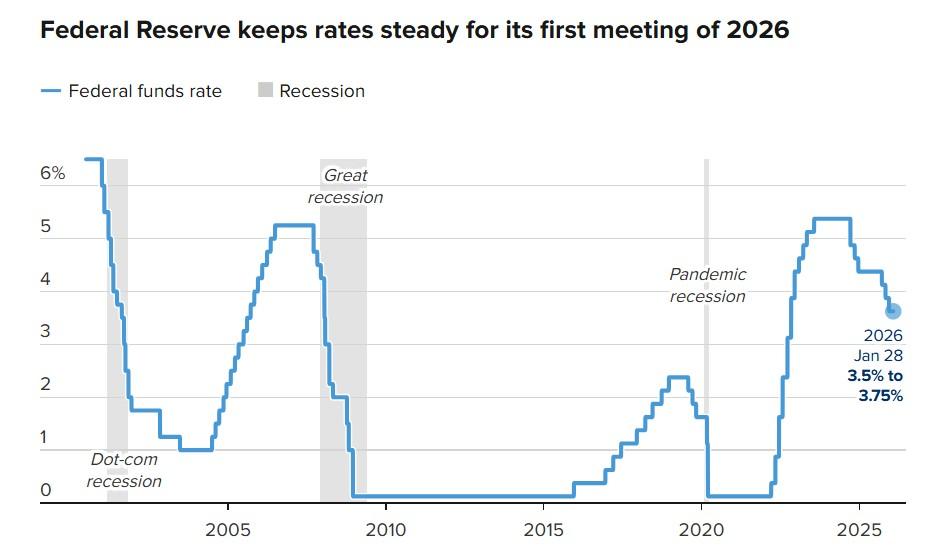
The current environment illustrates why this matters. The Fed’s July decision left the federal funds target range at 3.50%–3.75%, while policymakers continued to describe inflation as elevated. Three officials wanted a quarter-point increase, showing that the debate over how restrictive policy should be remains significant.
The Fed’s next scheduled meeting is September 15–16, 2026.
For households, the key point is that a Fed decision does not automatically mean your mortgage, credit-card or savings rate will change by the same amount.
Different financial products respond differently.
Short-term rates often react relatively quickly to changes in monetary policy. Longer-term borrowing costs can be driven heavily by Treasury yields, inflation expectations, economic growth and investor demand.
That distinction is crucial in 2026 because long-term Treasury yields have remained elevated even while markets debate the future path of Federal Reserve policy. Reuters recently reported that the 30-year Treasury yield reached its highest level since 2007.
In other words, the Fed rate is only one part of the interest-rate story.
How Higher Rates Affect Mortgages and Homebuyers
For homeowners and prospective buyers, interest rates can have an enormous effect because a mortgage is typically one of the largest financial commitments a household makes.
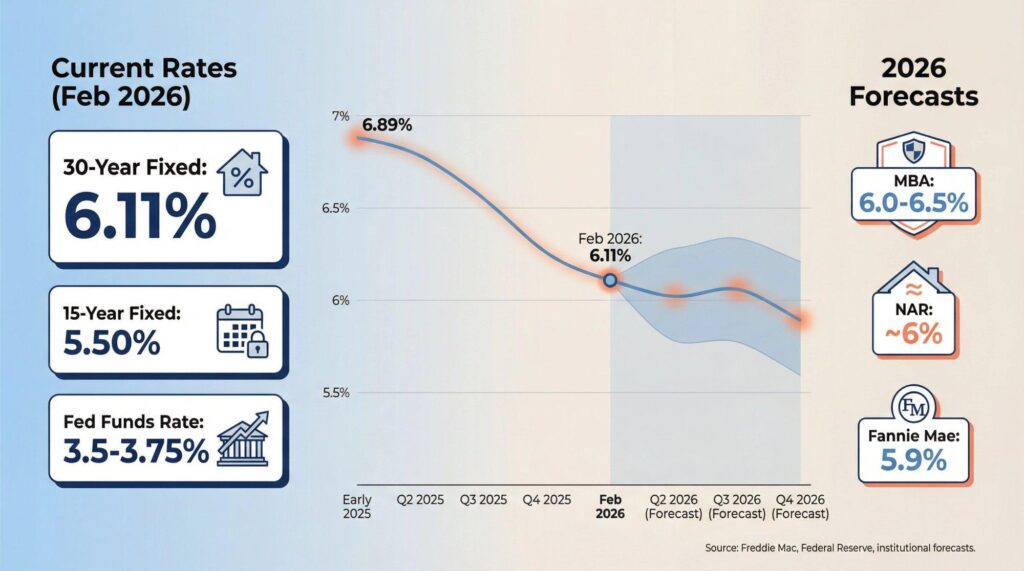
As of August 20, 2026, Freddie Mac reported an average U.S. 30-year fixed mortgage rate of 6.65%, down slightly from 6.67% the previous week. The average 15-year fixed mortgage rate was 5.95%. A year earlier, the 30-year rate was 6.58%.
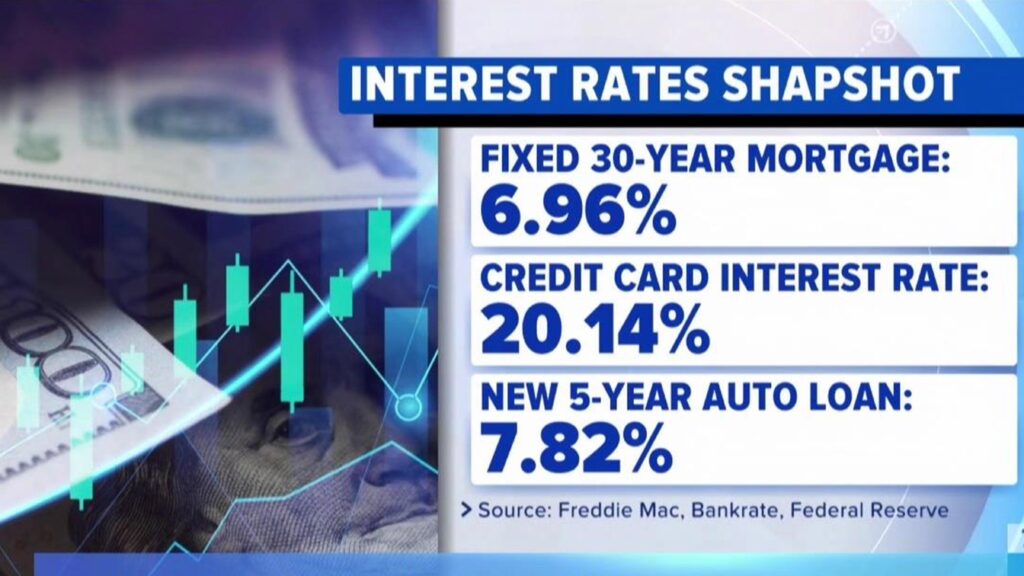
That illustrates an important point: mortgage rates can remain relatively high even when investors expect eventual changes in Federal Reserve policy.
Mortgage rates are strongly influenced by longer-term bond markets, particularly the broader movement in Treasury yields and investor expectations.
For a homebuyer, the difference can be substantial.
Consider a hypothetical $400,000 30-year mortgage. At a 4% interest rate, the principal-and-interest payment would be roughly $1,910 per month. At 6.65%, it would be about $2,570 per month, before taxes, insurance and other housing costs.
That is roughly a $660 monthly difference.
The exact payment depends on the loan amount, fees, down payment and other factors, but the example demonstrates why even a few percentage points can dramatically affect affordability.
What this means for you: if you are shopping for a home, don’t focus only on the headline mortgage rate. Compare the annual percentage rate, fees, loan terms, down payment requirements and the total cost of borrowing.
And remember that mortgage rates change over time.
A borrower should not assume that today’s rate will necessarily be tomorrow’s rate. Conversely, waiting for dramatically lower rates can also carry risks if home prices, inventory or competition change.
For existing homeowners, refinancing only makes sense when the potential interest savings justify closing costs and other expenses. Freddie Mac notes that refinancing replaces the existing mortgage with a new loan, meaning the borrower receives a new rate and term.
Credit Cards, Auto Loans and Other Consumer Debt
Credit cards can be particularly painful when interest rates are high because many card balances carry variable rates and interest can compound rapidly when a balance is not paid in full.
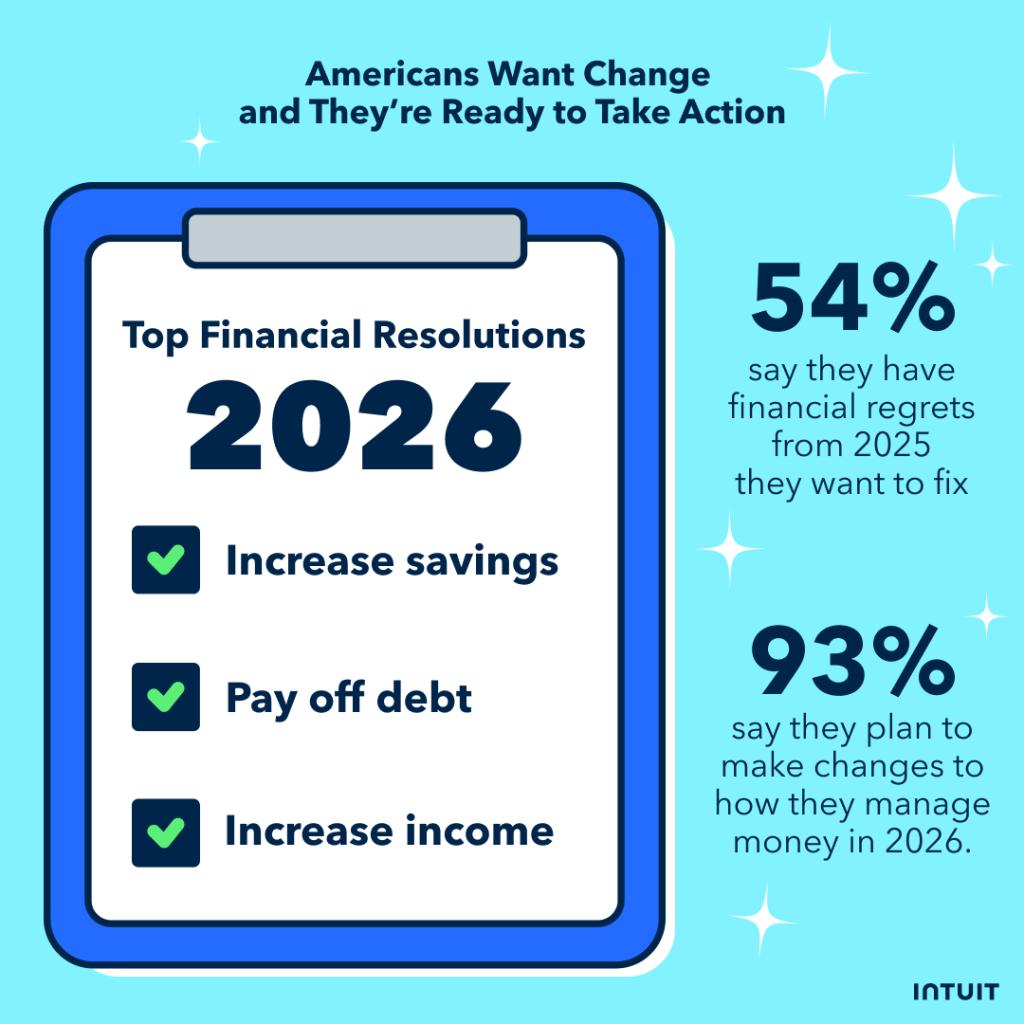
The Federal Reserve’s latest consumer-credit data show that revolving credit increased at a 3.9% annual rate in the second quarter of 2026, while total consumer credit increased at a 2.6% annual rate. In June alone, revolving credit increased at a 6.0% annual rate.
That does not mean every household is increasing credit-card debt, but it does show that revolving consumer credit remains an important part of the economy.
The Federal Reserve’s G.19 database tracks commercial-bank credit-card interest rates, including rates for accounts that are assessed interest.
For consumers carrying balances, the basic financial lesson is simple: high-interest debt can overwhelm investment returns.
Suppose someone has a $10,000 credit-card balance at a hypothetical 20% annual interest rate. If the balance remains outstanding, the interest burden can become substantial. A consumer earning 4% or 5% on a savings account while paying 20% or more on revolving debt is facing a large negative spread.
That is why paying down expensive revolving debt can sometimes be more financially valuable than chasing investment returns.
Auto loans work somewhat differently because rates depend on the lender, borrower credit profile, loan term, vehicle and broader market conditions.
But higher borrowing costs can still increase monthly payments and reduce the amount of vehicle a household can comfortably afford.
What this means for you: if rates are high, compare lenders, improve your credit profile where possible, avoid unnecessary borrowing and pay attention to the total interest cost—not simply the monthly payment.
A low monthly payment can sometimes hide a longer repayment period and a much larger total cost.
Savings Accounts and CDs Can Finally Work in Your Favor
There is another side to higher interest rates that borrowers often overlook: savers can benefit.
When rates are elevated, banks and financial institutions may offer more attractive yields on savings accounts, money-market accounts and certificates of deposit.
Bankrate’s August 2026 listings show high-yield savings accounts offering rates around 4.10% at the top of its current list, while its CD listings show some top rates reaching 4.50%, although individual offers and requirements vary.
This creates an opportunity for households holding emergency funds or money earmarked for short-term goals.
Instead of leaving a large cash balance in an account earning almost nothing, consumers can compare federally insured savings products and CDs.
But there is an important trade-off.
A savings account generally offers greater liquidity. A CD may offer a fixed rate for a specific period but can impose restrictions or penalties for early withdrawal.
What this means for you: the right place for your cash depends on when you need it.
Money needed for an emergency should generally remain accessible. Money that will not be needed for a defined period may potentially be placed in a suitable CD or other interest-bearing account after considering the terms, taxes and insurance coverage.
Higher rates can therefore be a negative for borrowers but a potential advantage for savers.
That is one reason interest-rate changes can affect two households in completely different ways.
A retiree holding substantial cash may welcome higher yields, while a young household trying to finance a home may prefer lower borrowing costs.
How Interest Rates Affect Stocks, Bonds and Investments
Interest rates also influence the stock market because they change the relative attractiveness of different investments and affect the cost of capital for companies.
When Treasury yields rise, government bonds can become more competitive with stocks, particularly for investors seeking income and lower-risk assets.
Higher rates also increase the discount rate investors use when valuing future corporate earnings. This can be especially important for growth companies whose valuations depend heavily on profits expected years in the future.
Reuters recently reported that rising Treasury yields have been weighing on risk appetite and contributed to pressure on U.S. equities.
But saying “higher rates are bad for stocks” is too simplistic.
Banks and some financial companies can benefit from certain higher-rate environments. Companies with strong cash flows and low debt may be better positioned than highly leveraged businesses.
At the same time, businesses that depend heavily on borrowing may face higher financing costs.
Technology companies can also be affected when investors place a higher value on current earnings relative to distant future growth.
The result is that interest rates can cause sector rotation rather than simply pushing the entire stock market in one direction.
Bonds have their own relationship with rates.
When market interest rates rise, prices of existing fixed-rate bonds generally fall because newer bonds offer more attractive yields. Longer-duration bonds tend to be more sensitive to changes in yields.
That is particularly relevant for retirees and conservative investors who may hold significant fixed-income portfolios.
Investor takeaway: don’t evaluate an investment only by asking whether rates are rising or falling. Ask how the specific asset, company or bond portfolio responds to the change.
Retirement Planning, Inflation and the Long-Term Outlook
Interest rates can have an especially complicated effect on retirement planning because retirees often need both income and purchasing-power protection.
Higher rates can increase income opportunities from cash, CDs and certain fixed-income investments. But inflation can reduce the real value of those returns.
July 2026 CPI data provide an important reminder. Overall consumer prices increased 3.4% over the year, while shelter increased 3.2%, food increased 3.0% and energy increased 14.7%.
If a savings account earns 4% while inflation runs at 3.4%, the nominal return is positive, but the real return before taxes is considerably smaller.
That is why retirement planning cannot focus solely on interest rates.
A retirement portfolio may need a combination of cash reserves, bonds, equities and other appropriate investments depending on the individual’s time horizon, risk tolerance, income requirements and financial circumstances.
For younger investors, higher rates can create opportunities to earn more on cash while continuing to invest for long-term growth.
For retirees, the calculation can be different.
A retiree who needs predictable income may value higher yields, but also needs to consider inflation, taxes, longevity risk and market volatility.
Investor takeaway: interest rates are one variable in a much larger retirement equation. A strong retirement strategy should focus on sustainable spending, diversification, inflation protection, taxes and the time horizon—not trying to predict every Fed decision.
The most important long-term question is not whether rates will be 3%, 4% or 5% at a particular moment.
It is whether your financial plan can continue working across different rate environments.
Future Outlook
The outlook for U.S. interest rates remains unusually important because inflation is still above the Federal Reserve’s 2% objective.
The July FOMC minutes showed that most officials supported holding the policy rate at 3.50%–3.75%, but three members wanted a 25-basis-point increase. The minutes also said economic activity continued to expand at a solid pace and that inflation remained elevated.
At the same time, Reuters reported that most economists in a recent poll expected the Fed to hold rates at its next meeting and through the end of 2026.
That creates an important tension.
The Fed could eventually reduce rates if inflation moves sustainably toward its target and economic conditions weaken. But if inflation remains stubbornly high, policymakers may have less room to cut aggressively.
Long-term Treasury yields add another layer of uncertainty.
Recent bond-market selling has pushed long-term yields sharply higher, with Reuters identifying government borrowing, inflation concerns, Federal Reserve expectations and weaker foreign demand among factors influencing the market.
For households, that means the next stage of the interest-rate cycle may not produce a simple “rates down everywhere” scenario.
Mortgage rates could remain relatively elevated even if the Fed eventually cuts its policy rate. Savings yields could decline more quickly than long-term borrowing costs. Credit-card rates could remain expensive. Stock-market valuations could continue responding to Treasury yields.
The smartest response for consumers and investors is therefore not to make major financial decisions based on a single forecast.
Instead, understand how your own finances respond to different rate environments.
If you have expensive variable-rate debt, higher rates are a risk.
If you have substantial cash savings, higher rates can create an opportunity.
If you are buying a home, mortgage rates can materially affect affordability.
If you are investing, Treasury yields can change valuations and portfolio risk.
If you are preparing for retirement, both interest rates and inflation matter.
The Federal Reserve will continue to influence the direction of short-term rates, but financial markets will determine many longer-term borrowing costs.
That is why understanding interest rates is ultimately about more than following the Fed.
It is about understanding how the price of money changes your monthly budget, your debt, your savings, your investments and your future financial security.
For American households, that knowledge can be more valuable than trying to guess the exact date of the next rate move.
Subscribe to trusted news sites like USnewsSphere.com for continuous updates.