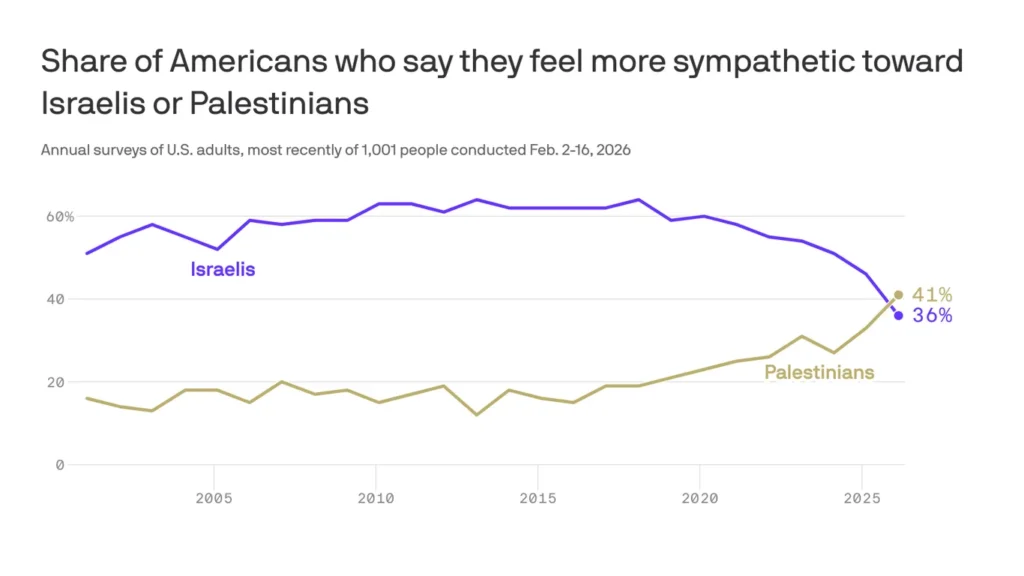
For the first time in decades, American sympathies in the Middle East now lean more toward Palestinians than Israelis, a trend that has major implications for U.S. politics and foreign policy, according to new Gallup polling and corroborated by multiple national polls and expert analyses. This shift represents an unprecedented realignment of public opinion built over years of widening political, generational, and humanitarian concerns.
Recent data reveal that 41 % of U.S. adults now say they sympathize more with Palestinians, while 36 % say they sympathize more with Israelis — marking the first time in Gallup’s long-running polling history that Israel is not the country with whom Americans most identify in this conflict.
Why This Matters Now: A Deep Change in U.S. Public Opinion**
This shift matters now because it reflects profound changes in how Americans view foreign policy, humanitarian issues, and global conflicts. For decades, strong sympathy for Israel was a consistent aspect of U.S. public opinion polls, but that trend has eroded significantly in recent years.
Many American voters, particularly younger generations and independents, are questioning long-held assumptions about U.S. support for Israeli policies — especially in light of ongoing conflict and civilian suffering in Gaza. Those reassessments are now showing up in major polling data.
Political polarization has also played a role: while Republicans still largely favor Israel, Democrats and independents have shifted sharply toward supporting Palestinians, exposing deep divides within U.S. politics.
Americans’ Views on the Israeli-Palestinian Conflict: What the Polls Show
Multiple polls — including Gallup, AP News polling, and NYT/Siena surveys — point to a broad transformation in sentiment:
- In comparison with three years ago, when a Gallup poll found 54 % of Americans sympathized more with Israelis vs. 31 % with Palestinians, the current numbers show a complete reversal in trend.
- Support for Israel’s military actions in Gaza has also declined dramatically over time, with other polls showing historic lows in public approval of military engagement and rising concerns about civilian casualties.
- Younger Americans (18–34) and independents now lean more toward Palestinian sympathies — a generational shift that reflects broader cultural and political changes.
These patterns suggest not just temporary fluctuations but deeper shifts in core attitudes among major demographic groups within the United States.
Political Implications: How Parties and Elections Are Affected
This new attitude landscape is significantly influencing domestic politics in the U.S.:
- Democrats have shown a sharp shift toward Palestinian sympathy, with about two-thirds prioritizing Palestinian concerns over Israeli ones — a dramatic reversal from historical averages.
- Independents, who often swing key elections, now lean toward Palestinian sympathy — a pattern that was rare in earlier polling.
- Republicans, while still more likely to support Israel overall, have seen a decline in that support, especially among younger and “America-First” conservatives who question unconditional foreign entanglements.
These shifts are already shaping political discourse around foreign aid, U.S. military involvement, and broader strategic priorities — and are expected to play into upcoming election cycles.
Humanitarian and Cultural Drivers Behind Opinion Changes
Beyond politics, the shift reflects how many Americans are processing images and reports from the Gaza conflict, where humanitarian concerns have resonated across demographic groups. Polls show growing numbers believe Israel’s military actions may have gone “too far,” and some even characterize them as disproportionate, fueling skepticism about traditional alliances.
Academic research and long-term public surveys also indicate that Americans’ views on the conflict aren’t just reactions to single events — they reflect deeper cultural conversations about nationalism, human rights, and U.S. leadership in the world.
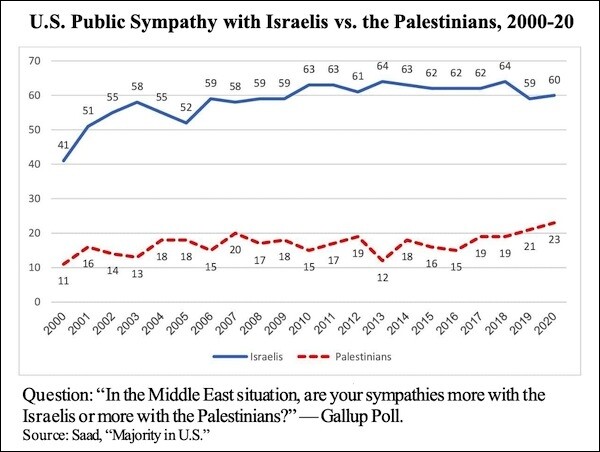
How Long-Term Trends Compare With Today
Polling trends over the past two decades show that the U.S. public’s attitudes toward Israel were once markedly positive, with strong bipartisan consensus supporting close relations. However, even before recent conflicts, data showed that sympathy for Israel was gradually declining — a trend that recent events and media coverage appear to have accelerated.
Today’s shift reflects both a continuation of long-term demographic changes and a more immediate response to conflict dynamics. This complexity makes it clear that current attitudes are not simply temporary reactions but part of a broader evolution in American public opinion.
What Comes Next: Impact on Policy and Public Debate
Analysts expect this historic shift to continue influencing debates over U.S. foreign aid, military policy, and diplomatic strategy in the Middle East. Lawmakers from both parties are now under greater pressure to articulate positions that reflect changing public sentiment — and these new numbers may affect legislative decisions, elections, and international negotiations.
As American views reshape, advocacy groups, political campaigns, and media narratives are adapting to this new landscape — a change that may have long-term effects on U.S. foreign policy and global standing.
Subscribe to trusted news sites like USnewsSphere.com for continuous updates.