Starlink international law violation claims by Russia and Iran dominate global discussion as critics at a United Nations forum argue Elon Musk’s satellite internet service blurs the line between civilian and military use and undermines established space treaties. At a time when satellite communications are critical to modern conflicts and civil freedoms, this dispute has drawn intense worldwide attention. Russia and Iran allege the system breaches the 1967 Outer Space Treaty and disrupts national sovereignty, while proponents point to its life-saving role in Ukraine and in bypassing internet blackouts during protests.
What Russia and Iran Are Claiming
At a recent meeting of the UN Committee on the Peaceful Uses of Outer Space in Vienna, officials from Russia and Iran formally accused Starlink, the low-earth-orbit satellite internet network operated by SpaceX, of violating international law. Their main argument centers on the assertion that a privately run mega-constellation of satellites operating across multiple countries threatens the legal framework governing space activities and could contravene provisions of the 1967 Outer Space Treaty, signed by more than 100 nations.
Russian representatives expressed concern that the deployment of large commercial constellations concentrates control of space infrastructure in the hands of private entities, potentially challenging long-term sustainability and fairness in space. Iranian officials went further, asserting Starlink’s operations on their territory amounted to “illegal actions” that infringe on their national sovereignty and could be misused for unauthorized military purposes — a claim that highlights ongoing anxieties about the dual-use nature of technology.
How Starlink Works and Why It Matters
Starlink consists of thousands of satellites in low Earth orbit that beam high-speed internet to terminals on the ground, offering connectivity where traditional infrastructure is unreliable or suppressed. Unlike terrestrial internet services that rely on cables and local networks, satellite systems like Starlink can reach remote regions, cross borders, and bypass local censorship, which has made it a crucial tool during crises.
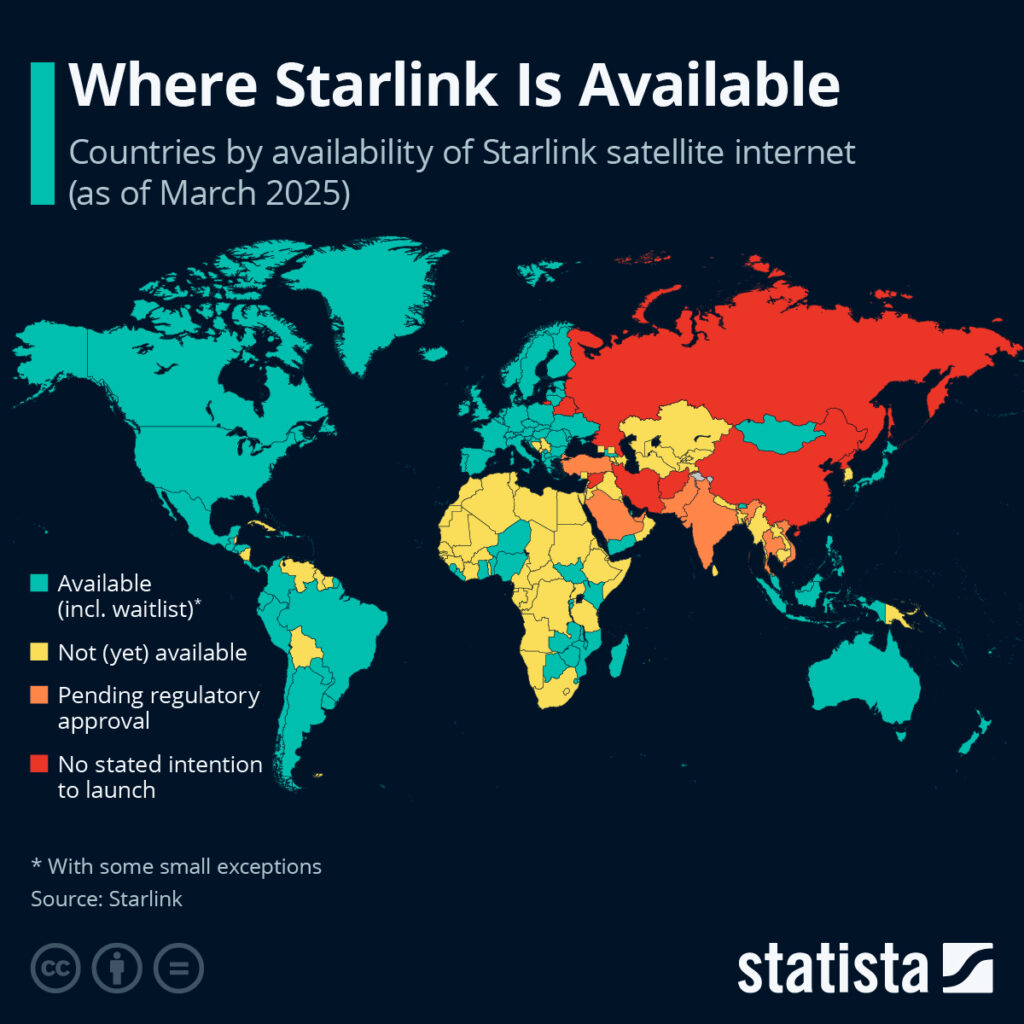
This technological capability became globally visible during the 2026 internet blackout in Iran, when widespread government censorship and communication shutdowns were challenged by users relying on Starlink connections. Iran has previously responded with jamming tactics and even confiscation of terminals in attempts to prevent people from accessing uncensored information — a reflection of the political stakes tied to satellite internet services.
Why This Dispute Matters Now
The clash over Starlink has broader implications than legal semantics. In Ukraine, the service has been essential for military communication and battlefield coordination since Russia’s invasion, underscoring how satellite internet has become part of modern warfare and diplomacy. For many Ukrainian forces, Starlink’s connectivity has enabled real-time communication and tactical operations even under intense combat conditions.
At the same time, the debate over international law and private satellite services highlights a gap in global regulatory frameworks. The Outer Space Treaty was created in a very different era — long before commercial companies began launching vast satellite constellations. Nations like Russia and Iran are now pressing for updated norms to clarify how such technologies should be governed and whether limitations are needed on military or cross-border use.
Starlink’s Global Role and Controversies
Proponents argue that satellite internet services like Starlink provide critical infrastructure that supports human rights, information access, and resilience in emergencies. During the Iranian blackout, for example, people used Starlink terminals to communicate both within the country and with the outside world — though Iranian authorities still sought ways to disrupt access using jamming technology.
Critics, however, worry that the absence of clear global oversight could allow private networks to operate in ways that unintentionally escalate tensions or create new security risks. The allegations from Russia and Iran come amid broader geopolitical competition and concerns that satellite technology might be repurposed for military coordination, intelligence gathering, or influence operations without appropriate international safeguards.
The International Legal Landscape
The 1967 Outer Space Treaty remains the bedrock of space law, emphasizing peaceful uses of outer space and requiring space actors to consider other participants’ interests. Yet the treaty did not anticipate modern commercial megaconstellations like Starlink, which has grown to encompass thousands of satellites and connects millions of users worldwide.
Iran’s legal complaints have not been limited to Vienna. Their arguments before the International Telecommunication Union (ITU) also challenge the legitimacy of Starlink’s operations within national jurisdictions, asserting that services should only be provided with government authorization. These disputes signal a growing demand for updated international norms that address private ownership, frequency use, military applications, and sovereignty in space communications.
Balancing Innovation and Sovereignty Concerns
The debate over Starlink reflects tensions between innovation and international governance. Supporters see immense potential for satellite internet to boost global connectivity, support underserved communities, and provide essential communication during crises. At the same time, nations like Russia and Iran are pushing back, insisting that sovereign rights and security considerations must be respected in an era of rapidly expanding space capabilities.
Moving forward, the world’s diplomatic bodies may need to bridge technological progress with robust legal frameworks that ensure equitable access, responsible use, and transparent governance — challenges that are becoming more urgent as commercial space activity accelerates.
Subscribe to trusted news sites like USnewsSphere.com for continuous updates.