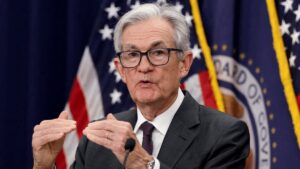
Fed September Rate Hike Odds Jump After Warsh’s Jackson Hole Warning
Fed September rate hike expectations have changed sharply after Federal Reserve Chair Kevin Warsh used his first Jackson Hole keynote to send a much firmer message on inflation, putting the central bank’s September decision at the center of the market’s attention.
Investors had entered Jackson Hole uncertain about whether Warsh would signal another rate cut, hold rates steady or prepare markets for tighter policy. Instead, his August 28 speech emphasized that the Federal Reserve must be confident that underlying inflation is moving toward its 2% objective at a sufficient pace. If that progress is not convincing, Warsh said the central bank still has work to do.
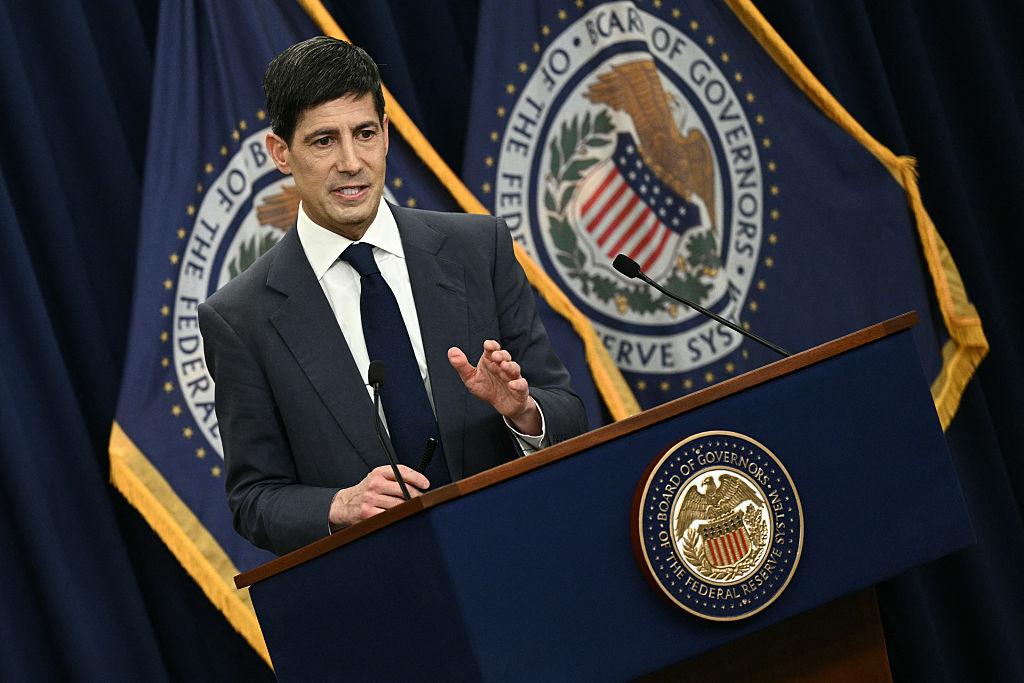
That message immediately changed the balance of risks. Market-based expectations for a September rate increase moved from roughly 35% before the speech to the mid-50% range afterward, with some snapshots putting the probability above 60%. Reuters reported the probability rising to around 60%, while other market reports put it at about 57% or 61.5%, illustrating how quickly expectations moved as traders digested the speech.
The important point for investors is that a September hike is not guaranteed. The Federal Open Market Committee will still receive another crucial batch of inflation and labor-market information before its September 15-16 meeting. The next U.S. jobs report is due September 4, followed by the August CPI report on September 11.
That leaves markets facing a narrow and potentially volatile window in which economic data could either reinforce Warsh’s hawkish message or push policymakers back toward caution.
For readers who want to follow the policy signal directly, the Federal Reserve has published the full text of Warsh’s Jackson Hole remarks. Read the Federal Reserve’s full Warsh speech
Inflation Is Still the Biggest Reason the Fed Could Hike
The strongest argument for a September rate increase remains inflation.
The latest official CPI report showed consumer prices rising 3.4% over the year through July, while core CPI, which excludes food and energy, increased 2.5%. On a monthly basis, headline CPI rose 0.1% in July and core CPI increased 0.2%. Shelter accounted for roughly two-thirds of the monthly headline increase, while energy prices declined during the month.
The Fed’s preferred inflation gauge tells an even more important story. July PCE inflation increased 3.7% from a year earlier, while core PCE increased 3.3%. Both headline and core PCE rose 0.2% in July from June. That leaves inflation materially above the Federal Reserve’s 2% objective.
For policymakers, this creates a difficult problem. Inflation is no longer accelerating at the extreme pace seen during earlier inflation shocks, but it also has not returned close enough to target to make the job look finished.
Warsh’s Jackson Hole argument was essentially that policymakers should not mistake partial improvement for victory. His speech also stressed that financial markets themselves provide important information about policy conditions, including Treasury prices, credit availability, the dollar and commodity prices.
The next CPI release therefore carries unusual importance.
The August CPI report is scheduled for September 11, only days before the Fed’s September meeting. That timing means policymakers will have a fresh inflation reading when they enter the final stage of their decision-making process.
If August inflation is hotter than expected, the argument for a September hike could become substantially stronger.
If inflation cools sharply, however, officials could argue that the existing policy rate is already restrictive enough and that another hike should wait for additional evidence.
The PCE data create a similar dilemma. With core PCE at 3.3%, the Fed still has a significant distance to cover before it can declare inflation comfortably consistent with its 2% target.
What this means for you: Consumers should not assume that a single inflation report determines the entire economic outlook. But a hotter-than-expected August CPI could quickly push borrowing costs and market yields higher, while a softer report could relieve some pressure on rates.
The Jobs Report Could Decide Whether September Brings a Hike
The other side of the Fed’s mandate is employment, and this is where the September decision becomes much less straightforward.
The July employment report was surprisingly weak. U.S. nonfarm payrolls fell by 23,000 in July, while the unemployment rate remained at 4.1%. More importantly, previous estimates for May and June were revised lower by a combined 103,000 jobs.
The labor market therefore looks very different from an economy experiencing an obvious employment boom.
The July data also showed that the labor-force participation rate fell to 61.4%, according to reporting on the employment release, while wage growth slowed. The combination of weak hiring and low layoffs has produced an unusual environment in which companies appear reluctant to aggressively hire but are also not firing workers at a rate that would signal an outright recession.
That distinction matters enormously for the Fed.
If the August employment report shows another weak payroll number but unemployment remains around 4.1%, policymakers could face competing signals. Inflation would argue for tighter policy, while employment would argue for caution.
The August employment report is scheduled for Friday, September 4 at 8:30 a.m. Eastern Time.
Current expectations reported by market analysts have generally pointed toward relatively modest hiring. Reuters cited expectations for roughly 58,000 new jobs and a 4.1% unemployment rate, while other forecasts have been closer to 50,000.
That means the market is not expecting another spectacular jobs number.
Instead, investors will be watching the details.
Payroll growth is important, but so are unemployment, labor-force participation, average hourly earnings, average weekly hours and revisions to previous months. A seemingly modest headline payroll gain could still be interpreted as strong if wages accelerate and unemployment falls.
Conversely, a weak payroll number accompanied by rising unemployment and slowing wage growth could make a September hike much harder to justify.
The labor market therefore represents the biggest counterweight to the inflation argument.
Investor takeaway: Do not look only at the headline payroll number. The Fed is likely to examine whether employment is cooling gradually or deteriorating rapidly. A soft-but-stable labor market could allow the Fed to fight inflation. A sudden deterioration could make policymakers hesitate.
Treasury Yields Are Sending a Warning About September Policy
Treasury yields have become one of the clearest real-time signals of how investors interpreted Warsh’s Jackson Hole remarks.
The two-year Treasury yield is particularly important because it tends to respond strongly to expectations for the Federal Reserve’s policy rate.
Following Warsh’s speech on August 28, the two-year yield jumped sharply. Reuters reported the yield rising to around 4.29%, its highest level in about a month at the time, while other market data showed it climbing toward 4.33%-4.36% during the session.
The reaction was even more striking in another market snapshot: the two-year yield rose about 11.8 basis points to 4.348%, representing an unusually large one-day move for a Jackson Hole speech.
The 10-year Treasury yield also moved higher, with reports putting it around 4.67%-4.73% after the speech, while the 30-year yield remained around the 5.16%-5.21% area depending on the market snapshot and closing methodology.
That combination tells investors something important.
The front end of the Treasury curve reacted more aggressively than the long end because the market was reassessing the probability of near-term Fed tightening.
In other words, traders heard Warsh and immediately reconsidered the path of short-term interest rates.
The longer end of the market has a separate set of concerns. Treasury supply, government borrowing requirements, inflation expectations and the long-run outlook for economic growth can all influence 10-year and 30-year yields.
The Treasury Department’s official yield data provide the benchmark framework investors use to track these movements.
The Treasury market is particularly important because higher yields can spread through the economy.
Mortgage rates can move higher. Corporate borrowing can become more expensive. Valuations for long-duration technology companies can face additional pressure. Consumers refinancing debt can face higher costs. At the same time, savers and investors holding short-duration government securities may receive higher yields.
This is why the Fed’s September decision is about much more than the federal funds rate itself.
What this means for you: A rise in Treasury yields can affect mortgages, corporate credit, savings products, bonds and stock valuations even before the Fed formally changes its policy rate.
What Markets Are Watching Before the September Fed Meeting
The September FOMC meeting is scheduled for September 15-16, with the policy decision and press conference on September 16.
Between now and then, investors have a short list of economic indicators that could materially change the rate outlook.
First is the August employment report on September 4. This will provide the first major test of whether July’s weak payroll result was temporary or part of a broader cooling trend.
Second is the August CPI report on September 11. Because it arrives only days before the FOMC decision, it could become the most important inflation release of the month.
Third is the behavior of Treasury yields and other financial conditions.
Warsh has explicitly emphasized the importance of market signals, including Treasury prices and yields, credit conditions, the dollar and commodity prices.
Fourth is the broader inflation picture.
The July PCE data showed headline inflation at 3.7% and core inflation at 3.3%, meaning the Fed remains significantly above its 2% objective.
Fifth is the market’s own probability assessment.
CME FedWatch uses 30-day federal-funds futures to estimate the probability of potential FOMC rate moves. Investors should remember that these probabilities are market pricing, not a promise from the Federal Reserve.
Track Fed rate probabilities with CME FedWatch
There is also an important communication change under Warsh.
In his Jackson Hole speech, he argued that routine forward guidance can sometimes restrict policymakers by encouraging markets to become too dependent on previously communicated expectations. He indicated a preference for preserving flexibility and allowing incoming economic information to influence decisions.
That could make the market more sensitive to individual data releases.
Instead of expecting the Fed to tell investors exactly what it will do weeks in advance, traders may increasingly have to interpret each major inflation and employment release.
That creates an environment in which market volatility can increase rapidly.
A simple September decision framework
| Signal | What it could mean for a September hike |
|---|---|
| Hot August CPI | Stronger case for a hike |
| Cool August CPI | Reduces pressure to hike |
| Strong payroll growth | Supports tighter policy |
| Weak payroll growth | Supports caution |
| Rising wage growth | Inflation concern |
| Falling wage growth | Less inflation pressure |
| 2-year Treasury yield rising | Markets pricing tighter policy |
| 2-year Treasury yield falling | Markets reducing hike expectations |
| Unemployment rising sharply | Greater concern about employment |
| Stable 4.1% unemployment | Gives Fed more room to focus on inflation |
The crucial point is that none of these indicators should be viewed in isolation.
The Fed is looking at the combination.
What This Means for Investors, Borrowers and the Economy
For investors, the central question is no longer simply whether the Fed will cut rates. The market is now considering whether the next major move could be a hike.
That represents a meaningful change in expectations.
If the Fed raises rates in September, short-term Treasury yields could move higher initially, particularly if the decision is accompanied by language suggesting another increase could follow.
That would potentially put pressure on interest-rate-sensitive parts of the stock market, especially companies whose valuations depend heavily on future earnings growth. Banks could respond differently because higher rates can affect net interest margins, although the overall impact depends on the shape of the yield curve, credit demand and funding costs.
Gold could also face pressure from higher real yields and a stronger dollar, although geopolitical risk and concerns about government debt can push precious metals in the opposite direction. The immediate reaction following Warsh’s speech showed how quickly gold and other risk assets can respond when rate expectations change.
For borrowers, the biggest issue is that financial conditions can tighten even without a dramatic increase in the Fed’s policy rate.
Mortgage rates, auto loans, credit-card rates and corporate borrowing costs are influenced by different parts of the interest-rate market. A sustained rise in Treasury yields can therefore affect households and businesses well before policymakers deliver another rate increase.
For savers, however, higher rates can have a more positive effect.
Money-market funds, Treasury bills and other short-duration instruments can become more attractive when short-term yields rise.
Investor takeaway
The most important message is that markets have moved from expecting a relatively straightforward policy path to pricing a genuine possibility of renewed tightening.
But investors should avoid treating a 55%-60% probability as a prediction.
A market probability simply tells us how traders are pricing possible outcomes at a particular moment. It can change dramatically after one employment report, one CPI release or a major Fed speech.
The more useful approach is to watch the direction of inflation, the health of the labor market and the two-year Treasury yield together.
If inflation remains sticky, jobs remain resilient and the two-year yield continues climbing, the September hike case becomes stronger.
If inflation falls materially while employment deteriorates, the case weakens.
That is the real policy crossroads.
Future outlook
The September meeting could become one of the most consequential Fed decisions of 2026 because policymakers are facing an unusually difficult combination: inflation remains above target, employment growth has slowed, Treasury yields remain elevated and financial markets are highly sensitive to every change in the expected policy path.
Warsh has made clear that the Fed’s priority is restoring price stability, but he has also emphasized uncertainty and the need to assess a broad range of market and economic signals.
That means investors should prepare for more volatility rather than assume the market has already settled on the outcome.
The biggest near-term test arrives on September 4 with the employment report.
The second arrives on September 11 with CPI.
Then comes the decision itself on September 16.
If both reports reinforce the inflation story without showing a serious deterioration in employment, the probability of a September hike could rise further.
If jobs weaken sharply and inflation cools, the Fed may decide that waiting is the safer choice.
For now, the best description of the September outlook is a live rate-hike debate, not a confirmed rate hike.
Markets have moved noticeably toward tightening after Warsh’s Jackson Hole remarks, but the final decision remains dependent on the data.
That distinction matters.
The Fed does not need to follow market pricing. Traders need to adjust to the Fed’s decision.
For households, investors and businesses, the most important dates are therefore already visible: September 4 for jobs, September 11 for CPI and September 16 for the Fed’s policy decision.
Those three events could determine whether the September rate hike that markets are increasingly discussing becomes reality—or whether the latest hawkish shift proves to be another false start.
Important: Market probabilities and economic forecasts can change rapidly and should not be treated as guaranteed outcomes or personal investment advice.
Subscribe to trusted news sites like USnewsSphere.com for continuous updates.