U.S. stocks are pulling back as investors confront a difficult combination of rising oil prices, elevated Treasury yields, geopolitical uncertainty and renewed concerns about inflation.
Wall Street began the week with a relatively modest decline. On Monday, August 17, the S&P 500 fell 0.52%, the Dow Jones Industrial Average declined 0.51% and the Nasdaq Composite slipped about 0.31%. The retreat came as higher oil prices revived inflation concerns and the bond market pushed long-term yields higher.
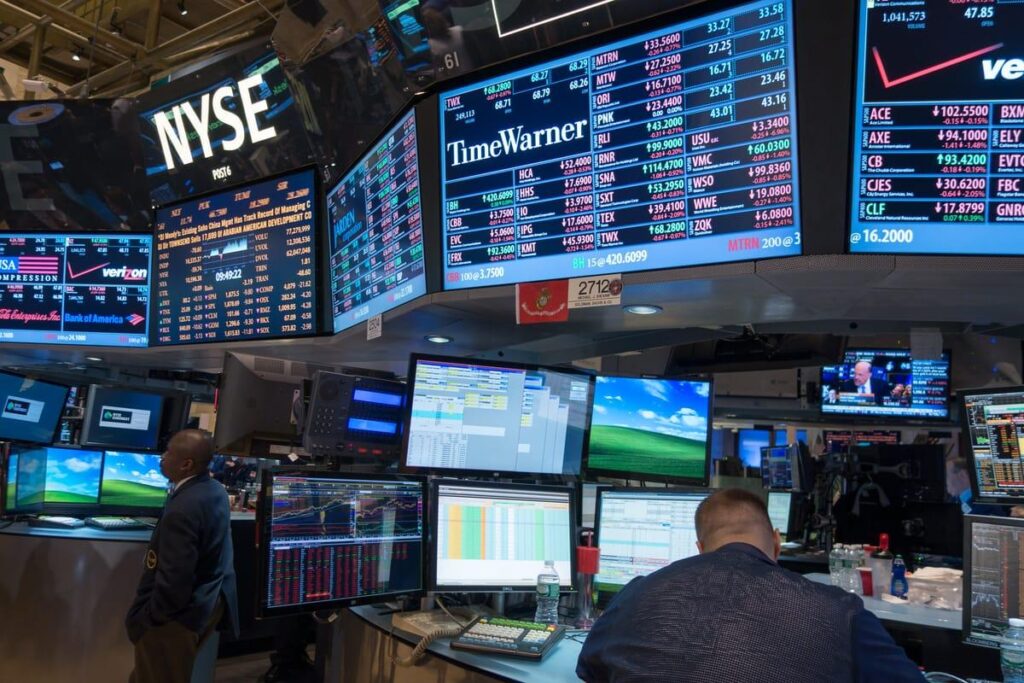
But the pressure intensified Tuesday. The latest Reuters market coverage showed the Nasdaq down about 1.06%, the S&P 500 off 0.49% and the Dow lower 0.12% during Tuesday’s session. At the same time, the 30-year Treasury yield reached its highest level since 2007 before easing to around 5.29%, while the 10-year yield remained near 4.71%.
The important point for investors is that this is not simply a story about one bad trading session. Oil, bonds, inflation expectations and geopolitics are interacting in a way that can change how investors value stocks—particularly technology and other companies whose valuations depend heavily on future earnings.
U.S. Stocks Pull Back as Oil and Treasury Yields Rise
The initial Monday decline was relatively small compared with the size of the broader market. The S&P 500 closed at 7,745.06, the Dow at 53,459.78 and the Nasdaq at 26,644.91, according to the Associated Press. Despite the decline, all three indexes remained close to historically high levels.
That distinction matters. A market that falls half a percent after reaching record or near-record levels is very different from a market entering a deep bear-market decline. Investors were taking some money off the table while reassessing the outlook for inflation, interest rates and geopolitical risk.
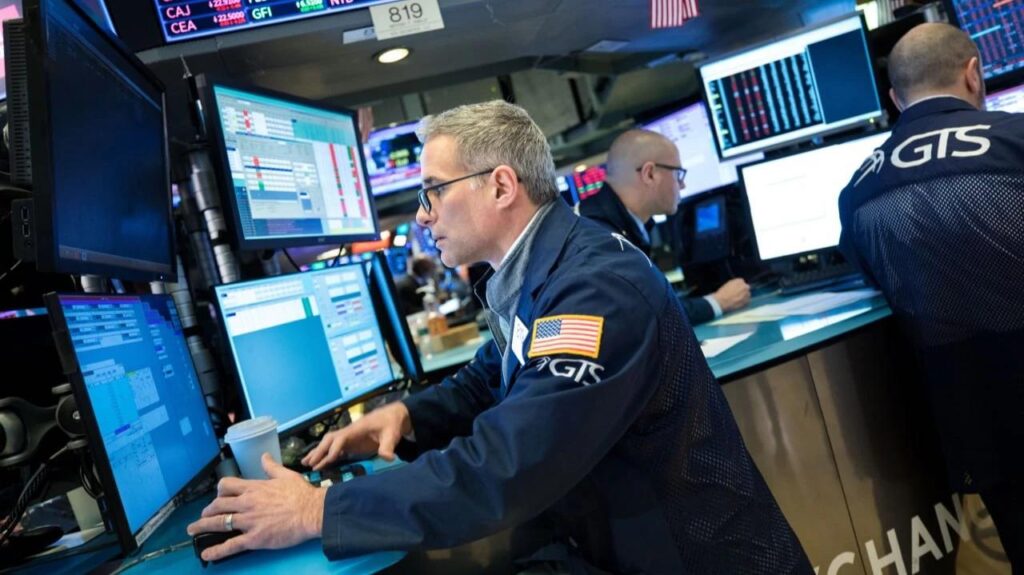
The bond market, however, delivered a much more significant warning signal. The U.S. 30-year Treasury yield climbed above 5.3% and reached its highest level since 2007. Reuters attributed the move to a combination of geopolitical uncertainty, inflation concerns, fiscal pressures and increased debt issuance.
Long-term Treasury yields matter enormously for equities because they influence the return investors can receive from relatively low-risk government debt. When Treasury yields rise, stocks generally have to compete against a more attractive alternative. Higher yields can also increase borrowing costs for corporations and reduce the present value investors assign to future profits.
That second effect is particularly important for growth stocks. Companies expected to generate much of their earnings years into the future are generally more sensitive to changes in interest rates than businesses producing substantial cash flow today.
Why Oil Is Suddenly a Major Problem for Investors
Oil is becoming one of Wall Street’s most important inflation signals again.
Brent crude settled at $90.87 a barrel on Monday, while West Texas Intermediate reached $84.50, according to Reuters. On Tuesday, Brent climbed again to around $91.23, while WTI rose to approximately $85.06.
The increase is closely connected to uncertainty surrounding the U.S.-Iran conflict and the strategic Strait of Hormuz. Shipping through the waterway has slowed substantially, increasing concern about potential disruption to global energy supplies. Reuters reported that only a handful of vessels passed through the strait over the weekend, far below normal traffic levels.
This matters beyond gasoline prices.
A sustained oil-price increase can affect transportation, manufacturing, chemicals, plastics, airlines, logistics and consumer goods. Companies facing higher energy costs may eventually have to absorb those expenses, reduce margins or pass them on to customers.
That creates a difficult environment for the Federal Reserve. If economic growth weakens while energy-driven inflation rises, policymakers face a classic policy dilemma: inflation remains uncomfortable while the economy becomes less resilient.
Investors are therefore watching oil not merely as an energy-market story but as a potential interest-rate story.
If crude prices remain elevated for an extended period, markets could begin pricing a more persistent inflation problem. That could keep Treasury yields high even if economic growth slows.
What Treasury Yields Mean for the Stock Market
The surge in Treasury yields is arguably the most important part of the current market pullback.
On Tuesday, the U.S. 30-year Treasury yield reached its highest level since 2007, while the 10-year yield remained around 4.71%. Reuters reported that the rise came even as expectations for an immediate Federal Reserve rate hike were not particularly strong.
That is significant because it demonstrates that stock-market conditions cannot be explained only by the Fed’s next policy decision.
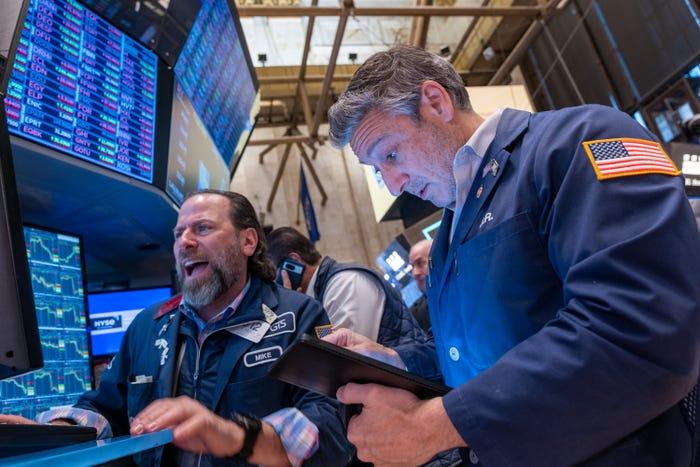
Long-term yields respond to expectations about inflation, government borrowing, economic growth, investor demand for bonds and the future path of monetary policy. The market can therefore tighten financial conditions even without the Fed raising its benchmark rate.
For businesses, higher yields can translate into more expensive financing. For consumers, they can contribute to higher borrowing costs. For investors, they can change the relative attractiveness of bonds compared with stocks.
The effect is especially visible in technology and other high-growth sectors.
Reuters reported that major technology shares came under pressure Tuesday, with Nvidia falling around 2% and Meta declining about 3% in the session’s early market action. The semiconductor sector was also under pressure, with the Philadelphia Semiconductor Index down sharply.
This does not necessarily mean investors have suddenly abandoned technology. Instead, it suggests that valuation sensitivity is increasing. When long-term yields rise, investors can become less willing to pay extremely high multiples for future earnings.
What This Means for You
For long-term investors, a market pullback of roughly 0.5% to 1% should not automatically be interpreted as a signal to sell everything.
The broader market remains much stronger than the daily declines suggest. The Associated Press reported that as of Monday’s close, the S&P 500 was still up about 13.1% for the year, the Dow was up 11.2% and the Nasdaq had gained approximately 14.6%. The Russell 2000 was ahead by roughly 23.2%.
That means investors are dealing with a market that has already generated substantial gains and is now confronting a new combination of risks.
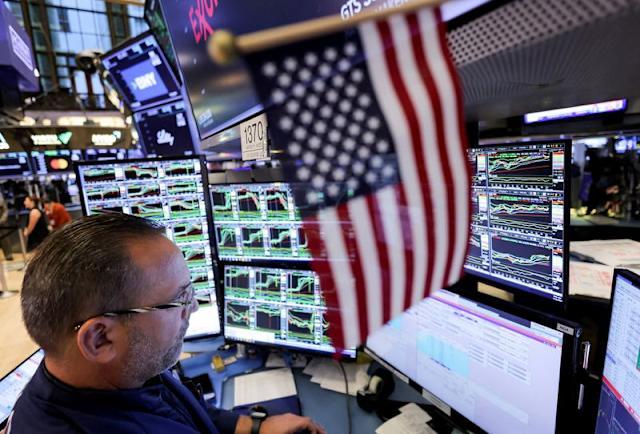
For retirement investors and people with long time horizons, the key question is whether corporate earnings can continue growing despite higher energy prices and borrowing costs. A temporary geopolitical shock can produce a sharp market reaction without permanently damaging the underlying earnings power of companies.
Short-term traders face a different environment.
They need to watch crude oil, Treasury yields, the dollar, volatility and major index futures because these markets can change rapidly when geopolitical headlines hit. A move in oil can quickly influence inflation expectations, which can influence bonds, which can then affect growth stocks.
The current market also illustrates why diversification matters.
A portfolio concentrated entirely in high-growth technology companies may behave very differently from one containing energy producers, healthcare companies, consumer staples, financials, short-duration bonds and cash.
None of those assets is guaranteed to perform well, but different economic conditions can affect them differently.
The current environment also provides a reminder that investors should distinguish between price volatility and fundamental deterioration.
A falling stock price does not automatically mean a company’s business has deteriorated. Conversely, a strong share price does not guarantee that the underlying business is becoming healthier.
Investor Takeaway
The current Wall Street pullback is being driven by several forces at once: higher oil prices, elevated long-term Treasury yields, geopolitical uncertainty and concerns about inflation.
The combination is particularly uncomfortable because each factor can reinforce the others.
Higher oil prices can increase inflation expectations. Higher inflation expectations can push bond yields higher. Higher bond yields can pressure equity valuations. Falling technology shares can then weigh on the Nasdaq and broader market sentiment.
But there are also reasons not to overstate the bearish case.
Corporate earnings remain an important source of support. Reuters reported last week that approximately 85% of S&P 500 companies that had reported earnings were beating estimates, with AI-related investment continuing to support several areas of corporate spending.
Tuesday’s Home Depot earnings also offered a useful example of corporate resilience. The company reported $47.86 billion in second-quarter revenue, above the $47.27 billion Wall Street consensus, while adjusted earnings per share reached $4.92 versus an expected $4.73. However, the company also acknowledged that high interest and mortgage rates continue to weigh on major renovation projects and the broader housing recovery.
This creates a market with two competing narratives.
The bullish narrative is that corporate earnings, AI investment and economic resilience can continue supporting stocks.
The bearish narrative is that higher oil prices, elevated bond yields and geopolitical uncertainty could gradually undermine consumer spending, corporate margins and valuations.
Investors should watch which narrative gains strength over the next several weeks.
Future Outlook: What Wall Street Is Watching Next
The next phase of the market could depend heavily on whether oil remains above $90 a barrel and whether long-term Treasury yields stay around historically elevated levels.
If geopolitical tensions ease and energy prices retreat, some of the inflation premium currently embedded in markets could disappear. Lower oil prices could reduce pressure on inflation expectations and potentially help Treasury yields stabilize.
If tensions intensify instead, the opposite could happen.
A prolonged disruption around the Strait of Hormuz would raise concerns about global energy supplies and could push crude prices considerably higher. That would increase pressure on inflation-sensitive assets and potentially make the Federal Reserve’s job more difficult. Reuters reported Tuesday that Iran’s more aggressive military posture and uncertainty over negotiations were contributing to the latest oil-market move.
The Federal Reserve will therefore remain central to the market’s outlook, but investors should not assume that weaker economic data automatically means lower stock-market volatility.
Markets were already reducing expectations for an immediate September rate hike. Reuters reported that futures markets were pricing only about a 31% probability of a September hike in Tuesday’s trading. Yet stocks were still under pressure because inflation and long-term borrowing costs remained concerns.
That is an important distinction.
The market can become more worried about long-term inflation and fiscal risk even when expectations for an immediate Fed rate increase decline.
Investors are also looking ahead to the Federal Reserve’s meeting minutes and the Jackson Hole Economic Policy Symposium, scheduled for August 27–29. Those events could provide additional clues about how policymakers view inflation, economic growth and future interest-rate decisions.
Meanwhile, upcoming corporate earnings will help determine whether consumers and businesses are holding up under higher borrowing costs.
Home Depot’s results showed that consumers are still spending on smaller repair and maintenance projects, even though expensive renovations are being affected by high rates. Results from other major retailers will provide additional evidence about the strength of household demand.
The market’s next major test may therefore come from the intersection of oil prices, Treasury yields, inflation, consumer spending and corporate earnings.
The Bottom Line
U.S. stocks are pulling back, but the latest decline should be viewed in context.
Monday’s modest losses were followed by deeper pressure Tuesday as oil climbed, Treasury yields remained elevated and geopolitical uncertainty increased. The S&P 500, Dow and Nasdaq are still well above their levels at the beginning of the year, meaning the market has room to absorb volatility without necessarily entering a major correction.
The biggest risk is not one weak trading session. It is a prolonged combination of expensive energy, high long-term interest rates and deteriorating economic expectations.
For investors, the most important numbers to watch now are not just the daily percentage changes in the Dow, S&P 500 and Nasdaq. Keep an eye on Brent crude, WTI, the 10-year Treasury yield, the 30-year Treasury yield, inflation expectations, Federal Reserve communication and corporate earnings.
If oil stabilizes and bond yields retreat, Wall Street could regain momentum. If oil continues climbing and long-term yields remain elevated, investors may continue demanding lower valuations—especially from expensive growth and technology stocks.
That makes the next several trading sessions particularly important.
The market is not simply asking whether stocks can rise.
It is asking whether corporate earnings can remain strong enough to justify today’s valuations while oil, inflation and borrowing costs remain elevated.
That is the question investors should carry into the next market session.
Subscribe to trusted news sites like USnewsSphere.com for continuous updates.