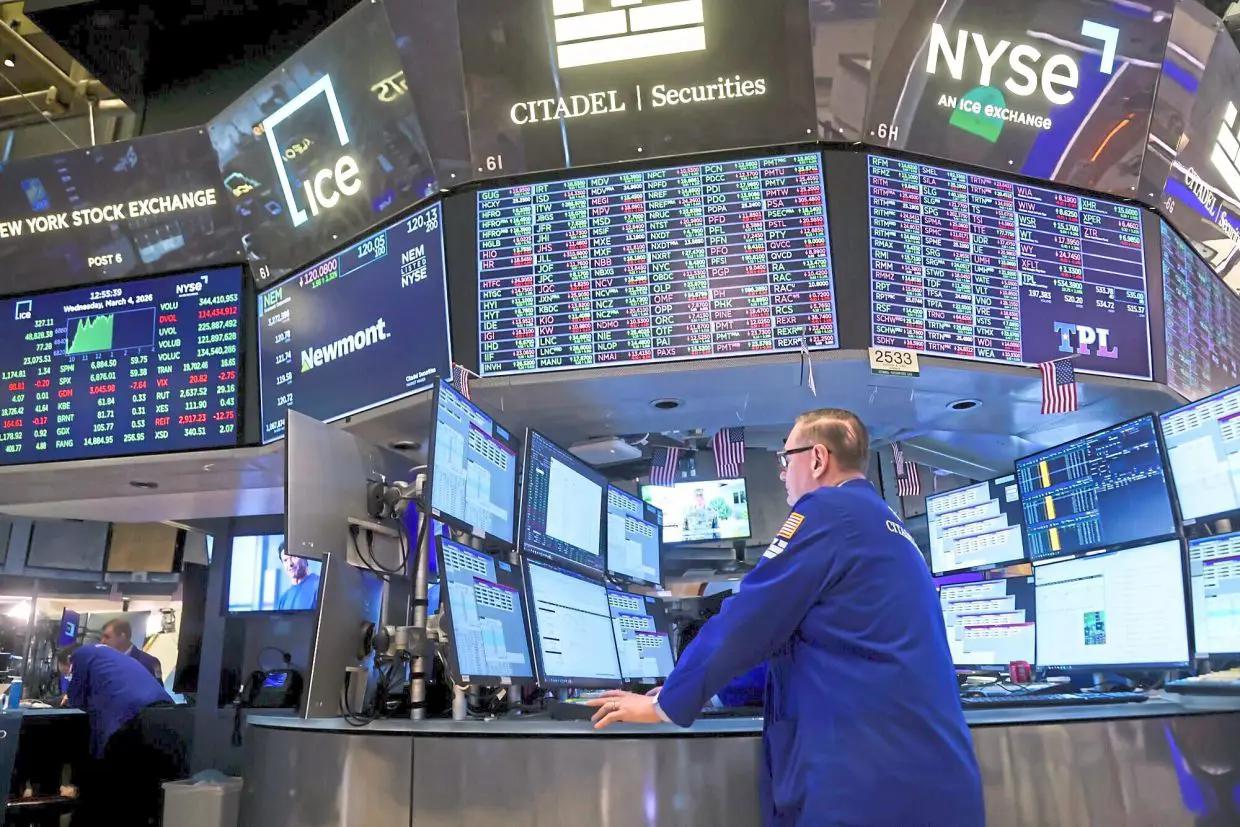
S&P 500 and Nasdaq outlook is becoming increasingly dependent on seven market signals that could determine whether Wall Street extends its recent gains or enters another period of volatility: Treasury yields, inflation, Federal Reserve expectations, corporate earnings, valuations, oil prices and the U.S. dollar.
Wednesday’s trading session gave investors a relatively constructive signal. The S&P 500 gained 0.26% to close at 7,748.50, while the Nasdaq Composite rose 0.54% to 26,588.49. The Dow Jones Industrial Average slipped 0.04% to 53,770.27, while the Russell 2000 gained 0.61%. The stronger performance from technology and smaller-company shares came as investors digested July’s inflation report and a powerful rally in AI infrastructure stocks.
The latest CPI report showed that consumer prices increased 0.1% in July from June and rose 3.4% over the previous year. Core CPI increased 0.2% for the month and 2.5% annually. The report was broadly consistent with expectations and reduced some of the immediate pressure on markets surrounding a possible Federal Reserve rate increase.
But the market is not operating in a risk-free environment. The S&P 500 remains close to record territory, technology valuations are demanding, oil prices are still sensitive to Middle East developments and the Federal Reserve has not declared victory over inflation. The next trading session could therefore depend less on the headline index level and more on whether these seven underlying signals continue pointing in the same direction.
Treasury Yields and Inflation Set the Market’s First Test
Signal one: Treasury yields. Bond yields remain one of the most important indicators for investors watching the S&P 500 and Nasdaq because they influence both borrowing costs and the valuation investors place on future corporate earnings. When Treasury yields rise sharply, high-growth companies can face greater valuation pressure because investors have a more attractive return available from government debt.
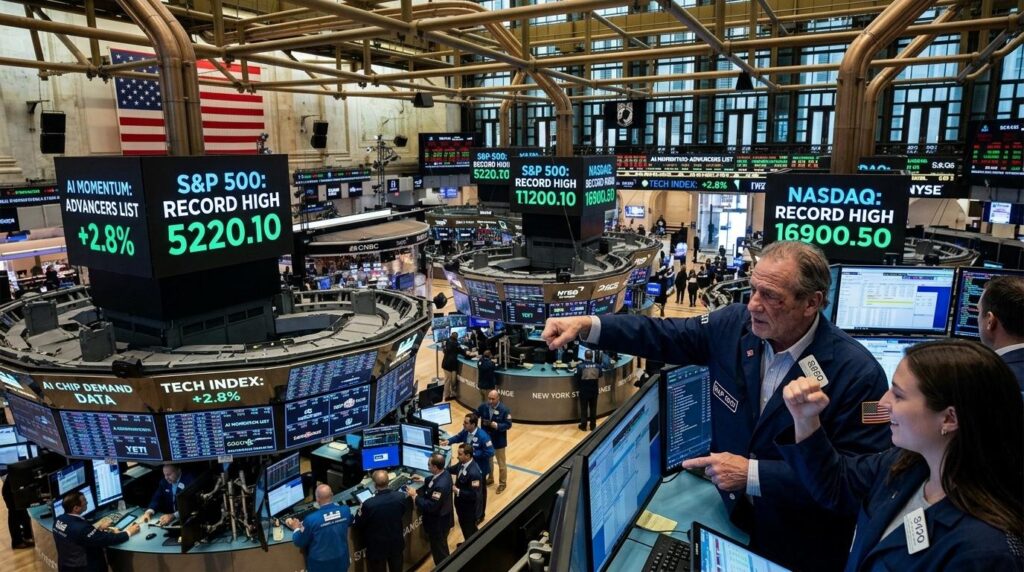
The latest Federal Reserve rate data show just how elevated the rate environment remains. On July 29, the effective federal-funds rate was 3.63%, while the 10-year Treasury yield was 4.67% and the 2-year yield was 4.31%. The 30-year Treasury yield was 5.15%. These levels mean stocks are competing with relatively high fixed-income yields, making the direction of the bond market especially important for equity valuations.
Signal two: inflation. July CPI was encouraging in the sense that prices did not accelerate unexpectedly. Headline inflation rose only 0.1% from June, while the annual rate eased from 3.5% in June to 3.4% in July. Core CPI rose 0.2% monthly and 2.5% annually. The improvement has helped investors reduce some of their concern about an immediate policy tightening move, but inflation remains above the Federal Reserve’s 2% objective.
That means the next inflation reports still matter enormously. If inflation continues to moderate, Treasury yields could find it easier to stabilize or decline, creating a potentially friendlier environment for growth stocks. If inflation accelerates again, especially because of energy prices or producer costs, the opposite could happen.
The next major test is the July Producer Price Index. The Bureau of Labor Statistics scheduled the release for August 13 at 8:30 a.m. Eastern Time. Investors should compare the actual PPI result with expectations rather than judging the number in isolation.
Fed Expectations and Earnings Could Decide Whether the Rally Broadens
Signal three: Federal Reserve expectations. The Fed kept the federal-funds target range at 3.50% to 3.75% at its July 28–29 meeting. The decision passed by a 9–3 vote, with three policymakers preferring a quarter-point increase. The Fed said economic activity was expanding at a solid pace but inflation remained elevated relative to its 2% target, with energy-related supply shocks contributing to price pressures.
The significance for stocks is that monetary policy remains restrictive even though the market’s expectations for another increase have eased. Reuters reported Thursday that July’s mild CPI reading reduced the probability investors were assigning to a September rate hike, with the odds falling from 54% to around 40% in the latest market pricing. Those expectations can change quickly when a new inflation, employment or economic-growth report arrives.
Signal four: corporate earnings. This is currently one of the strongest supports for the Nasdaq. AI infrastructure companies CoreWeave and Super Micro Computer delivered results and forecasts that reinforced investor confidence in continued spending on computing infrastructure. CoreWeave’s revenue backlog reached $104.2 billion in the second quarter, while the company increased its outlook for revenue, operating profit and capital spending. Super Micro also gave an optimistic fiscal 2027 revenue outlook.
The market response was significant because investors are increasingly asking whether enormous AI capital expenditure is translating into real revenue and profitability. Strong results can justify higher valuations, but disappointing guidance could have the opposite effect. That makes the earnings signal particularly important for the Nasdaq, where technology and semiconductor companies have an outsized influence.
For the next trading session, investors should therefore watch whether AI-related strength spreads beyond a handful of companies. A broader rally involving financials, industrials, consumer companies and smaller businesses would provide stronger evidence of market participation than another advance concentrated primarily in mega-cap technology.
Valuations and the Dollar Could Change the Risk-Reward Equation
Signal five: valuations. A rising stock market does not automatically mean stocks are becoming more attractive. Valuation is the bridge between corporate growth and the price investors are willing to pay for that growth. When earnings expectations rise rapidly, a higher stock price can be justified. But if prices rise faster than earnings, the market becomes increasingly dependent on investors continuing to accept elevated valuation multiples.
That issue is particularly important for the S&P 500 and Nasdaq because the strongest technology and AI companies have already benefited from substantial optimism surrounding future growth. Recent investor discussions have highlighted the tension between strong earnings growth and elevated forward valuations. The key question is therefore not simply whether AI companies are growing, but whether their growth is strong enough to justify what investors are currently paying for their shares.
Signal six: the U.S. dollar. The dollar also matters because it can influence multinational corporate earnings, commodity prices and global financial conditions. A stronger dollar can make U.S. exports more expensive for overseas customers and reduce the value of foreign revenue when it is converted back into dollars. A weaker dollar can have the opposite effect for multinational companies, although the broader consequences depend on why the currency is moving.
On Thursday, the dollar was broadly steady after the July inflation report reduced expectations for an immediate Fed rate increase. Reuters reported that the dollar index was around 99.976 and remained up about 0.4% for the week, while the euro was around $1.1525 and the dollar traded near 159.35 yen.
The dollar’s next direction could therefore provide another clue about how investors are interpreting U.S. monetary policy. If the dollar weakens because markets increasingly expect easier Fed policy, that could support certain multinational stocks and commodities. If the dollar strengthens because inflation forces the Fed to remain restrictive, financial conditions could become less comfortable for risk assets.
Oil, Market Breadth and the Next Trading Session
Signal seven: oil prices. Energy remains one of the most important risks to the current market narrative because a sustained increase in crude prices could feed back into inflation expectations. Higher energy costs can affect transportation, manufacturing, household budgets and business margins, potentially making the Federal Reserve’s inflation problem more difficult.
Oil prices were moving lower Thursday as investors considered weaker demand expectations and a surprise increase in U.S. crude inventories. Brent crude was reported around $87.95 while U.S. crude was around $82.19 in early global-market trading. At the same time, uncertainty surrounding the Strait of Hormuz and Middle East developments remained an important geopolitical risk.
That creates an important tension for the stock market. Lower oil prices can help the inflation outlook and potentially support consumers and businesses. But a sudden geopolitical escalation that disrupts supply could reverse that trend quickly. Investors should therefore watch crude prices alongside Treasury yields rather than treating oil as an isolated commodity story.
Market breadth is another useful confirmation tool. On Wednesday, the Russell 2000 rose 0.61%, slightly outperforming the S&P 500’s 0.26% gain, while the Nasdaq gained 0.54%. If smaller companies and economically sensitive sectors continue participating, that could suggest improving confidence in the broader economy rather than another narrowly concentrated technology rally.
The volatility index also deserves attention. A market recap put the VIX around 14.55 after Wednesday’s session, a relatively subdued level. Low volatility can indicate investor confidence, but it can also mean markets are less prepared for a sudden shock. A rapid jump in volatility alongside higher Treasury yields would be a warning sign that the current risk appetite is changing.
What This Means for You and the Market Outlook
For U.S. investors, the current environment is best understood as a contest between falling inflation pressure and elevated expectations. The CPI report was constructive, AI earnings remain powerful and the major indexes are near historically strong levels. But Treasury yields, valuations and energy-market risks mean the market still has several potential sources of volatility.
For long-term investors using retirement accounts or diversified portfolios, one trading session should not determine an investment strategy. The more important issue is whether the underlying economic environment remains supportive over months rather than hours. Inflation moving gradually toward 2%, healthy corporate earnings and stable economic growth would create a much more favorable backdrop than a market rally driven entirely by multiple expansion.
For investors with significant technology exposure, the AI earnings story deserves particular attention. CoreWeave and Super Micro’s results provide evidence that businesses are continuing to invest heavily in AI infrastructure. CoreWeave’s large backlog and higher capital-spending outlook suggest that demand remains substantial. But investors should also monitor whether the return on that spending eventually justifies the enormous amount of capital being deployed.
The next trading session is therefore less about predicting whether the S&P 500 will rise by a fraction of a percent and more about identifying whether the seven signals are confirming one another.
If inflation cools, Treasury yields stabilize, the dollar remains orderly, AI earnings stay strong, oil remains contained and market participation broadens, the bullish case becomes stronger. If yields rise, inflation reaccelerates, oil spikes, the dollar strengthens sharply and market breadth deteriorates, the risk of a correction increases.
The market does not need every indicator to be perfect. But the more signals that move in the same direction, the stronger the evidence becomes.
Investor Takeaway and Future Outlook
The S&P 500 and Nasdaq outlook remains cautiously constructive, but the rally should not be viewed as guaranteed. Wednesday’s market action showed why: relatively benign CPI data reduced some Fed concerns at the same time that strong AI earnings reignited technology-stock enthusiasm. The S&P 500 gained 0.26%, the Nasdaq gained 0.54% and the Dow slipped 0.04%.
The immediate question is whether that combination can continue. The next major economic catalyst is July PPI, scheduled by the BLS for August 13. Investors should compare the actual result with expectations and then watch how Treasury yields, the dollar and rate expectations respond. The market reaction can sometimes be more informative than the headline number itself.
The bullish case for the next phase of the rally is clear: inflation continues to moderate, the Fed becomes less likely to tighten policy, economic growth remains resilient and AI-related earnings continue beating expectations. In that environment, the Nasdaq could remain a leader while the S&P 500 benefits from broader earnings growth.
The bearish case is also straightforward. Inflation could prove sticky, producer prices could accelerate, oil could rise because of geopolitical disruption, Treasury yields could move higher and expensive technology stocks could face renewed valuation pressure. A weaker labor market could add another complication by creating a difficult balance for monetary policy.
Investors should also remember that a market near record levels does not necessarily mean an immediate decline is coming. Strong earnings can allow indexes to grow into high valuations over time. But when expectations are elevated, the market becomes more sensitive to disappointment. That is why earnings revisions, profit margins and forward guidance deserve as much attention as headline revenue growth.
Looking ahead, the seven signals provide a practical framework for following the market:
Treasury yields show how bond investors view inflation and rates.
Inflation determines how much pressure remains on the Federal Reserve.
Fed expectations influence financial conditions and equity valuations.
Corporate earnings determine whether stock prices have fundamental support.
Valuations show how much future growth is already reflected in prices.
Oil can either help or hurt the inflation outlook.
The dollar provides another window into monetary policy and global financial conditions.
The strongest market environment would be one in which these signals gradually become more supportive without the economy overheating. That would allow corporate profits to grow while inflation moves closer to the Fed’s target.
For now, investors have reason to remain attentive rather than complacent. The S&P 500 and Nasdaq are being supported by real earnings momentum and a more comfortable inflation reading, but the next move will depend on whether the market receives continued confirmation from economic data, monetary policy and corporate results.
The next trading session may produce only a small change in the major indexes. The more important story will be hidden underneath that move: which of these seven signals is getting stronger, which is weakening, and whether investors are beginning to change their expectations for the rest of 2026.
Subscribe to trusted news sites like USnewsSphere.com for continuous updates.