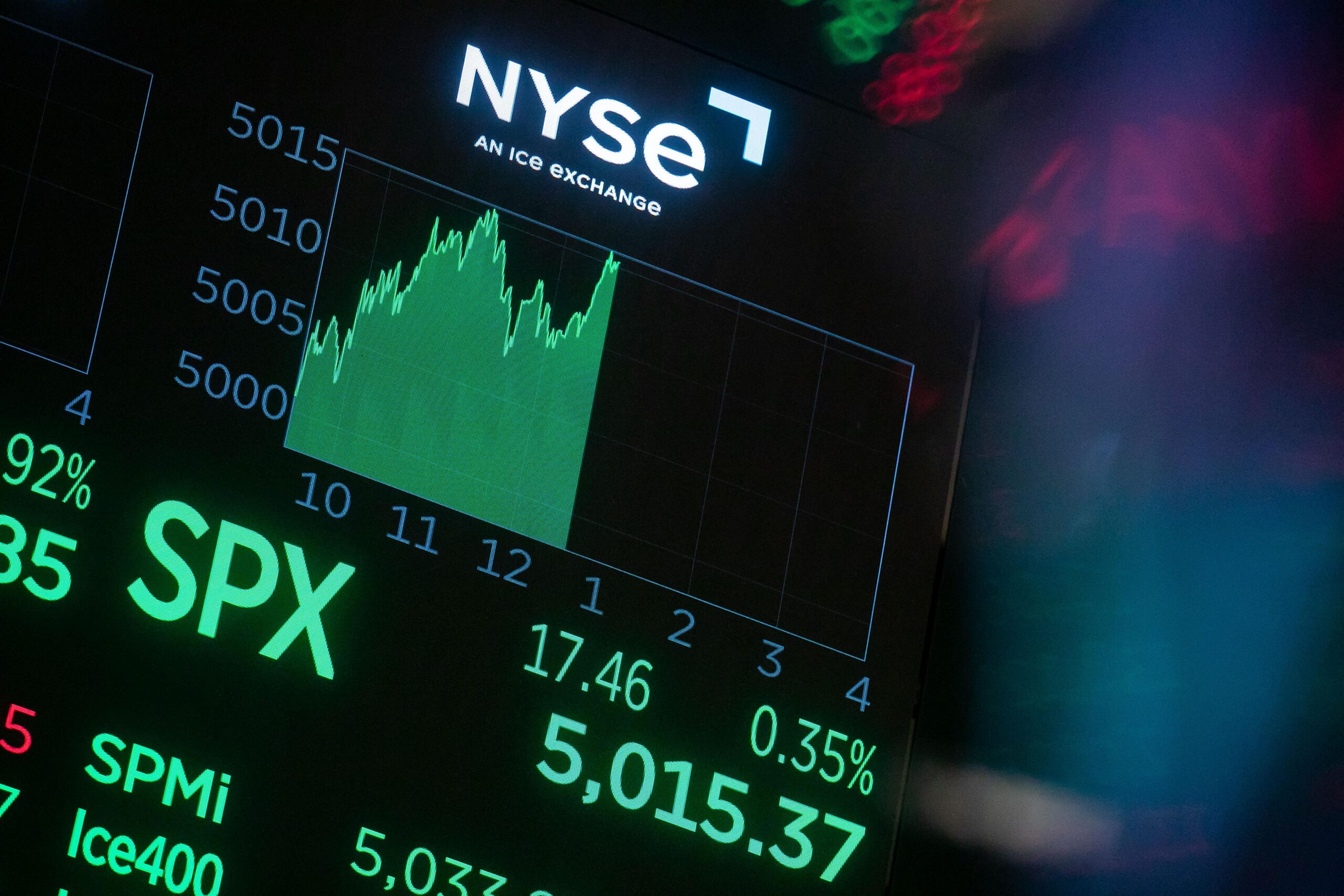
S&P 500 near record highs is once again one of the biggest stories on Wall Street, but the more important question for investors is whether the rally is being powered by improving fundamentals or by fear of missing out. The benchmark index closed at a record 7,798.99 on August 13, after rising 0.65%, and the broader rally has now extended through three consecutive weeks.
There is a legitimate fundamental case behind the advance. Corporate earnings have been exceptionally strong, inflation has shown signs of cooling, expectations for another immediate Federal Reserve rate hike have declined, and investors continue to see enormous potential in artificial-intelligence infrastructure and related businesses. FactSet’s latest detailed earnings update found that 86% of S&P 500 companies reporting by July 24 had exceeded earnings-per-share estimates, while the blended second-quarter earnings growth rate had reached 37.9%.
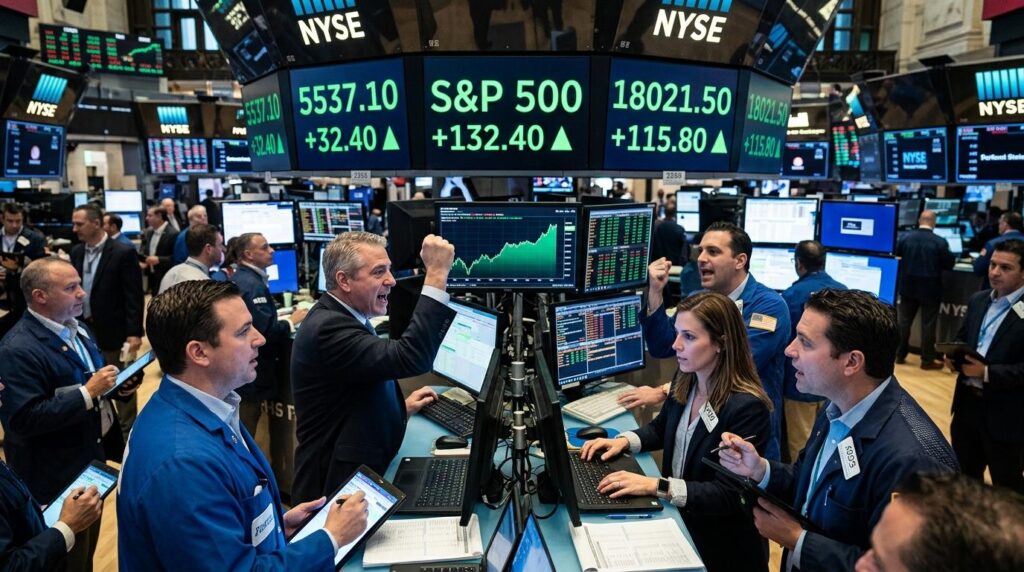
But there is another side to the story. The S&P 500 is trading at a valuation above its recent historical averages, expectations for future earnings are high, volatility is relatively subdued and investor positioning has become increasingly bullish. That does not mean a crash is imminent. It means the market’s ability to absorb disappointing news may be lower than it appears.
The best way to judge the rally is therefore not to ask whether stocks are “too high.” Instead, investors should ask whether earnings, valuations, AI spending, interest rates, positioning, volatility and market breadth are moving in a direction that can justify today’s prices.
The Case for a Healthy S&P 500 Rally Is Stronger Than It Looks
The strongest argument for calling this a healthy rally is corporate profitability. The S&P 500 is not rising solely because investors are buying a story about future profits. Companies are already reporting substantial earnings growth.
FactSet’s July 24 earnings update showed a 37.9% blended year-over-year earnings growth rate for the second quarter, the strongest quarterly growth rate since the third quarter of 2021 if that estimate held. Excluding Alphabet’s unusually large gain, the growth rate would have been 25.9%—still substantial. Ten of the 11 sectors were reporting year-over-year earnings growth, while seven were reporting double-digit growth.

Revenue growth also provided support. FactSet reported that 80% of companies reporting by July 24 had exceeded revenue estimates, while aggregate revenues were running 2.8% above expectations. Analysts were forecasting earnings growth of 27.3% for the third quarter and 24.9% for the fourth quarter, with full-year 2026 earnings growth also projected at 27.3%.
More recent reporting has reinforced the earnings story. MarketWatch reported that about 90% of S&P 500 companies had reported results by August 17 and that 69% had surpassed Wall Street revenue expectations. The strength of corporate results—particularly in technology and AI-related businesses—has been one of the major forces keeping the index close to its record.
That matters because a rally supported by rising earnings is fundamentally different from a rally in which prices rise while profits stagnate.
However, strong earnings do not automatically mean stocks are cheap.
Valuations Are the First Major Test for the Rally
The biggest challenge for the bullish case is valuation. FactSet’s July 24 data showed the S&P 500 trading at a 20.1 forward 12-month P/E ratio, above the five-year average of 19.9 and the 10-year average of 19.0. The multiple had actually declined slightly from 20.4 at the end of the second quarter, but it remained above longer-term averages.
This creates a simple equation for investors.
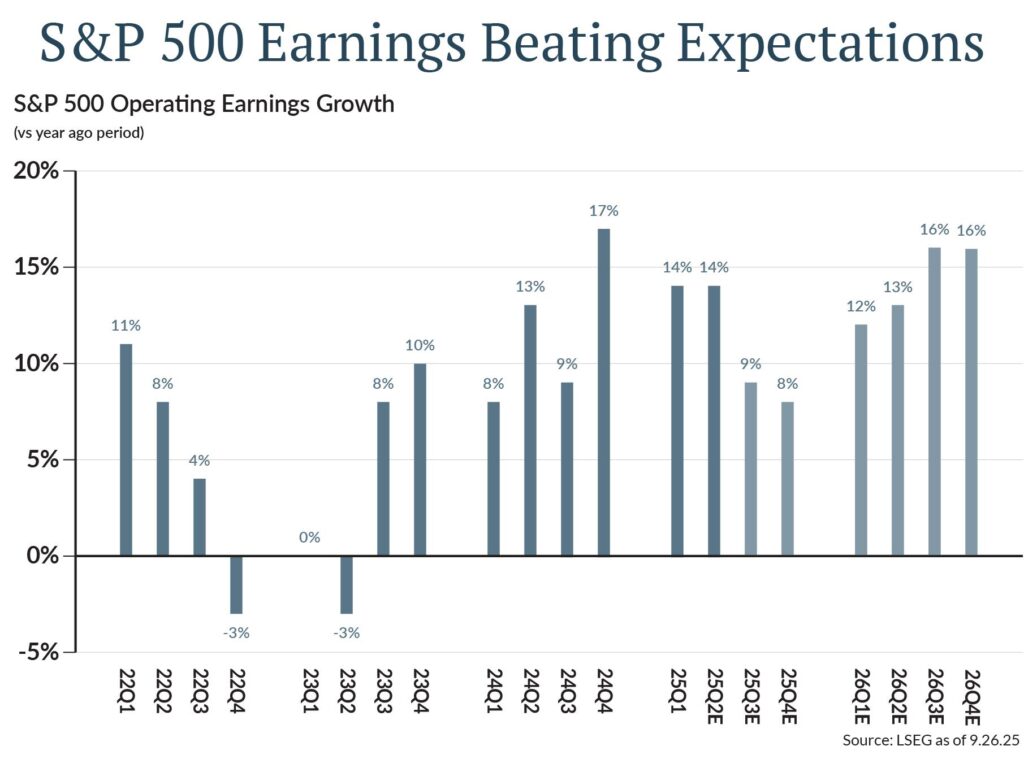
If earnings continue growing at the aggressive rates analysts currently expect, elevated valuations can potentially be supported. But if earnings forecasts are revised lower, investors may become less willing to pay today’s prices for tomorrow’s profits.
That is why the market can look simultaneously strong and expensive.
A high valuation by itself is not a timing signal. Stocks can trade above historical averages for long periods. What matters is whether earnings, interest rates and future growth justify the premium investors are paying.
For the current rally to remain healthy, one of the strongest confirmations would be continued earnings beats accompanied by stable or improving forward guidance. If analysts begin cutting estimates broadly while stock prices continue climbing, the gap between expectations and fundamentals would become a much bigger warning sign.
AI Expectations Are Powering the Rally—But They Raise the Bar
Artificial intelligence remains one of the most important engines behind the current market optimism. Demand for data centers, advanced chips, networking equipment, cloud computing and AI infrastructure has created a powerful investment cycle that is benefiting many large technology companies and their suppliers.
Recent market coverage shows how quickly AI-related earnings can move individual stocks. On August 13, for example, Super Micro Computer surged after reporting stronger-than-expected results and providing a favorable outlook, while CoreWeave also rallied sharply after reporting stronger revenue and reducing losses. Nvidia gained as investors continued to focus on demand for the chips powering AI infrastructure.
But AI creates a second-order question: How much future growth is already reflected in today’s stock prices?
The market does not need AI to fail for an AI-driven rally to weaken. Companies merely need to produce results that are good rather than spectacular. When expectations are exceptionally high, a strong earnings report can still produce a disappointing stock reaction if investors were expecting even more.
That dynamic has already appeared in the market. Recent reporting noted sharp moves in individual AI-related companies after earnings, illustrating how sensitive some valuations have become to guidance and future-growth expectations.
What this means for you
Investors do not necessarily need to choose between “AI is a bubble” and “AI will transform everything.” Both extremes can be misleading.
The more useful question is whether individual companies can convert enormous AI spending into sustainable revenue, margins and free cash flow. If they can, today’s valuations may have stronger fundamental support. If capital spending grows faster than monetization, investors could eventually demand a lower valuation.
That distinction will become increasingly important as the AI investment cycle matures.
Interest Rates, VIX and Investor Positioning Tell a More Complicated Story
Interest rates remain another major pillar of the rally. Recent economic data have reduced expectations for an immediate Federal Reserve rate hike. Reuters reported on August 17 that traders had cut the probability of a September hike to about 30%, from roughly 50% a week earlier, after weaker economic indicators including unexpectedly soft retail sales and declining consumer sentiment.
Lower expected rates can support stock valuations because investors generally place greater value on future corporate cash flows when discount rates decline. Falling Treasury yields can also make equities relatively more attractive compared with bonds.
But investors should not assume that lower Fed-rate expectations automatically guarantee higher stocks.
Inflation remains above the Federal Reserve’s target, and energy prices and geopolitical developments could complicate the inflation outlook. Reuters reported that the Fed’s preferred PCE inflation measure remained around 3.7%, significantly above the 2% target, while Brent crude was approaching $90 per barrel.
Then there is the VIX.
The Cboe Volatility Index has remained relatively low, with recent market data showing the VIX around the mid-teens. Cboe’s volatility-futures data also show investors pricing volatility above the spot VIX in coming periods.
Low volatility is not automatically bearish. It can simply mean investors believe economic conditions are relatively stable. But when low volatility combines with strong bullish positioning, it can mean investors have become less prepared for a sudden shock.
Options positioning provides another clue. Recent reporting found unusually strong demand for call options as traders chased the rally, a sign that bullish sentiment has become increasingly powerful.
That creates a potential FOMO dynamic: investors who missed earlier gains may feel pressure to buy because the market keeps making new highs.
Market Breadth May Decide Whether This Rally Has Real Strength
Market breadth is one of the most useful ways to distinguish a broad rally from a narrow one.
If the S&P 500 rises because only a handful of mega-cap companies are surging while most stocks are stagnant or falling, investors should be more cautious. A rally becomes more convincing when participation expands across sectors, company sizes and individual stocks.
There are encouraging signs here. Citadel Securities’ August market analysis reported that breadth was rising while correlation was falling and dispersion remained high, creating a stronger environment for individual stock selection. Its analysis also noted that equal-weight performance had been improving relative to the traditional market-cap-weighted index.
That is important because the S&P 500 is market-cap weighted. The largest companies have an enormous influence on the index. If smaller and mid-sized companies begin participating more broadly, it can provide evidence that the rally is spreading rather than remaining concentrated in a small group of mega-cap names.
The Russell 2000 offers another useful comparison. AP reported that the small-cap index was up substantially in 2026, while the S&P 500, Nasdaq and Dow were also posting strong year-to-date gains as of August 12.
Investor takeaway
The healthiest version of this rally would show several things happening simultaneously:
Earnings continue beating expectations.
Revenue growth remains broad.
AI investment produces measurable profits and cash flow.
Market breadth continues improving.
Interest rates remain supportive without requiring aggressive Fed easing.
VIX remains controlled without signaling extreme complacency.
Valuations remain supported by actual earnings growth.
If those conditions continue, the argument that the S&P 500 rally is fundamentally supported becomes considerably stronger.
The opposite combination would be more concerning: earnings estimates falling, market breadth deteriorating, AI spending producing weaker returns, Treasury yields rising, inflation accelerating and investors becoming increasingly dependent on a small group of stocks.
Future Outlook: What Would Confirm the Rally—and What Could Break It?
The next stage of the S&P 500 rally will probably be decided by whether the market’s optimistic assumptions survive the next several months.
What would confirm the rally?
Continued earnings growth would be the most important confirmation. The market currently expects extremely strong 2026 earnings growth. If companies deliver results and maintain or raise guidance, investors have a stronger fundamental reason to keep valuations elevated. FactSet’s current projections of roughly 27% full-year earnings growth establish a very high bar.
Broader participation would provide another confirmation. If more sectors and stocks continue participating, the rally becomes less dependent on a small number of mega-cap technology companies.
Controlled inflation would also help. If inflation gradually moves lower without a major economic slowdown, the Federal Reserve could avoid additional tightening and eventually have more room to ease policy.
Stable Treasury yields would reduce pressure on equity valuations. A sudden increase in long-term bond yields could make high-priced stocks less attractive.
AI monetization would be another major confirmation. Continued growth in AI-related revenue, margins and cash flow would make the enormous investment cycle easier for investors to justify.
What could break the rally?
The first major risk is an earnings disappointment. Because expectations are already high, companies may need to do more than simply beat estimates—they may need to demonstrate that future growth remains strong.
The second is renewed inflation. If energy prices rise sharply or inflation accelerates, investors could once again price in a more restrictive Federal Reserve.
The third is a deterioration in market breadth. If the index keeps rising while fewer stocks participate, the rally could become increasingly dependent on a narrow group of leaders.
The fourth is an AI spending or valuation shock. Investors do not need to abandon AI technology for this to happen. A slowdown in data-center spending, weaker-than-expected AI revenue growth or disappointing margins could be enough to trigger a repricing.
The fifth is a sudden rise in volatility. A VIX jump would not necessarily mean a bear market, but it would signal that investors are rapidly increasing their expectations for market swings.
The sixth is an economic slowdown that becomes severe enough to hurt corporate profits. Ironically, weaker economic data can initially help stocks by reducing Fed-hike expectations. But if economic weakness begins damaging earnings, that positive effect can reverse.
Bottom line: The S&P 500’s move toward record highs does not currently look like a rally built entirely on FOMO. The earnings evidence is too strong to make that argument convincingly. Corporate profits are rising rapidly, revenue growth is healthy, AI investment is generating substantial demand, and market breadth has shown encouraging signs.
At the same time, investors should not confuse a fundamentally supported rally with a low-risk rally. Valuations are above historical averages, expectations are high, volatility is subdued and the Federal Reserve remains an important source of uncertainty.
The most important test from here is whether earnings growth can continue catching up with stock prices.
If profits keep rising, participation broadens, AI spending continues producing measurable returns, inflation stays under control and the Fed avoids a renewed tightening cycle, the rally could prove much healthier than its critics expect.
If those supports begin disappearing at the same time, today’s record highs could become much more fragile.
For investors, the smartest question is therefore not simply “Is the S&P 500 too high?”
It is:
“Are the fundamentals still improving fast enough to justify the price investors are paying?”
That is the question likely to determine whether the current rally becomes another durable leg of the bull market—or a period when investors discover that optimism had moved faster than reality.
Subscribe to trusted news sites like USnewsSphere.com for continuous updates.