
Jane Street’s huge loss has become one of the most revealing stories of the 2026 market because it is not simply a story about one trading firm having a bad month. The reported roughly $15 billion July hit at Jane Street shows how quickly an AI-driven market reversal can move from falling stock prices to forced selling, investment losses, liquidity pressure and broader questions about risk across Wall Street. Reuters reported that Jane Street generated more than $40 billion in trading revenue through July, yet July became its first negative month of trading revenue since 2016.
The episode is particularly important because Jane Street is not an ordinary hedge fund. It is one of the world’s largest market makers, providing liquidity across equities, ETFs, bonds, options and other markets. The firm’s own description says it trades across more than 200 electronic exchanges and venues, while Reuters reported that it has roughly 3,500 employees and access to more than 200 trading venues globally.
That makes the July shock more useful as a market lesson than as a headline about a single loss. It raises a bigger question: what happens when sophisticated quantitative investors, hedge funds and market makers become exposed to the same crowded AI trade at the same time?
What Happened to Jane Street in July?
The reported $15 billion hit was linked partly to Jane Street’s investment in Situational Awareness, an AI-focused hedge fund managed by former OpenAI researcher Leopold Aschenbrenner. Reuters reported that Situational Awareness suffered a severe drawdown as AI-related stocks sold off and margin calls forced the fund to unwind much of its public-equity portfolio. A large portion of those positions was reportedly sold to Citadel.
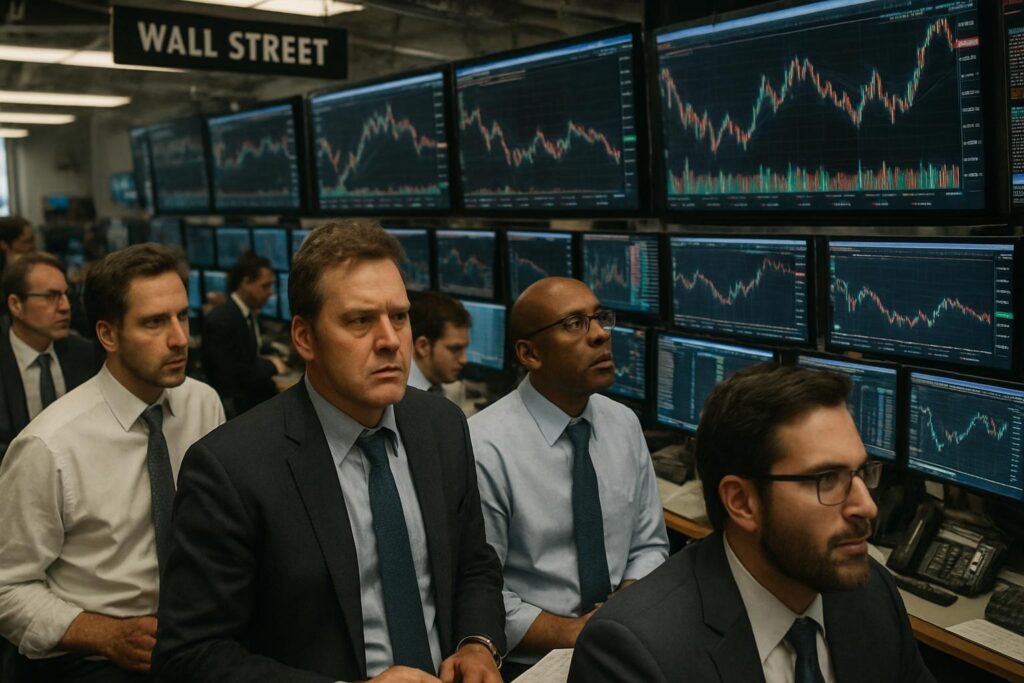
Jane Street told employees that its investment in Situational Awareness had become larger after performing strongly during the first half of the year. The subsequent drawdown left Jane Street’s stake roughly flat for the year, according to the internal note reported by Reuters. The firm also said it lost money on long positions in Asian technology companies, including semiconductor and memory stocks that had previously been among its stronger-performing positions.
The scale is striking, but the context matters. Reuters reported that Jane Street had generated more than $40 billion in trading revenue through July, already exceeding its $39.6 billion total for 2025. That means the July episode does not by itself indicate that the firm is financially broken. Instead, it demonstrates that even an exceptionally profitable and sophisticated trading organization can experience a dramatic drawdown when multiple correlated positions move against it simultaneously.
Why AI Stocks Became the Pressure Point
The Jane Street episode arrived after a major reversal in some of the market’s most crowded AI-related trades. During July, investors increasingly questioned whether enormous AI infrastructure spending would generate sufficient economic returns and whether valuations had moved too far ahead of fundamentals.
The pressure was especially visible in semiconductor and memory stocks. Jane Street said several of the largest memory and semiconductor stocks fell by around 50% during July, according to Reuters. Separately, the Guardian reported that Samsung Electronics and SK Hynix fell more than 10% during a July selloff, while several U.S. chip stocks also declined sharply. The Nasdaq 100 briefly moved into correction territory during that episode.
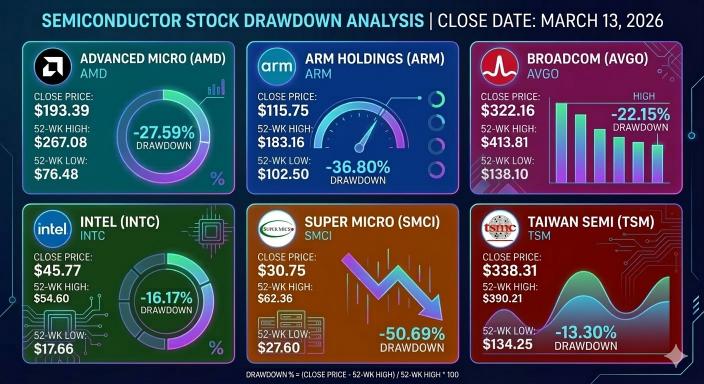
The important point for investors is that AI exposure is no longer confined to a handful of software companies. The trade now spans chipmakers, memory manufacturers, semiconductor equipment companies, data-center operators, cloud providers, utilities, power infrastructure and companies expected to benefit from AI spending.
That creates a potentially dangerous feedback loop. When investors become less confident about AI valuations, selling one group of stocks can quickly affect another. A semiconductor decline can hurt hardware suppliers; weaker hardware expectations can affect data-center companies; falling data-center valuations can change financing assumptions; and leveraged investors may then be forced to reduce positions.
The result can be much larger than the original change in fundamentals.
What Jane Street’s Loss Reveals About Quant Trading Risk
Quantitative trading is often associated with sophisticated models, enormous datasets and lightning-fast execution. Those advantages are real. Jane Street itself says its trading operations combine quantitative analysis, machine learning, technology and human judgment.
But technology does not eliminate market risk. A model can identify patterns, estimate probabilities and hedge certain exposures, yet it cannot guarantee that markets will behave independently when investors become stressed.
This is one of the most important lessons from Jane Street’s July experience. Reuters reported that the firm generally uses put options to protect against sharp drawdowns, but said the AI-stock losses were spread over the month rather than concentrated in one sudden crash. As a result, the firm’s short-term hedges provided relatively little protection.
That distinction matters. Risk models are often designed around particular assumptions about how markets move. A gradual decline across many correlated positions can produce a different risk profile from a sudden one-day crash.
There is also a second issue: crowding.
If multiple funds own similar AI stocks, use similar volatility measures, finance positions through similar channels and respond to losses by reducing exposure, the market can become reflexive. Falling prices create margin pressure; margin pressure creates selling; selling creates lower prices; lower prices create more margin pressure.
That is how a market correction can become a liquidity event.
What this means for you: investors should not assume that a company, fund or strategy is safe simply because sophisticated institutions own it. Institutional participation can provide liquidity in normal conditions, but crowded institutional positioning can also amplify moves when risk limits are reached.
Why Liquidity Could Become the Bigger Wall Street Risk
The most important part of the Jane Street story may ultimately be liquidity rather than the headline dollar amount.
Jane Street is a major market maker. Its business involves continuously pricing and trading financial instruments and providing liquidity to clients. The firm’s own materials emphasize its role in ETFs, equities, bonds and options and its ability to manage risk across different market environments.
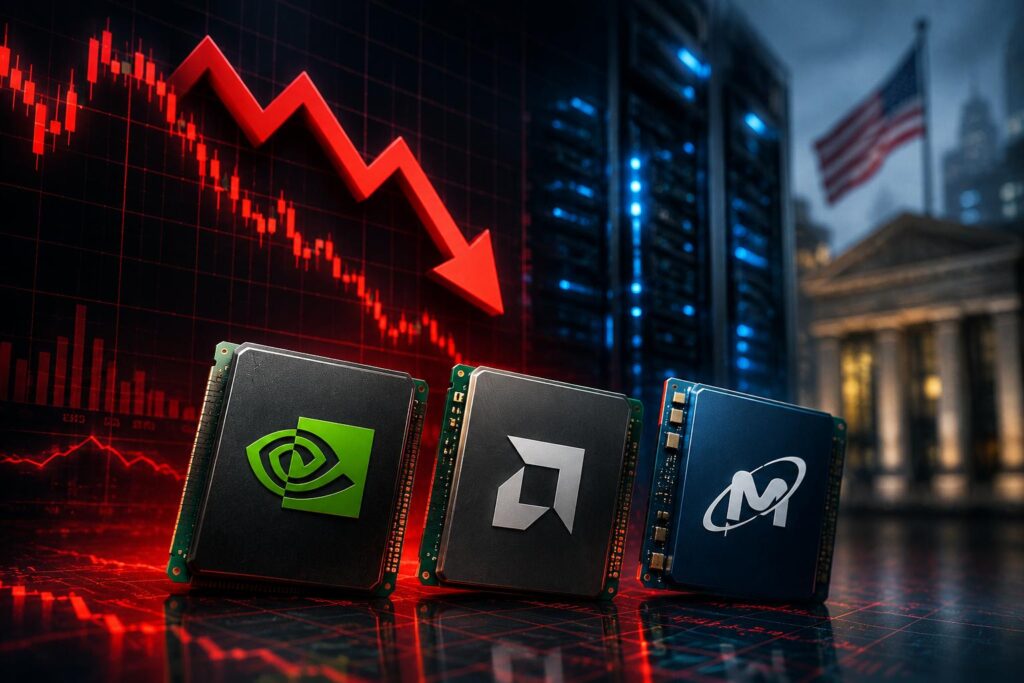
Market makers can help stabilize markets because they stand ready to buy and sell. But market makers also have risk limits. When volatility increases or positions become too large relative to those limits, firms can reduce inventories, widen risk controls or exit positions.
That does not automatically mean a systemic crisis is coming. It does mean investors should watch market depth and volatility alongside headline index performance.
The July AI selloff offered an example of how quickly liquidity conditions can change. The Guardian reported that the Nasdaq 100 briefly entered correction territory during the July technology selloff, while major Asian semiconductor companies experienced double-digit declines.
There is another important development: leverage.
Reuters reported that the Situational Awareness collapse involved margin calls after the fund’s AI positions fell sharply. Separately, recent Wall Street reporting has highlighted rising use of margin financing and the increasing connections between banks, hedge funds and non-bank liquidity providers. That means the risk is not simply whether AI stocks decline; it is whether declines force leveraged investors to sell at the same time.
Investor takeaway: a falling stock is not necessarily a dangerous market event. A falling stock combined with leverage, crowded positioning, margin calls and shrinking liquidity is much more important.
What This Means for AI Stocks and the Market Ahead
The Jane Street episode does not prove that the AI investment boom is over. In fact, recent investor behavior suggests the market remains divided.
Charles Schwab data reported by Axios showed that retail investors continued buying stocks during July’s volatility and remained interested in AI-related names after declines. The difference was that investors increasingly appeared interested in buying AI stocks at lower prices rather than chasing them at previous highs.
That is an important signal. It suggests the AI trade may be moving from a simple momentum story toward a valuation-and-earnings debate.
Investors are likely to ask tougher questions about future cash flows, capital spending, chip demand, data-center utilization and the return generated by enormous AI infrastructure investments. The market will increasingly distinguish companies that are generating real revenue and cash flow from companies whose valuations depend heavily on future expectations.
The financing side also deserves attention. Concerns about the enormous amounts of money being committed to AI infrastructure were already visible during the July selloff. The Guardian reported that investors were increasingly worried about borrowing by AI-related companies and the enormous capital requirements associated with data-center expansion.
At the same time, the AI ecosystem continues to attract enormous investment. That creates a complicated outlook: AI fundamentals can remain strong while individual AI stocks experience severe corrections.
Future outlook: the next major test will be whether AI companies can translate extraordinary capital spending into sustainable earnings and cash flow. If they do, the July selloff could ultimately look like a painful repricing. If returns disappoint, the episode could mark the beginning of a much broader valuation reset.
For Wall Street, the lesson is even broader. Jane Street has reportedly responded by becoming more selective about risk and closing a significant portion of exposure in areas that generated July losses. Reuters reported that the firm also reduced risk-taking in other strategies while saying its short-horizon trading business remained strong.
That response is significant because it shows how a professional trading firm can react after a major drawdown: not necessarily by abandoning markets, but by reassessing concentration, correlation, liquidity and the amount of risk that can safely be carried.
The Bigger Wall Street Lesson From Jane Street’s Huge Loss
Jane Street’s huge loss is ultimately less about whether one trading firm made a bad investment and more about what happens when a modern financial market becomes heavily concentrated around a single powerful theme.
AI has become one of the most important investment narratives in the world. It influences technology stocks, semiconductor demand, data centers, cloud computing, power consumption, private financing and even the strategies of quantitative trading firms. When that narrative changes, the consequences can travel across multiple markets simultaneously.
Jane Street’s reported July loss demonstrates why investors should look beyond headline returns. A market can appear healthy while hidden concentrations of risk are building underneath the surface. The real warning sign is not simply that an AI stock falls 10% or 20%. It is when leverage, crowded positioning, correlated portfolios and forced selling begin reinforcing one another.
For individual investors, the practical lesson is straightforward: avoid treating a popular theme as a guarantee. AI may remain one of the defining technologies of this decade, but that does not mean every AI-related stock will deliver strong returns at every valuation.
For professional investors, the lesson is even more direct. Sophisticated models and enormous computing power can improve decision-making, but they cannot repeal the basic laws of markets. Liquidity can disappear, correlations can rise and positions that look diversified during calm conditions can suddenly behave like one enormous trade.
Jane Street’s July experience therefore deserves attention far beyond the firm’s own balance sheet. It is a warning about concentration, leverage and liquidity at a moment when Wall Street remains deeply invested in the AI story.
What this means for you: focus on valuation, balance-sheet strength, cash flow, position size and diversification rather than simply following the most popular AI names.
Investor takeaway: Jane Street’s reported $15 billion July hit does not mean AI is finished or that Wall Street is facing an inevitable crisis. It does show that even highly sophisticated firms can suffer when crowded positions, correlated assets and changing liquidity conditions collide.
Future outlook: watch AI earnings, semiconductor demand, capital spending, credit conditions, margin debt, volatility and market breadth. Those indicators will provide a better picture of whether the AI selloff was a temporary reset or the beginning of a deeper repricing.
The most important question for investors now is not simply, “How much did Jane Street lose?” It is: “What did the loss reveal about the risks everyone else may be carrying?”
That is why this story matters.
Subscribe to trusted news sites like USnewsSphere.com for continuous updates.