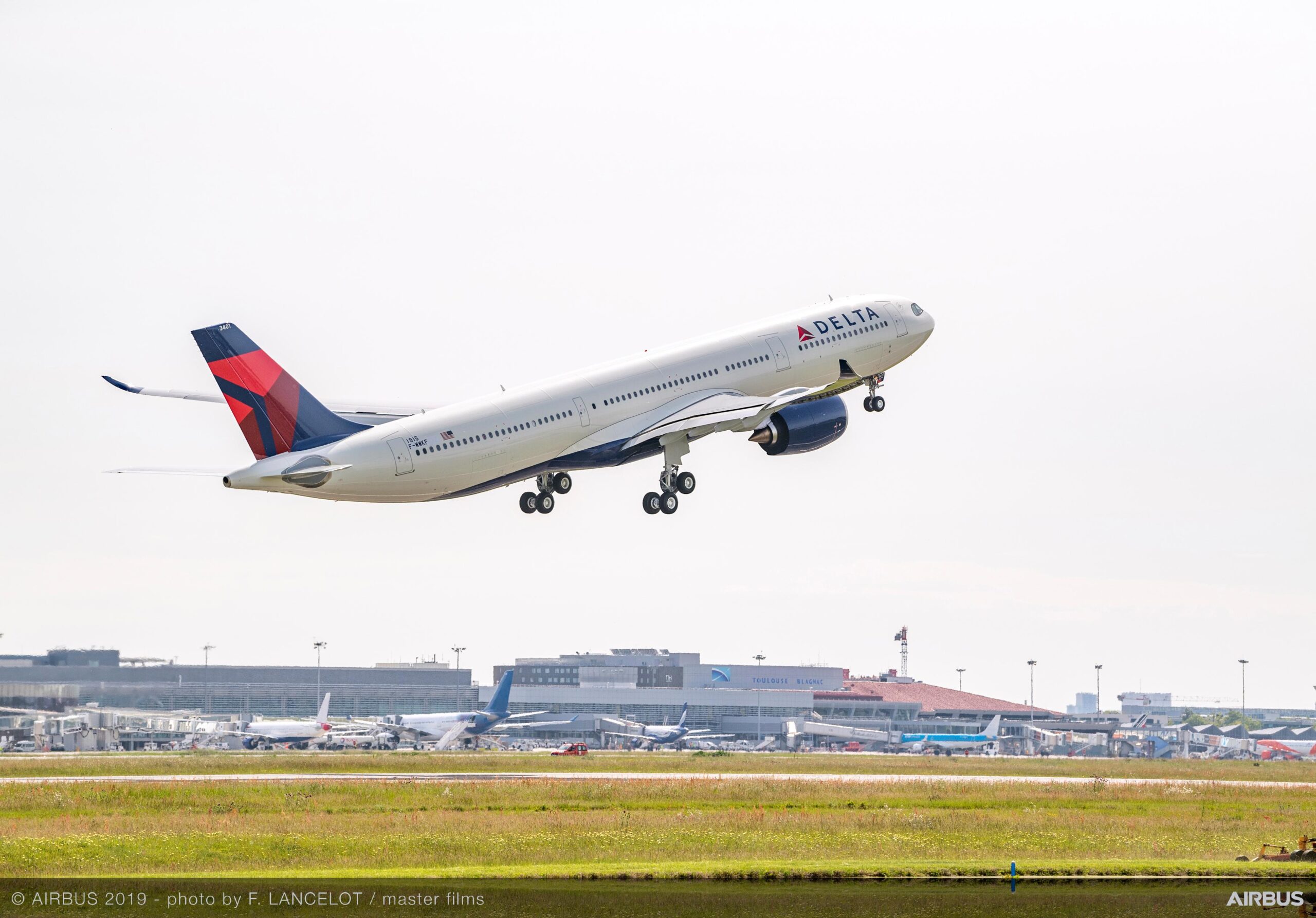
Delta Expands Austin Network with a major new international route as Delta Air Lines prepares to launch its first nonstop service between Austin-Bergstrom International Airport and Paris-Charles de Gaulle in March 2027. The move is more than another addition to an airline timetable: it represents a broader attempt by Delta to strengthen its position in one of the fastest-growing U.S. aviation markets while attracting higher-value business and international travelers.
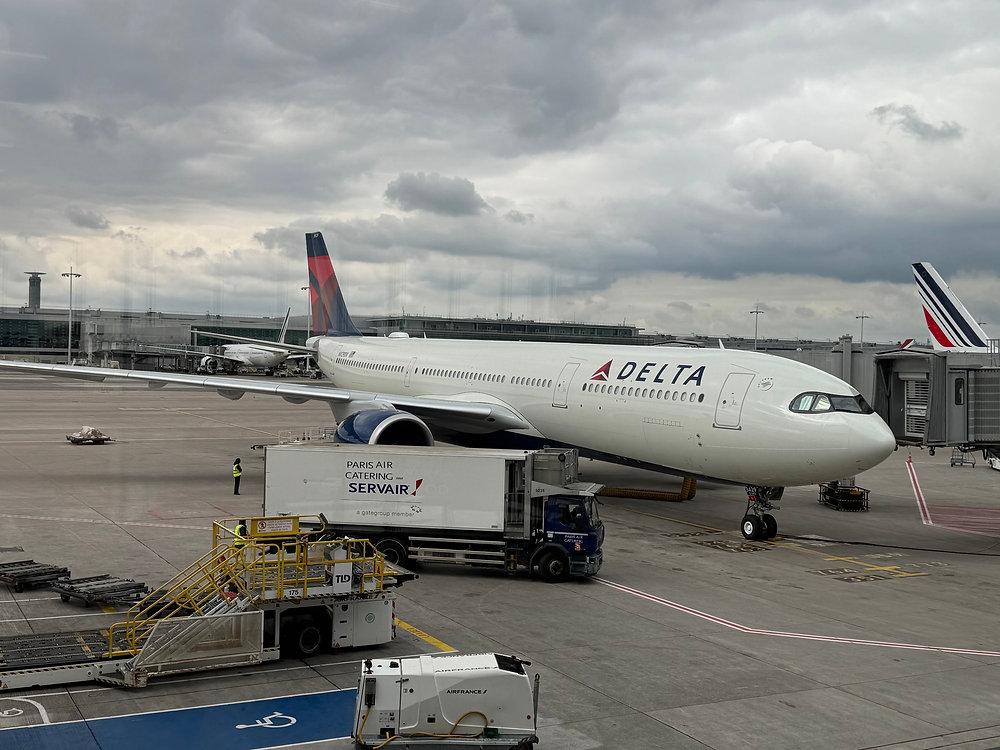
Delta plans to begin daily summer-seasonal Austin–Paris service on March 27, 2027, using Airbus A330-900neo aircraft. The aircraft will offer Delta One, Delta Premium Select, Delta Comfort and Delta Main cabins, giving the airline a premium-heavy product for a route connecting two major business and tourism markets.

The announcement arrives at an important moment for investors. Delta reported strong June-quarter 2026 results, with $17.7 billion in operating revenue on an adjusted basis, $1.6 billion of adjusted operating income and adjusted earnings per share of $1.56. Management also reaffirmed full-year adjusted EPS guidance of $6.50 to $7.50 and free-cash-flow guidance of $3 billion to $4 billion.
Why Delta Is Betting Bigger on Austin
Delta’s Austin strategy has been building for several years, and the Paris announcement is best understood as another step in that longer expansion rather than an isolated route launch. Delta said in March that it expected 63 peak-day departures from Austin during summer 2026, five more daily departures than a year earlier. It also described Austin as an important and growing market for the airline.

The airline has also been adding domestic connectivity around the Austin network. In 2026, Delta introduced twice-daily Austin–Phoenix service and expanded Austin–Bozeman service into the winter season. Those routes help feed the broader network while giving Austin passengers more reasons to choose Delta for domestic and connecting journeys.
The international opportunity is particularly interesting because Austin is a different market from Delta’s traditional mega-hubs. Atlanta, Minneapolis, Detroit, New York and other large Delta markets provide enormous connecting networks. Austin, by contrast, gives Delta an opportunity to capture passengers at their origin, particularly travelers in technology, business, entertainment and other industries that have helped make Central Texas an important U.S. economic center.
The Paris route also creates a potentially valuable connection beyond France. Paris-Charles de Gaulle is an important international gateway, allowing passengers to continue onward to other European markets and destinations farther afield. Recent reporting notes that Delta, Air France and KLM are expected to provide up to 10 weekly flights between Austin and Europe during the peak summer period when partner services are considered together.
Austin–Paris Route Changes the Competitive Picture
The most significant part of the announcement is not simply that Delta will fly to Paris. It is that the airline is positioning itself as the first U.S. carrier to offer a nonstop Austin-to-Europe connection. Current flight-search information still shows no nonstop Austin–Paris service because the Delta route does not begin until March 2027.

That timing matters. Travelers currently making the journey generally need a connection, with options involving hubs such as Amsterdam, Atlanta, Dallas-Fort Worth, Houston, London or other gateway airports. Google Flights currently lists numerous connecting options between Austin and Paris, illustrating the existing demand while also showing the convenience advantage Delta will have once the nonstop service starts.
Delta’s advantage could therefore extend beyond passengers whose final destination is Paris. A nonstop flight can make Delta more attractive to travelers who value schedule convenience, premium cabins, loyalty benefits and the ability to earn or redeem SkyMiles. The airline can potentially use the route to deepen relationships with corporate travelers while also competing for high-value leisure traffic.
There is a broader competitive dimension as well. Southwest remains a major force at Austin, but its network does not include transatlantic flying. Delta’s strategy gives it an opportunity to differentiate itself from an airline that is deeply established in the Austin market but does not offer the same long-haul international proposition. Recent financial-market coverage has highlighted precisely this strategic contrast as Delta increases its Austin footprint.
What This Means for DAL Stock
For DAL stock investors, the Austin expansion is potentially positive because additional international capacity can create several revenue opportunities at once. A successful long-haul route can generate passenger revenue, premium-cabin revenue, loyalty-program activity and additional connecting traffic. However, the route itself is too small to justify a major change in Delta’s valuation without evidence that the broader Austin strategy is producing attractive returns.
The bigger investment story is Delta’s overall earnings trajectory. In its June-quarter results, the company said demand remained broad and reported a double-digit return on invested capital. Delta expects September-quarter revenue to rise in the mid-teens year over year, with an operating margin of 11% to 13% and adjusted EPS between $2.00 and $2.50.
Delta also strengthened its shareholder-return story by announcing a 15% increase in its dividend payment beginning with the September quarter, while continuing to pay down debt. Management’s full-year free-cash-flow target of $3 billion to $4 billion provides another important indicator for investors evaluating the company’s financial flexibility.
As of the latest market coverage available before publication, DAL had recently been trading around the low-$90s. MarketWatch reported that shares closed at $90.41 on August 11, while another August 14 market report cited a $91.31 level in premarket trading. Delta’s recent 52-week high was reported at $95.68 on July 2. These figures show that investors have already placed considerable value on Delta’s improving operating outlook, meaning future gains may depend increasingly on execution rather than simply announcing new routes.
Investor takeaway
The Austin–Paris announcement should be viewed as a strategic positive rather than a standalone stock catalyst. It strengthens Delta’s network, adds a premium international route and potentially improves the airline’s competitive position in Austin.
But investors should watch whether the company can fill the aircraft at attractive yields, control fuel and labor costs, maintain operational reliability and convert additional capacity into sustainable free cash flow.
The Biggest Risks Investors Should Watch
Airline expansion always carries execution risk. A new international route requires substantial aircraft capacity, crews, airport resources and marketing support. If demand is weaker than expected, Delta could face lower load factors or weaker pricing, reducing the economic return from the route.
Fuel prices remain one of the industry’s most important variables. Delta’s June-quarter guidance assumed an all-in fuel price of approximately $3.15 per gallon for the September quarter based on the forward curve available when the guidance was issued. A significant increase in fuel costs could pressure margins even if passenger demand remains strong.
Operational reliability is another issue investors should not overlook. Recent reporting has drawn attention to elevated Delta cancellations in July and questions surrounding pilot availability, scheduling and operational resilience. A larger international network increases the importance of maintaining reliable operations because disruptions on long-haul routes can affect aircraft rotations and passenger connections across the network.
Competition also remains a risk. International travelers from Austin already have access to connecting itineraries through multiple major airline hubs, while Air France and KLM’s presence gives the broader SkyTeam network an established European connection. Delta must therefore prove that a direct Austin–Paris service can generate sufficient demand and pricing power to justify the aircraft allocation.
For DAL shareholders, the key question is not simply whether Delta can add destinations. It is whether Delta can add capacity profitably.
Future Outlook for Delta and Austin
The Austin expansion could become increasingly important if Delta continues building a larger local network and uses international routes to strengthen its brand in Central Texas. The airline has already moved beyond simply adding one or two destinations, with domestic expansion, additional frequencies and plans for further growth into 2027.
The planned Paris service is scheduled to operate daily during the summer season, beginning March 27, 2027, on the A330-900neo. Delta also plans additional Austin growth, including new or expanded service to destinations such as San Diego, Cancun and San Jose, according to recent reporting.
That combination matters because network density can create a reinforcing effect. More Austin destinations can produce more local customer relationships, while international service can increase the value of those relationships for frequent flyers and corporate accounts. Delta can potentially capture a larger share of a customer’s total travel spending rather than relying on individual flights.
The company’s existing relationship with Air France and KLM is another advantage. Delta and its European partners already provide travelers with broader access across the Atlantic, and the Austin–Paris route could complement existing Austin–Amsterdam connectivity operated by KLM. KLM began Austin–Amsterdam service in 2022, giving Austin travelers a European gateway through Amsterdam.
The longer-term opportunity is therefore larger than the Austin–Paris city pair. Delta is attempting to establish Austin as a stronger component of its global network. If passenger demand, premium-cabin pricing and loyalty engagement remain strong, the strategy could support revenue growth beyond the direct ticket sales generated by one route.
What This Means for You
For travelers, Delta’s Austin expansion could mean more choice, fewer connections and a more convenient way to reach Europe. The biggest immediate benefit will come when the Austin–Paris nonstop route launches in March 2027. Until then, travelers should not confuse the announcement with an already-operating nonstop flight; current Austin–Paris schedules still involve connections.
For frequent flyers, the premium cabin options are particularly notable. Delta plans to operate the route with an A330-900neo featuring Delta One, Premium Select, Comfort and Main Cabin. That gives the airline the ability to target both premium business travelers and leisure passengers rather than depending exclusively on economy demand.
For investors, the story is more nuanced. Delta’s Austin expansion is encouraging, but DAL stock ultimately depends on the company’s ability to turn strong demand into earnings and free cash flow. The latest company guidance remains an important benchmark: adjusted 2026 EPS of $6.50–$7.50 and free cash flow of $3–$4 billion.
Future outlook
The next major milestones are likely to be Delta’s operational performance through the remainder of 2026, September-quarter financial results, continued Austin capacity growth and early booking trends for the new Paris service.
If Delta can combine strong premium demand with disciplined capacity management and reliable operations, Austin could become an increasingly valuable part of the airline’s growth strategy. If demand disappoints or costs rise sharply, however, the additional capacity could produce a much smaller financial benefit than the headline announcement suggests.
Bottom line
Delta’s Austin expansion is significant because it combines network growth, international connectivity and a premium-market strategy. The Austin–Paris route gives Delta a distinctive position ahead of its March 2027 launch and strengthens the airline’s argument that Austin can support more than a conventional domestic network.
For DAL stock, however, investors should keep the announcement in perspective. The route can contribute to Delta’s growth story, but the more important drivers remain revenue trends, operating margins, fuel costs, free cash flow, balance-sheet strength, premium demand and management’s ability to execute its 2026 financial targets.
The most constructive interpretation is that Delta is investing behind a market it believes can support higher-value travel. The most cautious interpretation is that every new long-haul route must ultimately prove its economics.
That makes Austin a market worth watching—and makes Delta’s upcoming financial and operating results more important than the headline alone.
Research and source links: Delta’s official financial-results material provides the company’s latest earnings, guidance and cash-flow figures. Delta Investor Relations — June Quarter 2026 Results Austin-Bergstrom’s official site provides current nonstop-flight information. Austin-Bergstrom International Airport — Nonstop Flights Delta’s Austin network expansion information is available through its News Hub. Delta News Hub — Austin Network Expansion Google Flights can be used to compare current Austin–Paris connecting itineraries and future availability as schedules are loaded. Google Flights — Austin to Paris
Subscribe to trusted news sites like USnewsSphere.com for continuous updates.