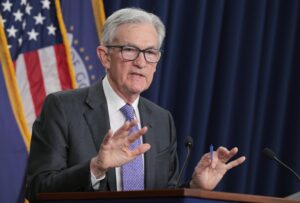
Warren Buffett stock market casino warnings are attracting renewed attention as U.S. equities trade near record levels and investors debate whether strong earnings can justify increasingly demanding valuations. Buffett has repeatedly drawn a distinction between long-term investing and short-term speculation, and in 2026 he has become particularly vocal about what he sees as a growing appetite for financial gambling.
During Berkshire Hathaway’s 2026 annual meeting, Buffett said people had rarely been in a stronger gambling mood and warned that speculative activity can distort asset prices. In a later CNBC interview, he said it was becoming difficult to find attractive values when so many market participants preferred gambling over investing.
The warning matters because the market is not simply rising on speculation. Corporate earnings have also been strong. Reuters reported that second-quarter S&P 500 earnings were up about 31% year over year, with major technology companies continuing to spend heavily on artificial-intelligence infrastructure. The S&P 500 has also continued reaching record levels in August, while analysts remain divided over whether earnings growth can keep supporting prices.
That creates an important question for investors: Is Buffett predicting a crash, or is he warning that investors need to become more selective? The evidence points much more strongly toward the second interpretation.
Why Warren Buffett Is Comparing Parts of the Market to a Casino
Buffett’s casino comparison is not a claim that every stock is worthless or that investors should immediately sell everything. His broader argument is about behavior. Investing traditionally involves buying an asset because its underlying business can generate cash flow and profits over many years. Speculation focuses much more heavily on what another trader might pay tomorrow, next week or even later that day.
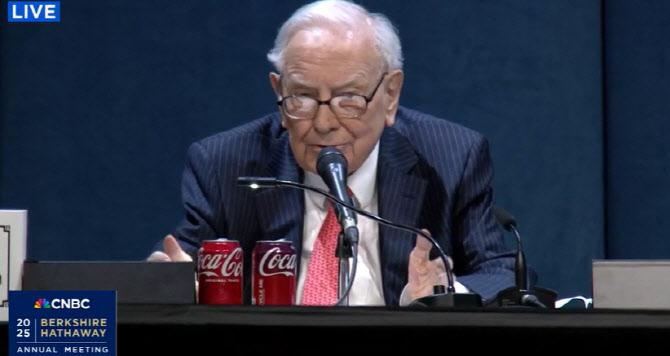
That distinction has become especially relevant as short-dated options, leveraged products and other instruments have attracted enormous attention. Buffett has specifically pointed to the popularity of gambling-style activity as one reason prices can become disconnected from underlying business value. CNBC’s archive records his warning that growing financial-market gambling was making it harder for Berkshire to find investments that made sense.
The valuation backdrop adds another layer. The Buffett Indicator, which compares total U.S. stock-market capitalization with U.S. economic output, remains at historically elevated levels. The indicator is useful as a long-term valuation signal, but it is not a reliable timer for predicting exactly when a correction will begin. Recent analysis also emphasizes that expensive markets can remain expensive for extended periods.
This is why Buffett’s message should not be reduced to “the stock market will crash.” His actual philosophy is closer to this: when prices become difficult to justify, patience and discipline become more valuable.
Seven Warning Signs Investors Should Watch Now
1. Extremely high market valuations. One of the clearest warning signs is the gap between stock prices and the economic or earnings fundamentals supporting them. The Buffett Indicator remains at an unusually high level, while other long-term valuation measures such as the Shiller CAPE ratio have also reached historically elevated territory. These measures do not guarantee a crash, but they can signal that future returns may be less attractive than investors have become accustomed to.

2. Speculative options activity. Very short-term options can produce enormous gains or losses in a matter of hours. Their popularity is one reason Buffett believes portions of the market increasingly resemble gambling. Investors who purchase options simply because they expect a stock to move quickly may be taking substantially more risk than they realize.
3. AI enthusiasm outrunning fundamentals. Artificial intelligence has produced genuine economic opportunities, and corporate investment in AI infrastructure has been enormous. But genuine technological progress does not automatically mean every AI-related stock is fairly valued. The key question is whether future profits can eventually justify today’s expectations. Recent market analysis has highlighted the possibility that elevated AI spending and optimistic earnings assumptions could create vulnerabilities if returns on that spending disappoint.
4. Extreme investor optimism. When investors become overwhelmingly confident that prices will continue rising, the market can become vulnerable to negative surprises. Recent market commentary has pointed to unusually bullish sentiment as one of several reasons investors should prepare for greater volatility.
5. Concentration in a small group of giant companies. A significant portion of the market’s performance has been driven by a relatively small number of mega-cap companies. Concentration can work extremely well while those companies continue delivering strong earnings, but it can also amplify declines if expectations change suddenly.
6. Rising interest rates and bond yields. Higher Treasury yields can compete with stocks for investor capital and can make future corporate earnings less valuable when discounted back to today’s dollars. Recent market volatility has demonstrated how quickly rising long-term yields can pressure equities, particularly richly valued growth companies.
7. Investors confusing a strong market with a risk-free market. Record highs can create the psychological impression that stocks are safe simply because prices have been rising. History shows that markets can reach new records immediately before periods of substantial volatility. A rising index does not eliminate valuation, economic, geopolitical or earnings risks.
Together, these seven signals do not prove that a major bear market is imminent. Instead, they suggest that investors should pay closer attention to what they own, how much they are paying and whether their investment thesis still makes sense if market sentiment changes.
Berkshire Hathaway’s Latest Moves Tell a More Complicated Story
Berkshire Hathaway provides an important real-world test of the Buffett warning. The company spent several years accumulating an enormous liquidity reserve while reducing its stock exposure. By March 31, 2026, Berkshire’s cash, cash equivalents and short-term U.S. Treasury investments had reached roughly $397.4 billion.
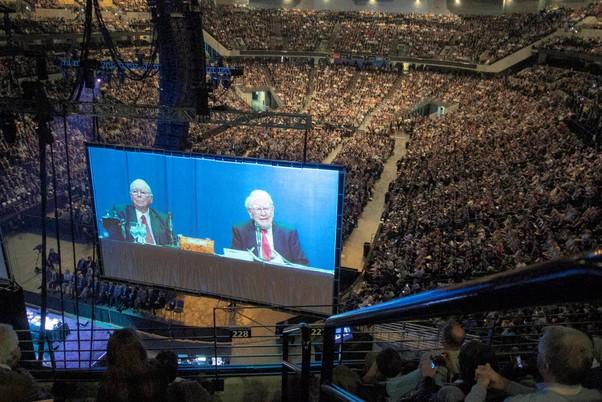
But the latest quarter changed the picture. Under CEO Greg Abel, Berkshire became a significant net buyer of equities in Q2 2026. The company bought approximately $23.5 billion of stocks and sold about $3.7 billion, while also spending $4.5 billion on share repurchases. Berkshire’s cash and Treasury-bill holdings fell to about $364.7 billion at the end of June.
Berkshire also made major investments, including a roughly $10 billion investment connected to Alphabet and a $6.8 billion acquisition of homebuilder Taylor Morrison. Recent reporting indicates that Buffett’s influence remains important even though Greg Abel is now Berkshire’s CEO.
That makes the Buffett story more interesting than a simple “Buffett is holding cash because a crash is coming” narrative. Berkshire is willing to invest when it finds opportunities. The lesson is not necessarily to copy Berkshire’s cash percentage. It is to understand the principle behind the decisions: price matters.
What This Means for You, Investor Takeaway and Future Outlook
What this means for you: Individual investors should not interpret Buffett’s casino warning as an instruction to abandon stocks. Instead, it is a reminder to distinguish investing from speculation. A company with strong cash flow, durable competitive advantages and sensible valuation is fundamentally different from buying a stock solely because it has recently gone up.
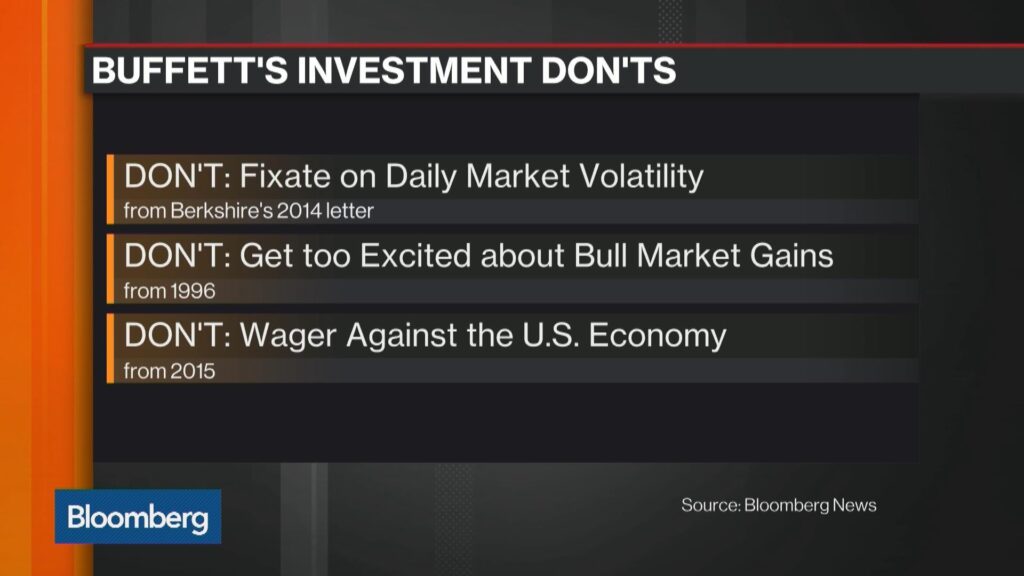
Investor takeaway: Consider asking seven questions before making a major investment. What is the business actually worth? How does it make money? Are earnings expectations realistic? What valuation am I paying? What happens if interest rates remain higher? Am I investing for years or gambling on the next price movement? And finally, would I still want to own the company if the stock market closed tomorrow?
Those questions are particularly important in a market where both bullish and bearish arguments have legitimate evidence. The bullish case is supported by strong corporate earnings, continued AI investment and expectations for further economic growth. UBS, for example, recently raised its year-end 2026 S&P 500 target to 8,100, citing earnings growth, economic resilience and AI adoption.
Future outlook: The most likely path may not be a simple crash-or-rally outcome. Markets can continue rising while valuations gradually become more reasonable if corporate earnings grow quickly enough. Recent data show that possibility is real. At the same time, elevated valuations, high expectations, interest-rate uncertainty, geopolitical risks and speculative trading mean that a sharp correction remains possible.
JPMorgan’s 2026 analysis illustrates this tension: historical valuation relationships suggest much lower long-term S&P 500 returns at elevated multiples, while equal-weighted stocks can offer a more favorable outlook.
For long-term investors, that means preparation may be more valuable than prediction. Keeping a diversified portfolio, maintaining an appropriate risk level, avoiding excessive leverage and buying businesses for fundamental reasons can help investors survive periods when market psychology changes.
The Bottom Line: Buffett’s Warning Is About Behavior, Not a Crash Prediction
Warren Buffett’s stock-market casino warning deserves attention because it arrives at a time when U.S. equities combine powerful fundamentals with unusually high expectations. Corporate profits are strong, AI investment is transforming major industries and the U.S. economy remains resilient. At the same time, valuations and speculative activity have created conditions where disappointment could produce larger-than-normal market reactions.
The biggest mistake would be turning Buffett’s comments into another short-term trading signal. Buffett himself has spent decades emphasizing patience. His recent comments are better understood as a warning against emotional decision-making, excessive speculation and paying any price for a popular asset.
Berkshire Hathaway’s own actions reinforce that interpretation. The company has held enormous liquidity, but it has also deployed tens of billions of dollars when attractive opportunities appeared. That is not the behavior of an investor who believes stocks should never be owned. It is the behavior of an investor who is unwilling to confuse excitement with value.
For investors watching the second half of 2026, the practical message is straightforward: don’t try to predict the exact day of the next correction. Instead, watch valuations, earnings, market concentration, options speculation, interest rates, investor sentiment and AI expectations. If prices continue climbing, strong fundamentals may keep the bull market alive. If expectations begin moving faster than profits, Buffett’s casino analogy could become increasingly relevant.
The market does not need to crash for Buffett’s warning to matter. Even without a dramatic selloff, investors who buy expensive assets without understanding their underlying value can experience disappointing long-term returns.
The smartest response to a casino-like market is not necessarily to leave the table. It is to stop behaving like a gambler.
Subscribe to trusted news sites like USnewsSphere.com for continuous updates.