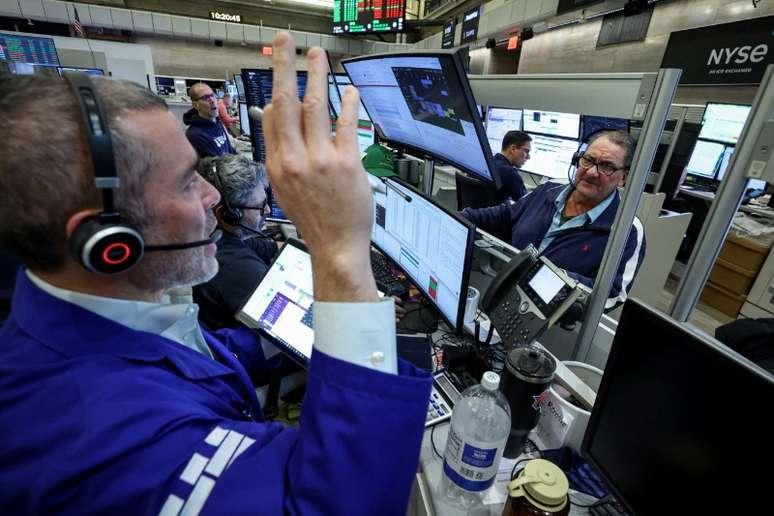
U.S. Stocks Enter a More Uncertain Phase After a Strong Rally
U.S. stocks are entering a more complicated phase after a powerful 2026 advance, with rising Treasury yields, higher oil prices, geopolitical uncertainty and questions about Federal Reserve policy forcing investors to reassess how much further the rally can run.
Wall Street finished Friday, August 21, with a rebound, but the gain did not erase the damage from a difficult week. The S&P 500 rose 0.4% to 7,674.37, the Dow Jones Industrial Average gained about 1% to 53,277.01, and the Nasdaq Composite advanced 0.4% to 26,180.45. The Russell 2000 gained 0.9% to 3,017.87. Yet all four major indexes finished the week lower.
The weekly decline was significant enough to interrupt a three-week winning streak for the S&P 500 and Nasdaq. The S&P 500 fell about 1.4% for the week, the Dow dropped 0.8%, the Nasdaq lost 2.1%, and the Russell 2000 declined 1.6%. Even after that pullback, the longer-term picture remained positive: the S&P 500 was still up 12.1% for the year, the Nasdaq 12.6%, the Dow 10.8%, and the Russell 2000 21.6% as of Friday’s close.
That combination—short-term weakness inside a much larger advance—is why the current market is better described as choppy rather than decisively bearish. Investors are not simply abandoning stocks. Instead, they are becoming more selective as the assumptions supporting the rally are tested by interest rates, inflation, energy prices and earnings.
Why the Stock Market Rally Is Becoming Choppy Again
One of the biggest pressure points is the U.S. Treasury market. Long-term yields have moved sharply higher, making stocks competing with bonds for investor capital. The 30-year Treasury yield recently reached its highest level since 2007, while the 10-year yield moved toward levels that have historically created additional valuation pressure for growth stocks.
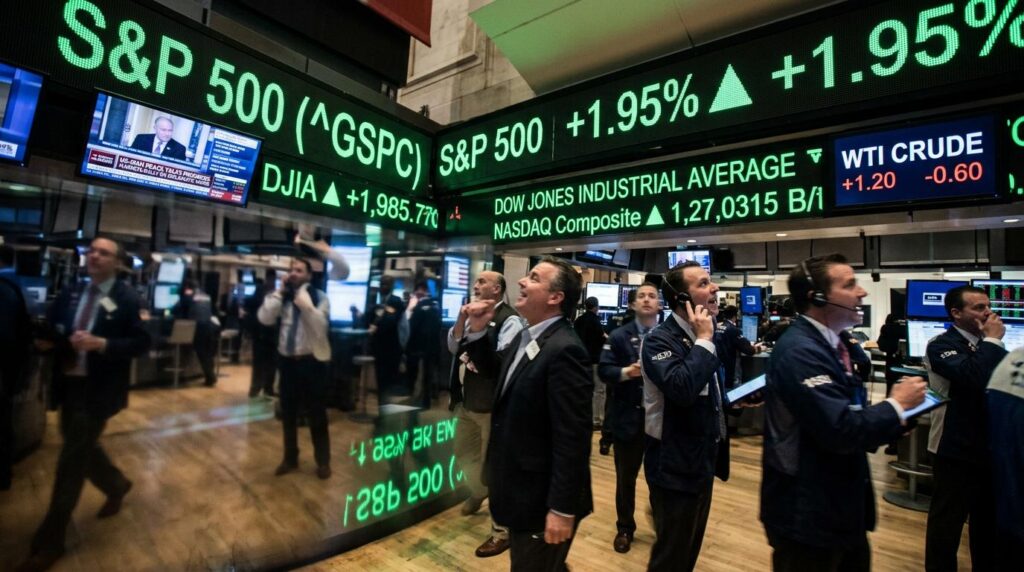
Higher yields matter because they affect the value investors assign to future corporate earnings. The impact can be especially strong on technology and AI companies whose valuations depend heavily on expectations for profits many years into the future. When bond yields rise, investors generally demand a higher return from equities, and expensive growth stocks can become more vulnerable to selling.
The pressure became visible during the week. On Thursday, August 20, the S&P 500 fell 0.9%, the Dow dropped 1.3% and the Nasdaq declined 1%. The Russell 2000 also lost 1.3%. The selloff came as oil prices climbed, inflation worries resurfaced and Treasury yields moved higher.
Oil is another important piece of the puzzle. Persistent geopolitical tensions involving Iran have kept investors focused on the possibility of supply disruptions and higher energy costs. Higher oil prices can feed into inflation, potentially making it harder for the Federal Reserve to ease monetary policy quickly.
That creates an uncomfortable combination for stocks: strong economic activity can keep inflation elevated, while weaker economic activity could eventually hurt corporate earnings. Investors therefore have to determine whether the economy can continue growing without forcing interest rates higher for longer.
The Rally Still Has Important Strength Under the Surface
Despite the recent volatility, the current market does not look like a simple collapse in investor confidence.
The S&P 500 remains substantially above its earlier 2026 levels, while smaller companies have performed even better. The Russell 2000’s roughly 21.6% year-to-date gain through August 21 is notable because small-cap stocks are often highly sensitive to domestic economic conditions and financing costs.
Corporate earnings are another source of support. Friday’s rebound was helped by stronger-than-expected results from Ross Stores and encouraging U.S. business-activity data. The combination suggests that investors still have reasons to believe corporate America can generate earnings growth even while financial conditions become less comfortable.
Money is also still flowing into U.S. equities. Reuters reported that U.S. investors were net buyers of equity funds for a second consecutive week through August 19, supported by earnings strength and continued demand for stocks.
This is an important distinction. A market can experience a correction or several difficult sessions without the underlying bull-market thesis disappearing. Investors should therefore watch breadth, earnings revisions, Treasury yields and economic data together, rather than treating one down week as proof that the entire rally is over.
At the same time, the recent weakness shows that investors are becoming less willing to pay any price for growth. That could lead to more sector rotation, with money moving between technology, financials, healthcare, energy, industrials and smaller companies as market participants search for better risk-adjusted returns.
Nvidia, AI Spending and Jackson Hole Could Decide the Next Move
The next major test arrives quickly.
Nvidia is scheduled to report its second-quarter results on August 26. Because Nvidia is one of the most important companies in the AI infrastructure boom, its results and forward guidance could influence not only its own shares but also semiconductor stocks and the broader technology sector.
Investors will be looking beyond the headline earnings number. The more important questions include whether data-center demand remains strong, how much customers are willing to spend on AI infrastructure, whether supply constraints are easing and whether the enormous capital spending associated with AI is generating enough economic value to justify current valuations.
The stakes are particularly high because bond yields are simultaneously increasing the cost of capital. Reuters reported that Nvidia has partnered with major financial institutions on an effort targeting more than $500 billion in AI infrastructure financing, highlighting the enormous scale of investment required to build the next generation of data centers and computing capacity.
There is another potential complication. Reuters reported on August 22 that Nvidia has notified major customers of expected price increases of more than 15% for certain AI server systems, primarily reflecting higher memory-chip costs. The reported increases are expected to affect systems shipped in early 2027, although Nvidia had not officially commented on the report at the time.
The Federal Reserve’s Jackson Hole symposium is equally important. The event is scheduled for August 27–29, and investors will be watching Fed Chair Kevin Warsh for clues about the central bank’s thinking on inflation, growth and interest rates.
Market participants have been particularly sensitive to rate expectations because long-term Treasury yields have risen sharply. Reuters reported that markets were assigning meaningful probabilities to a rate increase later in the year, making any new signal from the Federal Reserve potentially market-moving.
What This Means for You, Investor Takeaway and Future Outlook
What this means for you
For individual investors, the biggest message from the latest data is that a strong year-to-date market does not guarantee a smooth path higher.
The S&P 500’s 12.1% year-to-date gain and Nasdaq’s 12.6% gain through August 21 show that the broader rally remains substantial. But the latest weekly losses demonstrate how quickly sentiment can change when Treasury yields, oil prices and technology valuations move in the wrong direction.
Investors should therefore avoid making decisions solely because an index has recently reached a record or because one volatile week has produced a sharp decline. A more useful approach is to evaluate the underlying fundamentals: earnings growth, valuation, cash flow, debt levels, inflation, interest rates and the economic outlook.
The environment may also favor diversification. A portfolio concentrated entirely in high-valuation technology stocks can behave very differently from one that includes companies from healthcare, financials, industrials, consumer sectors and other areas of the market.
Investor takeaway
The latest market data points to a bull market under pressure, not necessarily a bull market that has ended.
The S&P 500 remains well above its earlier 2026 levels. Corporate earnings remain an important source of support. Investor flows into equity funds have continued, and small-cap stocks have posted particularly strong year-to-date gains.
But the risks are becoming harder to ignore.
The most important risk may be the bond market. If long-term yields continue climbing, valuations—especially among high-growth technology companies—could face additional pressure. A sustained rise in oil prices could reinforce inflation concerns, while geopolitical developments could create another source of uncertainty.
For investors, that means the market may reward selectivity more than aggressive chasing. Companies with strong balance sheets, durable cash flows and credible earnings growth could become increasingly attractive if volatility continues.
Future outlook
The next several trading sessions could be unusually important.
Nvidia’s earnings on August 26 could determine whether investors regain confidence in the AI trade or demand a larger valuation adjustment. The Federal Reserve’s Jackson Hole symposium from August 27–29 could reshape expectations for monetary policy. July PCE inflation data will also be closely watched because PCE is the Federal Reserve’s preferred inflation gauge.
Consumer confidence, economic growth figures and additional corporate earnings will provide further evidence about whether the U.S. economy can maintain its momentum while inflation remains above the Federal Reserve’s 2% objective. AP reported that investors were expecting the upcoming PCE report to show inflation still above 3%, illustrating why the inflation question remains central to the market outlook.
There are therefore several possible paths.
If Treasury yields stabilize, inflation shows signs of cooling and Nvidia delivers another strong outlook for AI demand, stocks could regain momentum and potentially retest recent highs.
If yields continue climbing, oil remains elevated and the Fed signals that monetary policy may need to stay restrictive, the market could remain volatile and expensive technology stocks could face additional pressure.
A third possibility is sector rotation rather than a broad market collapse. Investors could continue moving away from the most expensive growth names while favoring financials, healthcare, industrials, energy and selected smaller companies.
For now, the evidence favors caution rather than panic. The market has absorbed a meaningful weekly decline while retaining large year-to-date gains. The key question is no longer simply whether U.S. stocks can rise—it is whether earnings growth can remain strong enough to justify valuations while bond yields and inflation expectations are moving higher.
That is why the next few weeks could be more important than the headline movements of any single trading session. The rally still has powerful engines behind it, particularly corporate earnings and AI investment, but those engines are now being tested by the cost of capital and the broader macroeconomic environment.
Investors should watch the S&P 500, Nasdaq, Treasury yields, oil prices, Nvidia’s earnings, PCE inflation and Federal Reserve communication as a connected group of signals. Taken together, they should provide a clearer picture of whether the recent volatility is simply a pause inside a continuing bull market or the beginning of a more meaningful change in market leadership.
Additional market coverage: Search results did not surface a reliable August 2026 YouTube video directly matching this exact market week. Rather than attaching an unrelated older video, readers can use the latest market coverage from Reuters and other established financial outlets alongside the article. Reuters’ August 21 market outlook specifically covers Nvidia earnings, Jackson Hole and the pressures facing the rally. Reuters: Wall St Week Ahead — Nvidia earnings, Jackson Hole
Data reference: The Federal Reserve Bank of St. Louis’ FRED database records the S&P 500 at 7,674.37 on August 21, 2026, providing a useful primary-data reference for the index level. FRED S&P 500 data
This article is for news and informational purposes only and is not investment advice. Market conditions can change rapidly, and investors should consider their own financial circumstances and risk tolerance before making investment decisions.
Subscribe to trusted news sites like USnewsSphere.com for continuous updates.