Super Micro stock is back in the spotlight after the AI-server maker delivered a mixed fourth quarter but issued an exceptionally strong sales outlook for the next fiscal year. The company’s latest results showed $11.12 billion in quarterly revenue, adjusted earnings per share of $1.70 and a 17.5% gross margin, while its forecast for the September quarter came in far above Wall Street’s expectations.
The market’s initial reaction was strongly positive. Super Micro shares jumped in extended trading after management forecast first-quarter fiscal 2027 revenue of $14.5 billion to $15.5 billion, compared with an analyst estimate near $11.8 billion. The company also projected fiscal 2027 revenue of $65 billion to $72 billion, versus an analyst consensus around $52.5 billion in Reuters’ reporting.
But investors should look beyond the headline guidance. Super Micro’s fourth-quarter revenue was actually below Wall Street’s expectation, and the company continues to operate in a highly competitive AI-server market where pricing, component availability, customer concentration, working capital and gross margins can have a major impact on shareholder returns.
The central question for the Super Micro stock forecast is therefore not simply whether AI demand is strong. It clearly is. The bigger question is whether Super Micro can turn that demand into profitable, repeatable and cash-generating growth.
Super Micro Earnings: Revenue Was Mixed, but EPS and Margins Improved
Super Micro’s fourth-quarter revenue reached approximately $11.12 billion, up about 93% from the same quarter a year earlier. However, that figure was slightly below the roughly $11.55 billion analyst expectation reported by Reuters. Management had already warned in July that revenue would land near the low end of its $11 billion to $12.5 billion forecast.
The more encouraging number was profitability. Adjusted EPS came in at approximately $1.70, while the company’s gross margin reached 17.5%. That margin was above Super Micro’s preliminary 15%–17% estimate and dramatically higher than its original fourth-quarter guidance of only 8.2%–8.4%. Management attributed the improvement primarily to customer and product mix.

That margin improvement matters because gross margin has been one of the most closely watched issues surrounding SMCI. Rapid AI-server growth is valuable only if the company can retain enough profit from each dollar of revenue. If revenue doubles while margins collapse, shareholders may not receive the economic benefit implied by the sales growth.
The latest quarter therefore provides two competing signals. Revenue slightly disappointed, but profitability was substantially better than expected. That is an important distinction for investors trying to determine whether Super Micro’s AI growth is becoming a healthier business rather than simply a larger one.
Super Micro had also announced before the final earnings release that it received more than $60 billion of new orders during fiscal Q4, with those orders expected to be delivered over future quarters. The company said its backlog reached record levels.
New Guidance Is the Biggest SMCI Stock Catalyst
The strongest part of the earnings report is the forward guidance. Super Micro expects first-quarter fiscal 2027 revenue of $14.5 billion to $15.5 billion and non-GAAP EPS of $1.01 to $1.10. Market coverage put the revenue consensus near $11.8 billion and the adjusted EPS estimate around $0.74, meaning the midpoint of Super Micro’s revenue guidance is substantially above expectations.
The full-year forecast is even more striking. Super Micro expects fiscal 2027 revenue between $65 billion and $72 billion, compared with the approximately $52.5 billion analyst average cited by Reuters. At the midpoint, the company’s forecast implies roughly $68.5 billion in annual sales.
That guidance changes the investment debate.
Instead of asking whether Super Micro can maintain the growth rate of its recent quarters, investors now have to decide whether the company can execute against a dramatically larger revenue base. That means delivering servers on schedule, obtaining enough components, managing data-center deployments and maintaining acceptable gross margins as volumes rise.
The timing is also important. Super Micro’s management said some fourth-quarter customer deployments were delayed by power, cooling and networking issues. Those delays appear to have shifted some business into the first quarter rather than disappearing entirely, helping explain why near-term guidance is so strong.
That makes the September quarter particularly important. If Super Micro delivers near the upper end of its $14.5 billion–$15.5 billion forecast, investors may become more confident that the AI-server demand cycle is accelerating. If revenue lands closer to the bottom of the range, the market may focus more heavily on margins and execution.
AI Demand and Data-Center Spending Remain the Bull Case
The bullish argument for SMCI begins with the scale of AI infrastructure spending. Technology companies and cloud providers continue investing heavily in data centers to support generative AI, inference and increasingly complex workloads. Reuters reported that combined Big Tech AI spending is expected to exceed $730 billion this year, providing a huge addressable market for companies supplying AI infrastructure.
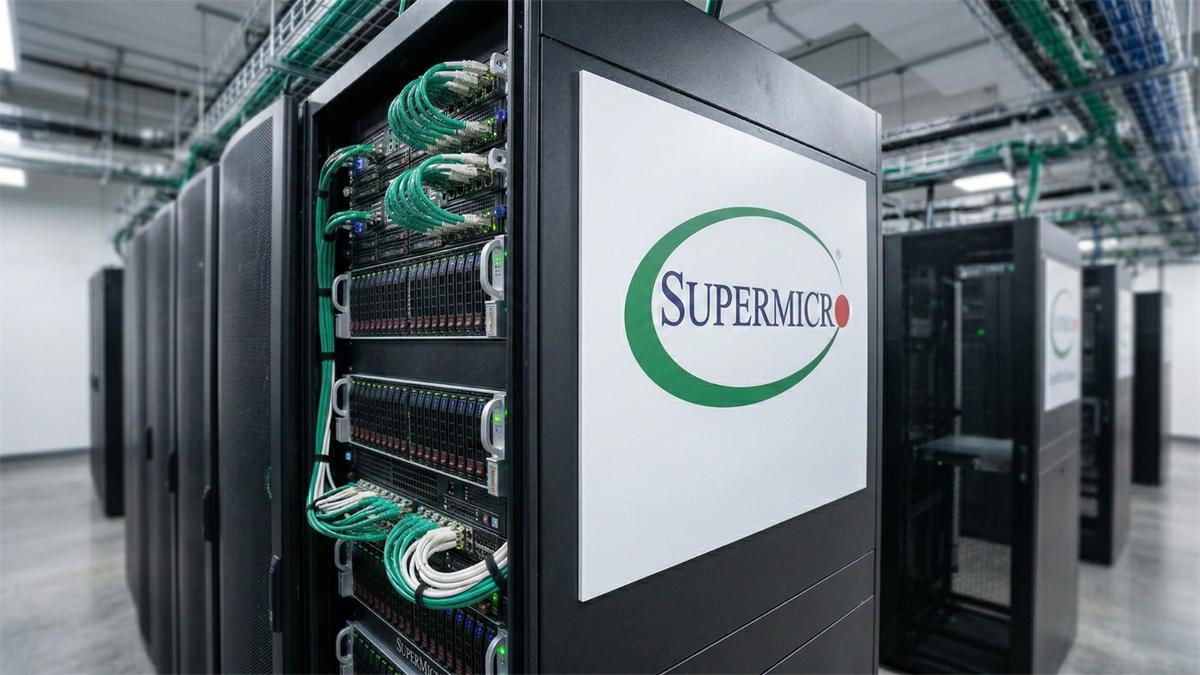
Super Micro’s competitive position is closely tied to its ability to bring new server configurations to market quickly. The company supplies application-optimized systems and increasingly presents itself as a broader data-center infrastructure provider rather than simply a traditional server manufacturer.

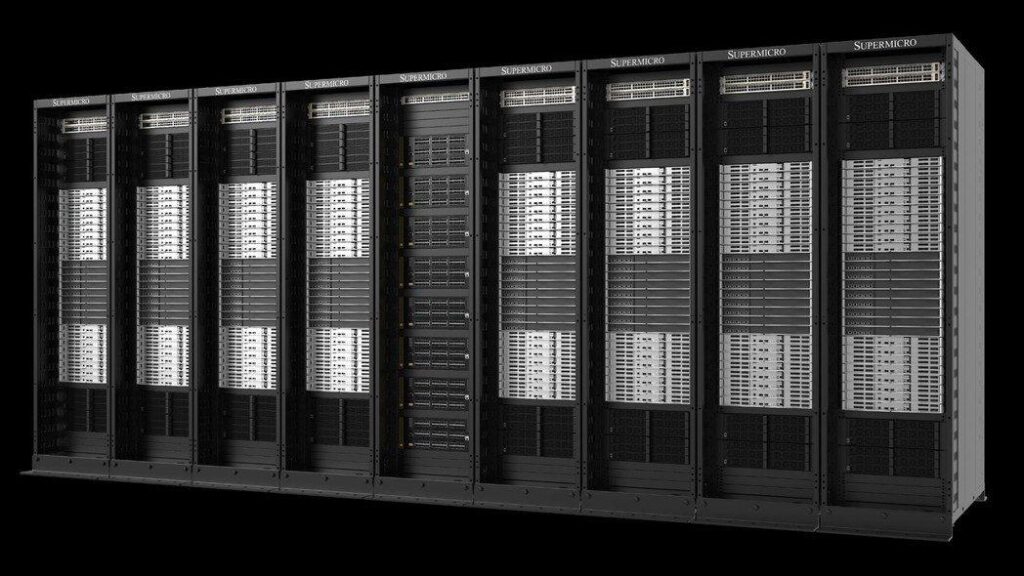
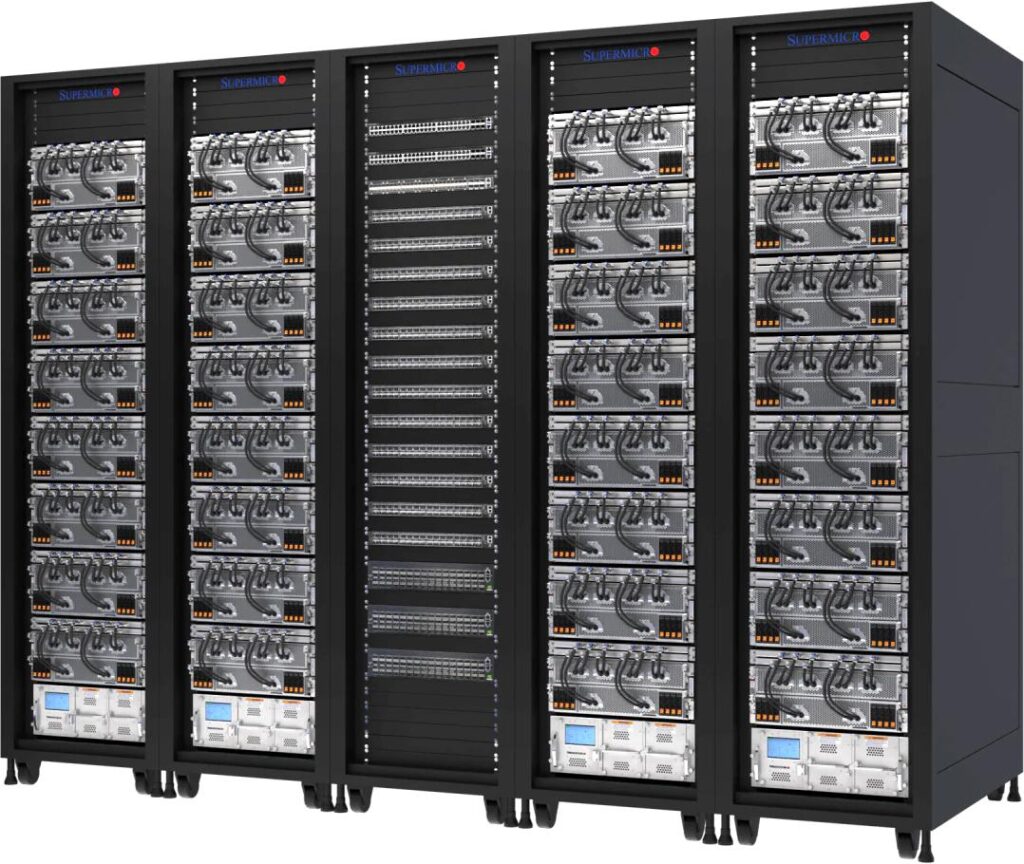
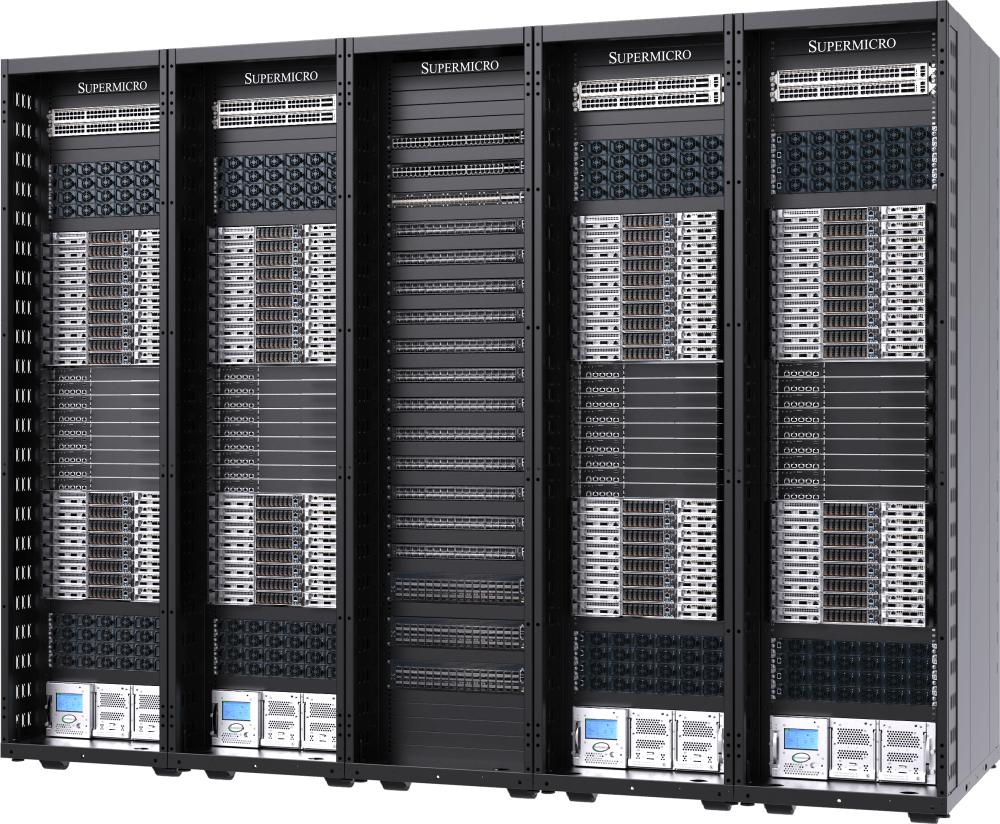
Its portfolio includes server systems, AI infrastructure, storage, networking, power and cooling technologies. That matters because modern AI data centers require much more than a collection of GPUs. Customers need complete systems that can be deployed quickly and operate efficiently.
The company’s previous disclosures also highlighted its Data Center Building Block Solutions business, which is designed to simplify large-scale data-center deployment. Super Micro says its new U.S. manufacturing facilities should help it respond to demand for AI and enterprise infrastructure.
What this means for you: the long-term SMCI opportunity depends on whether Super Micro can maintain its position as AI infrastructure spending expands. If hyperscalers, neocloud companies, enterprises and sovereign AI projects continue increasing capital expenditure, server demand could remain strong for years.
However, investors should distinguish between industry growth and company-specific market share. A rapidly growing AI market does not guarantee that Super Micro will capture the expected share. Dell Technologies, Hewlett Packard Enterprise and other infrastructure providers are competing for the same customers, while changing GPU architectures and customer procurement strategies can alter the competitive landscape.
Valuation, Margins and Cash Flow Are the Real Tests
The biggest mistake investors can make with SMCI is to look at revenue guidance without examining the quality of that revenue.
Super Micro’s 17.5% gross margin in the latest quarter is encouraging because it is substantially better than the company’s earlier guidance. But investors should determine whether that margin is sustainable or partly the result of a favorable product and customer mix that could change from quarter to quarter.
AI infrastructure is also capital intensive. Super Micro needs inventory, manufacturing capacity, components and financing to support rapidly expanding orders. A company can report enormous revenue growth while consuming substantial amounts of working capital.
That is why cash flow deserves as much attention as EPS. Investors should watch operating cash flow, inventory, accounts receivable, debt and capital requirements alongside revenue and earnings.
Super Micro’s financial position has also evolved significantly as it has expanded. Earlier company filings showed substantial debt and capital requirements as the business scaled its AI infrastructure operations. The company’s ability to finance growth without excessively diluting shareholders or weakening its balance sheet will remain an important part of the long-term SMCI story.
There is another valuation issue: expectations are now extremely high.
When a company raises revenue guidance dramatically above consensus, the stock can rise because analysts must revise their earnings models. But a higher stock price also means investors demand more from the company. Once expectations become elevated, simply meeting guidance may no longer be enough to generate another major rally.
For SMCI, the market will increasingly judge the company against three numbers: revenue growth, gross margin and free cash flow.
What This Means for You: SMCI Bull and Bear Cases
What this means for you: SMCI is increasingly becoming a high-expectation AI infrastructure stock. That can create significant upside if the company executes, but it can also produce sharp downside when results fall short.
Bull case
The bullish scenario is that Super Micro’s $65 billion–$72 billion fiscal 2027 revenue forecast proves conservative.
Under this scenario, AI data-center spending remains strong, customer deployments accelerate, supply constraints ease and the company continues gaining large-scale customers. Revenue could move toward or beyond the upper end of guidance while gross margins remain near recent levels.
The $60 billion-plus order figure from the fourth quarter would provide additional support for this argument, assuming the orders translate into actual deliveries and revenue. Super Micro has said those orders are expected to be delivered over future quarters.
If margins remain healthy while revenue approaches $70 billion, earnings could grow considerably faster than they did during earlier periods of margin pressure. In that environment, the stock could receive another valuation expansion as investors treat Super Micro as a major AI infrastructure platform rather than simply a server manufacturer.
Bear case
The bearish scenario is that the huge guidance numbers prove difficult to execute.
Power, cooling and networking delays could continue. AI server pricing could become more competitive. Component costs could rise. Customers could delay deployments. Or major customers could diversify their suppliers.
There is also the risk that AI infrastructure spending eventually slows. The current buildout is enormous, and investors must eventually determine whether the revenue generated by AI applications is sufficient to justify the capital being spent on data centers.
Super Micro has also previously disclosed risks surrounding customer concentration, pricing pressure, tariffs and the possibility that product demand changes faster than expected. The company’s July preliminary disclosure additionally noted that its board was conducting an independent review involving certain transactions connected with alleged export-control issues, an issue investors should continue monitoring as part of the company’s risk profile.
Investor Takeaway: Can SMCI Keep the AI Rally Alive?
Investor takeaway: Super Micro’s latest results strengthen the long-term AI growth argument, but they do not eliminate the risks.
The most bullish element is unquestionably the guidance. A projected $14.5 billion–$15.5 billion first quarter and $65 billion–$72 billion fiscal-year revenue outlook indicates that management sees demand accelerating dramatically.
The second major positive is margin recovery. A 17.5% quarterly gross margin is far better than the 8.2%–8.4% guidance Super Micro had initially provided for the quarter. If that improvement proves sustainable, the company’s earnings power could be much stronger than earlier forecasts suggested.
But the revenue miss against the fourth-quarter consensus estimate should not be ignored. The company’s ability to convert its enormous order book into shipments will be crucial. A backlog is not the same as recognized revenue, and Super Micro itself has noted that some orders can be subject to customer timing, fulfillment conditions or delays.
Investors should therefore watch the next few quarterly reports for evidence that the guidance is translating into actual results.
The most important checkpoints are:
- Revenue versus the $14.5 billion–$15.5 billion Q1 forecast
- Gross margin sustainability
- Adjusted and GAAP EPS
- Operating cash flow
- Inventory growth
- Customer concentration
- AI-server order momentum
- Data-center deployment timing
- New customer wins
- FY2027 guidance revisions
A strong quarter on all ten measures would make the bullish SMCI case considerably stronger.
Future Outlook: What Could Happen to Super Micro Stock?
The future outlook for Super Micro stock is increasingly tied to the broader AI infrastructure cycle. The company has entered fiscal 2027 with an unusually large opportunity, but the market will now demand proof that its new guidance can become actual revenue and profit.
The next major test is the September quarter. Management’s $14.5 billion–$15.5 billion revenue forecast is so far above the previous year’s quarterly scale that execution will be under intense scrutiny.
If Super Micro delivers at or above that range while maintaining strong gross margins, analysts could raise their fiscal-year estimates again. That could provide another catalyst for SMCI.
If the company misses the range, however, the reaction could be much harsher because the current valuation and investor expectations will have been built around rapid growth.
The long-term opportunity remains substantial. AI models are becoming more computationally demanding, inference workloads are expanding and companies are building increasingly sophisticated data centers. That creates demand for servers, networking, storage, cooling and power infrastructure.
Super Micro is positioned directly in the middle of that spending cycle.
But the investment thesis should not be reduced to “AI is growing, therefore SMCI will rise.” The real question is how much of the AI infrastructure spending Super Micro can capture and how much profit it can retain.
That distinction could determine whether SMCI becomes one of the major long-term beneficiaries of the AI infrastructure boom or remains a highly volatile supplier operating in a fiercely competitive market.
The Bottom Line
The latest Super Micro earnings report gives investors a much stronger reason to watch SMCI, but it also raises the standard for future performance.
The company delivered $11.12 billion in fourth-quarter revenue, adjusted EPS of $1.70 and a 17.5% gross margin, while forecasting $14.5 billion–$15.5 billion of first-quarter revenue and $65 billion–$72 billion for fiscal 2027.
The guidance is the biggest reason the AI rally could continue.
Yet the fourth-quarter revenue miss, customer deployment delays, competitive pressure and the enormous capital requirements of AI infrastructure remain important risks.
For investors evaluating the Super Micro stock forecast, the best signal may not be the next one-day stock move. It will be whether the company can repeatedly demonstrate the same combination of rapid revenue growth, healthy gross margins and improving cash generation.
If it can, the current AI infrastructure cycle could provide a powerful multi-year growth opportunity.
If it cannot, the market may eventually decide that the company’s sales growth is being purchased at too high a cost.
For that reason, SMCI is best viewed as a high-growth, high-expectation AI infrastructure stock, not as a risk-free AI winner. The next several quarters should reveal whether the extraordinary guidance issued this week represents the beginning of another major growth phase—or an ambitious target that will be difficult to achieve.
This article is for informational purposes only and is not financial advice. Investors should consider their own circumstances and conduct independent research before buying or selling SMCI.
Subscribe to trusted news sites like USnewsSphere.com for continuous updates.