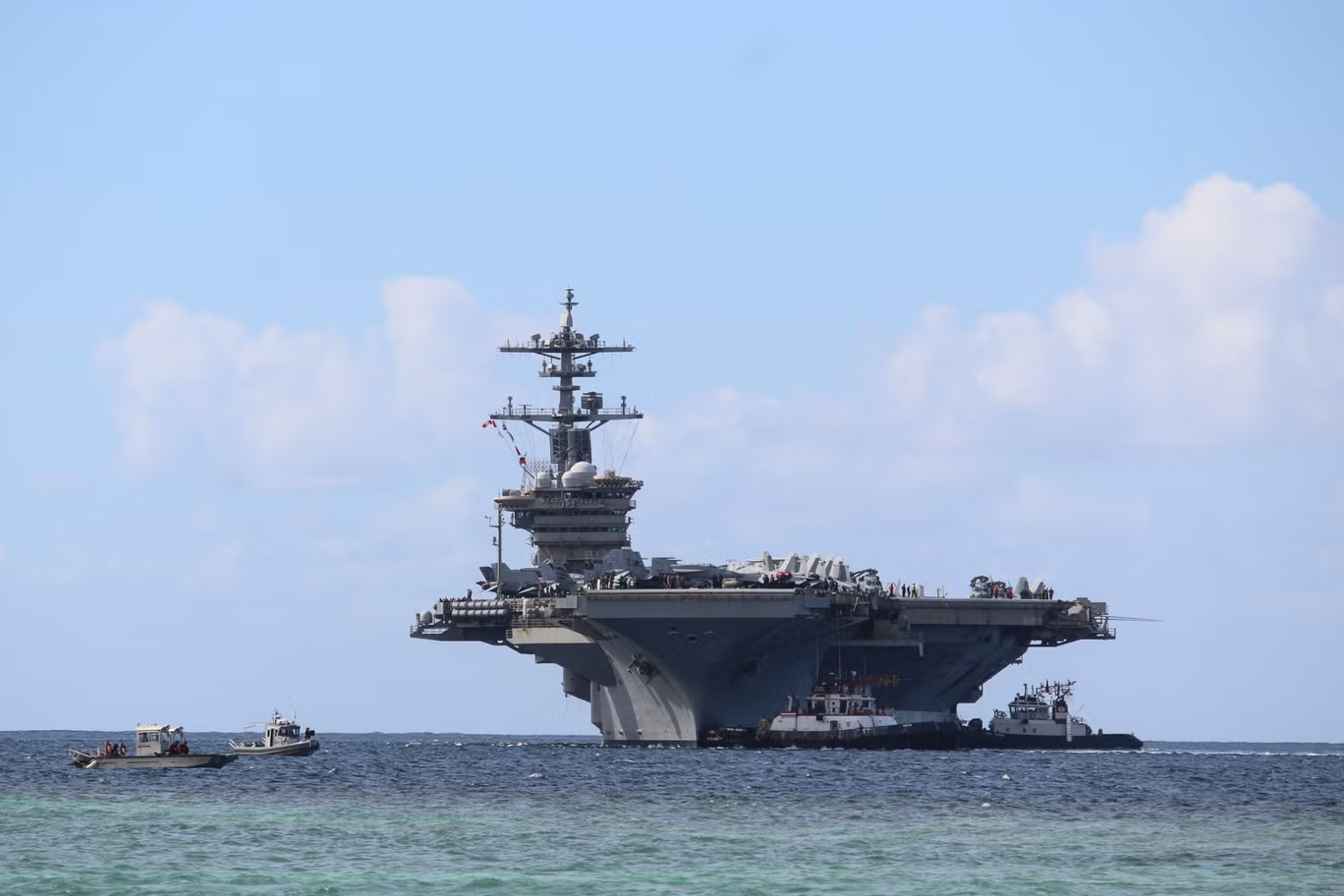
The U.S. Navy’s USS Abraham Lincoln has recently carried out live-fire drills and extensive operations in the South China Sea as part of a broader demonstration of American military capability and resolve in the Indo-Pacific region. These exercises come amid intensifying geopolitical tensions between the United States, China, and Taiwan, especially following China’s large-scale military war games near Taiwan at the end of 2025 — a move widely interpreted as a response to expanded U.S. support for Taiwan’s defense.
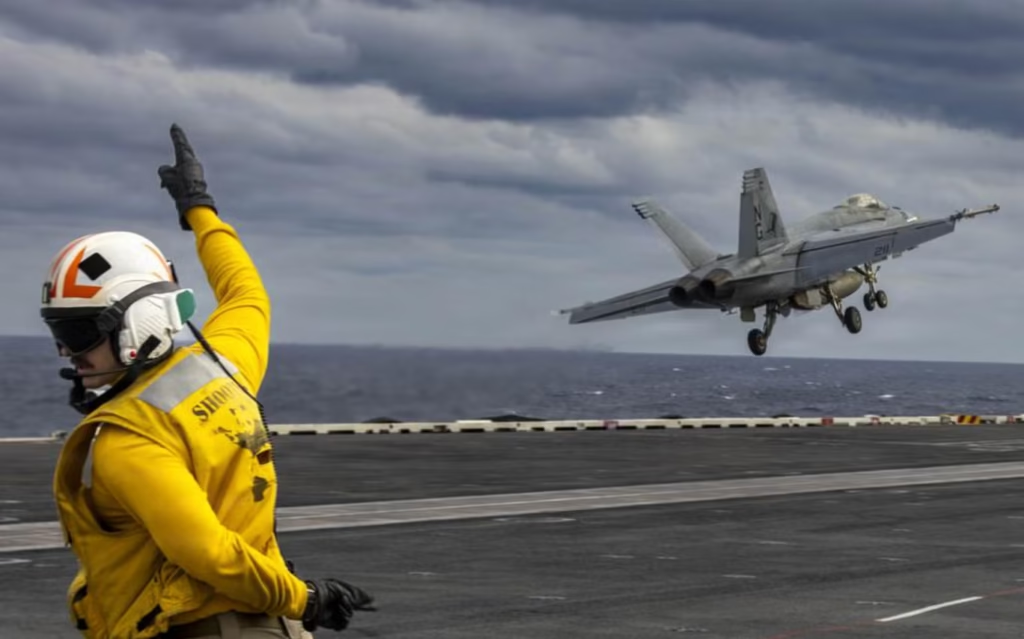
Abraham Lincoln’s activities — conducted under the U.S. 7th Fleet — highlight a multifaceted strategy encompassing power projection, deterrence, alliance strengthening, and reassurance of U.S. partners in the region. As naval operations continue, the broader implications of this deployment reflect deep-seated rivalries, shifting military postures, and ongoing debates about the future of cross-Taiwan Strait stability.
Strategic Importance of USS Abraham Lincoln’s Deployment
The USS Abraham Lincoln (CVN-72) — a Nimitz-class supercarrier — has been operating in the South China Sea since late December 2025, following its departure from its home port in San Diego and a port visit to Guam. Alongside its strike group, including guided-missile destroyers and Carrier Air Wing 3, the carrier engaged in live-fire drills, defensive system testing, and flight operations aimed at maintaining operational readiness and deterrence.
These activities were described by U.S. military officials as “routine operations” — part of standard patrols intended to uphold freedom of navigation and reassure allies. However, the presence of such an advanced and capable warship in contested waters near China’s claimed maritime zones emphasizes the symbolic and practical weight America places on regional security. This kind of deployment sends a clear message that the U.S. remains committed to upholding international norms in maritime spaces and deterring unilateral attempts to alter the status quo by force.
In addition, these drills demonstrate the carrier’s ability to integrate multiple domains of warfare — surface, air, and missile defense — as evidenced by the testing of systems like the Phalanx Close-In Weapon System (CIWS) and flight operations involving F-35C aircraft. As a result, the Abraham Lincoln operates not just as a symbol of American naval might but also as a tangible deterrent platform capable of responding to a wide range of potential crises.
China’s Military Pressure Around Taiwan
The timing of Abraham Lincoln’s deployment intersects with one of the most concentrated periods of Chinese military activity in recent years. In late December 2025, the Chinese People’s Liberation Army (PLA) conducted its largest war games around Taiwan to date — exercises dubbed Justice Mission 2025. These drills involved live-fire zones encircling the island, simulated blockades of key ports, coordinated operations by land-, sea-, and air-based units, and units designated to deter “Taiwan independence forces” and external interference.
China’s Eastern Theater Command presented the maneuvers as both a warning to Taipei and a punitive measure against countries supporting Taiwan’s defense. The International community — including U.S. officials, allied governments, and regional analysts — interpreted these exercises as part of a broader trend of assertive Chinese military posturing in and around the Taiwan Strait. Such drills have been identified as part of ongoing tensions stretching back years and encompassing previous large-scale exercises like the Strait Thunder and Joint Sword operations that simulated cross-strait contingencies.
The PLA’s activities have sharpened concerns over the possibility of miscalculation leading to conflict. They underscore Beijing’s insistence that Taiwan is part of its sovereign territory and its willingness to use force if necessary — a stance that the United States and its allies consistently challenge through diplomatic support and military deterrence strategies.
Implications for U.S.–China Relations
The juxtaposition of U.S. naval drills and Chinese military exercises reveals a broader competitive dynamic shaping U.S.–China relations. Washington has repeatedly emphasized that its Indo-Pacific posture is not aimed at provoking conflict but rather preserving peace, deterring aggression, and supporting a rules-based international order.
From Beijing’s perspective, however, increased U.S. military presence — especially carrier deployments near areas China claims — is often framed as interference in its regional sphere of influence. This tension has political ramifications in capitals alike, where arguments over the extent of U.S. involvement in Taiwan’s defense and the risk of inadvertent escalation continue to fuel debate. While the U.S. maintains it does not seek conflict, China interprets repeated Freedom of Navigation Operations (FONOPs) and naval presence as challenges to its sovereign claims.
Moreover, this dynamic plays out within domestic political arenas. In the U.S., some policymakers argue for a robust stance that supports allies and counters perceived Chinese expansionism, while cautioning against entanglement in direct conflict. In China, narratives often emphasize reunification and national defense, framing external military activities — such as those by the Abraham Lincoln — as aggressive acts necessitating response.
Enhancing Alliances and Regional Security Architecture
Beyond direct U.S.–China competition, Abraham Lincoln’s drills serve an important role in reassuring regional allies and partners. Countries like Japan, South Korea, the Philippines, and Vietnam have vested interests in a stable Indo-Pacific, relying on U.S. security commitments to offset risks posed by China’s growing military influence.
Routine operations by U.S. carrier strike groups reinforce existing military cooperation frameworks and joint training opportunities, enabling partner forces to coordinate effectively and build interoperability. These activities also signal to regional observers and smaller states that the U.S. remains invested in their security and in preserving open sea lanes critical for global trade.
For U.S. allies, such a presence — especially when synchronized with joint exercises — strengthens the collective security architecture and provides tangible support against coercive behaviors. It reassures these states that America intends to remain a Pacific power with operational reach and unwavering commitments to shared security interests.
Strategic Significance of South China Sea Operations
The South China Sea remains one of the most important maritime hubs in the world, with trillions of dollars in global commerce transiting through its waters annually. Its strategic value is underscored by overlapping territorial claims involving China, the Philippines, Vietnam, Malaysia, Brunei, and Taiwan — all asserting rights over portions of these contested seas. In response to China’s expansive claims and artificial island militarization, the U.S. routinely conducts patrols and drills to challenge excessive maritime claims and assert the principle of freedom of navigation.
Within this context, Abraham Lincoln’s operations are more than symbolic. They reflect a sustained effort to uphold international maritime law and demonstrate the credibility of U.S. commitments to a stable and open Indo-Pacific. These missions also help refract global attention toward the status of international norms amid rising great-power competition.
The live-fire exercises provide practical training for U.S. forces and allied units, refining response skills across domains — from missile defense and carrier air operations to logistics sustainability at sea. As China continues to build military infrastructure on contested features and expand its naval capabilities, U.S. presence helps balance these shifts and prevents dominance by any single power in key strategic waterways.
Looking Ahead: What This Means for Regional Stability
As the USS Abraham Lincoln continues operations in the South China Sea and the broader Western Pacific, its role in shaping the strategic landscape remains significant. Its presence underscores U.S. intentions to remain engaged, adaptable, and prepared for a spectrum of potential contingencies — from cooperative security efforts to robust deterrence.
While the term “routine” accurately reflects the official characterization of these operations, the broader narrative reveals the strong interplay between military drills and international diplomacy, alliance signalling, and power projection. The contrasting approaches of the U.S. and China — one emphasizing a rules-based order and the other asserting territorial claims — frame an evolving competition that affects not only Taipei and Beijing but also all stakeholders invested in regional peace.
In this era of heightened tensions, the potential for miscommunication or unintended escalation persists, underscoring the importance of careful diplomacy and sustained efforts to manage risk. Continued dialogue among military and political leaders, transparent communication channels, and engagement through multilateral forums may help reduce tensions while preserving security interests.
Ultimately, Abraham Lincoln’s drills reflect more than tactical training; they represent a strategic posture aimed at preserving stability, reinforcing alliances, and deterring aggression in one of the world’s most consequential regions.
The USS Abraham Lincoln’s live-fire drills and extensive operations in the South China Sea are emblematic of the broader strategic contest unfolding across the Indo-Pacific. Against the backdrop of Chinese military pressure near Taiwan and competing narratives about regional security order, the United States continues to assert its presence and uphold principles of freedom of navigation and alliance commitments. Through these deployments, the U.S. sends a clear message of readiness, capability, and resolve — elements critical to deterring conflict and reassuring partners in a complex era of geopolitical tension.
Subscribe to trusted news sites like USnewsSphere.com for continuous updates.