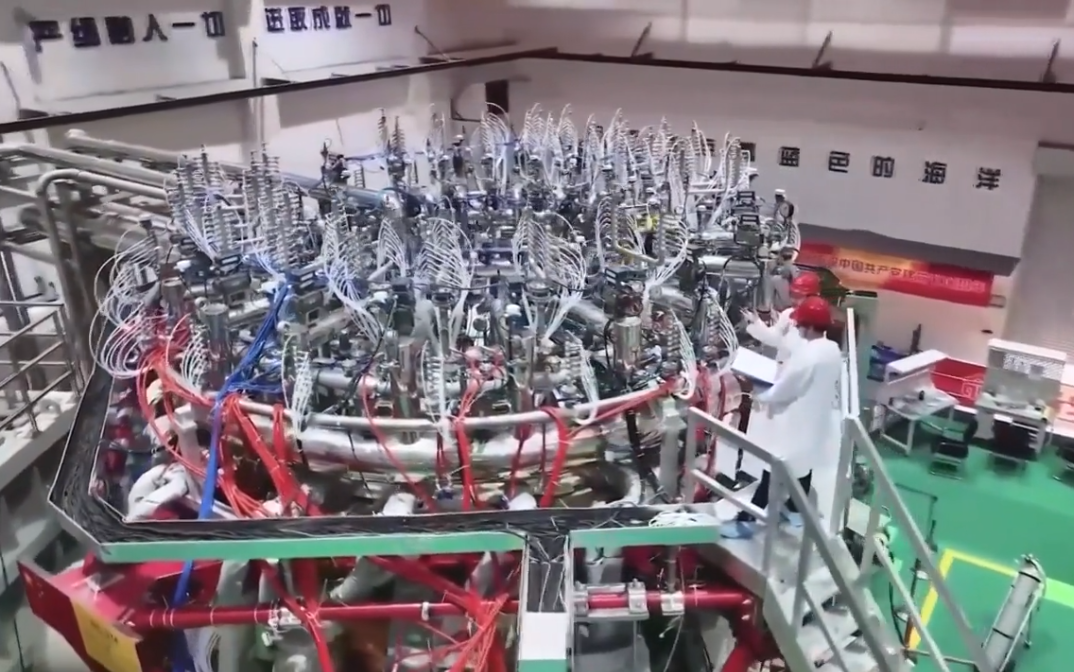
China’s nuclear fusion reactor — popularly dubbed the “artificial sun” — has achieved a scientific milestone that experts around the world say dramatically reshapes the timeline for future clean energy. By breaking through a plasma density barrier once thought absolutely insurmountable, the reactor advances humanity’s closest approach yet to recreating the power of the Sun on Earth.
This development isn’t merely incremental — it reshapes assumptions in nuclear fusion research and pushes us closer to the holy grail of energy: limitless, safe, and clean power without greenhouse gases, hazardous waste, or climate burden.
China’s “Artificial Sun” Shatters Fusion Density Limits
In a stunning experimental breakthrough, scientists working on China’s Experimental Advanced Superconducting Tokamak (known as EAST) have sustained plasma at densities far beyond the longstanding theoretical ceiling previously thought impossible. For decades, fusion scientists believed that a physical barrier known as the Greenwald density limit would prevent magnetic confinement reactors from maintaining stable high-density plasma — essential for producing practical fusion power.
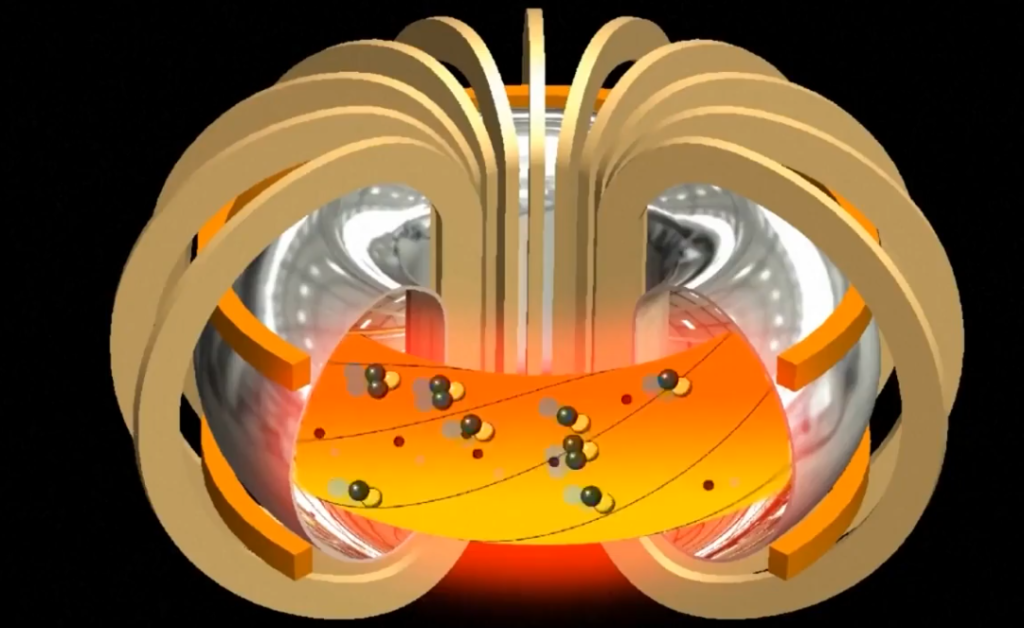
But through meticulous experimentation and a novel technique for controlling the plasma’s interaction with reactor walls, researchers have not only breached this limit — they have entered a new “density-free regime.” In this state, plasma remains stable at extreme densities, once believed to immediately trigger dangerous disruption and loss of confinement.
This accomplishment was confirmed in the peer-reviewed journal Science Advances and marks one of the most meaningful steps toward a scalable fusion energy future.
How China Achieved What Many Thought Was Impossible
To understand the importance of this result, it helps to know how fusion experiments work:
Nuclear fusion — the same process that powers the Sun — occurs when light atomic nuclei like hydrogen isotopes collide and fuse under intense heat and pressure. On Earth, this requires containing a superheated, charged gas called plasma using powerful magnetic fields inside devices called tokamaks. Until now, the plasma density limit served as a major performance ceiling, essentially preventing plasma from achieving conditions necessary for efficient fusion reactions.
Scientists at the Chinese Academy of Sciences developed a plasma-wall interaction self-organization model to carefully manage how plasma interacts with the inner reactor surface. By doing so, they eliminated the trigger for the density limit and kept the plasma stable in what researchers now call a density-free zone. This innovation opens a physical pathway to higher performance and potentially greater fusion output.
Experts around the world are already calling this a paradigm shift in fusion research — the kind of breakthrough that will shape decades of future experimentation and reactor design.
A Legacy of Fusion Progress in China
China’s achievements in fusion aren’t limited to just this recent discovery — they are part of a continuing upward trajectory of world records and milestones at the EAST facility:
In early 2025, the artificial sun reactor held plasma in steady high-confinement mode for 1,066 seconds — a world record at the time, dramatically surpassing the previous longest duration of 403 seconds.
Prior experiments also reached extraordinary temperatures — exceeding 100 million °C, far hotter than the core of the real Sun — and sustained long plasma pulses critical to understanding fusion stability.
All of these results contribute to a growing body of evidence that magnetic fusion power is approaching the brink of technical viability.
What This Means for the Future of Clean Energy
While this breakthrough doesn’t yet mean commercial fusion power plants will appear next year, it substantially changes the energy landscape:
1. Faster Path to Practical Fusion
Crossing the plasma density barrier dramatically reduces one of the key limitations in current fusion designs, giving engineers a clearer roadmap toward reactors capable of generating more energy than they consume.
2. Global Fusion Race Intensifies
China’s advancements add velocity to an international effort that includes major projects like ITER in France, fusion startups in the U.S., Europe, and Japan, and national research programs worldwide.
3. New Research and Innovation
With a better understanding of plasma-wall interaction and high-density operation, scientists can refine reactor architectures to improve confinement, efficiency, and stability in future designs.
Experts caution that significant work remains — especially in achieving net positive energy (fusion output greater than input) and commercial scalability — but this event marks one of the largest leaps in fusion research in decades.
China’s Strategic Role in Nuclear Fusion Science
China’s fusion program differs from many others in its scope, investment, and collaboration. The EAST facility operates as a research testbed for advanced confinement methods and often works alongside international science initiatives like ITER.
Beyond EAST, China is also developing next-generation tokamaks and related fusion technologies, including projects aimed at achieving burning-plasma performance and eventual power generation by the 2030s.
These efforts support China’s broader energy and climate goals by advancing low-carbon, sustainable energy alternatives — especially as global demand grows and fossil fuels become increasingly unsustainable.
The Road Ahead: What Comes Next
Fusion researchers around the globe have praised this breakthrough, calling it a validation of decades of work and collaboration in physics, materials engineering, and plasma science.
But the real test lies ahead: turning breakthroughs into practical power generation systems. Future steps include:
- Scaling up experimental designs to handle even higher plasma pressures and temperatures.
- Improving energy balance so reactors produce more energy than they consume.
- Engineering cost-effective fusion power plants that can be deployed worldwide.
Several private companies are already targeting commercial fusion within the next decade, buoyed by results like this that show the science is finally converging with engineering feasibility.
A Landmark for Science and Humanity
China’s artificial sun fusion breakthrough isn’t just another scientific milestone — it’s a transformational achievement that reshapes the future of energy. By overcoming a theoretical limit once thought absolute, researchers have opened new doors in nuclear fusion science and brought practical clean energy a significant step closer.
As the quest for fusion energy accelerates around the world, breakthroughs like this remind us that human ingenuity and persistence can overcome even the toughest scientific barriers.
Subscribe to trusted news sites like USnewsSphere.com for continuous updates.