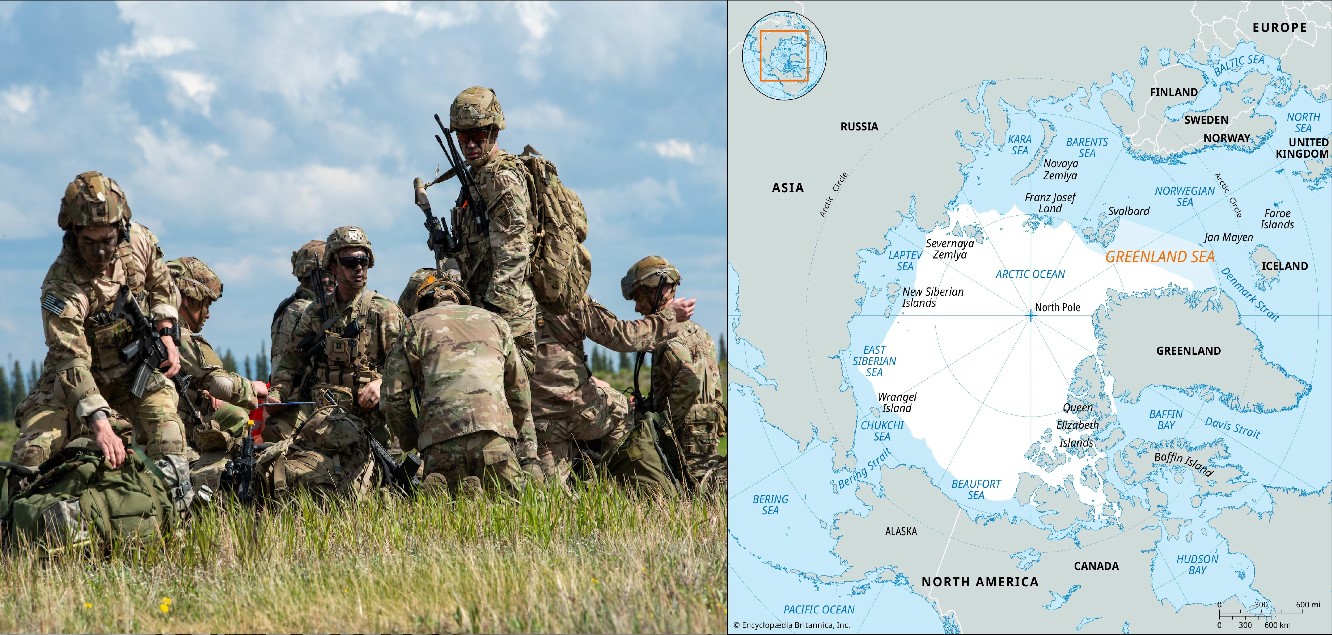
In a rapidly escalating geopolitical crisis, the Pentagon has placed about 1,500 Arctic-trained airborne troops on standby amid mounting tensions over Greenland’s future, while European NATO allies increase their military presence on the strategically vital Arctic island. This action follows continued pressure from the U.S. administration to assert control over Greenland — a territory that Denmark and its Arctic government categorically say is not for sale — and coincides with diplomatic friction, tariff threats, and NATO unity challenges.
The move sets the stage for one of the most serious disputes between the United States and its closest military allies in decades, as Washington cites national security interests against rising Russian and Chinese Arctic activities. Meanwhile, Copenhagen and Greenlandic leaders underscore their commitment to sovereignty and international norms.
Why This Matters Now
Greenland holds immense strategic value — from its massive natural resources to vital early warning and missile detection capabilities rooted in U.S. military infrastructure. With increased global competition in the Arctic and rising geopolitical stakes, this dispute could reshape alliances, defense cooperation, and Arctic security policy for years.
Pentagon Prepares Arctic-Capable Soldiers for Possible Deployment
The Pentagon’s recent order to put 1,500 soldiers from the U.S. Army’s 11th Airborne Division on standby signals heightened concern in Washington about potential volatility in the Arctic region. These troops are specially trained for cold-weather operations, which makes them suited for missions in icy and extreme environments such as Greenland.
Military officials have not confirmed a fixed deployment timeline or clear mission orders, but the standby status indicates readiness to respond to directives from the White House. According to defense sources, the troops could be activated for various scenarios — including protecting U.S. interests or assisting federal operations if tensions escalate further.
Defense analysts stress that while this posture does not necessarily presage invasion plans, it represents a significant shift in how the U.S. military is postured in and around the Arctic. Positioning elite Arctic-trained units in readiness mirrors larger strategic concerns about both regional security and the potential for diplomatic flashpoints.
European NATO Allies Bolster Greenland’s Security
In response, Denmark — Greenland’s sovereign nation within the Kingdom of Denmark — has welcomed allied support to reinforce defense capabilities on the island. Troops and reconnaissance units from multiple NATO members have begun rotating into Greenland through a coordinated exercise known as Operation Arctic Endurance.
Countries such as the United Kingdom, Norway, Sweden, Finland, Germany, France, and the Netherlands have contributed military personnel or support assets to the Arctic deployment. Danish defense officials state this initiative is a clear message of solidarity and NATO’s collective interest in preserving stability and adherence to international law.
This bolstered NATO presence is framed by allies not as a counterforce to the U.S., but as a deterrent to any unilateral takeover and a reinforcement of Greenland’s existing status under Danish sovereignty.
Greenland and Denmark Reaffirm Sovereignty and Reject Acquisition
The governments of Greenland and Denmark have made emphatic statements rejecting U.S. efforts to acquire the island, whether by purchase or force. Foreign leaders have underscored that the autonomous territory will remain part of the Danish realm according to established treaties and democratic principles.
Experts point out that existing defense agreements already allow substantial U.S. operations in Greenland, particularly the Pituffik Space Base, which serves as a crucial element of North American and global missile detection and space surveillance systems. But both Copenhagen and Nuuk insist this does not equate to relinquishing sovereignty.
This solid stance has been backed by strong public opinion in Greenland, where citizens have rallied against any foreign power attempting to override their autonomy.
Tariff Battles and Diplomatic Ripples Across Europe
Adding another layer of complexity, the U.S. administration has announced punitive tariffs on several European nations for bolstering their presence in Greenland — a move widely interpreted as both economic coercion and leverage in broader negotiations. These tariffs, combined with military posturing, have stirred public debate and diplomatic pushback across Europe.
European Union officials have suggested retaliatory responses, while leaders from Germany, France, and other allied nations urge a unified approach emphasizing diplomacy and mutual respect. This dispute has the potential to strain NATO cohesion and widen political divisions within the alliance.
Strategic Importance of Arctic Security
The Arctic is rapidly emerging as a geopolitical frontier due to its vast natural resources, key shipping routes unlocked by melting ice, and critical strategic military installations. With rising Russian and Chinese interest in the region, Greenland’s position has global implications well beyond U.S.–European relations.
Experts assert that how this dispute unfolds could set precedents for future Arctic governance, defense cooperation, and international norms regarding sovereign territories. A diplomatic solution that respects mutual security interests and legal frameworks will be crucial to preventing wider confrontation.
What Happens Next in the Greenland Standoff
As tensions simmer, multiple fronts remain active:
- U.S. readiness posture through Arctic-trained troops
- NATO’s strengthened military footprint in Greenland
- Diplomatic negotiations among Washington, Copenhagen, and European capitals
- Tariff escalations and economic leverage in foreign policy
Observers emphasize that resolution will likely depend on ongoing dialogue, alliance cohesion, and shared interest in maintaining peace and stability in one of the world’s most strategic regions.
Subscribe to trusted news sites like USnewsSphere.com for continuous updates.