Late Monday night, gunfire and aerial activity were reported near Venezuela’s presidential palace in Caracas, sparking alarm across the capital and drawing international attention to the country’s deepening political crisis. Witnesses described a sudden outbreak of shots near the iconic Miraflores Palace, which serves as the seat of the Venezuelan government, in an incident that unfolded just hours after Vice President Delcy Rodríguez was sworn in as interim president.
The reports have triggered concern both domestically and abroad, with social media footage showing flashes in the night sky and civilians expressing fear about what this could mean for Venezuela’s future. Government officials in Caracas have stated the situation is under control, and international actors, including the United States, have denied direct involvement in the events.
Shots Fired in Central Caracas Near Miraflores Palace
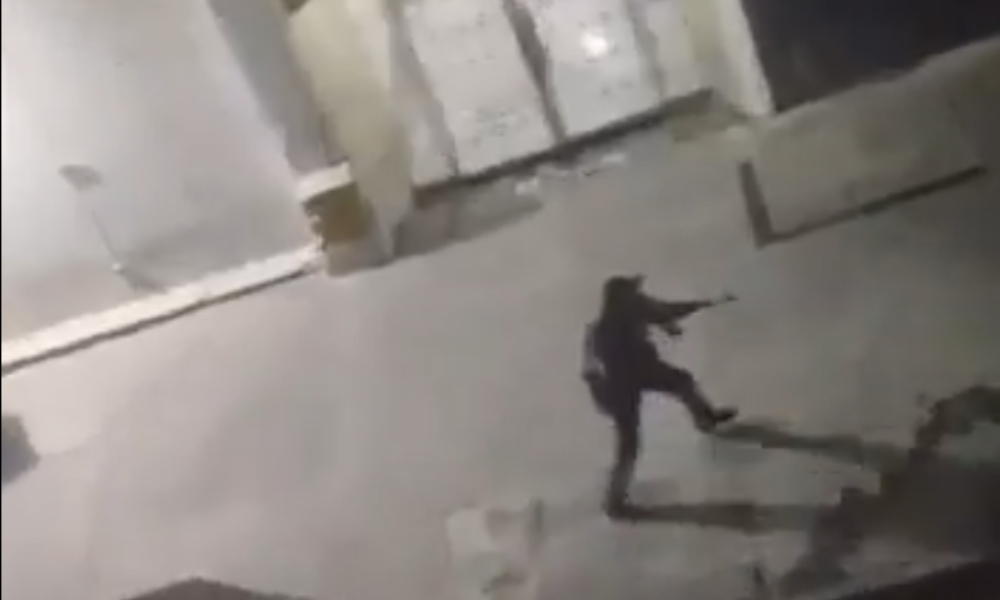
Eyewitnesses told local news outlets that shortly after nightfall, bursts of gunfire echoed through the streets just outside Miraflores Palace, a fortified area typically ringed by heavy security. These reports came amid heightened political tension after a dramatic weekend that saw the removal and capture of former President Nicolás Maduro by U.S. forces.
Social media posts and eyewitness videos show tracer-like flashes streaking across the sky, suggesting that government security units were responding to unidentified aerial objects — widely believed to be drones. Venezuelan forces reportedly discharged rounds into the air as a defensive measure.
Although the precise catalyst for the gunfire remains unclear, authorities maintain that the situation did not escalate into full combat. A source close to the Venezuelan government assured that “the city has not spiraled into open battle,” though residents said the night was marked by fear and uncertainty.
Drones and Tension: What Triggered the Security Response?
Multiple independent outlets report that the Venezuelan security apparatus reacted to unidentified drones spotted over the Miraflores area just minutes before shots were fired. According to NDTV and India Today, these objects were perceived as potential threats, prompting a heightened defensive posture by palace guards and security forces.
Unidentified drones in volatile political environments are not uncommon, but their appearance against the backdrop of Venezuela’s current crisis has raised eyebrows. Local residents said they observed red lights and fast-moving objects overhead, though it remains unclear whether the drones were armed or merely reconnaissance devices.
Officials in Caracas insisted the presence of aerial objects alone does not equate to an attack. Still, the combination of gunfire and drones has intensified fear within communities already on edge after political upheaval and uncertainty in leadership.
Political Turmoil: Maduro’s Capture and Rodriguez’s Swearing-In
The gunfire incident unfolded only hours after Delcy Rodríguez was sworn in as Venezuela’s interim president, following the capture of Nicolás Maduro. Maduro and his wife, Cilia Flores, were taken into U.S. custody and transferred to New York to face federal drug trafficking charges.
This extraordinary political development — involving foreign military intervention and the seizure of a sitting president — has polarized global reaction. Supporters of Maduro have denounced his ousting, while critics view the change in power as an opportunity for reform in a country beset by economic struggle and widespread social unrest.
Rodríguez’s assumption of power was intended to stabilize the government. However, the gunfire incident suggests that a peaceful transition is still far from certain, as factions loyal to the former president and security officials grapple with evolving dynamics.
U.S. Response and Denials of Involvement
As international media amplified reporting on the gunfire near Miraflores Palace, White House officials were quick to issue a statement denying any U.S. involvement in the incident. According to India Today, a spokesperson emphasized that the United States was closely monitoring developments but had no operational role in the clash.
This distancing comes amid a widening diplomatic controversy. U.S. authorities have repeatedly stated their actions in Venezuela were aimed at enforcing justice against criminal activity, and that they seek stability rather than escalation.
Meanwhile, world leaders have voiced a spectrum of responses — some expressing concern over sovereignty and potential escalation, others urging a peaceful path forward amid ongoing political transformation.
Civilian Reaction in Caracas: Fear, Uncertainty, and Resilience
In neighborhoods near central Caracas, residents described scenes of tension as shots pierced the night sky, and local news videos circulated of people peering anxiously from windows or sheltering indoors. Many voiced frustration and fear about what this latest episode means for day-to-day life in the capital.
Long-time Caracas resident Laura Salazar told reporters: “We have been through so much, but this… this feels like the country might crack further apart.” Others mentioned the eerie atmosphere of the city, shifting between heightened security and everyday life that continues despite uncertainty.
While no mass casualties were immediately reported, the psychological impact of the night’s events has raised questions about how stable Venezuela truly is and whether further unrest could follow in the coming days.
Expert Insight: What This Means for Venezuela’s Future
Political analysts say that incidents like gunfire near a presidential palace — especially in a capital city — are rarely random. Instead, such moments often reflect deep structural fissures within a nation’s governing apparatus and security establishment. International relations expert Dr. Helena Ortiz observed that when leadership transitions are perceived as illegitimate by certain factions, the risk of sporadic violence increases.
Analysts also warn that if Venezuela’s key institutions — military, judiciary, and public safety forces — remain divided in their loyalties, the possibility of further confrontation cannot be ruled out. These structural challenges may manifest not only as isolated gunfire incidents but also as broader security breakdowns or political flashpoints if left unresolved.
Economic implications are significant as well. With Venezuela holding some of the world’s largest oil reserves, instability in Caracas directly impacts global energy markets and foreign investment decisions. Investors and analysts are monitoring developments closely, aware that internal mistrust combined with external geopolitical pressures could shape the country’s trajectory for years to come. The Guardian
Conclusion: A Nation at a Crossroads
The reports of gunfire near Venezuela’s presidential palace in Caracas represent more than just a momentary flare-up; they highlight a nation grappling with profound political change and an uncertain future. As authorities insist the situation is under control, and as the international community watches closely, Venezuelans and global observers alike are left asking what comes next. The mix of internal political struggle, external diplomatic pressure, and public apprehension suggests Venezuela remains at a tense crossroads.
Subscribe to trusted news sites like USnewsSphere.com for continuous updates.