The United Kingdom and major European partners are engaged in intensive discussions about deploying troops and bolstering NATO’s presence in Greenland amid renewed threats from U.S. President Donald Trump to acquire the strategically vital Arctic island — a move that has rocked international diplomacy and sent shockwaves through alliances once considered unshakeable.
The situation in the Arctic, centered on Greenland’s sovereignty, has rapidly transformed from a fringe geopolitical concern into one of the most urgent defence and diplomatic crises of early 2026.
A Renewed Geopolitical Flashpoint: Why Greenland Matters
Greenland, the world’s largest island and a semi-autonomous territory of the Kingdom of Denmark, occupies a uniquely strategic position in the Arctic — both geographically and geopolitically. Its location overlooks critical Arctic passages and serves as a gateway between North America and Europe. In the modern era, the island’s importance has risen even further due to climate change opening northern shipping routes and its abundant natural resources, including rare earth minerals essential for advanced technologies.
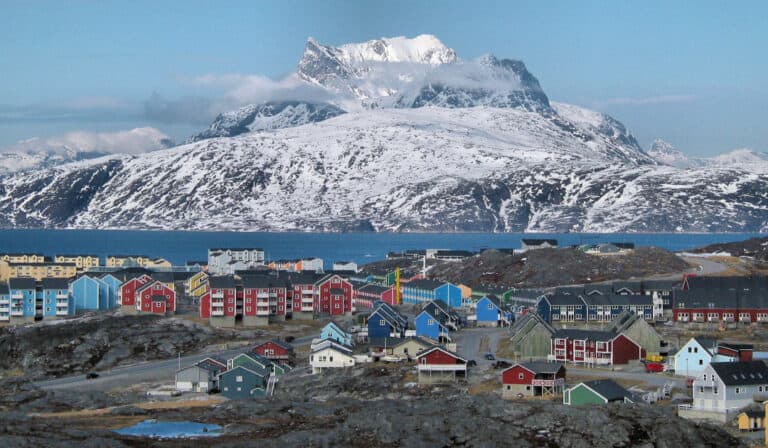
In recent days, President Trump’s outspoken interest in “having” Greenland has reignited tension between the United States, its European allies, and the Danish government. Trump has publicly suggested that the U.S. might pursue acquisition of the island by offering payments to residents, attempting to “buy” it, or, in the most controversial rhetoric, through force if necessary.
These comments have triggered alarm across Europe, with world leaders emphasizing that Greenland’s destiny belongs to its inhabitants and the Danish realm, and cannot be unilaterally dictated by another state.
Britain and European Allies Weigh Military Options
In response to the growing crisis, British officials are in active talks with NATO partners — especially France and Germany — about the possible deployment of troops, warships, and aircraft to Greenland. The proposed mission would not only serve as a deterrent against unilateral U.S. action but also reinforce NATO’s collective commitment to Arctic security.
Sources within the UK government indicate that these talks are at an early stage but are being pursued with urgency. Defence planners are drawing up contingency plans for a NATO-led force, and discussions include full military deployments as well as intelligence sharing and joint exercises.
Prime Minister Keir Starmer has characterized the security situation in the High North as “extremely serious” and underscored the importance of deterring aggression not only from Russia and China but also ensuring that NATO remains united in the face of any perceived threats.
Trump’s Greenland Push: Rhetoric, Strategy, and Controversy
President Trump’s interest in Greenland is rooted in a mix of strategic calculations and nationalist rhetoric. Citing concerns over Russian and Chinese influence in the Arctic, Trump has argued that the United States must secure Greenland for national security purposes. He has also suggested that if the territory isn’t acquired “the easy way,” the U.S. might pursue other options.
While Trump’s team has mentioned options like payments to Greenland’s population to encourage secession from Denmark, international law experts and foreign leaders have widely rejected any strategy that undermines the island’s autonomy and sovereignty.
Some American lawmakers have even expressed concern about the implications of such threats. Within the U.S., prominent Republican senators publicly criticized the idea of military force being used against a NATO member, highlighting that the consequences could damage America’s standing and relationships with long-standing allies.
Greenland’s Response: Unity in Sovereignty
Across Greenland’s political landscape, the reaction to Trump’s statements has been overwhelmingly unified: Greenlanders do not want to become Americans. In a rare joint declaration, the island’s five major political parties emphatically rejected any notion of U.S. annexation or statehood, reaffirming their commitment to autonomy and self-determination.
Greenland’s leadership has also warned that forced acquisition or undermining of sovereignty could fracture NATO and destabilize the international order. Danish Prime Minister Mette Frederiksen echoed this sentiment, declaring that an attempt to seize Greenland by force would mark the end of NATO.
This level of cohesion in Greenland’s response underscores broader European solidarity. France, Germany, Italy, Spain, Poland, and others have publicly affirmed that Greenland’s future must be decided by Greenland and Denmark alone — rejecting external pressure or interference.
NATO’s Strategic Dilemma: Defence or Disagreement?
NATO finds itself in an unprecedented position. On one hand, the alliance’s collective defense obligations mean that any attack on Danish territory — including Greenland — would theoretically trigger mutual defense commitments. On the other hand, the notion of one NATO member (the United States) pressing for control over another’s territory raises profound legal and operational questions.
German officials have asserted that NATO would work together to protect Greenland if Trump’s rhetoric escalated into action. Meanwhile, Nordic countries have publicly refuted the justification Trump offered about Russian and Chinese naval activity around Greenland, stating there’s no credible evidence of such threats in the vicinity.
The strategic calculus is complicated by a longstanding U.S. defense presence in Greenland. The Pituffik Space Base, operated by the U.S. Space Force, plays a vital role in missile surveillance and Arctic monitoring. This presence adds another layer of complexity when assessing potential military options.
Broader Global Implications
This Arctic crisis is not just a NATO issue — it reverberates throughout global diplomacy. Smaller nations and international institutions are watching closely, concerned that the norms of sovereignty and peaceful cooperation are being tested. Analysts warn that a forced transfer of territory among allies would set a dangerous precedent and erode trust across global security frameworks.
European Union leaders have signalled full support for Denmark and Greenland, emphasizing territorial integrity and international law. Even countries outside Europe, like Canada, have taken steps to reinforce diplomatic support for Denmark, upholding Greenland’s right to choose its own path.
Additionally, military and geopolitical scholars point out that Greenland’s mineral wealth — particularly rare earth elements — adds economic dimensions to the dispute, contributing to its allure for global powers.
What Happens Next: A Precarious Path Forward
As the crisis evolves, several outcomes remain possible:
- Diplomatic resolution: Continued high-level talks between NATO allies and the U.S., aiming to defuse tensions.
- Arctic defense reinforcement: Increased NATO troop deployments or joint Arctic defense initiatives to reassure all parties.
- Legal and institutional challenge: International legal bodies may be invoked if sovereignty disputes escalate.
- Strategic cooperation over conflict: Allies may shift focus toward shared Arctic security threats that unite rather than divide. TIME
The coming weeks will be critical in shaping both Arctic geopolitics and broader transatlantic relations.
The Arctic, long seen as a remote and frozen frontier, has suddenly become the hotspot of global diplomacy. Greenland’s unique status at the intersection of sovereignty, defense, and resource competition is challenging assumptions about alliances, sovereignty, and international law. With the UK and European allies intensifying discussions around troop deployments and collaborative defense measures, the response to President Trump’s threats signals a renewed commitment to collective security and respect for national autonomy.
World leaders, analysts, and global citizens alike should watch closely as this defining geopolitical episode continues.
Subscribe to trusted news sites like USnewsSphere.com for continuous updates.