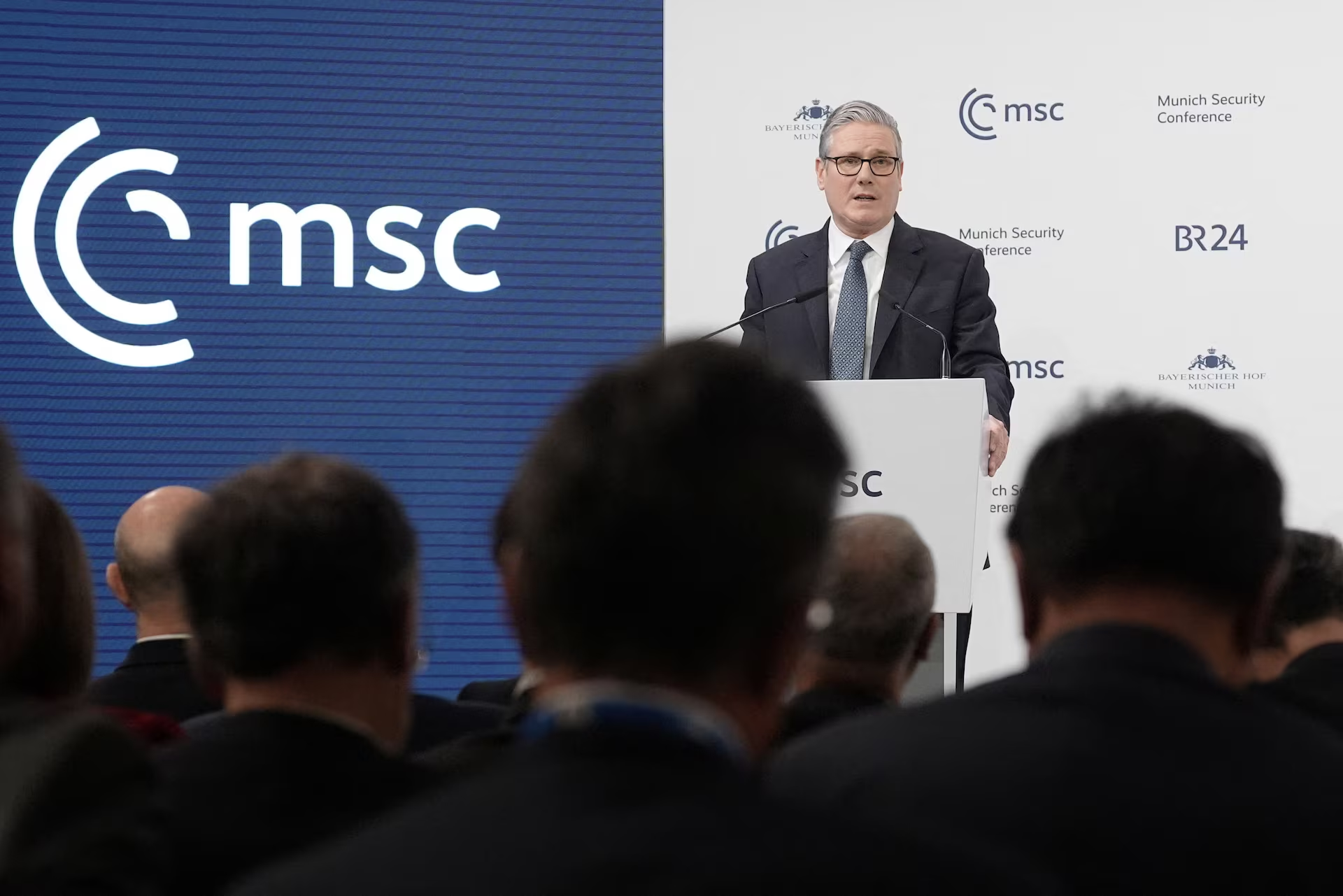
UK Prime Minister Keir Starmer delivered a defining speech at the 2026 Munich Security Conference, declaring that “we are not the Britain of the Brexit years anymore” and urging European partners to reduce reliance on the U.S. for defence as global threats evolve. In a world reshaped by rising geopolitical tensions, particularly concerning Russia and changing American foreign policy under President Donald Trump, Starmer’s address marked a strategic pivot in London’s foreign policy that could reshape UK-Europe relations.
Starmer argued that the UK’s security and economic prosperity are inseparable from that of Europe, offering a clear response to years of Brexit-driven isolationism. With Trump’s increasingly unpredictable approach to NATO and diplomacy, his call for Europe to take greater responsibility carries deep implications for transatlantic alliances. This matters now because Europe faces an increasingly assertive Russia and shifting U.S. priorities — demanding new leadership and unity on defence and strategy.
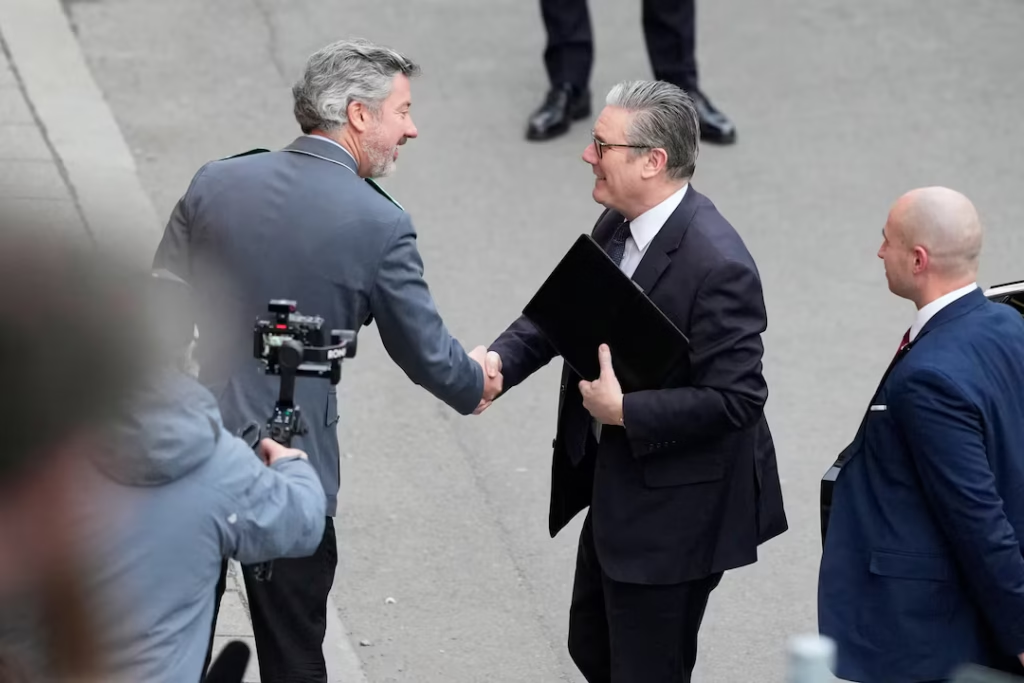
Why UK Security Now Hinges on European Ties
Starmer told world leaders in Munich that the security landscape is undergoing dramatic change, warning that Russia’s ongoing aggression and global instability require Europe and the UK to work more closely on defence and strategy. Critics of Brexit have long argued that leaving the European Union weakened Britain’s influence and security partnerships – a point Starmer appears determined to reverse.
Rather than viewing the U.S. and Europe as competing partners, Starmer stressed that the UK must build mutual defence capability with European counterparts while retaining ties with the United States. He emphasised that the UK’s security can only be guaranteed by collective strength – “no British security without European security.” This marked a significant break from past inward-looking rhetoric toward a more unified Western defence posture.
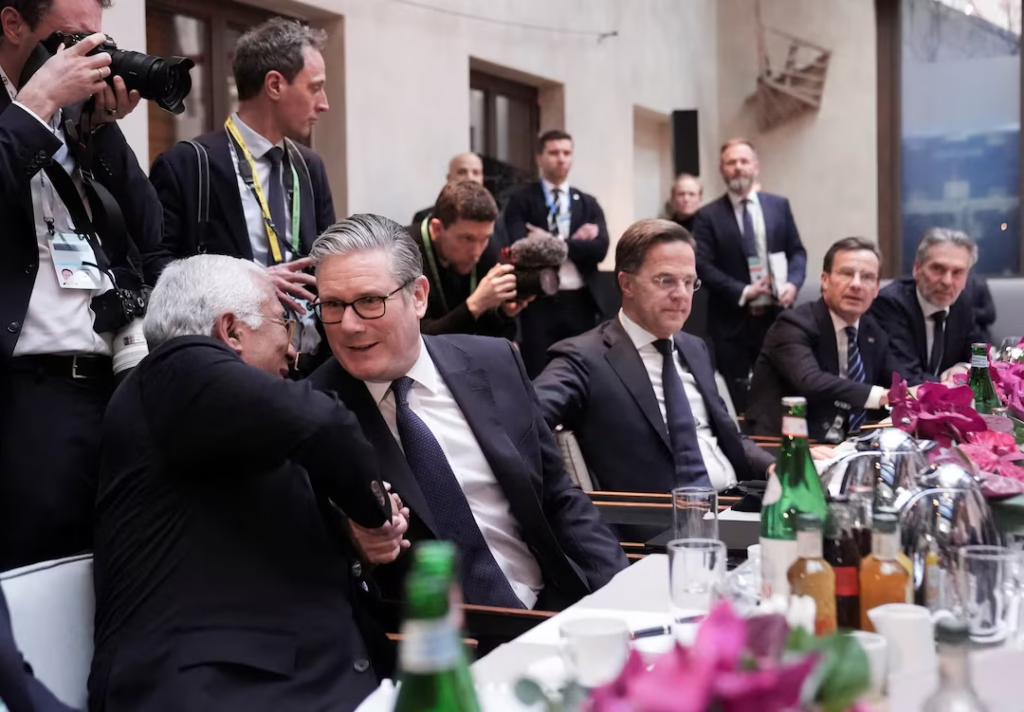
Charting a New Path: Less Reliance on the U.S. and More on European Capacity
While the United States under Trump has reassured allies of its commitment to NATO, recent policy choices — including controversial remarks and threats to European interests — have fueled uncertainty among leaders in Brussels and London. U.S. Secretary of State Marco Rubio reassured European nations that the transatlantic alliance remains vital, but also signalled the need for Europe to shoulder more responsibility for its own defence.
Starmer’s push for a “more European NATO” emphasises shared defence spending, common procurement of military equipment, and deeper operational coordination. He also suggested exploring cooperation in areas like the EU single market to drive economic growth, which in turn could strengthen defence investment across the continent. His position reflects a growing recognition that Europe must reduce dependency on external powers while preserving strong partnerships.
Growing European Unity Amid Global Uncertainty
Leaders from across Europe echoed Starmer’s message at Munich, focusing on the need for preparedness in the face of rising Russian aggression and unpredictable global shifts. Ukrainian President Volodymyr Zelenskyy also called for stronger European unity and defence capabilities to protect sovereignty and deter future attacks — underscoring the urgency shared by many EU states.
German Chancellor Friedrich Merz highlighted concerns over transatlantic relations, arguing that the United States cannot act alone in today’s geopolitical environment and emphasising cooperative strategies through NATO and broader EU coordination. This alignment of views indicates that European capitals are increasingly receptive to deeper defence collaboration, which could transform Western security architecture in the decades ahead.
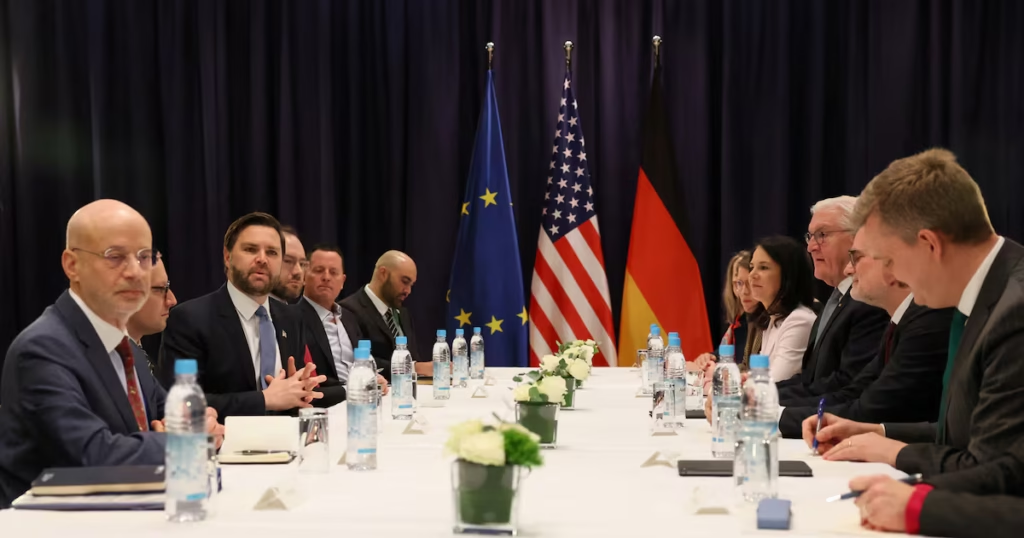
Domestic Politics and Defence Strategy Debate
Starmer’s bold remarks were not without political controversy. In his Munich speech, he directly criticised domestic parties like Reform UK and the Greens for being “soft on Russia” and weak on NATO defence commitments, challenging his political opponents to recognise the gravity of current security challenges. Opponents argue that Starmer’s proposals could undermine British sovereignty or overextend UK commitments, while supporters see his approach as a necessary evolution of Britain’s global role.
The Prime Minister’s stance also reflects a broader recalibration of UK foreign policy — one that distances itself from isolationist impulses and embraces long-term alliances with European democracies. With European security increasingly tied to deterrent capability and shared strategy, Starmer’s speech underscores a historic opportunity for collaborative defence initiatives.
What This Means for the Future of Western Alliances
Starmer’s call for greater cooperation with Europe and a redefined transatlantic partnership arrives at a critical geopolitical moment. With Russia’s ongoing conflict in Ukraine and evolving global threats, the UK’s foreign policy shift could inspire deeper European defence integration and renewed Western solidarity. As NATO and EU leaders digest his vision, the question will be how far Britain and its allies can go to transform strategic relationships in the face of uncertainty.
In a world where global power dynamics are rapidly shifting, Starmer’s message in Munich reflects a strategic moment — urging shared responsibilities, stronger alliances, and a recalibrated security framework that aligns with present-day challenges.
Subscribe to trusted news sites like USnewsSphere.com for continuous updates.