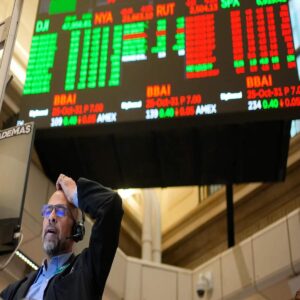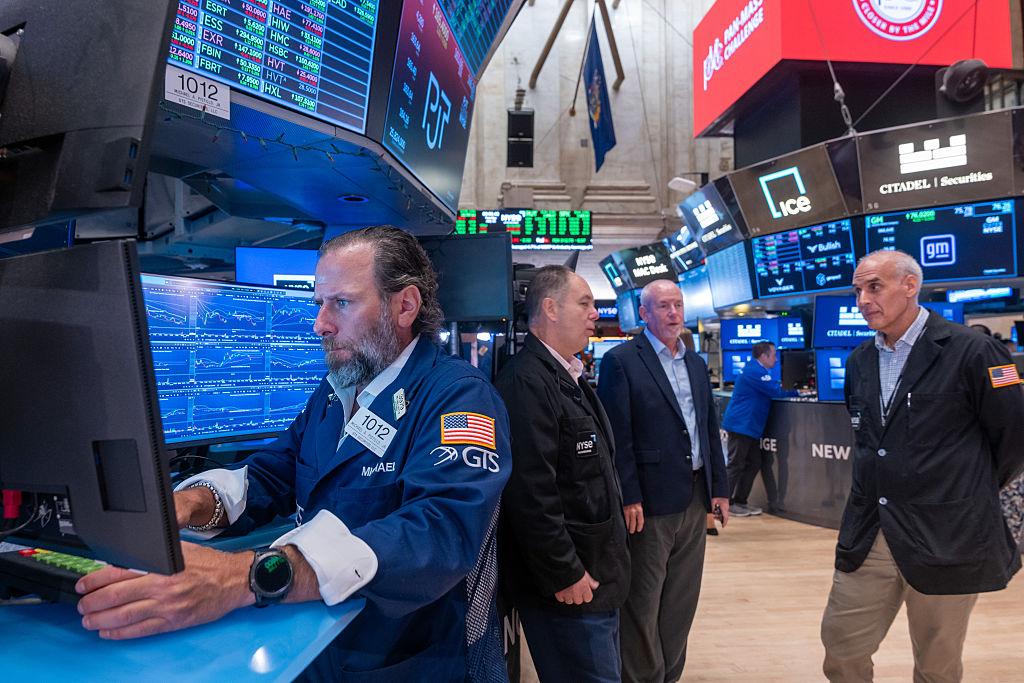
U.S. markets today are heading into a potentially important week with investors balancing a fragile stock-market rebound against elevated Treasury yields, geopolitical uncertainty, oil-price swings and a packed economic and corporate calendar. Wall Street finished Friday higher, but the gains did not erase the damage from a difficult week, particularly for technology stocks.
The S&P 500 gained about 0.4% Friday to close at 7,674.37, while the Dow Jones Industrial Average rose roughly 1% to 53,277.01. The Nasdaq Composite also advanced about 0.4% to 26,180.45. Despite the Friday recovery, the three major indexes finished the week lower, with the Nasdaq suffering the largest decline at about 2.1%.
Monday’s early futures trading is signaling a cautious start rather than a decisive move. Recent overnight readings put S&P 500 futures around 7,686, Dow futures near 53,340 and Nasdaq-100 futures around 29,300, with futures broadly close to flat. Oil has eased from its recent highs, while gold remains elevated as investors continue to seek protection against geopolitical and fiscal risks.
The bigger question for investors is whether Friday’s bounce can develop into a broader recovery or whether higher long-term borrowing costs will continue to pressure equity valuations. This week could provide important answers because Nvidia earnings, U.S. inflation data and Federal Reserve Chair Kevin Warsh’s Jackson Hole speech are all approaching.
Wall Street Starts the Week After a Volatile Friday Rebound
The immediate backdrop for U.S. stocks is mixed. Friday’s advance provided some relief after a sharp sell-off earlier in the week, but the weekly numbers show that investors remain cautious. The S&P 500 lost about 1.4% for the week, the Dow declined about 0.8%, and the Nasdaq dropped approximately 2.1%. Even so, all three indexes remain comfortably positive for the year, according to AP’s Friday market recap.
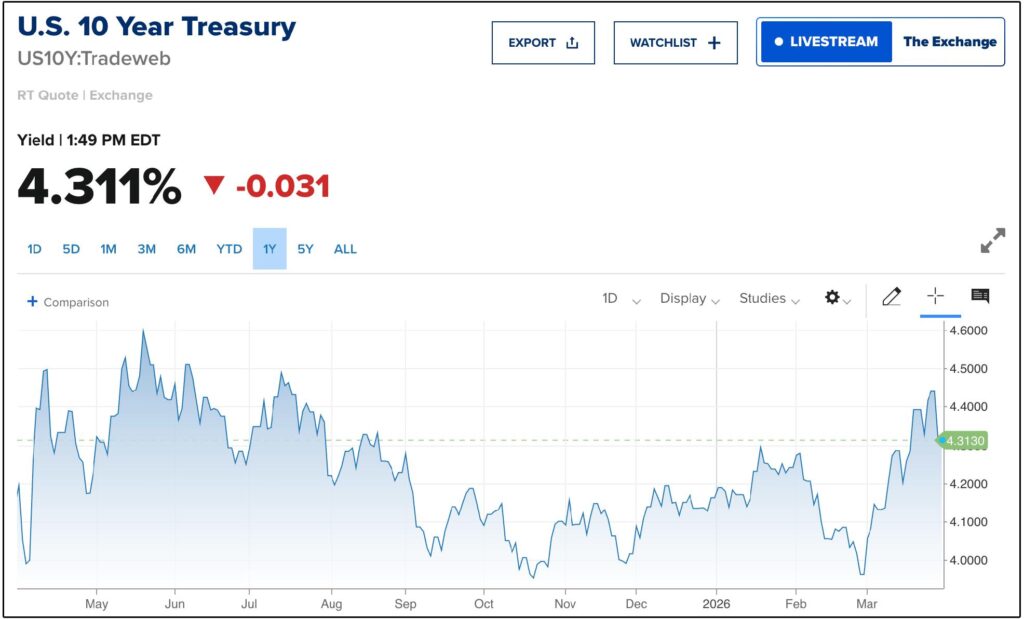
The performance also shows how much interest-rate expectations are influencing equity markets. Technology and growth stocks are particularly sensitive to changes in Treasury yields because higher discount rates reduce the present value investors assign to future earnings. That relationship became visible again last week as long-term Treasury yields climbed and technology shares came under pressure.
Friday’s stronger performance was helped by corporate earnings and signs of resilience in U.S. business activity. But investors are entering Monday with several unresolved risks. The collapse of U.S.-Canada trade talks has created another source of uncertainty, while the United States is also preparing further economic measures involving Iran. Oil prices and Treasury yields therefore remain two of the most important cross-asset signals to watch when U.S. trading begins.
The early futures picture is relatively calm. Sunday evening trading saw S&P 500 futures around 7,692.50, Nasdaq-100 futures near 29,390.50 and Dow futures around 53,346 before later overnight moves. That suggests traders are waiting for fresh catalysts rather than aggressively positioning for a major gap in either direction.
Treasury Yields Remain the Biggest Threat to the Stock Rally
The bond market may be even more important than the stock market at the start of this week. The 10-year Treasury yield finished Friday around 4.7%, while the 30-year yield was near 5.25%-5.27%. Those levels remain historically significant and are raising questions about how much additional pressure higher borrowing costs could place on companies, households and government finances.

The Federal Reserve’s daily interest-rate data also shows how dramatically the long end of the Treasury curve has moved. On August 20, the 10-year Treasury constant-maturity yield was 4.69%, while the 30-year yield was 5.23%. The market subsequently pushed longer-term yields higher, with the 30-year yield briefly reaching roughly 5.34%, its highest level since 2007.
The U.S. Treasury has attempted to reduce pressure in the long-dated bond market by increasing its buyback operations. The initial announcement produced a sharp decline in yields, but the relief proved temporary as yields rebounded. That is important because it suggests that investors are focusing on broader forces such as inflation expectations, government borrowing needs, economic growth and geopolitical risks rather than simply the Treasury’s market operations.
For stock investors, the message is straightforward: a sustained decline in long-term yields could give technology and growth shares more breathing room, while another move toward recent highs could make the equity market’s valuation problem more difficult. The bond market therefore deserves almost as much attention as the S&P 500 this week.
Oil, Gold and the Dollar Are Sending Different Signals
Oil markets are another major part of the U.S. markets today story. Brent crude was around $93 a barrel on Monday morning, while U.S. West Texas Intermediate crude was near $85.60. Both benchmarks were lower on the day as traders waited for details surrounding potential U.S. sanctions on Iran.
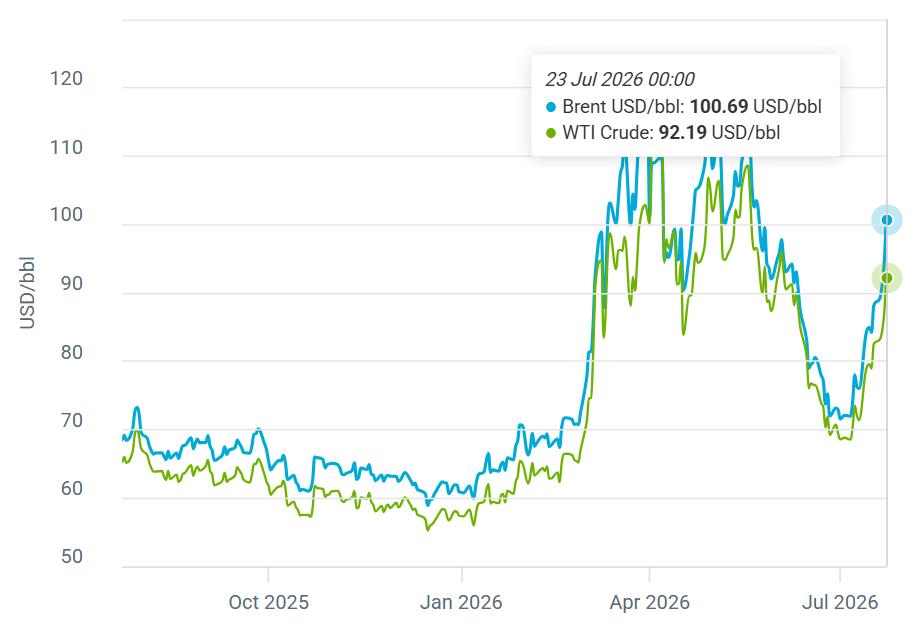
The decline does not mean the energy risk has disappeared. Oil remains substantially elevated compared with normal periods, and the situation around the Strait of Hormuz continues to create uncertainty about global energy supplies. If crude prices remain elevated for an extended period, the effect could spread beyond gasoline to transportation, manufacturing, chemicals, consumer products and inflation expectations.
Gold is moving in the opposite direction from the dollar in several recent sessions. Gold was around $4,700 an ounce in Monday’s overnight market, while the U.S. dollar remained near multi-month lows against a basket of major currencies. Reuters reported that gold had gained more than 15% during August, putting it on track for an unusually strong monthly performance.
The dollar’s weakness is significant because currency movements can affect corporate earnings, commodities and global capital flows. A softer dollar can provide some support to U.S. multinational companies when overseas revenue is translated back into dollars, while also making dollar-denominated commodities more attractive to international buyers.
At the same time, investors should not treat gold’s strength as a simple risk-off signal. Gold is responding to a combination of geopolitical uncertainty, concerns about government debt, currency expectations and interest-rate uncertainty. Those forces can remain powerful even when stocks are stable.
Nvidia Earnings and the Economic Calendar Could Drive the Week
The biggest corporate event on the calendar is Nvidia’s earnings report, scheduled for Wednesday after the market closes. The company’s results have become important far beyond the semiconductor industry because Nvidia sits at the center of the artificial-intelligence investment cycle. Investors will be watching revenue growth, data-center demand, margins, forward guidance and the company’s outlook for continued AI infrastructure spending.
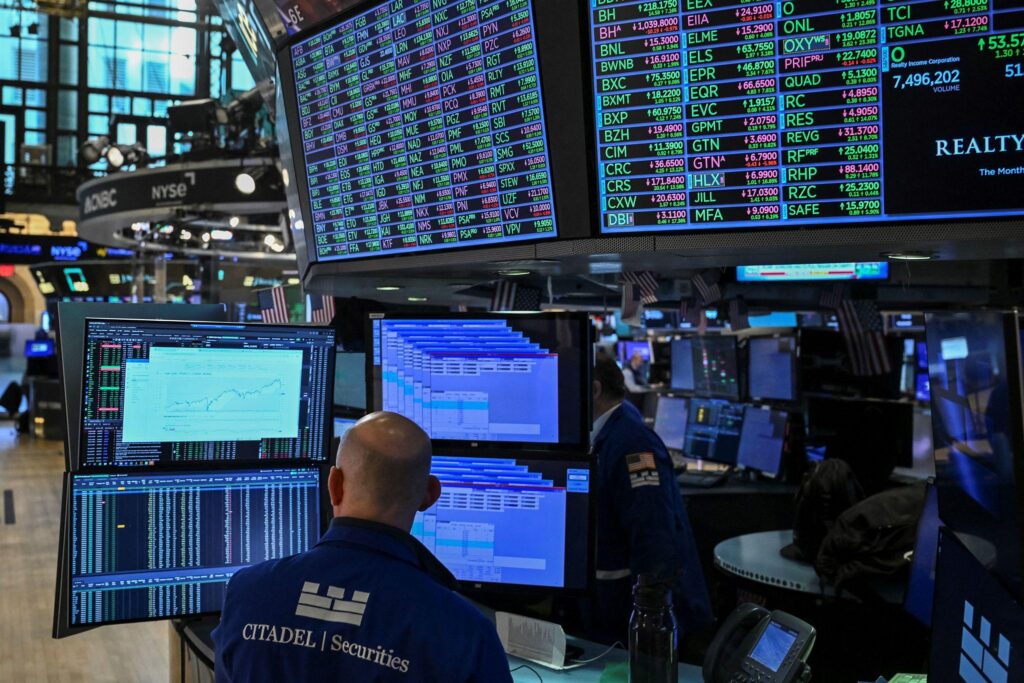
Reuters-based market coverage says analysts are looking for Nvidia revenue approaching $92 billion, while investors will pay close attention to whether future guidance can justify the enormous expectations surrounding AI spending. Other major technology and software companies, including Salesforce and CrowdStrike, are also scheduled to report during the week.
The macroeconomic calendar is equally important. Monday is relatively light, but the schedule becomes considerably more significant from Tuesday onward. Tuesday brings data on home prices, new-home sales, consumer confidence and manufacturing. Wednesday is especially important because investors will receive the July Personal Consumption Expenditures inflation report, core PCE data, durable-goods information and a revised second-quarter GDP reading.
PCE inflation deserves particular attention because it is the Federal Reserve’s preferred inflation gauge. Investors are looking for evidence that inflation is moving toward the Fed’s 2% objective or whether energy costs, tariffs and other pressures are keeping inflation uncomfortably high. Current expectations cited by market coverage call for core PCE to rise about 0.2% month over month, with annual core inflation around 3.2%.
The week concludes with another major event: Federal Reserve Chair Kevin Warsh is scheduled to speak at the Jackson Hole Economic Symposium on Friday. His remarks could become one of the most important market-moving events of the month because investors are looking for clues about the Fed’s approach to inflation, interest rates and financial conditions.
What This Means for You and the Investor Takeaway
What this means for you
For everyday investors, the most important lesson from today’s market setup is that several markets are influencing one another. Stocks are not moving in isolation. Treasury yields affect equity valuations, oil affects inflation expectations, the dollar influences commodities and multinational companies, and geopolitical developments can rapidly change all of those relationships.
Investors with heavy exposure to technology stocks should pay particular attention to Treasury yields and Nvidia’s results. A strong Nvidia outlook combined with stable or falling yields could support another move higher in growth stocks. Conversely, disappointing guidance or another sharp increase in long-term yields could produce another round of selling in high-valuation technology shares.
Bond investors face a different challenge. Elevated long-term yields can create attractive income opportunities, but they also expose investors to price volatility if yields rise further. Investors should therefore distinguish between the yield available today and the potential capital loss that can occur when bond prices fall.
Investor takeaway
The strongest takeaway for August 24 is that the market is entering a wait-and-see phase. Friday’s rebound is encouraging, but it has not yet confirmed that the recent correction is over. The S&P 500 remains above its recent lows, but the Nasdaq’s larger weekly decline demonstrates that growth stocks are more vulnerable to changes in interest-rate expectations.
Investors should watch four signals particularly closely: the 10-year and 30-year Treasury yields, Nvidia’s earnings outlook, July PCE inflation and the tone of Kevin Warsh’s Jackson Hole speech. Together, these events can provide a clearer picture of whether the current equity rally can regain momentum.
It is also worth watching oil rather than focusing only on the daily percentage change. A temporary decline in crude prices could help stocks by reducing inflation pressure. But if geopolitical developments cause oil to move decisively higher again, the resulting inflation concerns could make the Federal Reserve’s policy outlook more difficult.
This environment favors discipline over headline chasing. Investors should avoid treating a single futures move as proof that the market will finish higher or lower. Futures can change substantially before the opening bell, and the market reaction to economic data often depends on how the numbers compare with expectations rather than whether the headline appears objectively positive or negative.
Future Outlook: Can Stocks Regain Momentum?
The next several trading sessions could determine whether the late-summer stock-market pullback becomes a temporary correction or develops into a more meaningful shift in investor sentiment. The bullish case remains supported by strong year-to-date gains, corporate earnings growth and continued investment in artificial intelligence. The S&P 500 was still up about 12.1% for the year through Friday, while the Nasdaq remained up about 12.6%.
The bearish case is increasingly centered on the cost of money. If the 10-year Treasury yield remains around or above 4.7% and the 30-year yield stays near 5.25%, investors may demand greater compensation for owning high-priced growth stocks. Persistent oil strength could add another layer of inflation pressure, while fiscal concerns could keep investors nervous about the supply of government debt.
The dollar is another important variable. A continued decline in the U.S. currency could support gold and other commodities, while potentially helping multinational companies. But persistent dollar weakness can also become a concern if investors begin demanding a larger risk premium for U.S. assets. Reuters reported Monday that the dollar was trading near multi-month lows amid concerns surrounding debt, Treasury policy and monetary conditions.
The central event later in the week will likely be the combination of Nvidia’s earnings and the Federal Reserve’s Jackson Hole messaging. CME’s market analysis describes the coming week as one in which traders are looking for a catalyst capable of pushing equity futures either higher or into another correction, with Nvidia, U.S. GDP, PCE inflation, Treasury developments and Warsh’s speech all potentially affecting the direction.
For now, the most reasonable interpretation of U.S. markets today is cautious rather than bearish. Friday showed that buyers remain willing to step in after sharp declines, but the bond market has not yet given stocks a clean all-clear signal. Until Treasury yields stabilize, oil risks diminish and the upcoming economic data provide greater clarity, volatility is likely to remain part of the market environment.
Investors should also remember that this article reflects market information available before Monday’s regular U.S. session. Futures are not the same as official closing prices, and prices for stocks, bonds, commodities and currencies can change quickly. The most useful approach is to treat the early market as a starting point and then reassess after the opening bell, economic releases and company announcements.
Subscribe to trusted news sites like USnewsSphere.com for continuous updates.