
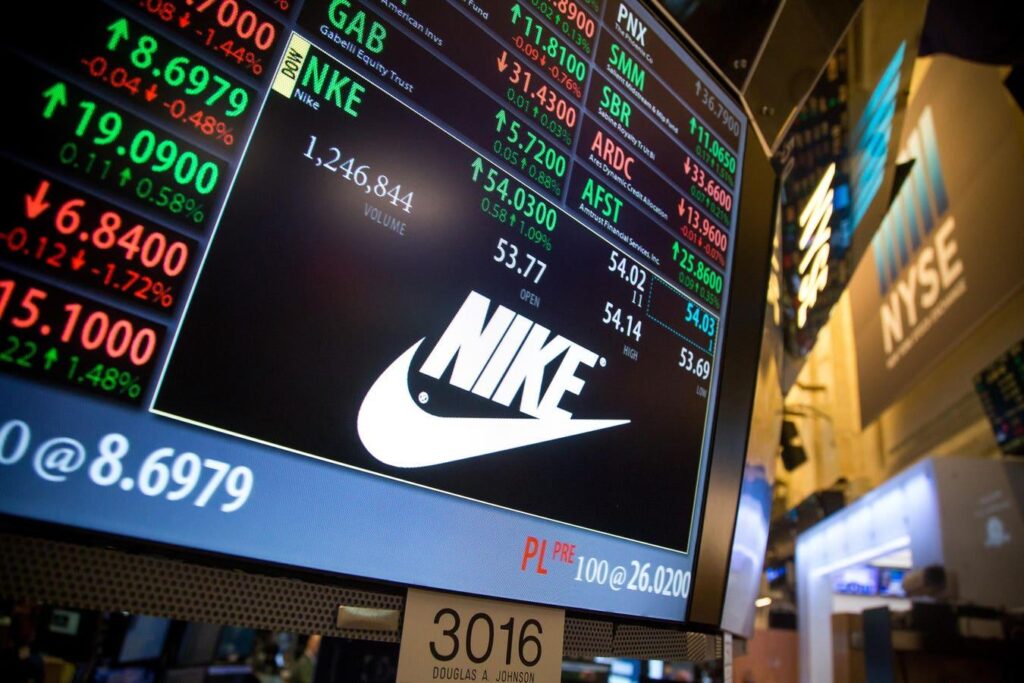
Nike stock is under renewed pressure after shares fell below $40 and closed Monday, August 17, at $39.09, the lowest closing price for the stock since 2014. The decline leaves Nike roughly 78% below its November 2021 record close of $177.51, turning what was once one of the market’s most dependable consumer brands into one of the Dow’s biggest turnaround stories.
The latest selloff is not being driven by one isolated problem. Investors are weighing weak sales in China, declining Nike Direct revenue, fierce competition in performance footwear, elevated inventory, questions about innovation and a recovery that management has repeatedly warned will take time. At the same time, Nike is trying to rebuild its wholesale relationships and shift its product strategy back toward sport.
That creates a much more complicated investment story than simply asking whether Nike stock is “cheap.” The company remains a global sportswear giant with enormous brand recognition, but investors now need evidence that the business can translate that brand power into sustainable revenue growth, healthier margins and stronger consumer demand.
What Happened to Nike Stock
The immediate market signal is stark. Nike shares dropped about 4.2% on Monday, contributing materially to the Dow Jones Industrial Average’s decline during the session. MarketWatch reported that Nike and Microsoft together accounted for roughly 104 points of the Dow’s intraday decline.
The move also pushed Nike to the bottom of the Dow’s performance rankings and reinforced the perception that the company’s turnaround remains unfinished. The stock’s collapse from its 2021 peak is particularly important because it has occurred despite Nike still generating tens of billions of dollars in annual revenue.
Recent price action shows how difficult the environment has become. Nike closed at $40.73 on August 14 before falling below $40 the following trading session. The market is therefore no longer treating Nike’s problems as a temporary earnings disappointment. Investors are increasingly questioning how quickly the company can rebuild growth.
The timing matters because Nike’s latest full-year financial results already showed a business moving in two different directions. Fiscal 2026 revenue was approximately $46.4 billion, essentially flat on a reported basis and down 2% on a currency-neutral basis. Fourth-quarter revenue fell 1% reported and 4% currency-neutral.
Nike’s latest fiscal 2026 results
Why Nike Is Under Pressure
Nike’s biggest challenge is that several weaknesses are occurring simultaneously. Greater China remains a major problem, while Nike Direct continues to struggle even as wholesale sales have begun showing signs of improvement.
For fiscal 2026, Nike Direct revenue fell 6% to $17.7 billion, with Nike Brand Digital revenue down 12% and company-owned store revenue down 4%. By contrast, wholesale revenue increased 6% on a reported basis and 4% on a currency-neutral basis to $27.5 billion.
That reversal is significant. Nike spent years emphasizing its direct-to-consumer model and reducing its reliance on wholesale partners. The company is now rebuilding some of those relationships because consumers still discover and purchase athletic products through large retailers and specialty stores.
Greater China is an even more serious issue. Nike’s fourth-quarter Greater China revenue fell sharply, with footwear down 13% reported and apparel down 10%. Reuters reported that China’s decline remained one of the central reasons investors were skeptical about the speed of the turnaround.
What this means for you: If you are an investor or simply follow the consumer economy, Nike’s weakness is important because it provides a window into discretionary spending, sportswear demand and the competitive health of a major American brand. A sustained improvement in Nike’s sales would be a meaningful signal that the company’s turnaround is becoming real rather than simply a financial restructuring story.
Sales, Margins and the Consumer
Nike’s headline margin improvement in fiscal 2026 looks impressive, but investors need to look beneath the number. Fourth-quarter gross margin jumped to 49.2%, up 890 basis points from a year earlier. However, Nike said approximately 900 basis points of that improvement came from the expected recovery of tariffs imposed under the International Emergency Economic Powers Act.
Nike recognized a $986 million benefit associated with the expected recovery of those tariffs. The company reported that the benefit contributed approximately $0.52 to quarterly diluted earnings per share.
That distinction is crucial. A tariff-related recovery can improve reported earnings without demonstrating that consumers suddenly want more Nike products. Investors therefore need to watch the company’s underlying gross margin and operating performance after temporary tariff effects disappear.
The underlying demand picture is mixed rather than uniformly disastrous. North America has shown comparatively better performance, while wholesale has recovered. Nike has also been investing in new footwear, sports categories and major global sporting events. But the company’s overall revenue remains under pressure, and management has indicated that the recovery will not happen immediately.
Consumer behavior is another variable. Athletic footwear has become more competitive, and consumers now have considerably more choices. Brands that were once niche players have built strong identities around running, comfort, performance and lifestyle.
Nike’s challenge is therefore not simply selling more shoes. It must convince consumers that its newest products deserve attention when shoppers can choose from a much broader range of brands.
Competition From Adidas, On, Hoka and Others
Competition is arguably one of the most important structural changes affecting Nike. Adidas has strengthened its position in performance running, while On has built a powerful premium running identity. Hoka has also become a major force in the running and comfort category.
The competitive landscape is particularly important because Nike historically dominated many high-profile performance categories. Reuters recently highlighted Adidas’ growing momentum in the “supershoe” race after athletes wearing Adidas products delivered major marathon performances, while Nike works to rebuild its position with newer versions of its Alphafly and Vaporfly lines.
On’s recent results also demonstrate that the athletic market itself is not collapsing. On reported second-quarter sales growth of 13%, although the company subsequently reduced its full-year growth outlook. Its direct-to-consumer sales increased 26%, showing that consumers continue to spend on performance footwear even in a more cautious environment.
At the same time, the competitive pressure extends beyond the brands most commonly discussed in the U.S. China’s domestic sportswear companies are becoming increasingly important inside Nike’s most troubled international market. Financial Times reporting has highlighted the growth of Chinese competitors such as Anta, 361 Degrees and XTEP.
This is why Nike’s turnaround cannot rely only on advertising. The company needs products that runners, athletes and everyday consumers actively prefer.
Nike CEO Elliott Hill has emphasized a stronger focus on sport, product innovation and the company’s relationships with major sporting events. Nike is also attempting to make its product portfolio more compelling after years in which critics argued that the company became too dependent on established franchises.
Tariffs, Sourcing and Nike’s Recovery Plan
Tariffs have added another layer of uncertainty. Nike relies on a global manufacturing and sourcing network, meaning changes in U.S. trade policy can influence product costs, pricing decisions and margins.
The company received a major accounting benefit from the recovery of previously paid IEEPA tariffs after the U.S. Supreme Court ruled those tariffs unauthorized. Nike’s SEC filing said it had received $302 million by May 31 and recorded another $684 million as a receivable, with substantially all of the remaining receivable received afterward.
But investors should not interpret that refund as a permanent improvement in Nike’s economics. Future tariffs, trade restrictions or changes in sourcing costs could still affect the company.
Nike has also faced controversy surrounding how tariff-related costs were handled. Reuters reported in May that consumers filed a proposed class-action lawsuit alleging Nike had passed some tariff costs through to customers and then could benefit again from government refunds.
The larger issue is supply-chain flexibility. Nike needs to manage sourcing costs while maintaining competitive prices. If it raises prices too aggressively, consumers can move toward Adidas, On, Hoka, New Balance, ASICS or other alternatives. If it absorbs too much cost, margins suffer.
Investor takeaway: The most important question is not whether Nike received a tariff benefit. It is whether Nike can produce healthy margins from its normal operations while simultaneously returning to sustainable sales growth. That is a much harder test—and a much more useful one for long-term investors.
What the Stock Chart Is Saying
From a technical perspective, Nike’s chart is sending a distinctly bearish message. The move below $40 is psychologically important because the stock had been trading near that area earlier in the year and has now returned to levels not seen in roughly 12 years.
The bigger picture is even more striking: Nike is approximately 78% below its 2021 record close. That means investors who bought near the pandemic-era peak have experienced an extraordinary decline despite the company continuing to generate substantial revenue.
The important levels now are less about predicting an exact bottom and more about identifying whether the stock can establish a durable base. A sustained recovery above the $40 area would be an early sign that buyers are returning. A continued breakdown below recent lows would indicate that investors still expect earnings estimates and the turnaround timeline to deteriorate.
Investors should also pay attention to trading volume. Heavy volume accompanying a decline can indicate aggressive selling, while strong volume on subsequent rallies can provide evidence that institutional investors are beginning to accumulate shares.
Technical analysis, however, should not be treated as proof that Nike is either a buy or a sell. A technically oversold stock can remain weak if earnings expectations continue to fall. Conversely, a company can begin a major recovery while its chart still looks damaged.
Can Nike Recover? What Investors Should Watch Next
Nike can recover, but the evidence needs to become stronger. The company still possesses assets that many competitors would struggle to replicate: global brand recognition, athlete relationships, distribution infrastructure, marketing capabilities and a massive installed consumer base.
The encouraging signs include improving wholesale performance, continued investment in sport, new footwear launches and comparatively better conditions in North America. Reuters reported that Nike is planning more than a dozen new footwear styles while using major sporting events, including the World Cup, to rebuild consumer momentum.
The problem is timing. Nike’s June earnings update indicated that revenue pressure would continue into the first half of fiscal 2027, with elevated inventory, competition, tariffs and cautious consumers remaining obstacles.
Future outlook: The next phase of Nike’s story will depend less on cost cutting and more on whether consumers genuinely return to the brand. Investors should watch several indicators closely: Greater China sales, Nike Direct growth, digital sales, wholesale momentum, gross margin excluding unusual tariff effects, inventory levels, new-product demand and management’s revenue guidance.
If those indicators begin improving together, the market could eventually start treating Nike as a genuine turnaround rather than a declining consumer giant. If China remains weak, digital sales continue falling and new products fail to generate meaningful demand, the stock could remain under pressure even after its enormous decline.
For consumers, the story is equally interesting. Nike’s attempt to regain market share could mean more promotions, broader retail distribution, new product launches and stronger competition across athletic footwear. For investors, however, the central question remains valuation versus earnings power.
A stock falling nearly 80% from its peak is not automatically a bargain. The right question is whether Nike’s future cash flows justify the current valuation and whether management can rebuild the company’s competitive advantage.
For now, Nike remains a high-risk turnaround story rather than a straightforward recovery story. The brand is far from broken, but the financial evidence has not yet shown that the turnaround is complete.
The next major catalyst will be Nike’s upcoming earnings and management commentary. Investors will want concrete evidence that North America can continue improving, China is stabilizing, wholesale growth can offset weakness in Nike Direct, and new products are winning consumers.
Until then, the stock’s historic decline is a warning—but it may also be setting the stage for one of the most closely watched consumer-brand turnarounds in the market.
Subscribe to trusted news sites like USnewsSphere.com for continuous updates.
Sources and useful video coverage
Nike Investor Relations — Fiscal 2026 Results
Nike SEC Filing — Fiscal 2026 Annual Report
Reuters — Nike turnaround, China weakness and outlook
WSJ — Nike hits a 12-year closing low
Yahoo Finance — Nike Q4 earnings video