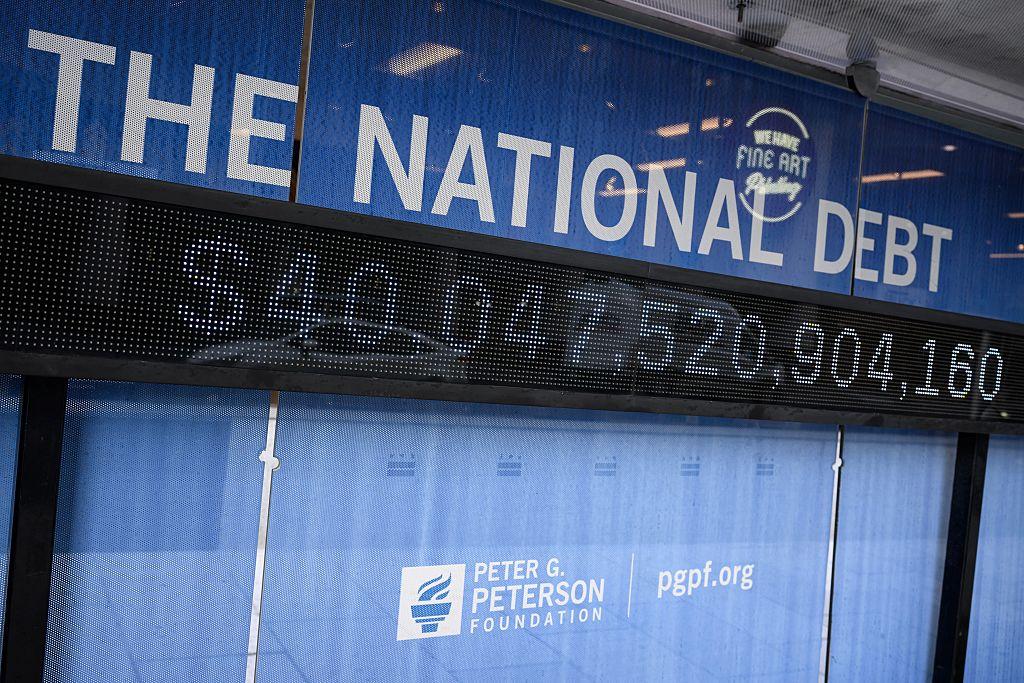
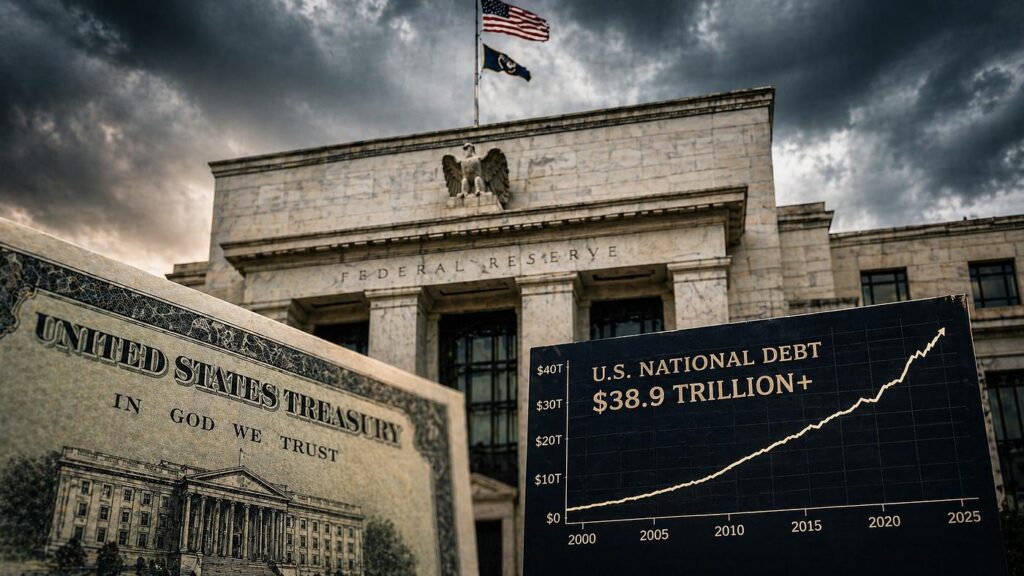
U.S. debt $40 trillion has become a defining financial milestone for America, arriving at a time when investors are already worried about elevated long-term Treasury yields, inflation, government borrowing and the cost of financing the federal budget.
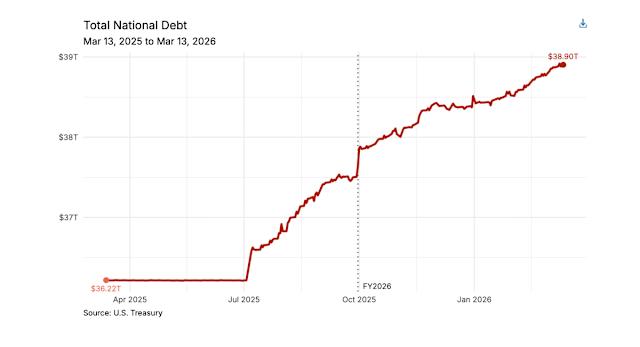
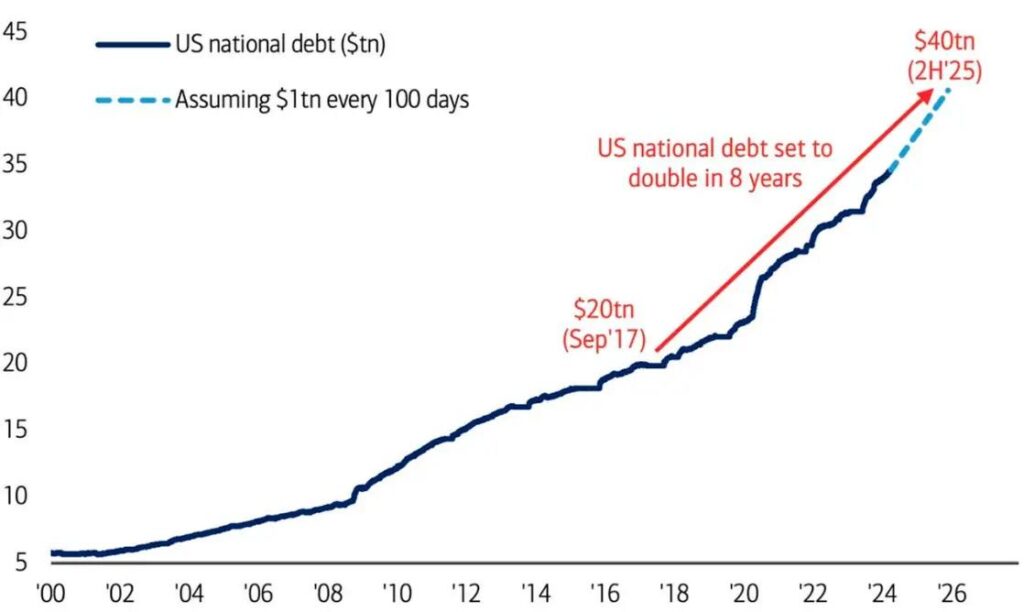
The U.S. national debt has now crossed $40 trillion, according to current reporting, only months after reaching $39 trillion in March. The milestone comes as the Treasury Department is taking an unusually visible step in the bond market by increasing the size of some long-term Treasury buyback operations. The move initially helped push longer-term yields lower, but much of that relief faded as investors continued to focus on the country’s large borrowing needs and fiscal outlook.
The numbers are enormous, but the story is not really about a giant number displayed on a government website. It is about what happens when a country with a massive debt load must continually refinance old borrowing while also financing new deficits.
That affects the bond market first. From there, the consequences can reach mortgage rates, credit-card borrowing, business investment, stock valuations, government spending and eventually household finances.
The question Americans should be asking is not simply “How much is the national debt?” It is “What does $40 trillion of debt mean for the cost of living, borrowing, investing and the economy?”
Why the $40 Trillion Debt Milestone Matters Now
The $40 trillion threshold is significant because the debt has been increasing rapidly. The Congressional Joint Economic Committee reported that gross national debt was already $39.83 trillion on August 7, after reaching $39.39 trillion in early July. At that earlier pace, the committee projected that $40 trillion would arrive later in August. The milestone was reached sooner than those earlier estimates suggested.

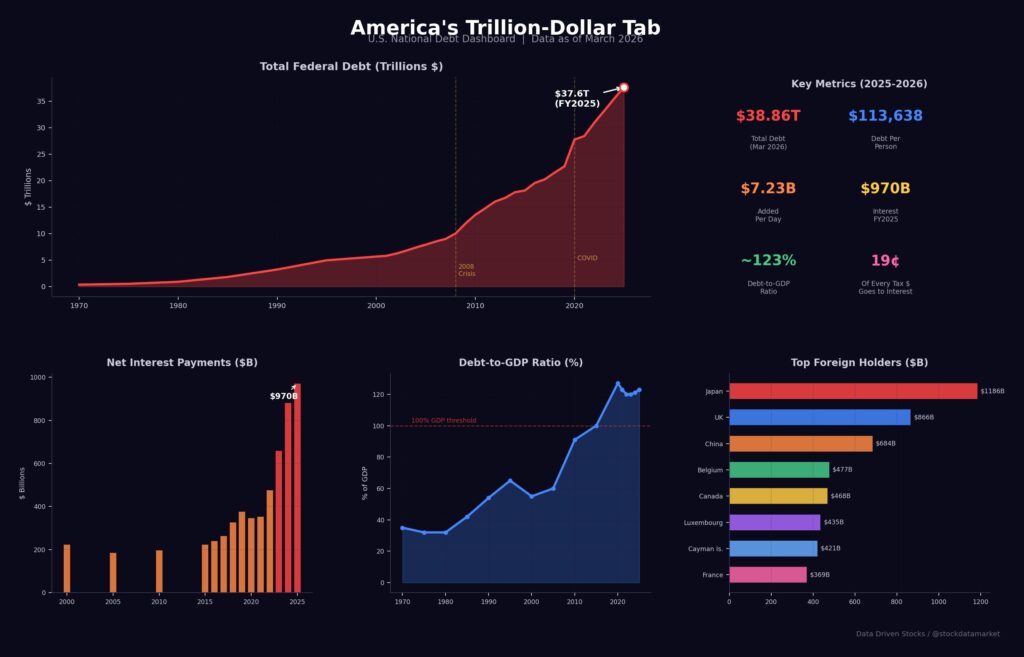
The speed of the increase matters almost as much as the headline number. CBO’s 2026 budget outlook projects a federal deficit of about $1.9 trillion for fiscal 2026 and says debt held by the public is expected to remain extremely large relative to the economy. CBO also projects that net federal interest costs will exceed $1 trillion in 2026, up from $970 billion in 2025.
That creates a difficult feedback loop. When the government has more debt outstanding, changes in borrowing costs can have a larger effect on the budget. If average interest rates remain elevated, refinancing maturing securities becomes more expensive. More money then has to go toward interest, leaving less room for other priorities unless policymakers raise revenue, reduce spending or borrow more.
The $40 trillion milestone therefore arrives at a particularly sensitive moment for U.S. financial markets. Investors are not just watching the size of the debt; they are watching whether Washington can keep financing it at manageable interest rates.
Treasury Buybacks Are Trying to Calm the Bond Market
The Treasury Department has responded to pressure in the long-term bond market by increasing the size of certain buyback operations. Treasury Secretary Scott Bessent announced that the maximum purchase amount for some liquidity-support operations involving longer-dated Treasury securities would rise from $2 billion to at least $4 billion per operation, with the larger operations scheduled to begin September 9. The securities targeted include longer maturities in the 10-to-30-year range.
Treasury buybacks are not the same thing as Federal Reserve quantitative easing. The Treasury is managing its debt portfolio and market liquidity, while the Federal Reserve is responsible for monetary policy. Treasury buybacks can help improve liquidity in particular parts of the government bond market, but they do not eliminate the federal deficit or make the national debt disappear.
That distinction is important because the initial market response was stronger than the lasting effect. The 10-year Treasury yield initially declined to around 4.64%, while the 30-year yield fell toward roughly 5.18%. But both subsequently moved higher again, with the 10-year yield returning close to 4.70% and the 30-year yield around 5.24% in Thursday trading.
The reaction suggests that investors are looking beyond the immediate liquidity operation. A larger buyback may help smooth trading conditions, but it cannot by itself solve the structural problem of persistent deficits and rising interest costs.
That is why today’s bond-market story is much bigger than the buyback announcement. Investors are asking whether Washington can address the underlying fiscal imbalance rather than simply reduce temporary market stress.
Trump Policies, Deficits and the Cost of Government Borrowing
The current fiscal outlook is also connected to policies enacted during the Trump administration, although the national debt itself reflects decisions made across many administrations and both political parties. Current CBO projections incorporate the effects of the 2025 reconciliation law, tariff policies, immigration-related changes and other economic factors.
CBO’s current baseline says the 2025 reconciliation law increases projected deficits by about $4.7 trillion over 2026–2035 after accounting for interest and broader economic effects. CBO also estimates that higher tariffs reduce projected deficits by about $3 trillion over that period, partly offsetting other changes. These figures are projections, not guaranteed outcomes, and they depend on the laws and economic assumptions incorporated into the baseline.
This is where the political debate becomes an economic one. Supporters of the administration’s policies argue that tax changes, investment incentives, energy policy and economic growth can strengthen the economy and improve federal finances over time. Critics argue that persistent deficits can increase Treasury borrowing, put upward pressure on long-term yields and eventually make debt service consume an increasingly large share of federal resources.
The important point for readers is that debt is not created by one single policy or one president. The United States has accumulated borrowing over decades through wars, recessions, tax policies, entitlement programs, emergency spending and the normal gap between federal revenues and expenditures.
But current policy decisions matter because they influence how quickly the debt grows from this point forward.
What This Means for You: Mortgages, Credit Cards, Savings and Prices
For American households, the most immediate connection is often the bond market. The 10-year Treasury yield is an important benchmark for many financial assets, while mortgage rates are influenced by broader bond-market conditions. On August 20, the average U.S. 30-year fixed mortgage rate was reported around 6.68%, with the 15-year rate around 6.03%.
That means a prolonged period of elevated Treasury yields can keep home financing expensive even if the Federal Reserve eventually cuts its short-term policy rate. Mortgage rates do not simply move one-for-one with the federal funds rate.
The same principle applies to businesses. When government bond yields rise, companies may have to offer higher interest rates to attract investors. Higher financing costs can make companies more cautious about hiring, expansion, acquisitions and major capital projects.
Consumers can feel the effects indirectly through loans and credit. Auto financing, personal loans, business credit and other forms of borrowing can become more expensive when market interest rates remain elevated.
There is also another side of the equation: savers can benefit from higher interest rates. People holding Treasury securities, certificates of deposit, money-market products or other interest-bearing assets may receive higher returns when market rates are elevated.
So a high-debt, high-rate environment does not affect every American in exactly the same way.
Borrowers generally face greater pressure, while savers may receive better yields. Homebuyers can face affordability problems, while existing homeowners with fixed-rate mortgages may be less immediately affected. Investors also experience a more complicated environment because higher bond yields can compete with stocks for capital.
Investor Takeaway: Why Interest Costs Could Become the Bigger Story
The most important long-term number may not be the $40 trillion debt total itself. It may be the amount the federal government must spend servicing that debt.
CBO projects net interest outlays at more than $1 trillion in 2026, representing about 3.3% of GDP. Under its baseline, net interest costs rise to approximately $2.1 trillion by 2036, or 4.6% of GDP. CBO says that would make interest costs nearly equal to all federal discretionary spending by 2036.
That is why interest rates matter so much for fiscal policy. If the government can borrow at lower rates for a sustained period, refinancing pressure is reduced. If long-term rates remain high, new borrowing and refinancing become more expensive.
Investors should therefore watch several indicators together:
| Indicator | Why it matters |
|---|---|
| 10-year Treasury yield | Major benchmark for financial markets |
| 30-year Treasury yield | Important for long-term borrowing |
| Federal funds rate | Signals short-term Fed policy |
| Inflation | Influences future rate expectations |
| Federal deficit | Determines additional borrowing needs |
| Debt held by public | Measures debt outside government accounts |
| Interest costs | Shows the budgetary burden of borrowing |
| Dollar | Influences global demand for U.S. assets |
| Mortgage rates | Shows household borrowing conditions |
The Federal Reserve currently has another important role in this story. At its July 29 meeting, the FOMC maintained the federal funds target range at 3.5% to 3.75%. The Fed said inflation remained elevated relative to its 2% goal, partly because of supply shocks including energy prices. Three members preferred a quarter-point rate increase at that meeting.
That means investors cannot assume that the $40 trillion debt milestone automatically leads to lower interest rates. The Fed must consider inflation and employment, while Treasury officials must manage government financing and the functioning of the bond market.
Future Outlook: Can Washington Lower Debt Pressure Without Hurting Growth?
The future path of U.S. debt will depend on the relationship between economic growth, government spending, tax revenue and interest rates.
If the economy grows rapidly enough, the debt can become less burdensome relative to GDP even when the dollar amount continues increasing. But if debt grows substantially faster than the economy, the ratio can continue moving higher.
CBO’s projections illustrate the challenge. Debt held by the public is projected to rise from roughly 99% of GDP at the end of 2025 to about 120% by 2036 under its baseline. CBO also projects that the federal deficit could reach $3.1 trillion, or 6.7% of GDP, by 2036.
Those projections are not predictions of a guaranteed crisis. They are a baseline based on assumptions about current law and economic conditions. Actual outcomes can differ significantly if Congress changes tax policy, spending, tariffs or other major programs, or if economic growth, inflation and interest rates develop differently.
The near-term bond-market outlook may be just as important. Treasury’s expanded buybacks could improve liquidity and temporarily reduce pressure on longer-term yields. But analysts quoted in current reporting have questioned whether buybacks can have a lasting effect without a broader improvement in the fiscal outlook.
For Americans, the most important takeaway is therefore not that the $40 trillion milestone automatically means higher taxes, a recession or a financial crisis. None of those outcomes is guaranteed.
Instead, the milestone highlights a growing sensitivity in the U.S. economy: when government debt becomes very large, interest rates matter more.
A small change in borrowing costs can affect the government’s annual interest bill, and that can eventually influence decisions about taxes, spending and public programs. At the same time, high Treasury yields can influence mortgages, business loans, stocks and other financial assets.
The Treasury’s current intervention shows that policymakers are paying close attention to the bond market. But the bond market itself is sending a message: investors want to know whether the United States can maintain strong economic growth while bringing its long-term fiscal trajectory under control.
That is likely to remain one of the most important financial stories for the rest of 2026 and beyond.
Conclusion
The $40 trillion U.S. debt milestone is more than a psychological number. It arrives at a moment when the Treasury is attempting to ease pressure in the long-term bond market, mortgage rates remain elevated and the Federal Reserve continues to balance inflation against economic growth.
For households, the connection is straightforward even if the underlying economics are complicated. Higher government borrowing costs can contribute to higher market yields, which can influence mortgages, business financing and investment valuations. At the same time, higher rates can provide better returns for savers and holders of interest-bearing assets.
For investors, the bigger story is the interaction between debt, Treasury yields, inflation, Federal Reserve policy and economic growth. Watching only the national-debt counter misses the more important question: how expensive will it become to finance that debt?
The Treasury’s buyback program may provide short-term relief, but the long-term fiscal challenge remains. The United States will need continued economic growth and credible fiscal management to prevent rising interest costs from consuming an increasingly large portion of the federal budget.
For now, the $40 trillion milestone serves as a warning sign rather than a prediction of an immediate crisis. The next moves in Treasury yields, inflation, Federal Reserve policy, federal deficits and government borrowing will determine how significant that warning becomes for American families, businesses and investors.
Subscribe to trusted news sites like USnewsSphere.com for continuous updates.