CoreWeave stock is emerging as one of Wall Street’s most closely watched artificial-intelligence infrastructure plays after the company reported $2.575 billion in second-quarter revenue and a revenue backlog of approximately $104.2 billion. Revenue more than doubled from a year earlier, while new customer commitments continued arriving as the company races to expand its GPU-powered cloud infrastructure.
The numbers are extraordinary, but they come with an equally important caveat. CoreWeave is spending enormous amounts of money to build the infrastructure required to fulfill those contracts. Second-quarter capital expenditure reached approximately $9.4 billion, while the company continues to carry substantial debt and report GAAP losses.
That creates the central question behind the CoreWeave stock forecast: can the company convert extraordinary AI demand into durable free cash flow quickly enough to justify the enormous capital required to keep expanding?
The answer will depend on several interconnected factors—GPU utilization, customer contracts, data-center deployment, revenue growth, operating margins, financing costs, debt, capital expenditure and ultimately the valuation investors assign to the business.
CoreWeave Revenue Is Exploding, but the Business Is Still Expensive to Build
CoreWeave generated approximately $2.575 billion in Q2 revenue, representing about 112% year-over-year growth and roughly 24% sequential growth. The result slightly exceeded the approximately $2.56 billion analyst estimate cited in current market coverage.
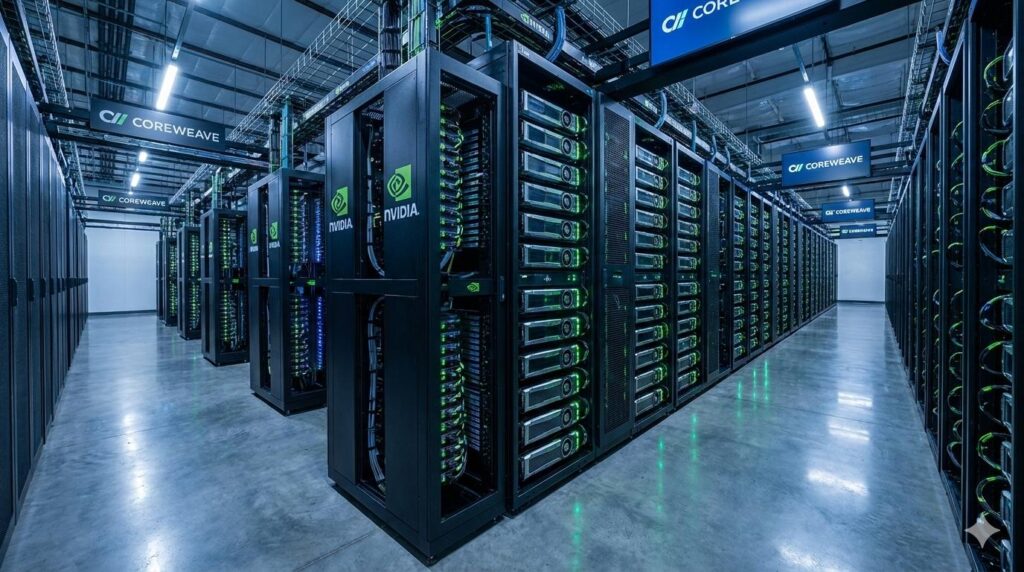
That growth rate is what makes CoreWeave different from a conventional cloud company. Demand for specialized AI computing has created an environment where customers are willing to commit billions of dollars for access to GPU capacity. CoreWeave installs high-performance NVIDIA computing infrastructure in data centers and sells the resulting computing capacity through its cloud platform.
The company’s backlog provides another indication of demand. Revenue backlog reached approximately $104.2 billion, up roughly 246% from a year earlier. CoreWeave also said it had secured more than $25 billion of additional customer commitments during the first weeks of the third quarter.
But backlog should not be confused with cash already sitting in the company’s bank account. CoreWeave defines its backlog around committed customer contracts and expected future revenue subject to delivery and service conditions. The company must still build and operate the infrastructure needed to fulfill those commitments. Its own earlier filings emphasize that it expects significant investment in infrastructure and may require additional debt or equity financing as it expands.
That distinction is crucial for anyone evaluating CRWV.
The $104 Billion Backlog Is the Bull Case—and a Massive Execution Test
The biggest reason investors are interested in CoreWeave is the scale of its contracted demand.
A backlog of approximately $104 billion provides substantially more visibility than a business that relies primarily on short-term cloud usage. Long-term commitments can help CoreWeave plan data-center construction, GPU purchases and financing requirements because the company has greater visibility into future demand.
More than $25 billion of additional commitments early in Q3 makes the picture even more striking. It suggests that demand has not disappeared as CoreWeave rapidly expands its capacity.
However, there is an important second side to the backlog story: CoreWeave has to execute.
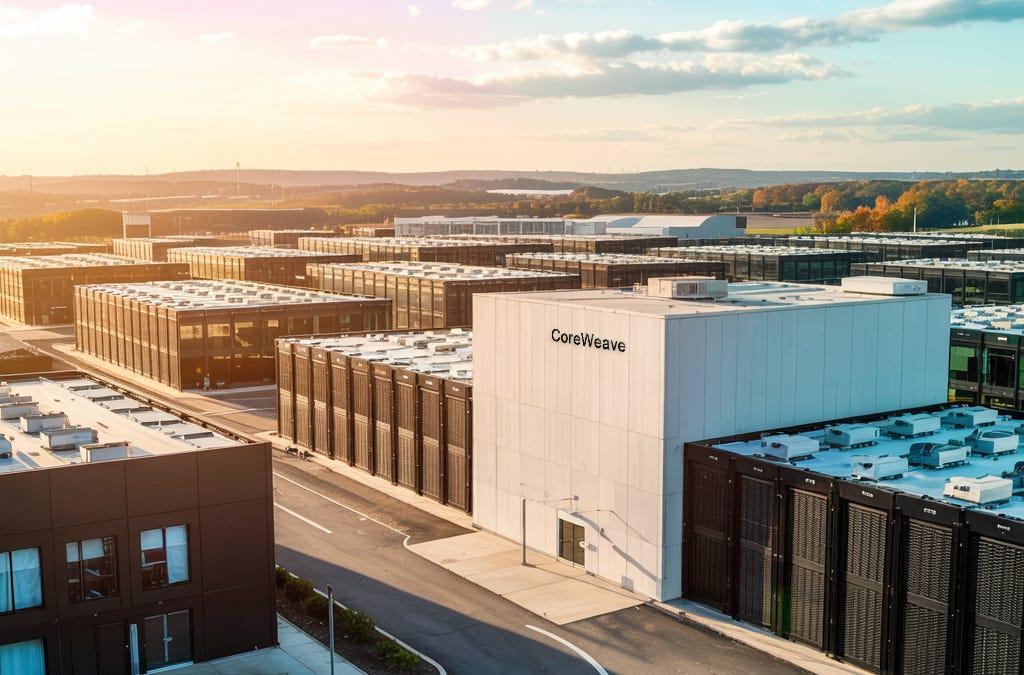
If data-center construction is delayed, power connections take longer than expected or GPUs cannot be deployed quickly enough, revenue recognition can be pushed into future quarters. That is why investors should watch active power capacity and deployment speed alongside the backlog number.
CoreWeave has been aggressively increasing its physical footprint. In its first-quarter report, the company said active power had surpassed 1 GW and that it was targeting more than 5 GW of additional AI-factory capacity by 2030. NVIDIA separately announced a $2 billion investment in CoreWeave in January and said the companies were working to accelerate the buildout of more than 5 GW of AI factories by 2030.
That partnership provides a powerful strategic advantage, but it also illustrates the scale of the capital challenge.
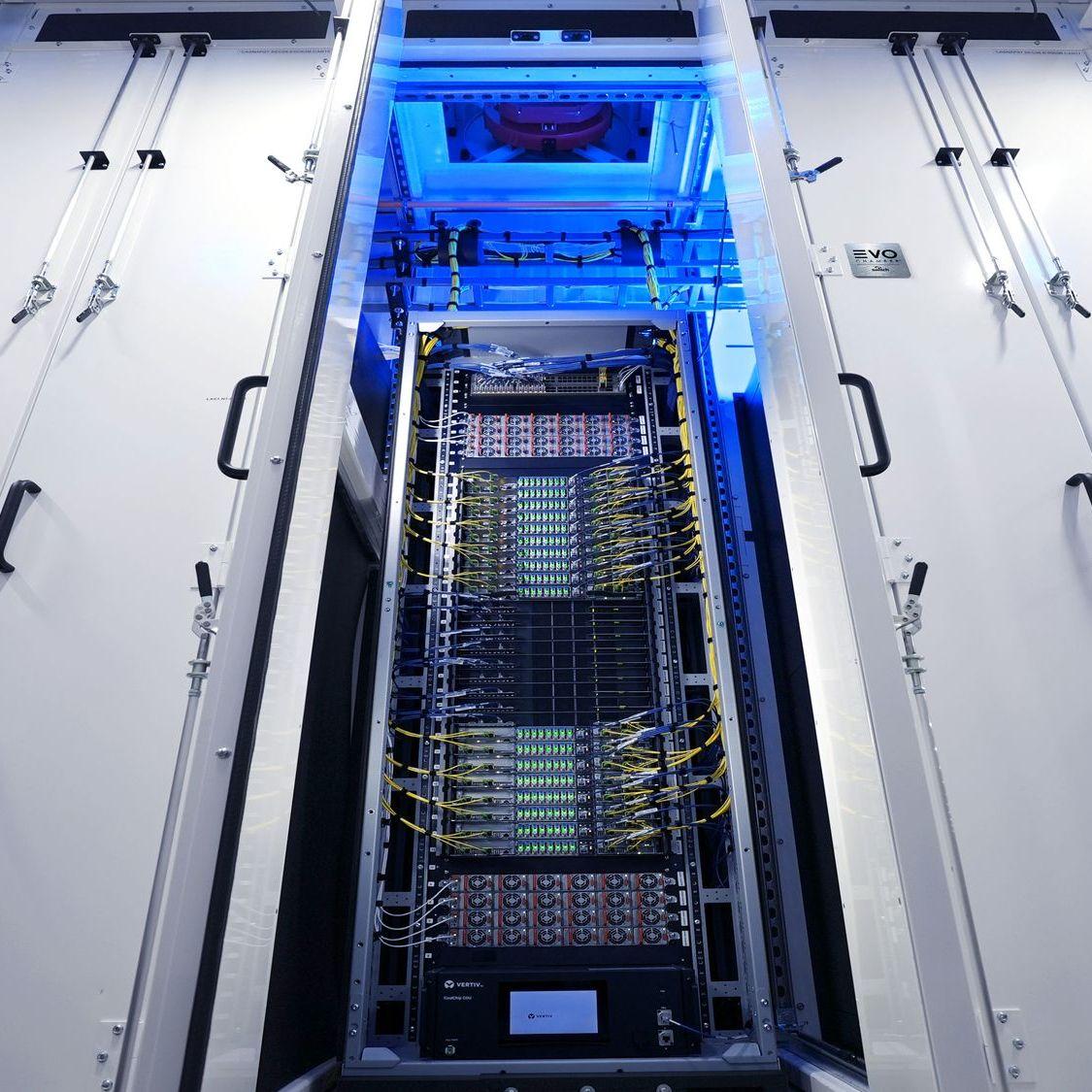
CoreWeave is not simply selling software. It is building a physical infrastructure network that requires land, electricity, data centers, GPUs, networking systems, cooling and financing.
Capital Spending and Debt Are the Biggest CRWV Risks
What this means for you: a company can have extraordinary revenue growth and still produce poor shareholder returns if it has to spend too much money to generate that growth.
CoreWeave’s Q2 capital expenditure was approximately $9.4 billion, according to current earnings coverage. That is an enormous amount relative to the company’s quarterly revenue.
The company needs that spending because its business depends on owning or controlling the computing infrastructure needed to fulfill customer contracts. GPUs are expensive, data centers require enormous amounts of electricity and cooling, and networking infrastructure must be upgraded as computing capacity expands.
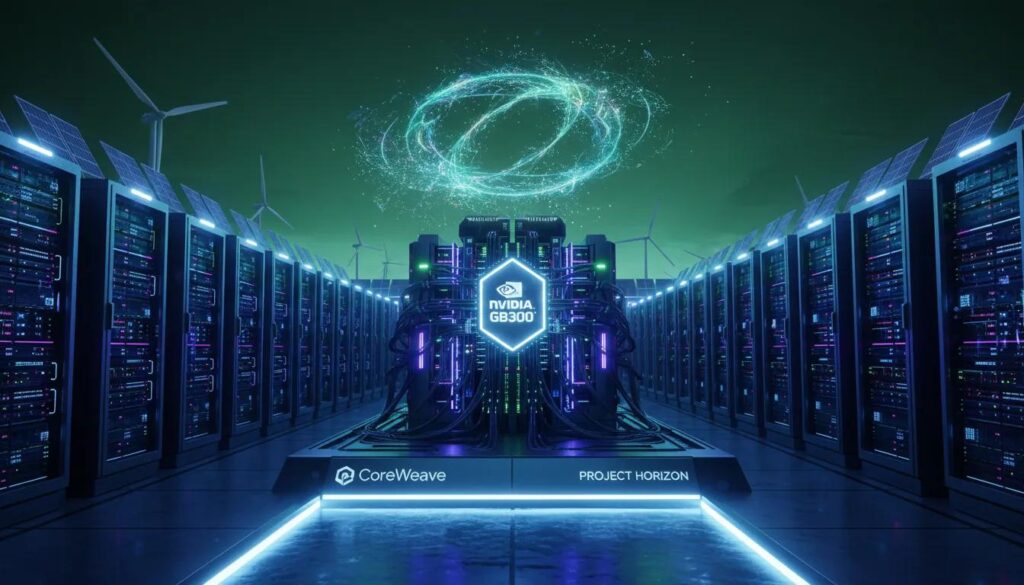
Earlier 2026 filings show the scale of the financial challenge. In the first quarter, CoreWeave generated $2.984 billion of operating cash flow but spent approximately $7.708 billion on investing activities, primarily because of investments in GPUs, servers, networking equipment and related infrastructure. The company said it expected capital investments to increase relative to 2025.
Debt therefore becomes an important part of the CRWV investment story.
Borrowing can accelerate growth when customer demand is strong and infrastructure produces attractive returns. But debt also creates fixed obligations. CoreWeave must pay interest regardless of whether GPU utilization is temporarily weak.
The Q2 results illustrate that pressure. Current reporting puts net interest expense at roughly $640 million, while the company still reported a GAAP net loss of approximately $626 million.
That does not automatically make the business unattractive. Young infrastructure companies often spend heavily before achieving mature profitability. The question is whether future revenue growth and improving utilization can eventually outpace financing and depreciation costs.
CoreWeave’s AI Advantage Depends on GPUs, Power and Customers
The bullish case for CoreWeave starts with its position in the AI-computing supply chain.
Unlike traditional cloud infrastructure, CoreWeave has built its platform specifically around high-performance AI workloads. The company works closely with NVIDIA and has been an early adopter of successive NVIDIA computing platforms. In January, NVIDIA and CoreWeave announced an expanded relationship covering multiple NVIDIA generations and a plan to accelerate more than 5 GW of AI-factory capacity by 2030.
That relationship could help CoreWeave maintain access to advanced computing technology as AI models become more demanding.
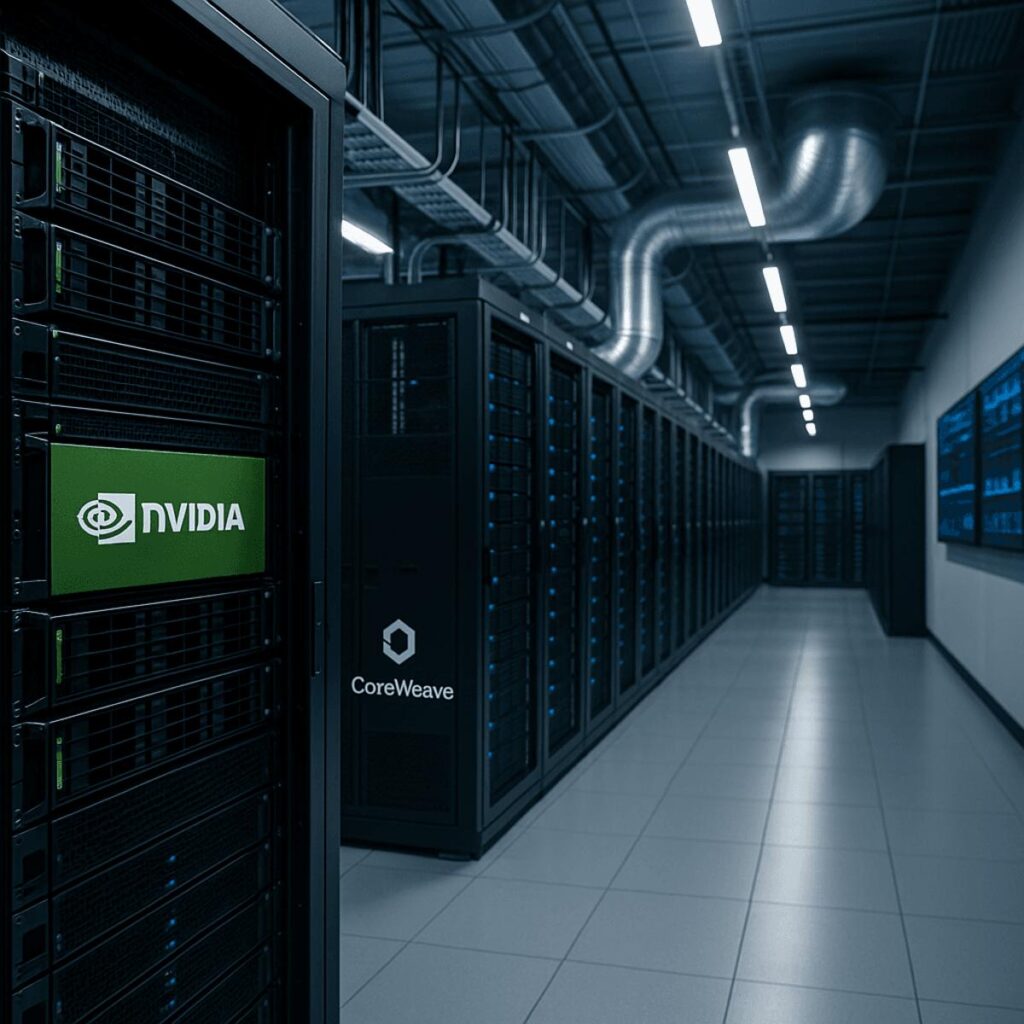
The business is also moving beyond the original training-heavy AI market. In its earlier earnings materials, CoreWeave emphasized that customer demand increasingly includes inference workloads—the computing required to run AI models after they have been trained. That matters because widespread AI adoption could eventually create a much larger recurring demand for inference capacity than the initial training boom alone.
CoreWeave’s customer base is also broadening. Current reporting highlights AI labs, hyperscalers and enterprises, while financial-services customers such as trading firms are becoming another area of interest. MarketWatch reported that financial services was becoming a meaningful growth area and could offer attractive margins.
Still, customer concentration remains an important risk. Large contracts can provide tremendous visibility, but dependence on a relatively small number of major customers means a change in spending by one large client could have an outsized effect.
That is why investors should examine not just the size of the backlog, but who is behind the backlog and how diversified it is.
What This Means for You: The CoreWeave Bull and Bear Cases
The bull case is that AI computing demand remains much stronger than available supply.
Under this scenario, CoreWeave continues signing large contracts, brings new data centers online quickly, keeps GPUs highly utilized and expands margins as the infrastructure base becomes more productive.
The company’s Q2 adjusted operating income improved to approximately $128 million, compared with $21 million in the first quarter, while adjusted EBITDA was around $1.51 billion. That suggests operating leverage may already be emerging as revenue scales.
If this trend continues, the company’s enormous infrastructure spending could eventually produce much stronger free cash flow. That would change the market’s perception of CRWV from a heavily financed AI-growth company into a more mature infrastructure platform.
The bear case is more complicated.
CoreWeave could discover that the cost of building AI capacity rises faster than expected. Data-center construction can be delayed, electricity can be difficult to secure, GPU economics can change and interest costs can remain high.
There is also a technological risk. AI hardware changes quickly. If a new GPU architecture delivers dramatically better performance or economics, older infrastructure could become less competitive before its expected useful life ends.
Then there is valuation risk.
A company growing revenue at more than 100% annually can justify a high valuation if that growth is sustainable. But investors may eventually demand evidence of free cash flow and durable profitability. If growth slows while capital expenditure remains enormous, the stock could face a significant valuation reset.
Investor takeaway: CRWV should be evaluated as both a technology-growth company and a capital-intensive infrastructure company. Looking at revenue alone misses half the story.
CoreWeave Stock Forecast: What the New Guidance Says
CoreWeave’s latest outlook provides another important piece of the forecast.
Management expects third-quarter revenue of approximately $3.45 billion to $3.6 billion and raised full-year 2026 revenue guidance to approximately $12.4 billion to $13.2 billion, according to current market coverage.
The midpoint of the annual range is approximately $12.8 billion. If CoreWeave reaches that level, the company would be demonstrating another dramatic step-up from its earlier revenue base.
The key question is what happens to profitability while revenue grows.
A business can become much more valuable when revenue growth produces increasing operating leverage. But if every additional dollar of revenue requires nearly equivalent capital expenditure, shareholders may not receive the benefit they expect.
This is why the next several quarters should be watched through a wider dashboard:
| Metric | What investors should watch |
|---|---|
| Revenue | Is growth staying above expectations? |
| Backlog | Are new commitments continuing? |
| Active power | How quickly is capacity coming online? |
| Utilization | Are GPUs being fully monetized? |
| Capex | Is spending rising faster than revenue? |
| Debt | Is leverage becoming more manageable? |
| Interest expense | Is financing consuming too much profit? |
| Operating margin | Is scale producing leverage? |
| Free cash flow | Is the business approaching self-funding growth? |
| Customer mix | Is dependence on major customers declining? |
This framework is more useful than trying to predict CRWV’s share price from one earnings report.
Investor Takeaway: Is CRWV Becoming a Major AI Infrastructure Bet?
Investor takeaway: CoreWeave is becoming one of the clearest public-market expressions of the AI infrastructure buildout, but it is also one of the clearest examples of the financial risks involved.
The $104 billion backlog demonstrates extraordinary customer demand. The $2.575 billion quarterly revenue figure shows that demand is already translating into large-scale sales. And the improvement in adjusted operating income suggests the business may be beginning to benefit from operating leverage.
But the other side of the ledger is equally important.
CoreWeave spent about $9.4 billion on capital expenditures in Q2, continues to report GAAP losses and carries substantial financing costs. The company is essentially making a massive bet that AI computing demand will remain strong long enough for today’s infrastructure investments to generate attractive returns over many years.
That is a high-risk, high-reward strategy.
For investors, the strongest evidence that the thesis is working would be a combination of continued backlog growth, rapid capacity deployment, rising operating margins and a narrowing gap between accounting earnings and actual cash generation.
The warning signs would be the opposite: slowing bookings, construction delays, falling utilization, accelerating debt, persistently high interest expense or capital expenditure that continues rising faster than revenue.
Future Outlook: Can CRWV Turn AI Demand Into Durable Cash Flow?
The future outlook for CoreWeave stock ultimately depends on whether the AI infrastructure cycle lasts long enough to justify the company’s enormous investment program.
There are reasons to remain optimistic.
NVIDIA and CoreWeave are targeting more than 5 GW of additional AI-factory capacity by 2030, while CoreWeave has described a broader strategy to build a much larger global AI infrastructure footprint. NVIDIA’s $2 billion investment in CoreWeave also provides a significant strategic endorsement and strengthens their technology relationship.
AI workloads are also evolving. Training remains important, but inference, enterprise AI and specialized workloads could create recurring demand for computing capacity. CoreWeave’s ability to serve customers across AI labs, hyperscalers, enterprises and financial services could help diversify its revenue base over time.
However, the next phase will be about economics rather than simply capacity.
The market has already seen that customers are willing to commit enormous amounts of money to AI computing. Now investors need to see whether CoreWeave can make money from providing that computing at scale.
That means watching return on invested capital, free cash flow, debt reduction and margins as closely as revenue and backlog.
If CoreWeave can continue growing rapidly while gradually reducing the amount of new capital required for each dollar of incremental revenue, the investment thesis could become considerably stronger.
If capital requirements remain enormous indefinitely, the company may need continued access to debt and equity markets, increasing financing and dilution risks.
The Bottom Line
CoreWeave has become one of the most important public companies for understanding the financial side of the AI infrastructure boom.
Its second-quarter results showed $2.575 billion in revenue, approximately 112% year-over-year growth and a roughly $104.2 billion backlog, while new customer commitments exceeded $25 billion early in the following quarter.
Those numbers make the demand story difficult to ignore.
But the capital story is just as important. CoreWeave spent about $9.4 billion on Q2 capital expenditures, carries substantial debt and remains GAAP-unprofitable.
That means the CoreWeave stock forecast should not be based simply on how quickly revenue grows.
The more important question is whether CoreWeave can transform its enormous backlog into revenue, convert that revenue into increasingly strong operating margins and eventually generate enough free cash flow to finance a meaningful portion of its own expansion.
If that happens, CRWV could become one of the major infrastructure beneficiaries of the AI economy.
If demand slows before the company’s massive infrastructure investments mature, the same leverage that accelerates growth could magnify the downside.
For now, CoreWeave represents a powerful but high-risk investment thesis: AI demand is enormous, the backlog is extraordinary, but the cost of satisfying that demand is enormous too.
Subscribe to trusted news sites like USnewsSphere.com for continuous updates.