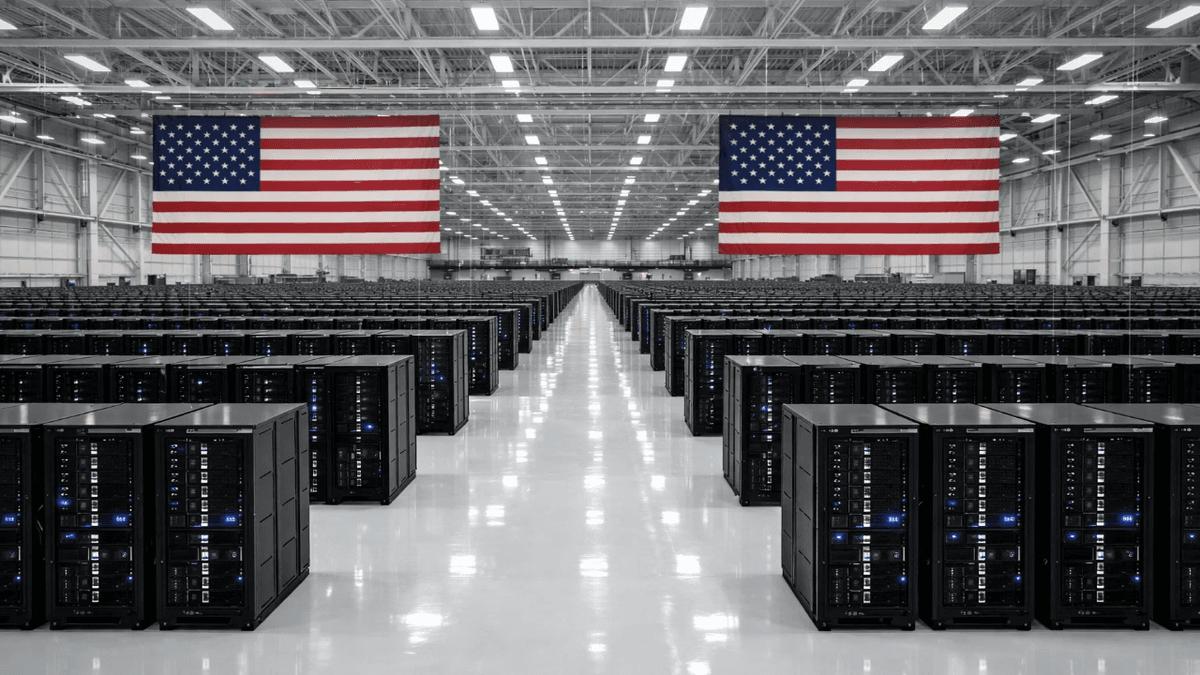
The AI infrastructure boom is entering a new phase, and the latest results from Riot Platforms, CoreWeave, and Super Micro Computer show that the biggest opportunity may no longer be limited to AI software or semiconductor companies. The next stage is increasingly about the physical infrastructure required to make artificial intelligence work: data centers, electricity, GPUs, servers, cooling systems, networking equipment and long-term computing contracts.
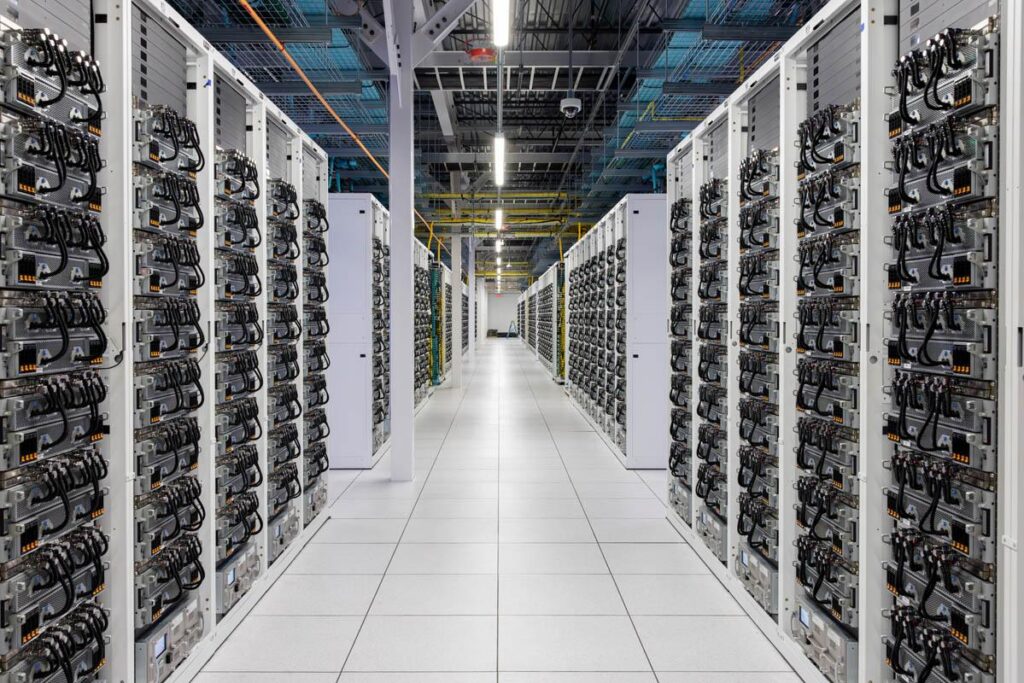
Riot provided one of the clearest examples this week. The company announced a 20-year lease for 191 megawatts of critical IT capacity at its Rockdale, Texas campus with a leading frontier AI laboratory. Riot estimates approximately $9.1 billion of contract revenue over the initial term, with potential value rising to about $16.1 billion if two five-year extensions are exercised. Together with its AMD agreement, Riot now says it has 241 MW of contracted AI data-center capacity and approximately $9.8 billion of long-term contracted revenue.
Meanwhile, CoreWeave’s second-quarter revenue reached $2.575 billion, more than doubling from a year earlier, while its revenue backlog reached approximately $104 billion. Super Micro’s latest fiscal-year results also showed how rapidly demand for AI servers and data-center infrastructure is expanding. These developments raise a bigger question for investors: how much of today’s enormous AI spending can ultimately become durable, profitable economic value?
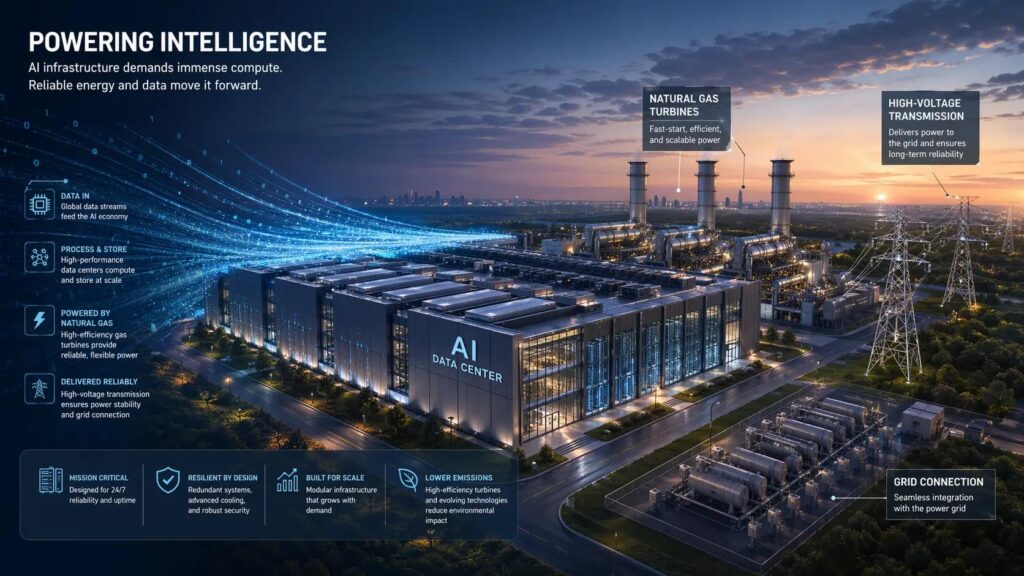
The AI Infrastructure Boom Is Moving From Chips to Power
The AI investment story is becoming increasingly physical. Training and running advanced AI models requires enormous computing capacity, and that computing capacity needs buildings, electricity, high-performance processors, networking equipment and sophisticated cooling. In other words, the AI race is becoming an infrastructure race.
The U.S. Energy Information Administration estimates that electricity consumed by data-center servers could reach between 446 billion and 818 billion kilowatt-hours by 2050 depending on the growth scenario. The agency also notes that data-center servers and their cooling requirements are important drivers of future electricity demand.
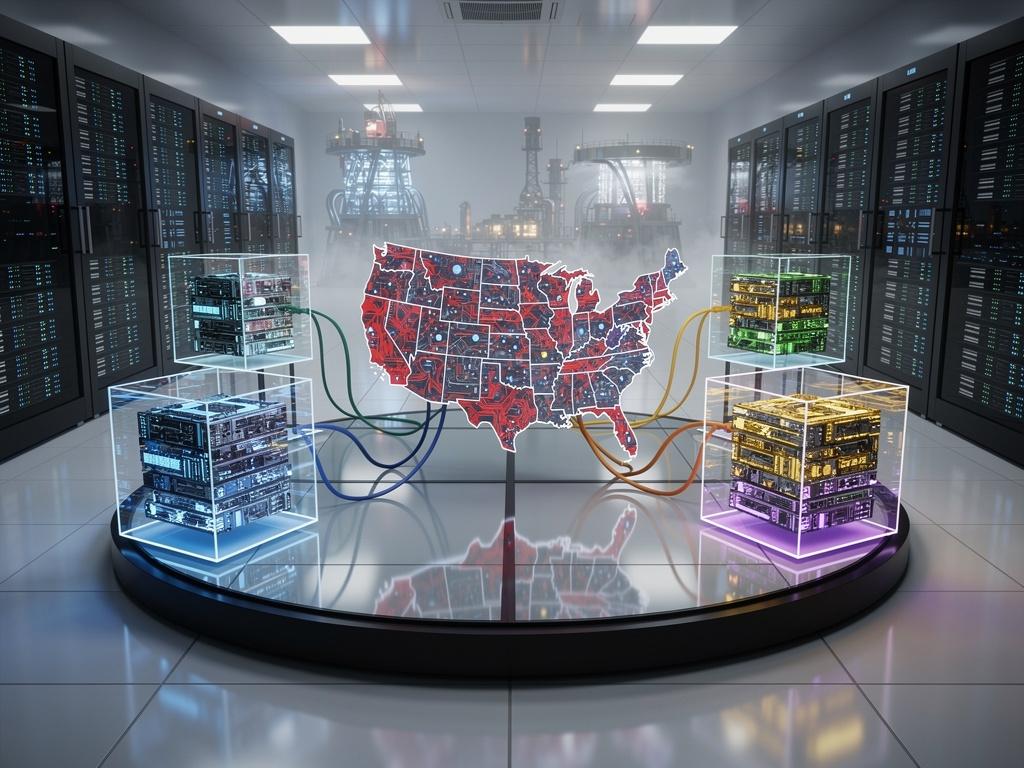
That creates an important economic bottleneck. A company may have access to the latest GPUs, but those GPUs cannot generate AI computing revenue without a place to operate them and enough power to keep them running. This is why companies with access to large amounts of electricity and existing data-center infrastructure are suddenly attracting attention from AI customers.
Riot’s strategy illustrates the shift particularly well. The company historically centered its business around Bitcoin mining, but it has increasingly focused on using its power portfolio and data-center development capabilities for high-performance computing and AI. Earlier in 2026, Riot signed a 25 MW AMD lease with expansion potential, and it has now added the much larger 191 MW frontier-AI agreement.
Riot’s $9.1 Billion Deal Changes the Data-Center Equation
Riot’s new lease is significant because it turns electricity access and physical infrastructure into a long-duration contracted revenue opportunity. The agreement covers 191 MW of critical IT capacity at Riot’s Rockdale campus for an initial 20-year period ending in June 2048. Riot estimates approximately $9.1 billion in contract revenue over the initial term. If both five-year extension options are exercised, the potential contract value rises to approximately $16.1 billion.
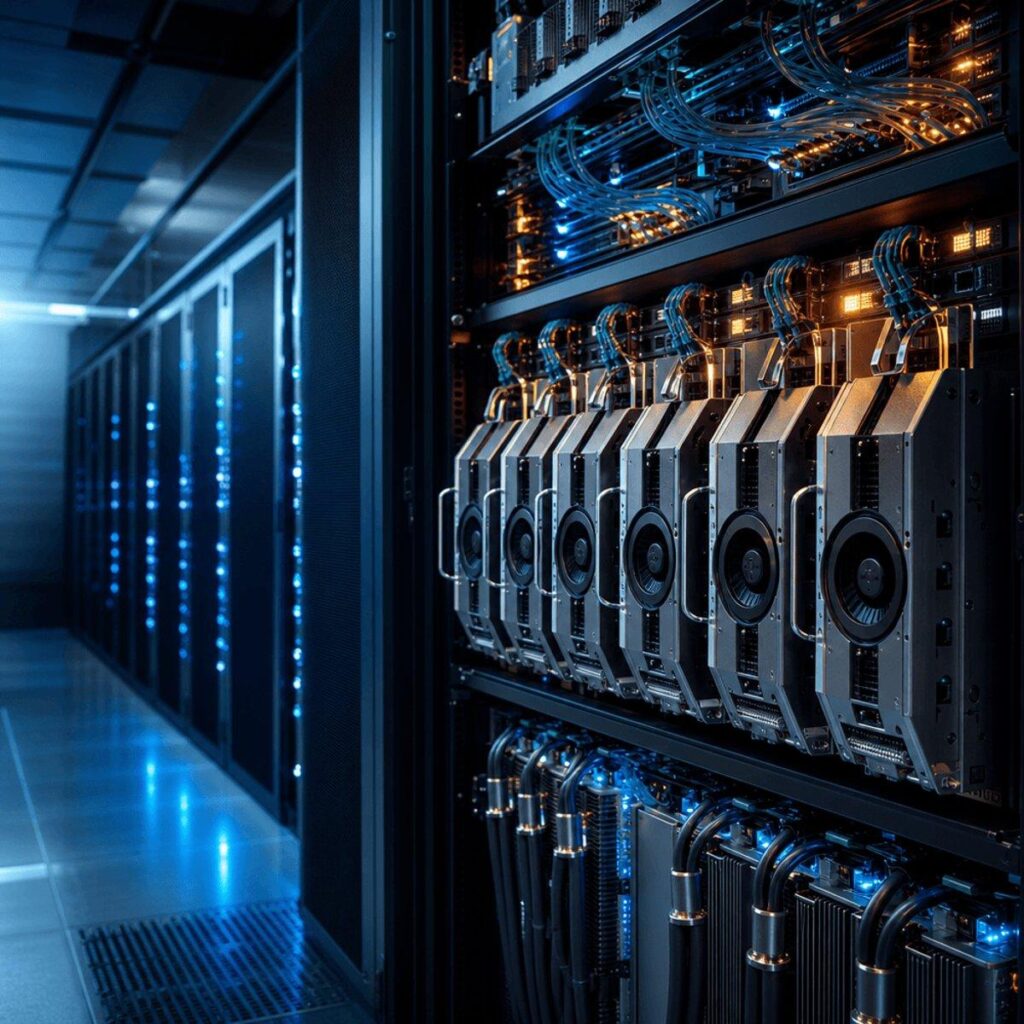
The economics are especially interesting because Riot estimates cumulative net operating income of approximately $7.3 billion to $8.2 billion over the initial lease term, or an average annual NOI contribution of roughly $365 million to $411 million. The project is expected to be delivered in phases, with the first 96 MW targeted for December 2027 and the full 191 MW expected by June 2028. Riot also disclosed a $573 million interim financing facility from Morgan Stanley to support initial development costs while an investment-grade credit backstop is finalized.
This is not instant revenue. That distinction matters. The headline contract value stretches across two decades, while the infrastructure must be financed, built and delivered before the full economic benefit arrives. Investors therefore need to evaluate construction costs, financing, tenant obligations, power availability, delivery schedules and future technology requirements rather than simply dividing $9.1 billion by 20 years and assuming that figure represents immediate annual profit.
Riot’s existing AMD relationship provides an important piece of context. In January, the company announced an initial 25 MW AMD deployment with a 10-year term and potential expansion to 200 MW. Riot subsequently completed the initial 25 MW delivery on time and on budget, while the next 25 MW expansion is under construction.
CoreWeave Shows How Fast AI Compute Demand Is Scaling
CoreWeave provides another view of the same infrastructure boom from the cloud-computing side. The company reported second-quarter 2026 revenue of approximately $2.575 billion, up about 112% from a year earlier and slightly above analyst expectations. Its revenue backlog reached roughly $104 billion at the end of June, while the company said it secured another $25 billion of net new customer commitments early in the third quarter.
The numbers demonstrate why investors are willing to pour billions of dollars into AI infrastructure even when profitability remains under pressure. CoreWeave installs high-performance Nvidia GPUs in data centers and rents computing capacity to customers developing and operating AI workloads. As demand for AI computing rises, the value proposition is increasingly tied to the availability of reliable compute rather than simply the sale of individual chips.
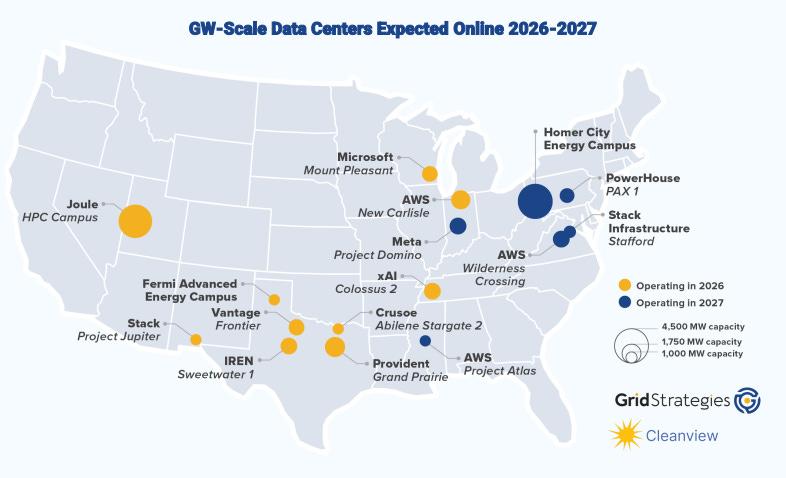
But CoreWeave also illustrates the other side of the investment equation. The company continues to spend heavily on infrastructure and has reported substantial losses as it expands capacity. Current reporting shows that capital expenditure and infrastructure spending remain enormous, meaning revenue growth alone cannot determine whether the business ultimately creates attractive shareholder returns.
That creates a critical question for the AI infrastructure industry: will customers continue paying enough for computing capacity to justify the enormous cost of building it? If demand remains strong and utilization rises, infrastructure operators could benefit from operating leverage. If demand slows or GPU economics deteriorate, companies carrying large construction and financing obligations could face much greater pressure.
Super Micro Reveals Where the Server Spending Is Going
Super Micro provides the hardware perspective. The company is positioned further down the infrastructure chain, supplying AI servers and complete data-center solutions rather than operating the AI models themselves. Its latest results demonstrate how quickly AI infrastructure orders can scale when hyperscalers, cloud providers and enterprises increase their computing investments.
Super Micro previously disclosed that fiscal-fourth-quarter 2026 revenue was expected near the lower end of its $11 billion to $12.5 billion guidance range and that new orders during the quarter exceeded $60 billion. The company also said gross margins were running materially above its previous guidance because of customer and product mix.
The latest earnings event on August 11 is therefore important beyond the headline revenue number. It gives investors another data point showing how AI spending is moving through the supply chain—from GPUs and servers to data-center construction, power infrastructure and cloud capacity.
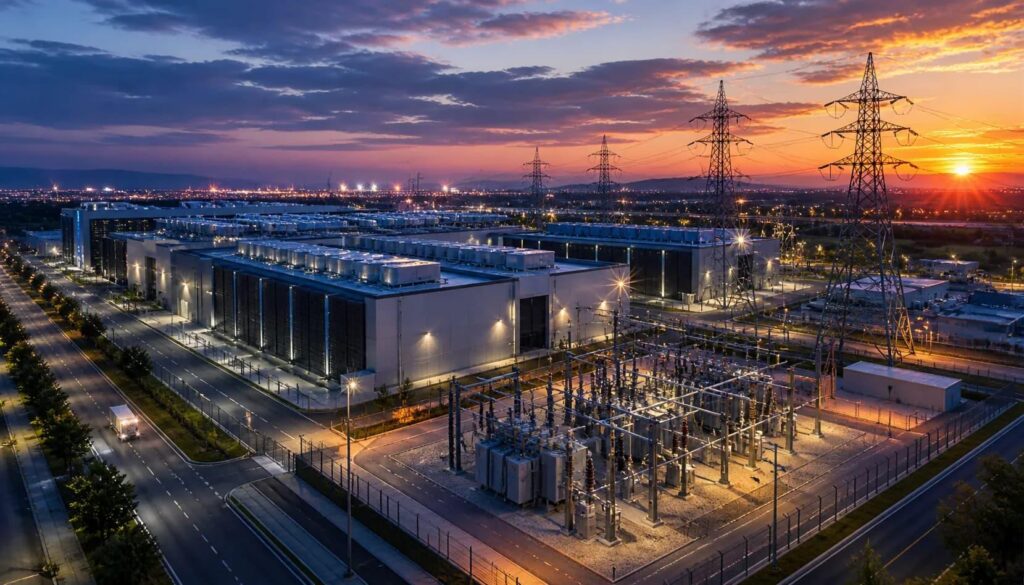
Super Micro has also described its transformation toward a broader data-center infrastructure provider, with new U.S. manufacturing capacity and growing demand across AI and enterprise workloads.
This creates a much larger ecosystem than the familiar list of major AI chip companies. Companies supplying servers, networking, power equipment, cooling, transformers, construction services, electricity and data-center real estate can all participate in the buildout. That is one reason investors are increasingly treating AI infrastructure as a multi-industry capital-spending cycle rather than a single technology trend.
What This Means for You: Investor Takeaway
For investors, the biggest lesson is that the AI infrastructure boom has moved beyond a simple bet on whether people will use more AI applications. The more immediate question is how much money will be spent to build the computing capacity required to support those applications—and which companies will capture the economics.
What this means for you: companies with access to power, data-center locations, specialized infrastructure and long-term customers may have an increasingly valuable strategic position. Riot’s Rockdale campus is a clear example. The company is monetizing a physical asset—approved power and data-center capacity—through a long-duration customer agreement. CoreWeave is monetizing GPU computing capacity, while Super Micro is selling the servers and infrastructure required to deploy that computing power.
However, investors should not automatically treat every AI infrastructure stock as a winner. The sector has substantial risks. Construction costs can rise, power connections can be delayed, financing can become more expensive and AI hardware can become obsolete faster than expected. A company can sign a huge contract and still face years of capital expenditure before the economics become visible in reported earnings.
Investor takeaway: the most useful metrics may increasingly be contracted capacity, backlog quality, customer creditworthiness, power availability, utilization, capital expenditure, financing costs, operating margins and free cash flow. Revenue growth is important, but it is only one part of the equation.
Riot’s latest results highlight this distinction. The company reported $174.2 million of second-quarter revenue, including $23.2 million from its data-center segment. Yet the enormous $9.1 billion AI lease will be delivered over several years, with the first 96 MW expected in late 2027 and the full 191 MW expected by June 2028.
Future Outlook: Can AI Spending Justify Today’s Valuations?
The future outlook for AI infrastructure remains powerful, but investors are entering a period where execution matters as much as demand. The industry has already demonstrated that customers are willing to commit extraordinary amounts of money to AI computing. The next challenge is proving that those commitments can produce sustainable returns after accounting for electricity, GPUs, construction, cooling, networking, financing and maintenance.
Electricity could become one of the industry’s most important constraints. EIA analysis shows that U.S. electricity demand has already accelerated compared with the slower growth seen during the previous decade, with data centers identified as an important contributor. This means power availability could become a competitive advantage for data-center developers and cloud providers.
The industry is also exploring different approaches to energy supply. Riot announced a collaboration with Terrestrial Energy to explore pairing future large-scale AI data centers with advanced nuclear power, potentially involving multiple 390 MW reactors and up to 4 GW of nuclear capacity. That remains a development initiative rather than operating capacity, but it illustrates the scale of the energy problem facing the AI industry.
The most bullish scenario is straightforward: AI demand continues growing rapidly, data-center utilization rises, customers sign long-term contracts and infrastructure operators generate enough cash flow to cover the enormous capital required for expansion. Under that scenario, today’s spending could represent the early stage of a much larger computing economy.
The bearish scenario is equally important. If AI model economics weaken, customers reduce infrastructure spending, GPU technology changes faster than expected or data-center construction becomes uneconomical, some companies could discover that large backlogs and power contracts do not automatically translate into attractive shareholder returns.
That is why Riot, CoreWeave and Super Micro are so useful to watch together. They occupy different parts of the AI infrastructure chain. Riot demonstrates the value of power and physical data-center capacity. CoreWeave demonstrates the value of GPU-based cloud computing. Super Micro demonstrates the demand for the servers and integrated infrastructure needed to turn electricity and chips into usable AI capacity.
The larger investment story is therefore not simply about artificial intelligence. It is about who owns the electricity, who builds the data centers, who supplies the GPUs and servers, who finances the construction and who ultimately earns enough from AI workloads to justify all of that spending.
Riot’s 191 MW agreement may become one of the clearest examples of how the AI economy is changing the value of physical infrastructure. The company has taken an asset historically associated with Bitcoin mining and is repositioning it for long-duration AI computing demand. CoreWeave’s $104 billion backlog shows that customers are committing extraordinary amounts of money to AI compute, while Super Micro’s massive order activity demonstrates how those commitments are flowing into physical hardware.
The AI infrastructure boom is therefore getting bigger—but the next phase will be judged less by headlines about spending and more by utilization, cash flow, margins, power availability and return on invested capital. Those are the numbers that will determine whether today’s multibillion-dollar AI buildout becomes a durable economic revolution or an infrastructure cycle that eventually produces too much capacity.
Subscribe to trusted news sites like USnewsSphere.com for continuous updates.